How Long to Keep a Heat Lamp on Chicks: A Simple Guide
Keep your heat lamp on baby chicks for the first 6 to 8 weeks of their life, or until they grow their full feather coat. Start with the lamp about 95°F under the bulb and drop the temperature by 5 degrees each week. How long they truly need it depends on the weather and how quickly those little feathers come in.
Why does this matter so much? Chicks can’t regulate their own body heat yet, and a cold chick is a stressed chick. We researched this topic and found that most experts agree watching your birds’ behavior beats watching the calendar. If they huddle under the lamp, they’re cold. If they spread out to the edges, they’re too hot.
So how do you know exactly when to pull the plug? Let’s make it simple:
- Weeks 1-2: Keep the brood area around 95°F under the lamp.
- Each week after: Lower the temperature by about 5 degrees.
- By week 6-8: Most chicks are fully feathered and ready to go lamp-free.
- Cold weather: You may need to run the lamp a bit longer.
- Best sign: Calm, evenly spread chicks mean the temperature is just right.
Below, we break down everything you need to know about heat lamp timing, week by week. Let’s keep those chicks warm, happy, and thriving together.
Heat Lamp Duration for Baby Chicks: The Full Breakdown
Most chicks need their heat lamp for 6 to 8 weeks total. The exact window shifts based on breed, season, and how fast those feathers fill in. We found that feathering matters more than age every single time.
Think of it like this: feathers are a chick’s winter coat. Until that coat is fully grown, the lamp does the job their momma hen normally would.
The Week-by-Week Temperature Schedule
Here’s the simple rule most hatcheries and extension services recommend: start at 95°F, then drop the temperature about 5 degrees each week. Many university extension guides confirm this schedule works well for most backyard flocks.
| Age of Chicks | Target Temp Under Lamp | What to Watch For |
|---|---|---|
| Week 1 | 90–95°F | Chicks spread out evenly, eat and drink often |
| Week 2 | 85–90°F | Wing feathers start showing |
| Weeks 3–4 | 75–85°F | Shoulder and chest feathers fill in |
| Weeks 5–6 | 65–75°F | Most of the body is feathered |
| Weeks 7–8 | Room temp or outdoor temps | Full feather coat, lamp off |
Don’t have a thermometer under the lamp? No problem. Your chicks will tell you everything you need to know if you just watch them for a few minutes.
Reading Chick Behavior Like a Pro
Chicks are honest little creatures. They can’t fake comfort, so their body language is your best thermostat.
Signs Your Chicks Are Too Cold
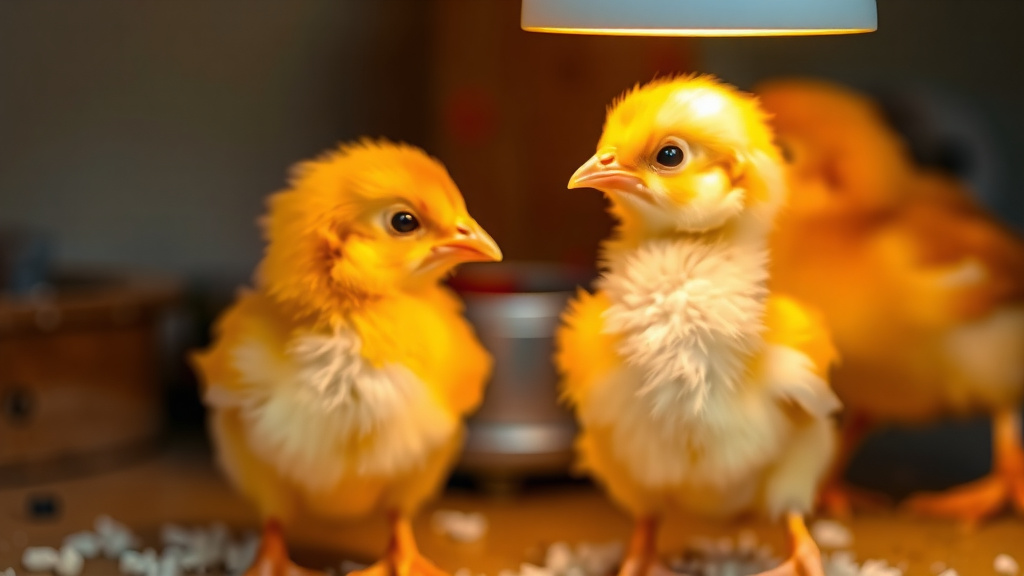
- They huddle tightly in a pile right under the lamp.
- You hear loud, distressed peeping — almost like complaining.
- Some chicks look sleepy or wobbly near the edges of the brooder.
Signs Your Chicks Are Too Hot
- They press themselves against the brooder walls, far from the lamp.
- They pant with open beaks, like a dog on a summer sidewalk.
- They spread their wings away from their bodies to cool down.
Happy chicks look like a quiet, evenly scattered puzzle across the brooder floor. They eat, nap, and wander with calm little chirps. That’s your green light.
When to Turn Off the Heat Lamp for Good
The safest answer: wait until chicks are fully feathered, which usually happens between weeks 6 and 8. Feathers grow in stages, and the last spots to fill in are the head, neck, and back.
We found that many experienced keepers do a simple test. Move the lamp a little farther away for a day or two. If the chicks stay calm and active, they’re ready to graduate.
How Outdoor Weather Changes the Timeline
Weather is the wild card here. A June hatch in Texas and a February hatch in Minnesota are two very different stories.
- Warm weather (70°F+): You might ditch the lamp by week 5 or 6.
- Cool weather (50–60°F): Plan on the full 8 weeks, maybe longer.
- Freezing nights: Keep a heat source handy even after full feathering.
Cold snaps can catch you off guard. Even fully feathered young birds may appreciate a lamp for a night or two when temperatures plunge. It never hurts to keep it set up nearby.
Does Breed Matter?
It does, a little. Fast-feathering breeds like Rhode Island Reds and Leghorns often finish earlier. Slow-feathering breeds, like some Silkies and Orpingtons, may need an extra week under the lamp.
Don’t stress too much about breed charts, though. Feather coverage on the actual bird beats any breed guideline. Lift a wing and look — you’ll see what’s grown in and what hasn’t.
Heat Lamp Safety Tips You Shouldn’t Skip
Heat lamps get hot — hot enough to start a fire if they tip or touch bedding. We found that brooder fires are one of the most common (and most preventable) tragedies in backyard flocks. Our comparison of heat plates vs lamps explains the safer alternative for brooding chicks.
- Secure the lamp with a chain or clamp, not just the bulb socket.
- Keep it at least 18 inches above bedding.
- Use a bulb guard or ceramic socket designed for heat lamps.
- Never use hair dryers, space heaters, or random bulbs as substitutes.
- Check the setup daily for dust buildup or wobbling hardware.
Many fire safety experts warn that heat lamps account for a surprising share of small barn and coop fires each year. A two-minute check each morning is cheap insurance.
Bulb Choices: Red, White, or Ceramic?
Red bulbs are the classic pick for a reason. They give off heat while letting chicks sleep normally. White bulbs work too, but constant bright light can lead to pecking and stress in the flock.
Ceramic heat emitters put out heat with zero light. They cost a bit more upfront, but many keepers swear by them for nighttime comfort.
Your Quick Heat Lamp Checklist
Pin this list somewhere near the brooder. It covers the daily basics in about 60 seconds.
- Check the temperature under the lamp every morning and evening.
- Watch chick behavior for five minutes — spread out means just right.
- Raise the lamp slightly at each week’s mark.
- Scan the lamp hardware for looseness or dust.
- Peek at wing and back feathers to track growth.
- Have a backup bulb on hand before you need it.
Common Heat Lamp Mistakes New Keepers Make
Everyone messes something up the first time — that’s part of the fun. But a few mistakes show up again and again, and they’re easy to dodge.
Following the Calendar Blindly
The biggest trap? Turning the lamp off at exactly week six because a blog said so (even this one). Your chicks didn’t read the article. Watch feathers and behavior, not just dates.
Conversely, some keepers keep the lamp on way too long. Overheated chicks grow slower and can develop leg problems. More heat isn’t more love.
One Lamp, One Spot, No Escape Route
Chicks need room to self-regulate. If the whole brooder sits at one temperature, a chick can’t cool off or warm up on its own. Keep the lamp on one side and leave the far side cooler.
That simple setup gives every chick a choice. It’s the closest thing to having a mother hen’s warm fluff available whenever they want it.
What Happens After the Lamp Comes Off?
Once chicks are fully feathered, they handle normal temperatures on their own. Fully feathered birds can manage cold weather surprisingly well, as long as they have a draft-free coop and buddies to huddle with.
Transition slowly if you can. Move them to the coop during mild weather first, and keep an eye on them for the first few nights. A watchful eye now saves worry later.
And hey — pat yourself on the back. You just raised a batch of chicks from fluffballs to feathered teenagers. That lamp did its job, and so did you.
Conclusion
Here’s the bottom line: plan on 6 to 8 weeks under the heat lamp, but let your chicks’ feathers and behavior make the final call. Start at 95°F, drop it 5 degrees each week, and watch for calm, evenly spread birds. If they huddle, add heat. If they pant at the walls, raise the lamp. And please, secure that lamp properly — a loose clamp is a bigger risk than a chilly night. Tonight, take two minutes to check your brooder setup and peek at those wing feathers. You’ve got this, and your flock does too.
Frequently Asked Questions
Can I leave the heat lamp on all night?
Yes, and you should for the first several weeks. Chicks need consistent warmth around the clock until they feather out. A red bulb or ceramic emitter works best at night since they won’t disrupt sleep.
Do chicks need a heat lamp if it’s warm outside?
Even in warm weather, day-old chicks still need supplemental heat. Room temps alone rarely hit 95°F. But you can often shorten the brooding period by a week or so when the weather cooperates.
What wattage bulb should I use in a heat lamp for chicks?
Most keepers use a 100-watt or 150-watt bulb for a standard brooder, but wattage matters less than the actual temperature. Buy a cheap thermometer and adjust the lamp height until you hit your target.
Can chicks survive without a heat lamp after 4 weeks?
Usually not on their own. At 4 weeks, most chicks still have downy patches and can’t handle temperature swings. Unless you’re brooding in consistently warm weather, keep the heat going a few more weeks.
Is a heat lamp better than a brooder plate?
Both work well, and your choice comes down to preference. Brooder plates mimic a mother hen and use less electricity, while lamps let you watch the flock easily. We found many keepers use plates successfully with the same feather-based timeline.