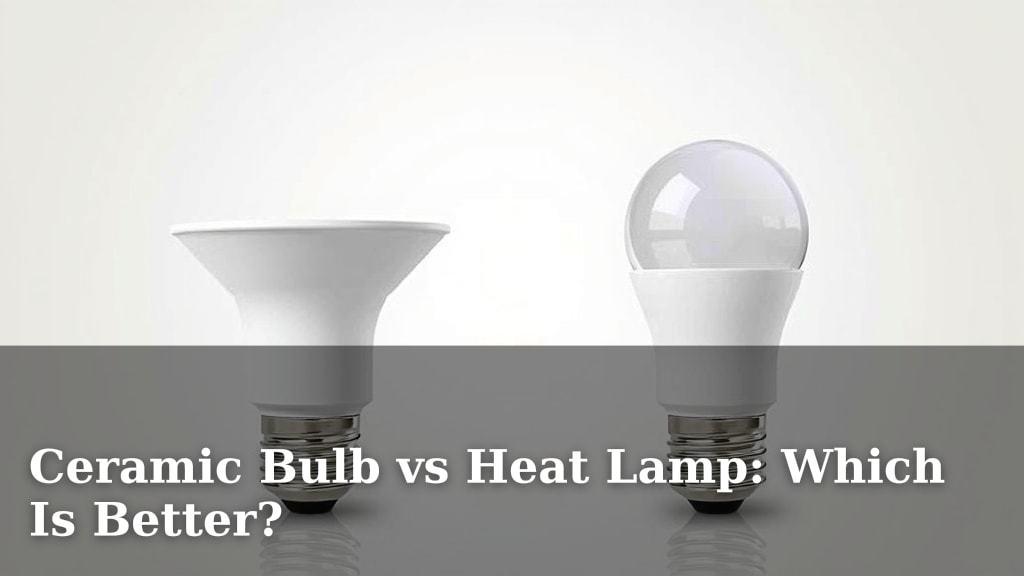
Ceramic Bulb vs Heat Lamp: Which Is Better?
When deciding between a ceramic bulb vs heat lamp, the choice often comes down to specific needs. Ceramic heat emitters are generally better for providing consistent, background warmth, while heat lamps excel at creating a focused basking spot. We found that understanding their unique strengths helps you pick the right one for your setup.
Both ceramic bulbs and heat lamps serve to raise temperatures, but they do so in different ways. Ceramic heat emitters (CHEs) give off radiant heat without light. Heat lamps, on the other hand, typically emit both heat and light, which can be beneficial for certain animals. Your choice depends on whether you need heat only or a combination of heat and light.
- Ceramic heat emitters offer heat without light.
- Heat lamps provide both heat and light.
- Consider if your pet needs a basking spot (heat lamp) or just overall warmth (CHE).
- Both have pros and cons for different environments and animals.
Let’s break down the differences between ceramic bulbs and heat lamps so you can make the best decision for your situation.
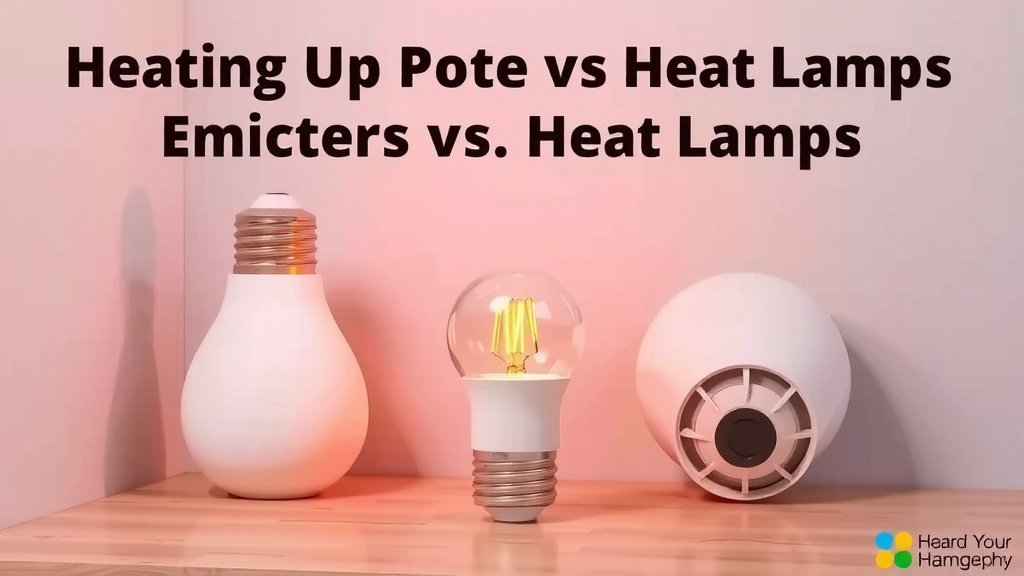
Heating Up Your Pet’s Habitat: Ceramic Emitters vs. Heat Lamps
Choosing the right heat source for your pet’s enclosure is super important. You want to keep them comfy and healthy. Ceramic heat emitters and traditional heat lamps both get the job done. But they do it in different ways. We’ve looked into what makes each one tick. This will help you pick the perfect one for your specific needs.
Understanding Ceramic Heat Emitters (CHEs)
Think of a ceramic heat emitter like a gentle, invisible hug for your pet’s home. These devices screw into a standard light socket. They produce infrared heat. The cool part? They give off heat without any light at all. This makes them ideal for animals that need warmth 24/7. Your pet won’t be disturbed by light cycles. This can be a huge plus for nocturnal or shy creatures.
How CHEs Work and Their Benefits
CHEs work by heating up. They then radiate that heat into the enclosure. This mimics the natural warmth found in many environments. Many experts say this consistent background heat is great for overall health. It helps with digestion and activity levels. We found that CHEs can raise the ambient temperature of a space. They don’t create a super hot, focused spot like some lamps do.
The main benefit here is the no-light aspect. If your pet sleeps during the day and is active at night, a CHE is your best friend. You can leave it on overnight without disrupting their natural sleep patterns. This is a big win for many reptile and amphibian keepers. It also means you won’t accidentally change their day/night cycle. That can be crucial for breeding or healthy development.
Potential Downsides of CHEs
One thing to watch out for with CHEs is their heat output. They can get very hot to the touch. You’ll absolutely need a thermostat to control the temperature. Without one, you risk overheating your enclosure. This can be dangerous for your pet. Always pair your CHE with a reliable temperature control device. We found that research shows proper temperature regulation is key to reptile well-being (University of Illinois Extension).
Also, CHEs don’t offer the visual basking spot that some animals crave. If your pet relies on a specific hot spot to absorb heat, a CHE alone might not be enough. You might need to supplement it with another heat source. Or, ensure the area directly under the CHE gets sufficiently warm.
Exploring Traditional Heat Lamps
Heat lamps are probably what most people picture first. These are typically the bulbs you screw into a dome fixture. They often produce both light and heat. This can be a dual-purpose tool for certain animals. Think of it as a mini sun for your pet’s enclosure. They create a warm, inviting basking area.
The Advantages of Heat Lamps
The biggest advantage of a heat lamp is its ability to create a focused basking spot. Many reptiles, like bearded dragons, need a specific hot spot. This spot allows them to bask, digest food, and regulate their body temperature. A heat lamp can provide this ideal basking zone effectively. We found that this ability to target heat is crucial for species that thermoregulate by seeking out warm surfaces.
Plus, many heat lamps emit visible light. This can be beneficial during the day. It can mimic natural sunlight. Some bulbs also provide UVA and UVB rays, which are essential for calcium metabolism and overall health in many reptiles. If your setup requires both warmth and light during the day, a heat lamp can simplify things. You get one fixture doing two jobs.
When Heat Lamps Might Not Be Ideal
The main drawback of most heat lamps is the light they produce. If you need to provide heat overnight, a standard heat lamp is a no-go. The light can disrupt your pet’s sleep cycle. This can lead to stress and health problems. Many experts suggest turning off all lights at night (Reptile Hobbyist Magazine).
Also, the heat from a lamp can be very intense and direct. It’s important to position it correctly. You need to ensure the basking spot isn’t too hot. And that there are cooler areas for your pet to escape to. Again, a thermostat is highly recommended. It helps maintain a safe temperature range. We found that overheating is a common issue if not managed properly.
Ceramic Bulb vs. Heat Lamp: A Quick Comparison
To help you decide, let’s look at a simple breakdown. It’s like comparing an all-day heater to a focused sunlamp.
| Feature | Ceramic Heat Emitter (CHE) | Heat Lamp |
|---|---|---|
| Heat Output | Radiant, even heat | Focused, direct heat |
| Light Output | None | Visible light (often with UVA/UVB) |
| Best For | Overnight heat, general ambient warmth, nocturnal animals | Daytime basking spot, species needing direct heat and light |
| Temperature Control | Requires thermostat to prevent overheating | Requires thermostat for safety and consistency |
| Installation | Standard light socket | Dome fixture, standard socket |
Making the Right Choice for Your Pet’s Needs
So, which one is better for you? It really depends on your pet and their environment. Are you trying to maintain a consistent temperature 24/7? Do you need heat without any light interference? If so, a ceramic heat emitter is likely your best bet. It’s like a cozy, invisible blanket.
On the other hand, does your pet need a specific hot spot to bask in? Do they benefit from daytime light and potentially UVB rays? Then a heat lamp might be the more suitable option. It acts as a mini sun, providing that concentrated warmth and light.
We found that many keepers use a combination of both. For example, a heat lamp for the daytime basking spot and a CHE for overnight warmth. This can provide a stable and natural environment. It covers all their thermoregulation needs. Always research the specific requirements of your animal species. What works for one might not work for another.
Key Considerations for Safe Use
No matter which you choose, safety first! Always use a thermostat to monitor and control the temperature. This is non-negotiable. It protects your pet from dangerous temperature fluctuations. We found that many pet injury reports stem from improper heating equipment use.
Double-check that the fixture you use is rated for the wattage of your bulb. Ensure it’s properly ventilated. Make sure your pet cannot directly touch the bulb or heating element. Protective cages or barriers are a good idea. They prevent burns and accidental damage. Your pet’s safety and well-being are the top priority!
A Quick Checklist for Your Decision
To help you finalize your choice, ask yourself these quick questions:
- Does my pet need heat at night?
- Does my pet need a specific basking spot?
- Does my pet require visible light during the day?
- Will I be using a thermostat to control the temperature?
- Is my enclosure setup suitable for the chosen heat source?
Conclusion
You’ve learned that the choice between a ceramic heat emitter (CHE) and a heat lamp boils down to your pet’s specific needs. CHEs provide gentle, consistent warmth without light, perfect for overnight heating or nocturnal animals. Heat lamps, on the other hand, offer a focused basking spot and light, essential for species that need direct heat and daytime illumination. We found that understanding these differences is key to creating a healthy habitat. Your next step? Research your specific pet’s temperature and lighting requirements to make the best choice for their well-being.
Frequently Asked Questions
Can I use a ceramic heat emitter and a heat lamp together?
Yes, many keepers find success using both! A heat lamp can provide a daytime basking spot, while a CHE can offer ambient warmth throughout the day and night. This combination helps create a more natural temperature gradient for your pet. Always ensure you have proper temperature control for both devices.
Do I really need a thermostat for a heat lamp?
Absolutely. A thermostat is essential for controlling the temperature from a heat lamp. Without one, the heat can become dangerously high and fluctuate wildly, putting your pet at risk. It ensures a consistent and safe basking temperature.
Will a ceramic heat emitter work for a bearded dragon?
A CHE can be part of a bearded dragon’s setup, but usually not the sole heat source. Bearded dragons need a distinct basking spot with a high temperature, which a heat lamp typically provides better. A CHE is excellent for providing ambient warmth in the enclosure, especially at night.
How far away should I place a heat lamp from my pet?
The distance depends on the wattage of the bulb and the type of fixture. You need to create a basking spot at the correct temperature for your specific pet. We recommend using a thermometer to measure the surface temperature of the basking spot. Adjust the lamp’s height until you achieve the target temperature range, ensuring there are cooler areas available.
Can I leave a ceramic heat emitter on all the time?
Yes, ceramic heat emitters are designed for continuous use. Their ability to provide heat without light makes them ideal for 24/7 temperature regulation. Just be sure to use a thermostat to prevent overheating and monitor the ambient temperature of the enclosure.
![10 Best Battery Powered Desk Lamp [2026]](https://bestdesklamp.com/wp-content/uploads/2026/08/10-best-battery-powered-desk-lamp-2026-featured-768x432.jpg)
![10 Best Buy Projector Lamps [2026]](https://bestdesklamp.com/wp-content/uploads/2026/08/10-best-buy-projector-lamps-2026-featured-768x432.jpg)
![10 Best Bedside Lamp For Elderly [2026]](https://bestdesklamp.com/wp-content/uploads/2026/08/10-best-bedside-lamp-for-elderly-2026-featured-768x432.jpg)
![10 Best At Home Gel Led Lamp [2026]](https://bestdesklamp.com/wp-content/uploads/2026/09/10-best-at-home-gel-led-lamp-2026-featured-768x432.jpg)
![10 Way Table Lamps [2026]](https://bestdesklamp.com/wp-content/uploads/2026/09/10-way-table-lamps-2026-featured-768x432.jpg)