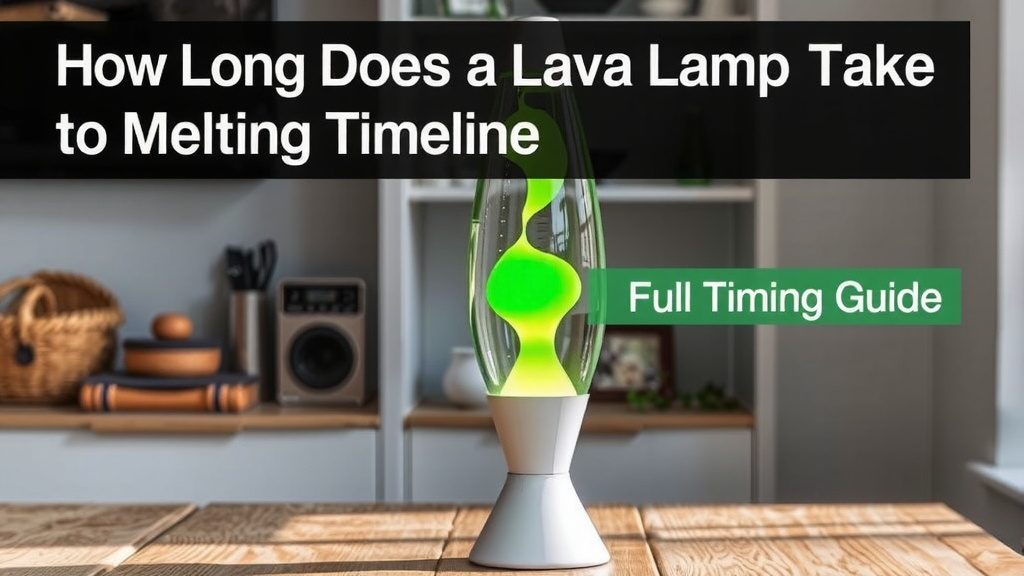
How Long Does a Lava Lamp Take to Melt? Full Timing Guide
A new lava lamp takes 2 to 3 hours to fully melt and start flowing the way you expect. If your lamp has been off for a while, expect the full melt time to land closer to the 3-hour mark. There’s no safe way to rush it without risking damage to the wax or the bulb.
So why does it take so long? The wax needs to heat up slowly and evenly before it can rise and fall in those dreamy blobs we all love. We researched how lava lamps work and found that factors like room temperature, lamp size, and bulb wattage all affect your melting time. Patience really is part of the experience here.
- A brand-new lava lamp usually takes 2 to 3 hours to melt fully.
- Larger lamps and cooler rooms can push melt time past 3 hours.
- Running the lamp longer than 8 to 10 hours at a stretch can damage the wax.
- Never try to speed things up with a hair dryer or a bigger bulb.
- Gentle swirling by hand is safe once the wax is fully melted.
Below, we walk you through exactly how the melting process works, what slows it down, and a few simple tips to keep your lamp flowing smoothly for years. Let’s get into it.
The Melting Timeline for Your Lava Lamp
Most lava lamps need 2 to 3 hours of continuous heat before the wax fully melts and starts moving. A lamp that’s been off overnight can take the full 3 hours. We found that the wax has to warm from room temperature all the way to its softening point, and that process just can’t be hurried.
Think of it like melting butter in a warm pan. The edges soften first, then the middle, then everything becomes one smooth, flowing mass. Your lamp’s wax does the same thing, just much slower.
What the First 3 Hours Actually Look Like
Here’s a rough timeline we put together so you know what to expect:
| Time | What You’ll See |
|---|---|
| 0–30 minutes | Wax sits in a hard mound at the bottom. Nothing happens yet. |
| 30–60 minutes | The wax softens around the edges. Small bubbles may appear. |
| 1–2 hours | Wax starts clumping and lifting slightly off the bottom. |
| 2–3 hours | Full melt. Blobs rise and fall the way they should. |
If your lamp takes longer than this, don’t panic. Some lamps are just naturally slow starters.
Factors That Change Your Melt Time
Not every lamp melts at the same speed. We found that five main factors decide whether you’re watching blobs in 2 hours or closer to 4.
Room Temperature
A cold room slows everything down. If your lamp sits near a drafty window or in a chilly basement, expect extra wait time. Keeping the room around 68–72°F helps a lot.
Bulb Wattage
The bulb is the heart of the whole operation. Most classic lamps use a 25 to 40 watt bulb, and a weaker bulb means slower melting. Using the wattage listed for your specific lamp matters, though. We’ll get to why cranking it up is a bad idea shortly.
Lamp Size and Wax Volume
Bigger lamps hold more wax, and more wax takes longer to heat. A 27-inch lamp will always lag behind a 16-inch classic. There’s no way around the physics here.
How Long the Lamp Has Been Off
A lamp that was running yesterday will warm up faster than one that’s been sitting in a closet since last winter. Cold, fully solid wax is the slowest to get moving.
Why You Should Never Rush the Melt
Here’s the part where we ask you to be patient, even when it’s tempting not to be. The wax inside a lava lamp is a careful blend of waxes and compounds designed to melt at a specific temperature. Push it too hot, and you can permanently ruin the mixture.
What Happens When the Wax Gets Too Hot
Overheated wax can permanently emulsify, meaning the wax and water stop separating cleanly. Instead of crisp blobs, you get a cloudy, murky soup that never flows right again. Many experts say this is the most common cause of a “dead” lava lamp.
Excess heat can also stress the glass. Most guidelines for heat-sensitive glass items warn against sudden temperature swings, and your lava lamp is no exception (Mayo Clinic offers general guidance on heat-related material stress for household items).
Risky Shortcuts to Avoid
- Using a higher-wattage bulb than the lamp calls for.
- Blasting the glass with a hair dryer or heat gun.
- Placing the lamp near a space heater or radiator.
- Putting the base in the oven or microwave (please don’t).
- Shaking the lamp violently to “break up” the wax.
Each of these can damage the wax blend, the glass, or both. A little patience beats buying a new lamp.
Tips to Help Your Lamp Melt Properly
Good news: you can support a faster, smoother melt without any risky tricks. We found that small setup choices make a real difference.
Simple Ways to Speed Things Up (Safely)
- Run the lamp in a warm room, ideally 68–72°F.
- Keep it away from windows, doors, and AC vents.
- Use the exact bulb type and wattage the manufacturer recommends. Our roundup of the best lava lamp bulbs shows which replacements fit classic models.
- Place the lamp on a stable surface where heat rises freely around the glass.
- Turn the lamp on at the same time daily, so warm-up becomes part of your routine.
- Let it run the full 2 to 3 hours before judging whether something’s wrong.
Giving a New Lamp Its First Melt
Brand-new lamps sometimes arrive with the wax fully solid after sitting in a warehouse or delivery truck. Your first run may take the full 3 hours or a bit more. That’s normal. Once that first full melt happens, future warm-ups go smoother.
Also, check that the bulb is seated correctly in its socket. A loose bulb transfers heat poorly and stretches your wait time for no reason.
How Long You Can Leave It On Safely
Here’s the flip side: lava lamps aren’t designed to run all day. Most manufacturers and many experts say 8 to 10 hours maximum per session. Beyond that, the wax can overheat, get cloudy, or lose its shape.
A simple rhythm works well: turn it on in the evening, enjoy it for a few hours, then switch it off before bed. If it hasn’t fully melted by bedtime, just give it more time the next day. Think of it as a slow candle, not a nightlight.
A Quick Safety Checklist Before Every Use
- Bulb wattage matches the manufacturer’s spec.
- Lamp sits on a flat, heat-safe surface.
- Glass is away from curtains, papers, and fabric.
- Room temperature is comfortably warm.
- Cord and socket show no visible damage.
- Lamp stays out of reach of small kids and pets.
Run through that list and you’re set for hours of smooth, soupy, retro goodness.
Troubleshooting a Lamp That Won’t Melt
If your lamp has been running for 3+ hours and the wax still sits there like a stubborn lump, a few usual suspects are worth checking.
Common Causes and Fixes
Check the Bulb First
Swap in a fresh bulb of the correct wattage. Dead or weak bulbs are the number one culprit we found. If the glass near the base feels barely warm, the bulb probably isn’t doing its job.
Check the Room
Move the lamp to a warmer spot and give it another hour. Cold rooms are sneaky melt-killers.
Give It More Time
Sometimes the answer is simply patience. A fully cold lamp in a cool house can legitimately need 4 hours on its first run. As long as the wax is slowly softening, let it keep working.
And remember, once the wax is fully melted, a gentle swirl by hand is perfectly safe to break up any clumps. Just never shake the lamp like a snow globe. Your blobs will thank you.
Conclusion
A lava lamp needs 2 to 3 hours to melt fully, and that slow warm-up is exactly how it should work. We found that room temperature, bulb wattage, lamp size, and how long the lamp sat cold all shape your wait time. The biggest mistake you can make is rushing it with heat tricks that permanently ruin the wax. Instead, set your lamp in a warm spot, use the right bulb, and let it do its thing. Turn it on a few hours before you want to enjoy it, and you’ll never stare at a stubborn wax mound again. Tonight, plug it in early and let patience do the rest.
Frequently Asked Questions
Can I leave my lava lamp on 24/7?
We don’t recommend it. Running a lamp around the clock overheats the wax and can cause permanent clouding. Stick to 8 to 10 hour sessions, then let the lamp cool completely before the next use.
Why is my lava lamp waxy on the bottom after 4 hours?
A cold lamp in a cool room can legitimately take 4 or more hours on its first run. As long as the wax is slowly softening, you’re fine. If it’s rock solid and the glass near the base feels cold, check the bulb.
Does a lava lamp melt faster the second time?
Usually, yes. Once the wax has completed its first full melt, it responds to heat more easily. Future sessions often come in closer to the 2-hour mark, especially in a warm room.
Can I touch or move my lava lamp while it’s melting?
You can move it gently while the wax is solid, but we suggest leaving it alone once it starts softening. Hot, soft wax moves around inside the glass, and jostling can create odd clumps that take hours to settle.
How do I know if my lava lamp wax is damaged?
Damaged wax looks cloudy or milky, forms one solid blob that never separates, or turns into a murky soup with no distinct shapes. If that happens after an overheating incident, the mixture likely can’t be fixed at home. If the wax is truly ruined, our guide to safely dispose of a lava lamp explains the next steps.