Find the Right Light Bulb for Your Lamp
Knowing what bulb your lamp needs is usually as simple as checking the lamp itself. Most lamps have a label near the socket that specifies the maximum wattage and bulb type. If you can’t find a label, you can often use a bulb that fits and has a lower wattage than the socket looks like it could handle. Don’t worry, it’s not as complicated as it might seem!
Your lamp requires a specific type and power of bulb to function safely and effectively. Using the wrong bulb can be a fire hazard or simply won’t work at all. We found that understanding a few key details about your lamp will help you make the right choice every time. It’s about matching the bulb to your lamp’s needs.
- Check the lamp for a label near the socket.
- Look for the maximum wattage and bulb type.
- If no label, start with a lower wattage LED bulb.
- Bulb base type (e.g., E26) is also important.
- Consider bulb shape and size for fixture fit.
Below, we’ll walk you through exactly how to find that information and what to do if it’s missing, so you can get your lamp shining safely again.
Figuring Out Which Light Bulb Your Lamp Needs
Finding the right light bulb for your lamp doesn’t have to be a guessing game. It’s all about matching the bulb’s specifications to what your lamp can safely handle. We found that a little bit of detective work on your lamp can save you a lot of frustration. Let’s get your lamp shining bright again!
Where to Find the Bulb Information
The easiest way to know what bulb your lamp needs is to check the lamp itself. Most manufacturers know you’ll need to replace bulbs eventually. So, they usually leave a little clue for you.
The Socket Label: Your Lamp’s Best Friend
Look closely around the light bulb socket. You’ll often find a small label or sticker. This is your golden ticket to information. It typically tells you the maximum wattage the lamp can support. For example, it might say “Max 60W”. This is super important for safety.
The label might also mention the type of bulb required. This could be something like “Type A” or specify a base type like “E26”. Don’t ignore these details; they are there to help you make the correct choice.
What If There’s No Label?
It happens! Sometimes labels fall off or were never there. In this situation, don’t panic. We found that you can often make an educated guess. The socket itself gives you clues about its size and potential wattage. Many older lamps might have been designed for incandescent bulbs, which generate more heat.
If you can’t find a label, it’s always safest to err on the side of caution. Start with a lower wattage bulb, especially if you’re considering LED bulbs. LED bulbs use much less energy and produce less heat, making them a safer bet in uncertain situations.
Understanding Bulb Specifications
Once you know where to look, you’ll see terms like “wattage,” “base type,” and “bulb shape.” Let’s break down what these mean for your lamp.
Wattage: The Brightness (and Heat) Factor
Wattage is often misunderstood as a measure of brightness. While it correlates, it’s actually a measure of energy consumption. Higher wattage means more energy used and, importantly for lamps, more heat produced. Exceeding the maximum wattage listed on your lamp can cause overheating, which is a fire risk.
If your lamp says “Max 60W,” this means you should not use a bulb that consumes more than 60 watts. This advice was primarily for incandescent bulbs. With modern LED bulbs, you’ll need to adjust your thinking. An LED bulb that produces the same amount of light as a 60W incandescent bulb might only use 8-10 watts.
Base Type: The Part That Screws In
The base type is the part of the bulb that screws into the socket. The most common base type in the US for household lamps is the E26 base. This is often referred to as a “medium” or “standard” base. You might also encounter smaller “candelabra” bases (E12) on decorative lamps or night lights.
You can usually tell the base type by looking at the socket. The E26 is about 1 inch in diameter. If you’re still unsure, taking a picture of the socket with your phone can be helpful when you go to the store.
Bulb Shape: Does It Fit?
Bulb shape is crucial for fitting into your lamp’s shade and fixture. The most common shape for table lamps is the A-shape bulb (A19 is a common size within this shape). This is your classic household bulb shape.
Other shapes include:
- Candelabra (B shape): Often used in chandeliers or decorative sconces.
- Globe (G shape): Round bulbs, often used in vanity lights or pendant fixtures.
- Reflector (R or BR shape): These are directional and have a more industrial look.
LEDs: A Smart Choice for Most Lamps
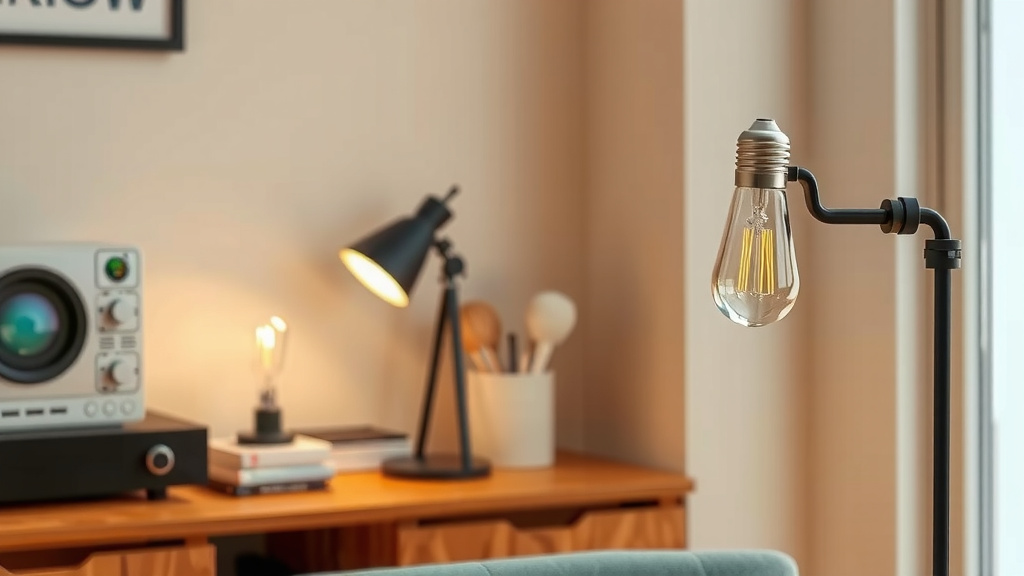
When replacing a bulb, consider switching to LED (Light Emitting Diode) technology. We found that LEDs are incredibly energy-efficient. They use significantly less electricity than traditional incandescent bulbs.
This lower energy use also means much less heat. This is a big advantage, especially for lamps with fabric shades or where space is tight. Many experts say LEDs can last up to 25 times longer than incandescent bulbs (Energy.gov). This means fewer replacements and long-term savings.
Matching LED Wattage to Your Lamp
The key with LEDs is to look at the “lumens” for brightness, not watts. Lumens measure the actual light output. If your old incandescent bulb was 60W, you’d look for an LED bulb around 800 lumens. The packaging will usually show the equivalent incandescent wattage.
For example, a common LED replacement for a 60W incandescent bulb is an LED bulb that uses about 9 watts and provides 800 lumens. Always ensure the LED bulb’s wattage is well below the lamp’s maximum wattage rating, which is easy to do with LEDs due to their low power consumption.
A Quick Checklist for Bulb Shopping
Before you head to the store or shop online, take a moment to review these points:
- Check the Lamp: Look for a label near the socket for wattage and bulb type.
- Identify the Base: Note if it’s a standard E26, candelabra E12, or another type.
- Measure the Space: Ensure the bulb’s shape and size will fit inside the shade.
- Note the Max Wattage: Remember this is a safety limit, especially for older lamps.
- Consider LEDs: Opt for LEDs for energy savings, lower heat, and longer life.
- Check Lumens for Brightness: Match the light output (lumens) to your desired brightness.
By following these simple steps, you’ll be able to confidently pick out the perfect bulb for your lamp. It’s all about safety and getting the light you need!
Conclusion
Finding the right bulb for your lamp doesn’t have to be a mystery. By checking that small label near the socket, you’ll usually find all the information you need about wattage and bulb type. If a label is missing, starting with a lower wattage LED is a smart and safe choice. Remember to consider the base type and bulb shape to ensure a perfect fit within your fixture. Making these simple checks will keep your lamp working safely and beautifully for years to come. Now, go find that perfect bulb and get your lamp shining!
Frequently Asked Questions
What if my lamp’s label is hard to read or faded?
If the label is too faded to read, you can often still make out the base type by looking at the socket itself. For wattage, it’s always safest to start with a lower wattage LED bulb, especially if the lamp seems older. You can usually find equivalent lumen output on the LED packaging to match your desired brightness.
Can I use a higher wattage bulb if my lamp isn’t on for long periods?
We strongly advise against using a bulb with a higher wattage than your lamp specifies. The wattage rating is a safety limit to prevent overheating, regardless of how long the lamp is used. Overheating can damage the lamp and pose a fire risk, so always stay within the recommended wattage.
Do I need to worry about the bulb shape if it screws in?
Yes, absolutely. While the base type ensures the bulb screws into the socket, the bulb’s shape is crucial for fitting inside your lamp’s shade. Some shades have very tight openings, and a bulb that’s too wide or too long simply won’t fit, even if the base is correct.
How do I know if an LED bulb is bright enough for my lamp?
Look for the “lumens” on the LED bulb’s packaging. This number tells you the actual brightness of the light. Compare this to the lumens of an old incandescent bulb you liked, or check the packaging; it often lists the equivalent incandescent wattage for easy comparison.
What happens if I accidentally use the wrong base type?
You generally can’t force a bulb with the wrong base type into a socket. The threads won’t match up. Trying to force it could damage the socket or the bulb, and it certainly won’t light up. Always ensure the base type on the bulb matches the socket in your lamp.


![10 Best Adjustable Desk Lamp [2026]](https://bestdesklamp.com/wp-content/uploads/2026/09/10-best-adjustable-desk-lamp-2026-featured-768x432.jpg)