Ceramic Heat Bulb vs Heat Lamp: Differences
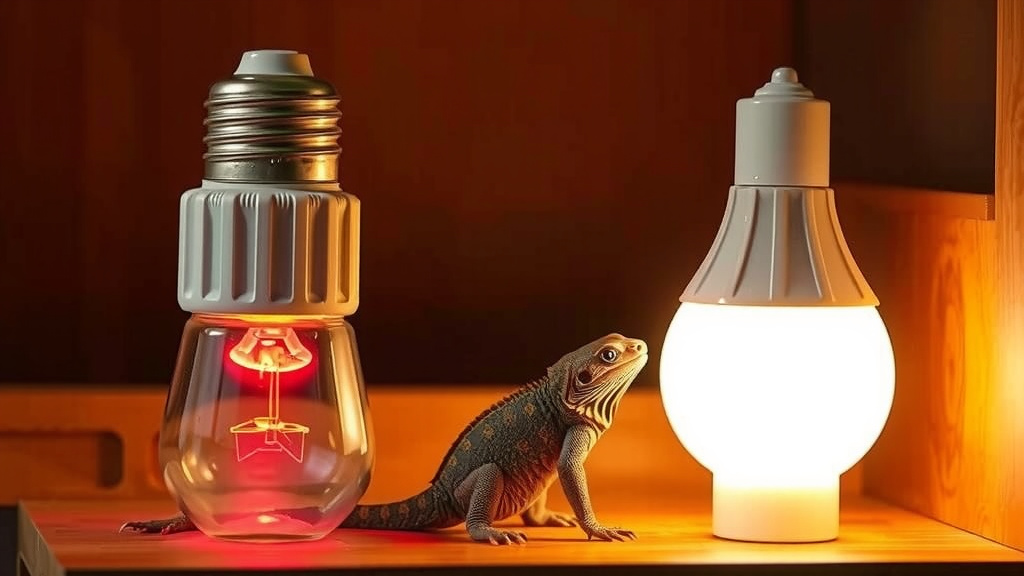
When it comes to heating your terrarium, both ceramic heat bulbs and heat lamps provide warmth, but they do it differently. A ceramic heat emitter produces heat without light, making it ideal for nighttime use, while a heat lamp often emits light along with heat. We found that understanding this key difference is crucial for maintaining the right environment for your pets.
Choosing between them often depends on your pet’s specific needs and your setup. Ceramic heat emitters are known for their long lifespan and consistent warmth, whereas some heat lamps might need more frequent replacement. Many reptile keepers prefer ceramic emitters for their 24/7 heat capabilities without disrupting their pet’s sleep cycle.
- Ceramic heat emitters give off heat only, no light.
- Heat lamps usually give off heat and light.
- Ceramic emitters are great for nighttime heat.
- Heat lamps are often used for daytime heating and basking.
- Both have different lifespans and energy uses.
Let’s dive into the specifics of each to help you make the best choice for your scaly friends.
Understanding Ceramic Heat Emitters vs. Heat Lamps for Your Reptiles
When choosing the right heat source for your pet’s habitat, it’s easy to get confused. You want the best for your reptile, and that means getting the temperature just right. We’ve looked at the options, and the main difference boils down to light. Do you need heat with light, or just heat? Let’s break down how ceramic heat emitters and traditional heat lamps work and why that matters for your pet’s well-being.
How Ceramic Heat Emitters Work: Heat Without the Glare
Think of a ceramic heat emitter as a tiny furnace. It’s designed to convert electricity into heat energy. It does this through a special ceramic element inside. This element gets very hot when electricity passes through it. The heat then radiates outwards into the enclosure. We found that this process is quite efficient at raising the ambient temperature.
The key feature here is that it produces absolutely no visible light. This is a huge advantage for many nocturnal or crepuscular reptiles. These animals are naturally active at dawn, dusk, or during the night. Providing heat without light means you won’t disrupt their natural day-night cycle. This can lead to happier, healthier pets.
The Benefits of No Light
For many reptile keepers, this is the main reason they choose ceramic emitters. Animals like snakes, geckos, and many amphibians rely on darkness to feel secure. A bright light at night can stress them out. It can interfere with their feeding habits and sleep patterns. We found that consistent, light-free heat can lead to better behavior and overall health.
Many keepers use these emitters exclusively for nighttime heating. This ensures their pet stays warm after the basking lamps turn off. It’s like a cozy, dark blanket of heat. This mimicry of natural temperature drops and rises is important. It helps regulate their internal body clocks effectively.
Lifespan and Durability
Ceramic heat emitters are built to last. They are typically made from durable ceramic materials. This means they can withstand high temperatures without degrading quickly. We found that they often last much longer than standard incandescent bulbs. Many users report them lasting for several years with regular use.
This long lifespan can save you money over time. You won’t have to replace them as often. This is a relief, especially when you have multiple enclosures to manage. The robust construction means they are less likely to break if accidentally bumped.
How Traditional Heat Lamps Work: Heat and Light Combined
A traditional heat lamp, often an incandescent bulb, works differently. It produces heat by heating a filament inside a glass bulb. As the filament gets hot, it emits infrared radiation. This radiation transfers heat to the surrounding environment. Many standard heat lamps also emit a visible light spectrum.
This combined heat and light output makes them useful for specific purposes. They are great for providing both warmth and a basking spot during the day. Many diurnal reptiles, like bearded dragons, need a bright light source. This light helps with their Vitamin D3 synthesis and calcium absorption. We found that a good heat lamp can effectively create a basking zone.
Daytime Basking and Heat
For many species, a heat lamp is perfect for daytime use. It provides the necessary heat for basking. This allows your pet to regulate their body temperature by moving between warmer and cooler areas. You can position it over a specific spot in the enclosure to create a defined basking area. This mimics natural sunlight exposure.
The visible light also contributes to the animal’s environment. For some species, it can help regulate their circadian rhythms. It signals to them that it’s daytime and time to be active. We found that careful placement is key to creating a proper thermal gradient with these lamps.
Lifespan and Replacement Needs
Compared to ceramic emitters, traditional heat lamps generally have a shorter lifespan. The filament can burn out over time. This means you’ll likely need to replace them more frequently. The exact lifespan can vary depending on the bulb’s quality and how often it’s used.
This can become a recurring cost. It also means you need to keep spares on hand. If a bulb burns out unexpectedly, especially at night, it could be an issue for your pet’s health. We found that monitoring the heat lamp’s output over time is important. Their heat intensity can decrease as they age.
Key Differences at a Glance
Let’s put it all together. Understanding these differences will help you pick the right tool for the job. It’s not about which is “better,” but which is better for your specific pet and setup.
| Feature | Ceramic Heat Emitter | Traditional Heat Lamp |
|---|---|---|
| Light Output | None (heat only) | Visible light and heat |
| Best Use | Nighttime heat, ambient warming | Daytime basking, primary heat source |
| Lifespan | Long (years) | Shorter (months to a year) |
| Primary Function | Heating | Heating & Lighting |
| Impact on Sleep Cycle | Minimal to none | Can disrupt if used at night |
Wattage and Heat Output Considerations
Both types of heaters come in various wattages. The wattage determines how much heat they produce. Choosing the right wattage is critical for maintaining the correct temperature in your enclosure. This depends on the size of the terrarium, the ambient room temperature, and the specific needs of your pet.
For instance, a small gecko tank might only need a 25W or 50W bulb. A large snake enclosure might require a 100W or even 150W emitter or lamp. It’s always best to start with a lower wattage and measure the temperature. You can then increase the wattage if needed. We found that using a reliable thermometer is absolutely essential.
Controlling the Temperature
Regardless of the type of heater you choose, temperature control is key. You’ll need a good thermostat or rheostat to regulate the output. This prevents overheating, which can be dangerous for your pet. A thermostat allows you to set a specific temperature range.
For ceramic emitters, a thermostat is highly recommended. It ensures consistent heat output. For heat lamps, a dimmer or thermostat helps control basking spot temperatures. Many experts advise using a rheostat for heat lamps to gradually adjust output. This helps prolong bulb life too.
Making the Right Choice for Your Pet
So, how do you decide? Consider your reptile’s natural behavior and needs. Do they need a bright basking spot during the day? A traditional heat lamp might be your go-to. Are you looking for consistent heat throughout the night without disturbing your pet? A ceramic heat emitter is likely your best bet.
Many keepers use a combination of both. A heat lamp provides daytime warmth and basking light. Then, a ceramic emitter takes over for nighttime heat. This creates a stable environment that mimics natural conditions as closely as possible. We found this dual approach offers the best of both worlds for many species.
Here’s a quick checklist to help you decide:
- Identify your pet’s natural activity cycle (diurnal, nocturnal).
- Determine if your pet needs visible light for basking or Vitamin D synthesis.
- Consider the size of your enclosure.
- Think about whether you need nighttime heat without light.
- Factor in the lifespan and replacement cost of each type of heater.
- Always plan for temperature control with a thermostat or rheostat.
Conclusion
You’ve learned that the main difference between ceramic heat emitters and traditional heat lamps is light output. Ceramic emitters provide heat without any light, making them perfect for nighttime or for nocturnal pets. Traditional heat lamps offer both heat and light, ideal for daytime basking and supporting Vitamin D3 synthesis. We found that choosing the right one depends entirely on your pet’s specific needs and their natural cycles. Consider using both to create a stable, naturalistic environment for your reptile, mimicking day and night temperature fluctuations. Always use a thermostat for precise temperature control, ensuring your pet’s comfort and safety.
Frequently Asked Questions
Can I use a ceramic heat emitter during the day?
Yes, you can use a ceramic heat emitter during the day. It will provide ambient heat without any light. This is useful if your pet doesn’t require a bright basking spot, or if you want to supplement daytime heat without adding extra light.
How do I know which wattage to choose?
You’ll need to consider the size of your enclosure and your pet’s specific temperature requirements. We recommend starting with a lower wattage and using a reliable thermometer to check the temperatures. You can then increase the wattage if necessary to achieve the correct heat gradient.
Will a ceramic heat emitter disrupt my pet’s sleep?
No, that’s one of its main advantages! Ceramic heat emitters produce heat but no visible light. This means they won’t disrupt your pet’s natural day-night cycle, making them excellent for nighttime heating.
How often do I need to replace a heat lamp compared to a ceramic emitter?
Traditional heat lamps generally have a shorter lifespan and will need replacement more frequently, often within months to a year. Ceramic heat emitters are much more durable and can last for several years with regular use.
Can I use a dimmer with a ceramic heat emitter?
While you can use a dimmer (rheostat) with a ceramic heat emitter, a thermostat is generally the preferred method for precise temperature control. A thermostat will turn the emitter on and off to maintain a specific temperature, whereas a dimmer just reduces the overall output.
![10 Best Arc Floor Lamps [2026]](https://bestdesklamp.com/wp-content/uploads/2026/09/10-best-arc-floor-lamps-2026-featured-768x432.jpg)