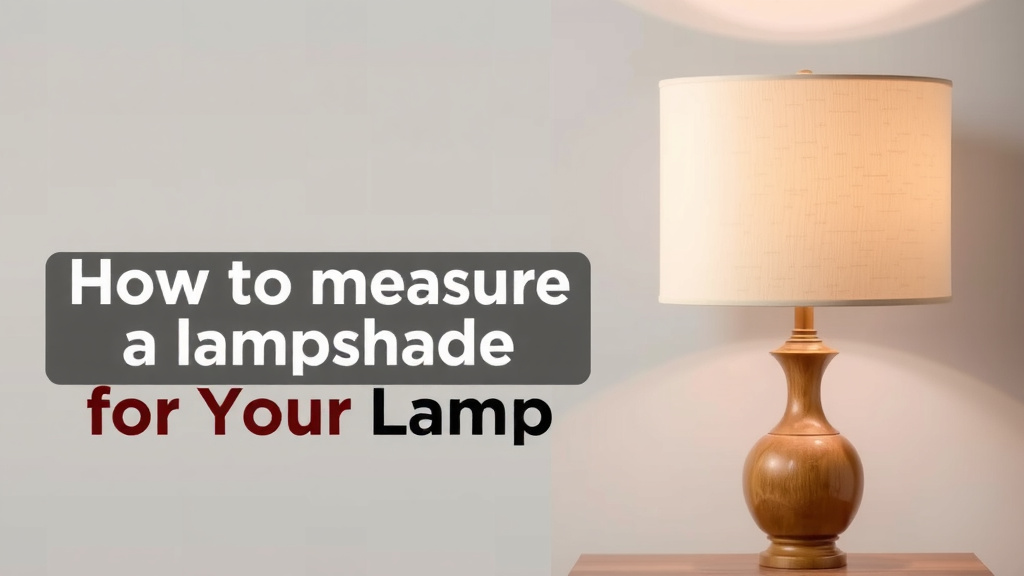
How to Measure a Lampshade for Your Lamp
Measuring a lampshade for your lamp is simpler than you might think! You’ll primarily need to measure the Measuring a lampshade for your lamp is simpler than you might think! Our guide on how to measure a lampshade can help.shade’s top diameter, bottom diameter, and vertical height. Getting these measurements right ensures your new shade will fit perfectly and look balanced with your lamp base. Many people overlook the height, but it’s key for proper light distribution.
Getting the right shade size is more than just aesthetics. A correctly sized lampshade can enhance the lamp’s function and prevent glare. We’ve researched that the bottom diameter should generally be about twice the width of the lamp base. The shade’s height should be roughly 70-75% of the height of the lamp base itself. It’s all about creating a pleasing visual harmony.
- Measure top diameter, bottom diameter, and vertical height.
- Bottom diameter should be about twice the lamp base width.
- Shade height should be around 70-75% of the lamp base height.
- Proper sizing improves light and appearance.
Ready to find the perfect fit? Let’s walk through exactly how to take these measurements step by step.
Figuring Out Your Lampshade Size Needs
Getting the right lampshade size is easier when you know what measurements to take. You’re essentially looking for a shade that complements your lamp base. We found that most lampshade sizes are determined by three key measurements. These ensure a shade looks balanced and functions well.
The Three Essential Measurements Explained
Let’s break down the critical numbers you’ll need. These are the top diameter, bottom diameter, and the vertical height of the shade. Don’t worry; you won’t need any fancy tools for this. A simple tape measure will do the trick!
Measuring the Top Diameter
First, find the diameter of the shade’s top opening. Imagine looking down into the shade. Measure straight across the widest part of that opening. If your shade isn’t perfectly round, measure across the longest distance.
Measuring the Bottom Diameter
Next, you’ll measure the width of the shade’s bottom opening. This is usually the widest part of the shade. Again, measure straight across the widest point. This measurement is often larger than the top diameter, giving the shade its characteristic shape.
Measuring the Vertical Height
Finally, determine the vertical height of the lampshade. You’ll measure from the very top edge of the shade straight down to the bottom edge. Make sure you’re measuring along the side of the shade, not across it. This number is crucial for proportion.
Making Sure Your New Shade Fits Like a Glove
So, you’ve got your measurements. Now, how do they translate to finding the perfect new shade? It’s all about proportion and a little bit of common sense. Many experts suggest a few guidelines to help you get it right.
Balancing Shade Width with Your Lamp Base
A good rule of thumb for the bottom diameter is to match it to your lamp base. We found that the bottom of the shade should generally be about twice the width of your lamp’s base. This creates a visually stable look. For example, if your lamp base is 6 inches wide, aim for a shade with a bottom diameter of around 12 inches.
Getting the Shade Height Just Right
The height of the shade also plays a big role. Many designers recommend that the shade’s height should be roughly 70-75% of the height of your lamp base. This calculation helps prevent the shade from looking too tall or too short. It ensures proper light diffusion and an appealing silhouette.
Let’s visualize this. If your lamp base stands 18 inches tall, you’d look for a shade that’s about 12.5 to 13.5 inches in height. This ratio helps maintain a pleasing balance. It’s more than just fitting; it’s about creating harmony.
Considering the Shade’s Angle and Fit
Beyond just size, think about how the shade attaches to the lamp. Most lamps use a Most lamps use a harp and finial system. Our guide can help you find the right lamp harp size.harp and finial system. The harp is the U-shaped wire that sits over the bulb. The finial screws onto the top of the harp to secure the shade. Make sure the shade’s top opening and the way it sits on the harp are compatible.
How the Shade Sits on the Harp
The spider fitter is a common type of shade attachment. It has a center ring that rests on top of the harp. When measuring, ensure the shade’s top diameter measurement you took accommodates this spider fitter. Some shades have a larger top opening to allow the harp to fit inside.
Checking Clearance and Bulb Coverage
You want your shade to cover the light bulb effectively. This prevents glare and directs light where you need it. Make sure there’s enough clearance between the bulb and the shade’s interior. Also, check that the shade’s bottom edge extends beyond the bulb. This helps to reduce harsh shadows on your tabletop.
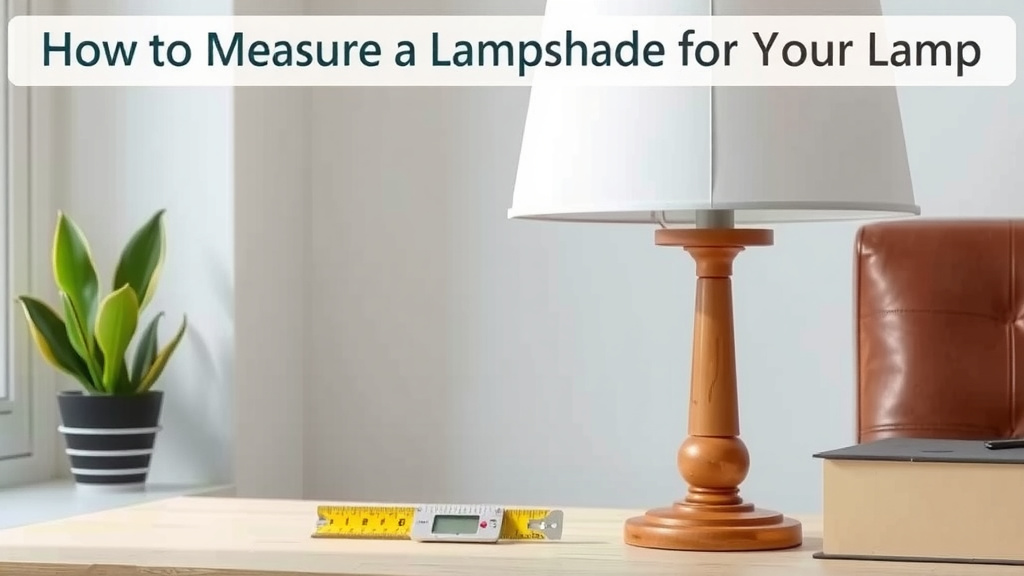
Quick Checklist for Your Lampshade Measurement Adventure
Ready to go find that perfect shade? Keep this quick checklist handy. It summarizes the key steps to ensure you get the right fit every time.
- Measure the top diameter of the existing shade.
- Measure the bottom diameter of the existing shade.
- Measure the vertical height of the existing shade.
- Compare your shade’s bottom diameter to your lamp base width (aim for 2x).
- Ensure the shade’s height is about 70-75% of your lamp base height.
- Check that the shade’s fitting (spider, uno, etc.) matches your lamp’s harp.
Conclusion
You’ve got this! Measuring your lampshade is all about a few key dimensions: top diameter, bottom diameter, and vertical height. By comparing these to your lamp base, you ensure a perfect visual balance and functional lighting. We’ve found that a shade’s bottom diameter should ideally be twice the lamp base width, and its height should be about 70-75% of the base height. Armed with these simple measurements and guidelines, you’re ready to confidently select a new shade that will make your lamp shine. Go ahead and give your lamp the stylish upgrade it deserves!
Frequently Asked Questions
What if my lampshade isn’t a perfect circle?
If your lampshade is oval or another shape, measure the widest points for both the top and bottom diameters. For the vertical height, measure straight down the side from the top edge to the bottom edge. This ensures you capture the largest dimensions for a good fit.
Do I need to measure the shade’s slant height?
No, you don’t need the slant height. The vertical height, measured straight down the side, is what’s important for determining proportion and how the shade will sit on your lamp. The top and bottom diameters are also measured straight across their widest points.
Can I use my old shade to get the measurements?
Yes, if you have an existing shade that fits well, use it to get your measurements! Measure the top diameter, bottom diameter, and vertical height of that shade. These measurements will give you a great starting point for finding a replacement that will fit just as well.
What’s the difference between a spider and an uno fitter?
A spider fitter has a ring that sits on top of the lamp’s harp, and the finial screws on top to secure the shade. An uno fitter has a threaded ring that screws directly onto the bulb socket, common on floor lamps. Ensure your new shade’s fitter type matches your lamp.
How do I measure my lamp base width?
To measure your lamp base width, find the widest point of the base itself. Measure straight across from one side to the other at its broadest part. This measurement is key for determining the ideal bottom diameter of your new lampshade for proper proportion.


![10 Best Affordable Nail Lamp [2026]](https://bestdesklamp.com/wp-content/uploads/2026/09/10-best-affordable-nail-lamp-2026-featured-768x432.jpg)