How Long Should a Lava Lamp Take to Heat Up? Full Guide
A typical lava lamp takes one to three hours to fully heat up and start flowing properly. If yours still looks flat after an hour, don’t panic — that’s completely normal. How long should a lava lamp take to heat up depends mostly on its size, with larger lamps needing more time.
We researched what lamp makers and long-time owners say, and we found a few patterns. Room temperature matters a lot, and so does the bulb wattage. A cold basement and a tiny 25-watt bulb can easily double your wait time.
So what’s the quick version? Here it is:
- Most lava lamps need 1 to 3 hours to heat up fully.
- Smaller lamps warm up faster than large ones.
- Never shake or stir the wax to speed things up — it ruins the flow.
- Keep the lamp away from drafts, AC vents, and cold windows.
- If it takes over 4 hours, your bulb may be too weak or worn out. If that happens, our lava lamp troubleshooting guide covers every common fix.
Below, we walk through exactly how this works — why the wait happens, what speeds it up, and when you should actually worry. Let’s get your lava moving.
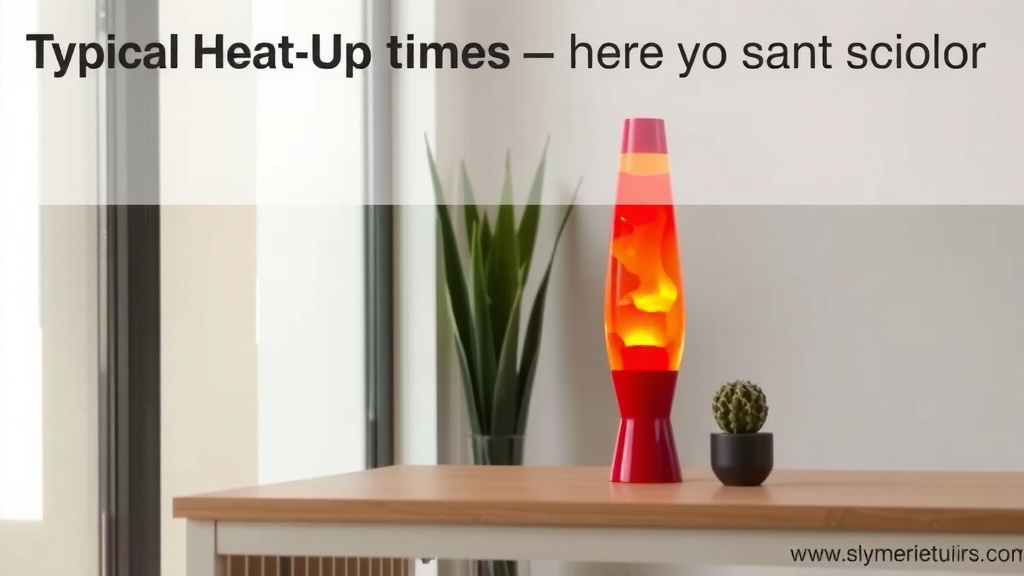
Typical Heat-Up Times by Lamp Size
Right after the H2 answer, here’s the nitty-gritty. Most classic 16.3-inch lava lamps need the full two to three hours. Smaller models, like the 14.5-inch or 11.5-inch versions, can start moving in as little as 45 minutes.
We found that Mathmos, the original lava lamp maker, recommends letting the lamp run for a few hours on first use. So if your brand-new lamp seems stubborn, it’s just breaking in — like a new pair of jeans.
Here’s a quick breakdown so you know what to expect:
| Lamp Size | Typical Heat-Up Time | Notes |
|---|---|---|
| 11.5 inches | 45 min – 1.5 hours | Warms up fastest |
| 14.5 inches | 1 – 2 hours | Good middle ground |
| 16.3 inches (classic) | 2 – 3 hours | Slowest but smoothest flow |
| 27 inches (Colossus) | 3 – 4+ hours | Be patient with this giant |
Why Does the Wax Take So Long to Start Moving?
The wax and the liquid need to reach similar temperatures before anything happens. Think of it like melting butter in a cool pan — nothing moves until the heat spreads evenly.
The wax inside your lamp has a melting point that’s higher than room temperature. The bulb heats the wax from the bottom, and that warm blob slowly rises. Once it cools near the top, it sinks back down. That cycle is the lava dance you’re waiting for.
The Physics in Plain English
It’s all about density. Cold wax is denser than the surrounding liquid, so it sits at the bottom. As it warms, it expands and becomes lighter than the liquid, so it floats up. Then it cools, gets heavier, and sinks again.
Many experts say this back-and-forth can’t happen until the whole lamp is warm — not just the bottom. That’s why the first hour often looks like nothing is happening. It is. You just can’t see it yet.
Room Temperature Plays a Bigger Role Than You Think
A lava lamp in a 68°F room warms up much faster than one in a 58°F basement. Cold air pulls heat away from the glass constantly, like wind stealing warmth from your face in winter.
If your lamp lives near a window, an AC vent, or a drafty door, move it. We found that even a small draft can add an hour to the wait.
Does Bulb Wattage Change the Heat-Up Time?
Yes, and it’s a big factor. Most classic lava lamps use a 40-watt or 25-watt bulb. The 40-watt bulb heats the wax noticeably faster, while the 25-watt bulb takes its sweet time.
Using the wrong bulb causes two problems:
- Too weak, and the wax never fully melts — it just sits there in a lump.
- Too strong, and the wax gets cloudy or the lamp gets dangerously hot.
Always match the wattage listed on your lamp’s base. Lava Brand and Mathmos both stress this in their care guides, and honestly, it’s the number one fix we’d suggest.
How to Check Your Bulb (It Takes Two Minutes)
Unplug the lamp and let it cool. Unscrew the base, and look at the bulb’s printed wattage. If it’s faded or you’re unsure, compare it to your lamp’s manual or the label on the cord.
Old bulbs also dim over time. If yours has been running daily for a couple of years, a fresh bulb can cut your heat-up time dramatically.
How to Help Your Lava Lamp Warm Up Faster (Safely)
You can’t rush physics, but you can remove the obstacles. Here’s our short checklist:
- Place the lamp in a warm room — somewhere between 68 and 72°F.
- Keep it away from AC vents, fans, and windows.
- Use the correct bulb wattage every time.
- Turn it on before you need it — start it two hours before movie night.
- Wipe dust off the glass so heat transfers better.
- Give a new lamp extra time on its first run.
Notice what’s not on that list? Shaking, stirring, or microwaving. Please don’t. We found many owner forums full of sad stories about cloudy, separated wax from quick-fix attempts.
What NOT to Do When You’re Impatient
Never tilt the lamp while the bulb is on. The glass gets hot, and tilting can make the wax touch the bulb housing. That can scorch the wax permanently.
Also skip the hair dryer trick. Direct heat on one spot can crack the glass or overheat the wax in that area. Patience is cheaper than a new lamp — and less messy.
When a Slow Lamp Signals a Real Problem
So when should you actually worry? If your lamp runs for over four hours and the wax still hasn’t budged, something’s off. But before you assume the worst, work through the likely causes.
- Weak or dead bulb — the most common culprit by far.
- Room too cold — try moving the lamp somewhere warmer.
- Wrong liquid level — some lamps let you top up with distilled water.
- Old, degraded wax — happens after years of heavy use.
If the wax is cloudy, separated, or permanently stuck in one shape, the wax itself may be ruined. At that point, a replacement lamp or a wax kit is usually the practical fix.
The Overheating Warning Nobody Mentions
Here’s the flip side: running your lamp constantly can cause problems too. Manufacturers generally suggest limiting sessions to 8 to 10 hours at a time. Beyond that, the wax can overheat, lose its flow, or cloud up.
Many experts say to let the lamp cool completely between uses. Think of it as a marathon runner — it needs rest breaks to perform its best. A lamp that runs 24/7 will age fast, and not in a charming way.
Is It Normal for the Wax to Clump at First?
Totally normal, especially on a brand-new lamp. During the first few runs, the wax often forms one big lazy blob or a few stubborn columns. Give it several full heat cycles before judging it.
We found that many owners report their lamps looking “broken” for the first two or three uses, then settling into a gorgeous flow. Lava lamps are like sourdough starters — they need time to find their rhythm.
One last tip: once your lamp is flowing nicely, resist the urge to move it. Letting it rest undisturbed between sessions keeps the wax emulsion stable for years. Your patience now pays off every time you flip the switch later.
Conclusion
So, how long should a lava lamp take to heat up? For most lamps, the honest answer is one to three hours — and that slow start is by design, not a defect. The biggest factors you control are bulb wattage, room temperature, and where the lamp sits. Avoid drafts, match the wattage on the base, and resist every urge to shake or stir the wax. If your lamp still won’t move after four hours, check the bulb first; we found it’s the culprit more often than anything else. Your next step is simple: plug your lamp in now, place it in a warm spot, and give it the time it deserves.
Frequently Asked Questions
Can I leave my lava lamp on overnight?
We don’t recommend it. Most manufacturers suggest limiting runs to 8 to 10 hours so the wax doesn’t overheat or cloud up. Turn it off, let it cool fully, and start fresh next time.
Why is my lava lamp wax sitting in a hard lump at the bottom?
That usually means the wax hasn’t reached its melting point yet. Check that you’re using the correct bulb wattage and that the room isn’t too cold. If the lump persists after several hours with a proper bulb, the wax may be old or degraded.
Does a new lava lamp take longer to heat up?
Yes, often it does. A fresh lamp needs a few full heat cycles to break in, and the wax may clump or act stubborn at first. Give it two or three sessions before judging how it performs.
Can I use a higher wattage bulb to heat my lava lamp faster?
Please don’t. A stronger bulb than your lamp specifies can overheat the wax, cloud the liquid, or make the glass dangerously hot. Stick with the wattage printed on the base — that’s the safe and reliable choice.
Should I turn my lava lamp off between uses?
Yes. Letting the lamp cool completely between sessions keeps the wax emulsion stable and extends its life. A lamp that runs nonstop ages quickly and loses its signature flow.