How Long Should a Himalayan Salt Lamp Be On? Safe Use Guide
You can keep your Himalayan salt lamp on as long as you want — most people run theirs for 8 to 12 hours a day with no issues. The real thing to watch isn’t how long it’s on, but whether the bulb gets too hot or the lamp stays dry. If it feels warm to the touch and looks fine, you’re doing it right.
Here’s the thing: salt lamps are meant to be used regularly, not switched on once a month. In fact, running your lamp often keeps it dry and stops it from “crying” or sweating salt onto your table. We researched what lamp makers and experts say, and the consensus is simple — common sense wins over any strict timer.
- There’s no official limit on how long a salt lamp can stay on.
- Most owners run theirs 8–12 hours daily, and some leave them on around the clock.
- Regular use actually helps prevent moisture buildup and sweating.
- Check the lamp feels warm, not hot, and keep it away from humid rooms.
- Turn it off when you leave home for long periods, just to be safe.
Below, we break down everything you need to know about how long your salt lamp should stay on, plus a few safety tips that’ll help it last for years.
How Long to Leave Your Salt Lamp On Each Day
Run your salt lamp for 8 to 12 hours a day and you’re in the sweet spot. That’s long enough to enjoy the glow and keep the salt dry, without pushing the bulb or cord for no reason.
Some owners leave lamps on 24/7 and never have a problem. Others switch theirs off at bedtime. We found that both approaches work — the lamp doesn’t care, as long as the bulb stays cool enough and the room isn’t humid.
Is It Safe to Keep a Salt Lamp On All the Time?
Yes, if the lamp is well-made and the bulb is the right wattage. Most safety concerns come from cheap lamps with flimsy dimmer switches or oversized bulbs. Many fire-safety experts, including the team at the Electrical Safety Foundation International, warn that any small appliance with a cheap dimmer can overheat — salt lamps are no exception.
Still, “safe” doesn’t mean “zero risk.” Treat your lamp like a nightlight, not a space heater. If it’s hot to the touch, that’s your cue to unplug it.
When You Should Definitely Turn It Off
- When you leave the house for more than a few hours.
- When you go to sleep and no one’s awake to notice a problem.
- When the bulb or switch feels hot, not just warm.
- When you notice frayed cords or a loose dimmer knob.
- When humidity spikes, like during a hot shower or a rainy week.
Think of it this way: you’d unplug a curling iron before heading out. A salt lamp deserves the same basic respect.
Why Running Your Lamp Often Actually Helps
Salt pulls moisture from the air. When a lamp sits unused, that moisture builds up and the lamp starts to sweat or “cry.” Regular use keeps the bulb warm, which dries the salt out and stops the puddles.
We found this confirmed across nearly every manufacturer’s care guide: a working lamp is a dry lamp. So if yours has been leaking water onto your nightstand, the fix isn’t less use — it’s more.
What Happens If It Sweats Too Much
A sweating lamp isn’t just messy. Wet salt can corrode the metal base, rust the bulb socket, and slowly damage the cord. Left long enough, that’s a real fire hazard.
If your lamp is damp right now, unplug it, pat it dry with a towel, and let it run for a few hours to fully dry out.
How Room Humidity Changes the Game
Humidity is the biggest factor in how long your lamp can safely stay on. Salt starts pulling serious moisture from the air at around 60% humidity and above, according to research on salt’s hygroscopic behavior published through the National Center for Biotechnology Information.
Living in Florida or coastal Texas? Your lamp will sweat more than one in dry Arizona air. That doesn’t mean you can’t own one — it just means you’ll want to run it more often and wipe it down more regularly.
| Room Type | Humidity Level | Safe to Run? |
|---|---|---|
| Living room or bedroom | 30–50% | Yes, all day |
| Kitchen | 50–70% | Yes, with check-ins |
| Bathroom | 70%+ | Skip it — too damp |
| Basement (unsealed) | 60%+ | Risky, monitor closely |
Should You Use a Dehumidifier Nearby?
If your home runs humid, a small dehumidifier can make life easier for both you and your lamp. The EPA recommends keeping indoor humidity between 30% and 50% for comfort and mold control — your lamp will thank you too.
Choosing the Right Bulb Matters More Than Hours
Here’s something most guides gloss over: the bulb decides how safe long runtimes are. A salt lamp should use a low-wattage incandescent bulb, usually 15 to 25 watts. The gentle heat is what keeps the salt dry.
We found that LED bulbs, while energy-efficient, don’t produce enough heat. That means a lamp with an LED can sweat even while it’s switched on — a bit like wearing a raincoat that leaks.
Signs Your Bulb Is Too Strong
- The salt directly around the bulb feels hot, not warm.
- You can smell a faint burning or plastic odor.
- The dimmer switch gets warm during normal use.
- The lamp glows painfully bright, more like a flashlight than a glow.
Swap in a lower-wattage bulb and the problem usually disappears.
Your Quick Daily Salt Lamp Checklist
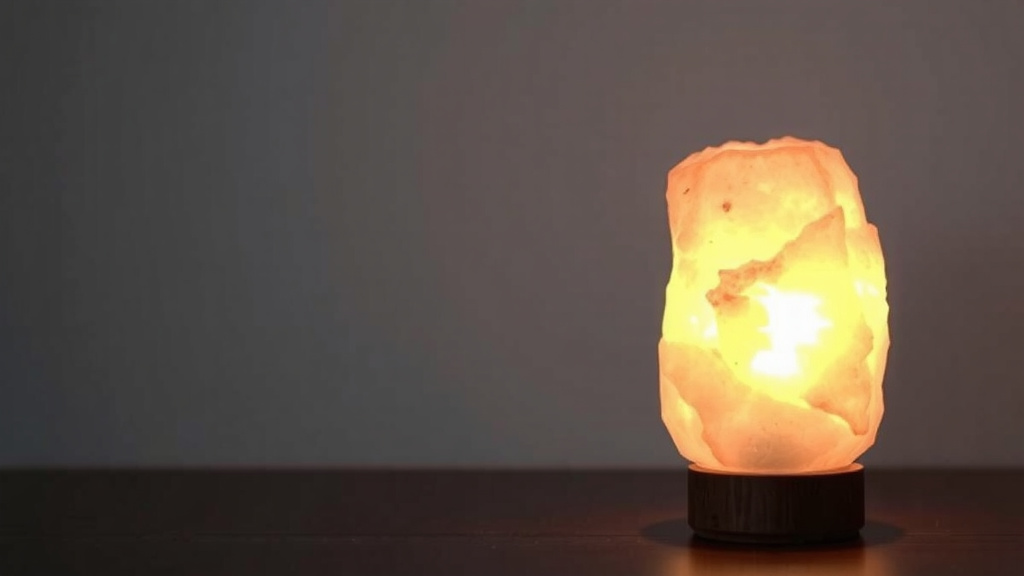
- Feel the lamp: warm is good, hot is not.
- Check the base: dry and clean, no salt crust.
- Look at the cord: no fraying or kinks.
- Test the dimmer: smooth clicks, no flickering.
- Wipe it down: once a week with a barely damp cloth.
- Unplug when out: err on the side of caution.
Do Salt Lamps Use a Lot of Electricity if Left On?
Barely. A 15-watt bulb running 12 hours a day uses about 0.18 kWh daily — that’s roughly two to three cents a day at typical U.S. rates, based on Department of Energy data. Leaving it on 24/7 still costs less than a dollar a week.
So no, you don’t need to feel guilty about that cozy glow. It’s one of the cheapest ambient lights you can run.
The Bottom Line on Runtime
Your salt lamp isn’t fragile, and it isn’t picky. Give it a quality bulb, a dry room, and a quick weekly check, and it can glow for 8, 12, or even 24 hours a day. Trust your hands — if it feels fine, it probably is.
Conclusion
Your salt lamp isn’t a gadget that demands a strict schedule — it’s a low-maintenance glow you can enjoy on your terms. We found the sweet spot is 8 to 12 hours a day, though 24/7 is fine if the bulb is low-wattage and the room stays dry. The habits that matter most are simple: keep the lamp warm, not hot, wipe it down weekly, and unplug it when you head out. Do that, and your lamp should last for years without sweating, corroding, or giving you any trouble. Your next step? Feel your lamp right now. If it’s just warm and dry, you’re already doing everything right.
Frequently Asked Questions
Can I leave my salt lamp on overnight while I sleep?
You can, but we’d only recommend it if your lamp is well-made and the bulb feels warm rather than hot. Many people use theirs as a nightlight without issue. If you want extra peace of mind, plug it into a smart plug with a timer so it shuts off partway through the night.
How long do Himalayan salt lamps last?
The salt block itself can last indefinitely — salt doesn’t expire or wear down with normal use. What wears out first is the bulb, cord, and dimmer switch, which are cheap and easy to replace. With occasional part swaps, your lamp can glow for decades.
Why is my salt lamp turning white or losing color?
That usually means moisture has been sitting on the surface too long, or the lamp has been running with the wrong bulb. Wipe it down, let it dry fully, and make sure you’re using a 15 to 25-watt incandescent bulb. The gentle heat from that bulb helps restore and maintain its natural pink glow.
Do salt lamps really clean the air?
Honestly, the evidence is thin. We found that salt does attract moisture, and some particles may stick to it, but there’s no solid research showing a lamp meaningfully purifies your air. Think of it as a beautiful, calming light first — any air benefits are a bonus at best.
Can I put my salt lamp on a timer?
Yes, and it’s actually a smart move. A simple outlet timer or smart plug lets you run the lamp 8–12 hours a day without remembering to switch it off. Just make sure the timer is rated for your lamp’s wattage, which is minimal for most salt lamps.