How Many Amps Does a 250W Heat Lamp Use? Simple Guide
A 250W heat lamp uses about 2.1 amps on a standard 120-volt US household circuit. The math is simple: you divide the wattage by the voltage, so 250 watts ÷ 120 volts = roughly 2.08 amps. That means a 250w heat lamp is one of the lighter loads in your home, well under the 15-amp limit of a typical circuit.
Why does this matter? If you’re setting up a heat lamp for chicks, reptiles, or a bathroom, you need to know how much room is left on your circuit. We researched common setups and found that most people can safely run several 250W lamps on one circuit. But add a space heater or a hair dryer to the same line, and things get tight fast.
- A 250W heat lamp draws about 2.1 amps at 120 volts.
- The formula is easy: amps = watts ÷ volts.
- On a 15-amp circuit, you can run around 5 to 6 heat lamps safely.
- Always leave some headroom, about 20%, to avoid tripped breakers.
- Higher-wattage bulbs or 240V setups will change the numbers.
Below, we walk you through the math step by step, show you real-world examples, and share a few tips to keep your setup safe. Let’s get into it.
The Amp Draw of a 250 Watt Heat Lamp, Explained
Let’s break down that number you saw at the top. A 250W heat lamp pulls 2.08 amps at 120 volts. It’s a simple division problem, and once you know it, you can figure out almost any appliance in your home.
The Formula: Watts ÷ Volts = Amps
Here’s the whole secret to household electricity. Amps equal watts divided by volts. That’s it. No calculus, no chemistry degree required.
Think of it like water in a hose. Watts are the total water coming out. Volts are the pressure pushing it. Amps are how much water flows past any given point each second. Your breaker cares about the flow, not the pressure.
- Watts = total power the lamp burns.
- Volts = the push from your wall outlet (120V in the US).
- Amps = the actual load on your wiring and breaker.
Real Numbers at 120 Volts
So, 250 watts ÷ 120 volts = 2.08 amps. We’ll call it 2.1 for easy math. Compare that to a hair dryer, which can pull 12 to 15 amps all by itself, and you can see why heat lamps are the gentle giants of the heating world.
Many appliance guides list typical wattage ranges for household devices so you can compare loads (U.S. Department of Energy). Heat lamps sit near the bottom of the heating category, which is good news for your breaker box.
How Many 250W Heat Lamps Can One Circuit Handle?
Most US homes use 15-amp or 20-amp circuits. At 2.1 amps per lamp, a 15-amp circuit can technically carry seven lamps. But “technically” is a dangerous word in electrical work, so let’s talk headroom.
The 80 Percent Rule
Electricians follow a long-standing safety standard: don’t load a circuit beyond 80% of its rating for continuous use. That means 12 amps on a 15-amp circuit, or 16 amps on a 20-amp circuit (National Electrical Code guidance).
Why the buffer? A circuit running near its limit for hours gets hot. Heat lamps are exactly the kind of “continuous load” the rule was written for, since they often run all day in a brooder or reptile habitat.
On a 15-amp circuit, that 12-amp budget means five heat lamps, and we’d stop at five even if a sixth might squeak in. On a 20-amp circuit, you have room for about seven lamps. Anything else plugged into that same circuit counts against your budget, too.
Heat Lamp Amps vs. Other Household Loads
This table puts a 250W lamp in perspective against things you probably already run:
| Appliance | Typical Wattage | Amps at 120V |
|---|---|---|
| 250W heat lamp | 250W | ~2.1 amps |
| LED lamp | 10W | ~0.1 amps |
| Phone charger | 20W | ~0.2 amps |
| Window fan | 100W | ~0.8 amps |
| Microwave | 1,000W | ~8.3 amps |
| Space heater | 1,500W | ~12.5 amps |
See the problem? One space heater eats nearly your entire 15-amp budget. Two heat lamps and a space heater on the same circuit? That breaker is going down.
What Happens at 240 Volts?
Some garage or workshop setups use 240-volt circuits. Higher voltage means lower amps for the same wattage. Divide 250 by 240 and you get about 1.04 amps. Half the load, same heat.
That’s why heavy-duty appliances like dryers and water heaters use 240V lines. The wiring stays cooler, and you can run more devices per circuit. Most home heat lamps won’t need this, but if you’re wiring a big commercial brooding setup, it’s worth knowing.
Common Heat Lamp Setups and Their Loads
Chick Brooders and Coops
Backyard chicken keepers often run one or two red 250W bulbs in a brooder. Two lamps add up to about 4.2 amps, which leaves plenty of room on a shared circuit. Researchers at university extension programs note that brooder temperature, not extra wattage, is what keeps chicks healthy, so resist the urge to stack bulbs for warmth (USDA and university extension guidance).
Reptile Tanks and Bathroom Lamps
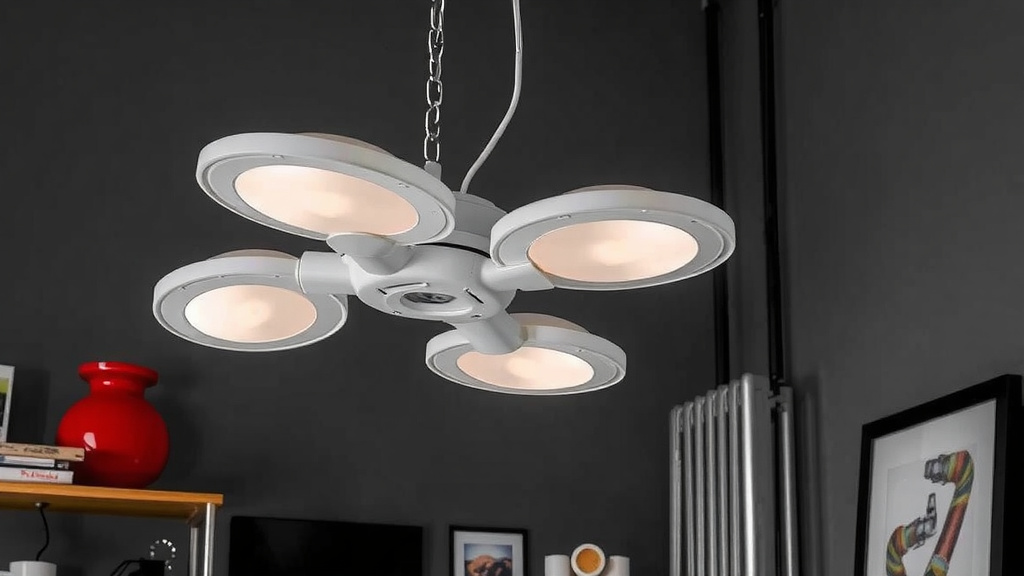
A single reptile basking lamp is usually the only heat source in the room, so you’re fine. Bathroom heat lamp fixtures are a bit different. Many combine multiple 250W bulbs with a fan in one ceiling unit. Two bulbs plus a fan can approach 4.5 to 5 amps, and if that bathroom shares a circuit with a hair dryer, you’ve found your tripped-breaker culprit.
Warning Signs Your Circuit Is Maxed Out
How do you know you’ve crossed the line? Your house will usually tell you before something worse happens.
- Breaker trips repeatedly, especially when appliances kick on together.
- Outlets or the plug feel warm to the touch.
- Lights on the same circuit flicker or dim when the heat lamp cycles.
- You notice a burning smell or scorch marks near the outlet.
- Cords feel hot along their length, not just at the plug.
Any one of these means it’s time to unplug something and spread your load across other circuits. If you smell burning or see scorch marks, treat it as urgent. Safety experts warn that overloaded circuits and hot cords are a leading cause of home electrical fires (Consumer Product Safety Commission).
Your Heat Lamp Safety Checklist
Before you plug in, run through this quick list. Thirty seconds now beats a dark brooder at 2 a.m.
- Find out which outlets share your circuit (flip breakers and test lamps).
- Add up the total watts of everything on that circuit.
- Keep the total under 80% of the circuit’s rating.
- Check that the lamp’s socket and fixture are rated for 250W bulbs.
- Keep bulbs, cords, and reflectors away from bedding, hay, and curtains.
- Use a bulb cage or guard if lamps hang over animals or flammable material.
One last tip we found in fire-safety guidance: never screw a higher-wattage bulb into a fixture than its label allows. The wattage printed on the socket isn’t a suggestion. It’s the difference between cozy chicks and a very bad afternoon (CPSC). Our guide to finding the right bulb for your lamp explains how to match bulb wattage to the socket’s label.
Conclusion
Now you know the number: a 250W heat lamp pulls about 2.1 amps on a standard 120V circuit. It’s a light load on its own, but it adds up fast when you stack lamps, fans, or other appliances on the same line. We researched typical setups, and the safest approach is always the same: count your watts, apply the 80% rule, and leave room to spare. If your breaker has tripped more than once or a plug feels warm, act on it today. Before you plug in your next bulb, take five minutes to map out your circuits and add up your load. Your chicks, your reptiles, and your peace of mind will thank you.
Frequently Asked Questions
Does a 250W heat lamp use a lot of electricity?
Not really. At 250 watts, running a lamp for 10 hours a day uses about 2.5 kWh daily, which costs roughly 30 to 40 cents in most states. It’s far cheaper to run than a space heater, which can use six times more power over the same period.
Can I plug a heat lamp into a regular outlet?
Yes, as long as the fixture and cord are rated for a 250W bulb. A standard household outlet handles up to 15 amps, and a heat lamp only needs about 2.1 of them. Just avoid daisy-chaining power strips or running the lamp on an extension cord long-term.
How many amps does a 250W heat lamp use on a 240V circuit?
On a 240-volt circuit, the same 250W bulb draws only about 1.04 amps. Higher voltage pushes the same wattage through with less current, which keeps wiring cooler. Most home setups use 120V, though, so expect 2.1 amps there.
Will a heat lamp trip my breaker?
By itself, almost never, since it uses only a fraction of a circuit’s capacity. It trips a breaker when it shares a circuit with big draws like a space heater, hair dryer, or microwave. If your breaker trips with just the lamp plugged in, the problem is likely the fixture, the cord, or the circuit itself. If the fixture itself is the problem, our lamp socket replacement guide walks through the fix step by step.
Do LED heat lamps use fewer amps?
Some “LED heat lamps” exist, but most don’t produce the same radiant warmth that 250W incandescent bulbs do. Reptile keepers and poultry keepers usually stick with traditional red bulbs because animals need the heat, not just the light. If you swap to a lower-wattage bulb, your amp draw drops in direct proportion to the wattage.