Perfect Balance: How Big Should a Lamp Be on an End Table?
Have you ever walked into a room and felt something was just off about the lighting setup, even though you couldn’t quite put your finger on why? Chances are, the lamp sitting on your end table was either a tiny afterthought or an enormous eyesore that completely dominated the space. Getting the right lamp size for your end table isn’t just about aesthetics—it’s about creating harmony, functionality, and that perfectly balanced ambiance you’ve been dreaming about.
I know what you’re thinking: it’s just a lamp, right? How complicated can it be? Well, let me tell you, choosing the correct lamp size involves understanding proportions, considering your furniture dimensions, thinking about the room’s purpose, and factoring in your personal style preferences. It’s like assembling a puzzle where every piece matters, and getting it wrong can throw off the entire picture.
Understanding the Importance of Lamp Proportions
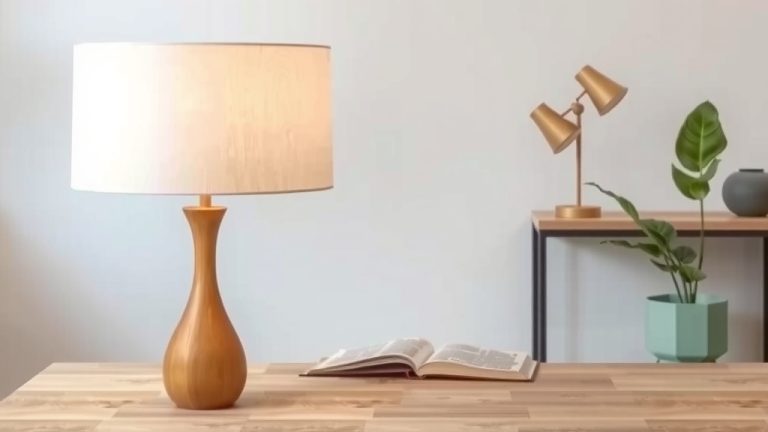
When you’re shopping for a lamp, you’re not just buying a light source—you’re investing in a piece of functional decor. The size of your lamp matters far more than most people realize. Think of your end table as the stage, and your lamp as the performer. If the performer is too small, nobody notices them. If they’re too large, they completely steal the show and make everything else on that stage look insignificant.
The relationship between your lamp and your end table creates what designers call “visual weight.” This is the sense of balance that makes a room feel comfortable and intentional rather than chaotic or incomplete. When proportions are off, your eye keeps bouncing around, searching for something to rest on. When they’re right, everything feels natural and inviting.
The Golden Rule of Lamp-to-Table Ratio
So let’s get down to the practical stuff. What’s the actual measurement you should be looking for? The general rule that interior designers follow is that your lamp should be roughly one-third the height of your end table. I know that sounds oddly specific, but hear me out—this ratio works because it creates what’s called the rule of thirds in design, which is aesthetically pleasing to the human eye.
Breaking Down the Mathematics
Let’s say you have a standard end table that’s about 24 inches tall. Following the one-third rule, your lamp should be approximately 8 inches in height. But wait—that’s just the lamp itself. When you’re shopping, you need to consider that most lamp dimensions refer to the base, and you’ll be adding a lampshade on top.
Here’s where it gets important: the total height from the base to the top of the shade should be measured together. Many people only look at the lamp base and then add a shade without thinking about the combined effect. Picture yourself standing in the store, and you’ve found a lamp base that’s 6 inches tall. You grab a 10-inch shade to go with it. Congratulations, you’ve just created a 16-inch lamp that might tower over your 24-inch table. That’s not the balance we’re aiming for.
Measuring Your End Table Correctly
Before you even think about shopping for a lamp, you need to know your end table’s exact dimensions. This is non-negotiable. Grab a measuring tape and check the height from the floor to the top of your table surface. Write this number down—seriously, don’t rely on memory.
What About Width and Depth?
The height is crucial, but the width and depth matter too. An end table that’s narrow and deep requires a different lamp style than one that’s wide and shallow. If your end table is only 12 inches wide, a lamp with a massive 16-inch-wide shade will overwhelm it completely. You’re aiming for a situation where your lamp takes up roughly one-third to one-half of the table’s surface area.
Think about it practically: you probably want to put other things on that end table too. A lamp, a small plant, maybe a book, a lamp, or a framed photo. If your lamp is so wide that it takes up the entire surface, you’ve created a functional problem, not just an aesthetic one.
The Impact of Lampshade Size on Overall Proportion
Here’s something that trips up a lot of people: they pick out a gorgeous lamp base and then choose a shade size without considering how it changes the lamp’s overall presence. The shade can completely transform how a lamp looks and feels in your space.
Wide Shades versus Narrow Shades
A wide shade makes a lamp look more stable and grounded. It also distributes light more evenly across your space. A narrow shade creates a more vertical, dramatic effect and concentrates light in a tighter area. For end tables, you generally want a shade width that’s slightly narrower than or equal to the height of the table itself.
Let’s use an example. If you have a 24-inch-tall end table, a shade that’s about 20 to 24 inches in diameter (for a drum shade) or similar proportions (for a tapered shade) would look balanced. Anything smaller looks lonely and underinvolved. Anything larger starts to dominate the table and the surrounding furniture.
Room Size Considerations
Your end table doesn’t exist in a vacuum. It’s part of a room, and that room has its own proportions. A lamp that looks perfect on an end table in a large living room might feel absolutely enormous in a cozy bedroom.
Large Rooms and Generous Proportions
If you’re furnishing a spacious living room with a large sectional and generous furniture spacing, you can absolutely go bigger with your lamp. A room with high ceilings and plenty of square footage can handle a more substantial lamp without it looking out of place. In fact, a too-small lamp in a large room looks insignificant and creates visual gaps that feel uncomfortable.
Small Rooms and Intimate Spaces
Conversely, if you’re working with a smaller bedroom, apartment, or cozy nook, oversizing your lamp becomes a real problem. A lamp that’s too large in a small room makes the space feel cramped and cluttered. It’s the difference between feeling cozy and feeling suffocated.
Sofa or Seating Height as a Reference Point
Many people focus solely on the end table when choosing a lamp, but they forget about how the lamp relates to the seating around it. Here’s a pro tip: your end table lamp should ideally have its light source (the bottom of the shade) at roughly the same height as the back of the sofa or the top of the chair arm beside it.
Why This Matters for Lighting Functionality
This positioning ensures that the light spills down properly for reading, working, or simply creating ambient lighting in your seating area. If your lamp is too short, it might create awkward shadows or not illuminate the space adequately. If it’s too tall, the light shoots up and over everyone’s head, which defeats the purpose of having task lighting beside a seating area.
Different End Table Styles and Their Lamp Requirements
Not all end tables are created equal, and different styles call for different lamp sizes. Let me break down some common end table types and what works best with each.
Glass or Metal End Tables
These modern, minimalist tables have a delicate visual quality. They work beautifully with proportionally smaller lamps that have sleek bases and simple shades. A chunky, oversized lamp on a glass table looks out of place and heavy.
Wooden End Tables
Traditional wooden end tables are more forgiving and can handle a wider range of lamp sizes. They have substantial presence, so they can balance a slightly larger lamp without looking overwhelmed.
Upholstered or Fabric-Covered Tables
These softer tables work well with medium-sized lamps. They already have visual softness, so they benefit from a lamp that’s proportional but not too delicate.
The Lampshade Shape Factor
Different shade shapes create different visual effects, and they affect how large a lamp appears in your space.
Drum Shades
Drum shades are cylindrical and create a balanced, modern look. They’re stable visually and work well in most rooms. A drum shade looks substantial without necessarily being overwhelming.
Tapered Shades
Tapered shades are wider at the bottom than the top. They create a classic, traditional look and are extremely forgiving in terms of proportion. Many design professionals favor tapered shades because they just naturally look balanced with most furniture.
Bell or Empire Shades
These shapes are somewhere between drum and tapered. They offer versatility and work in both traditional and contemporary spaces.
Practical Measurement Guidelines
Let me give you some concrete numbers to work with when you’re out shopping or measuring at home.
- For an end table between 20 to 24 inches tall, look for a lamp that’s 15 to 20 inches in total height (including the shade)
- For an end table between 24 to 28 inches tall, aim for a lamp that’s 20 to 26 inches in total height
- For an end table between 28 to 32 inches tall, look for a lamp between 24 to 32 inches in total height
- Remember that these measurements include both the base and the shade
- Always measure the total height from the floor, not just from the table surface
Considering Your Personal Style and Decor
While following design rules is helpful, your personal style and the overall aesthetic of your room matter too. A bohemian-style room might benefit from a slightly oversized, textured shade that creates drama. A minimalist space might call for a perfectly proportioned, sleek lamp.
Making Bold Choices Thoughtfully
If you’re drawn to a lamp that’s slightly larger than the “rules” suggest, that’s okay. Just be intentional about it. Make sure that oversized lamp is a statement piece that enhances your room’s personality. Don’t choose it by accident—choose it because it works for you and your space.
Budget Considerations and Quality
Getting the right size doesn’t mean you need to spend a fortune. Once you know what dimensions work for your space, you can find options at various price points. That said, don’t skimp on quality just because you’ve found the right size. A well-made lamp at the correct proportion will serve you far better than a cheap lamp that happens to be the right height but falls apart after six months.
Testing Before You Buy
If you’re shopping in person, take a moment to really visualize the lamp in your space. Hold it next to your body. Imagine how it would look on your table. Don’t just glance at it and move on. If you’re shopping online, pay close attention to the dimensions in the product description, and don’t hesitate to check customer reviews where people often mention how the lamp looks in their homes.
Lighting Quality Beyond Size
While we’ve been focused on size and proportion, remember that a lamp also needs to actually work as a light source. Choose a lamp that provides adequate brightness for your needs. A beautifully proportioned lamp that barely lights up your reading nook isn’t really serving its purpose. Look for lamps with good wattage capacity and consider adding a dimmer switch for flexibility.
Common Mistakes People Make
Let me share some of the most common errors I see people make when choosing end table lamps:
- Buying a lamp base without considering the shade height—then realizing the final product is too tall
- Choosing a lamp based solely on how it looks in the store, without considering their actual home dimensions
- Selecting a lamp that looks perfect on paper but doesn’t match their furniture’s style
- Prioritizing color or design over proportions—forgetting that function matters
- Purchasing a lamp that’s so wide it monopolizes the entire table surface
- Getting caught up in trends without considering whether a trendy lamp will work in their specific space
Conclusion
Choosing the right size lamp for your end table boils down to understanding proportions, measuring carefully, and thinking about how the lamp relates to everything around it. The one-third rule is a helpful starting point, but it’s not a rigid law—it’s more of a guideline that helps you make thoughtful decisions.
The best lamp for your end table is one that’s proportional to the table, complements your room’s style, sits at the right height relative to your seating, and actually provides the lighting you need. Take time to measure, visualize, and consider all these factors before making your purchase. When you do, you’ll end up with a lamp that not only looks balanced and beautiful but also works perfectly in your space. That’s when you’ll know you’ve gotten it just right.
Frequently Asked Questions
What if my end table is unusually short or tall—do the proportions still apply?
Yes, the proportions matter even more with unusual dimensions. If you have a particularly short table (under 20 inches), you’ll want an even smaller lamp to avoid overwhelming it. Conversely, if you have a very tall table (over 32 inches), you can accommodate a larger lamp. The key is maintaining that visual balance, so adjust based on what looks right for your specific measurements.
Can I use a large decorative lamp on a small end table if I really love it?
You can certainly try, but be prepared for it to look unbalanced. That said, sometimes a slightly oversized lamp can work as a statement piece if it’s intentional and the rest of your room’s design supports it. Just make sure it doesn’t crowd your table surface or create practical problems with accessing other items on the table.
Should I prioritize proportions or the type of light the lamp provides?
Ideally, you shouldn’t have to choose. Find a lamp that’s both the right size for your space and provides adequate lighting. If you must choose, lean toward getting the proportions right first, then supplement with additional lighting elsewhere in the room if needed. A beautifully proportioned lamp that barely lights up your space will drive you crazy.
How do I know if a lamp shade is too wide for my table?
A good rule of thumb is that your lamp shade should take up roughly half or less of your table’s surface area. If you’re shopping and the shade is clearly wider than half the table when you hold them up together, it’s too wide. Remember, you need room on that table for other items too.
Does the lamp base color or material affect what size I should choose?
Color and material affect the visual weight of a lamp, but they don’t necessarily change the ideal size measurements. A dark, heavy-looking base might feel bigger than a light, delicate base of the same actual height. If you’re choosing between two lamps of similar height, the lighter-looking one might feel more balanced on your table. But the primary size considerations remain the same regardless of color or material.
“`
![10 Best Candle Warmer Lamp Ikea [2026]](https://bestdesklamp.com/wp-content/uploads/2026/08/10-best-candle-warmer-lamp-ikea-2026-featured-768x432.jpg)