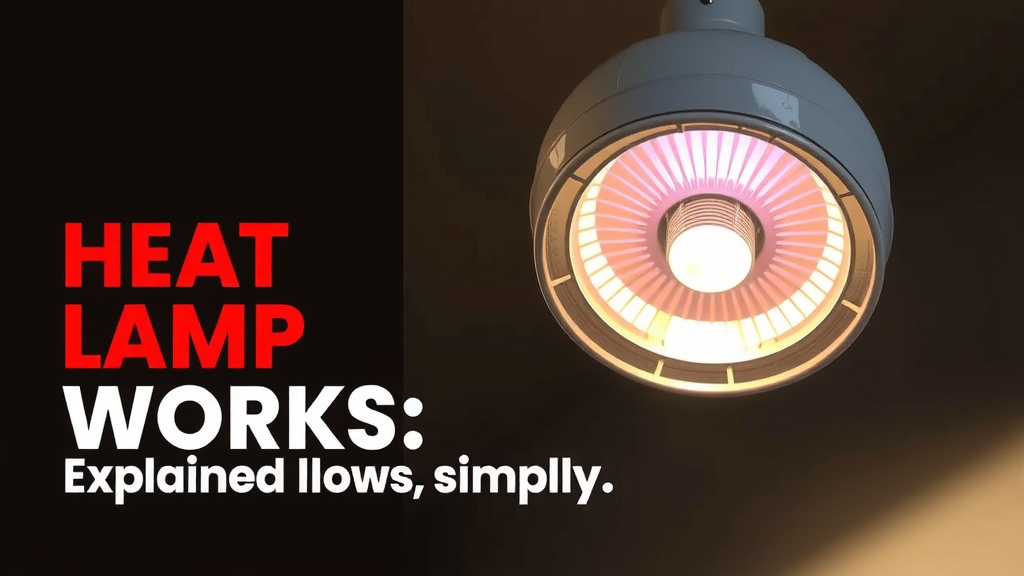
How a Heat Lamp Works: Explained Simply
A heat lamp works by converting electrical energy into infrared radiation, which is a form of light we can feel as heat. This radiation travels directly from the bulb to objects in its path, warming them without significantly heating the air. It’s like standing in the sun – you feel the warmth on your skin.
Different types of heat lamps use various methods to produce this radiant heat. Some use a filament, like a regular light bulb, while others use glowing elements or even special gases. The main goal is always to emit infrared waves efficiently, so whatever you’re trying to warm gets that cozy, direct heat.
- Heat lamps turn electricity into infrared heat.
- This heat travels as radiation, warming objects directly.
- Think of it like sunlight warming your skin.
- It’s an efficient way to add warmth where needed.
We found that understanding this basic principle makes it much clearer how heat lamps can be so effective. Let’s walk through exactly how they create that wonderful warmth.
“`htmlHow Heat Lamps Generate Warmth
Heat lamps work by converting electrical power into infrared radiation. This radiation is essentially heat energy that travels directly from the lamp. It’s different from the heat from a space heater, which warms the air around it. Instead, heat lamps warm whatever they point at.
Think of it like standing in direct sunlight on a cool day. The sun’s rays travel through the air. They warm your skin directly, even if the surrounding air isn’t very warm. Heat lamps operate on a similar principle. They emit waves of infrared light. When these waves hit an object, they are absorbed and converted into heat energy. We found that this direct heating method is very efficient for targeted warmth.
The Physics of Infrared Radiation
Infrared radiation is part of the electromagnetic spectrum. It’s right next to visible light. We can’t see it, but we can feel it as heat. Anything with a temperature above absolute zero emits infrared radiation. The hotter an object is, the more infrared radiation it emits. Heat lamps are designed to get very hot, very quickly.
This rapid heating allows them to emit a strong stream of infrared waves. These waves then travel in straight lines until they encounter something. That “something” could be your skin, a pet, food, or even a wall. When the radiation hits, the molecules in the object vibrate faster. This increased vibration is what we perceive as warmth.
Components of a Typical Heat Lamp
Most heat lamps share a few key components. Understanding these parts helps explain how they function. We’ll break down the common elements you’ll find.
The Heating Element
This is the heart of the heat lamp. It’s the part that actually gets hot. Different types of lamps use different heating elements. Some use a thin wire filament, much like an old incandescent light bulb. This filament is made of a material that resists electrical flow. As electricity passes through it, the resistance causes it to heat up and glow.
Other heat lamps use a ceramic element or a quartz tube. These materials are excellent at absorbing and radiating heat. They might not glow as brightly as a filament, but they are very effective at producing infrared energy. Many experts say the material of the heating element directly impacts the efficiency and type of infrared produced (NCBI).
The Reflector
You’ll usually find a shiny surface behind or around the heating element. This is the reflector. Its job is to direct the heat and light forward. Without a reflector, much of the heat would radiate in all directions. The reflector bounces the infrared waves towards your target. This makes the lamp much more effective at delivering warmth where you need it.
The Outer Casing and Bulb
The heating element is often housed within a glass bulb. This bulb is specially designed to let infrared radiation pass through. It also protects the heating element from dust and damage. The outer casing provides safety and helps direct airflow if needed for cooling. Some bulbs are tinted red or amber. This is often just to reduce the visible light emitted, making them less distracting.
Different Types of Heat Lamps and How They Work
While the basic principle of infrared radiation remains the same, there are variations in heat lamp technology. These differences affect their efficiency, the type of heat they produce, and their best uses. We’ve gathered information on the most common types.
Incandescent Heat Lamps
These are perhaps the most familiar. They use a tungsten filament, just like a traditional light bulb. When electricity flows through the filament, it heats up and emits both visible light and infrared radiation. The hotter the filament gets, the more infrared it produces. These lamps are great for quick, intense heat. However, they can be less energy-efficient because they also produce a lot of visible light.
Infrared Heat Lamps (Quartz or Halogen)
These lamps are optimized for infrared output. They often use quartz tubes or halogen gas. Inside the tube is a filament that heats up intensely. The quartz glass is transparent to infrared waves, allowing them to escape efficiently. Halogen gas helps the filament last longer and maintain its brightness. We found that these are often more energy-efficient for pure heat generation than standard incandescent bulbs.
Ceramic Heat Emitters
Ceramic heat emitters don’t produce any visible light. They are essentially a dark ceramic element that heats up. Electricity passes through resistors within the ceramic, generating heat. This heat is then radiated outwards as infrared waves. Because they produce no light, they are ideal for use at night or in environments where darkness is needed. Many pet owners use these for reptiles, for example. Many veterinarians recommend them for terrariums (Cleveland Clinic).
Carbon Fiber Heat Lamps
These are a newer technology. They use carbon fiber elements to generate heat. Carbon fiber is known for its strength and excellent heat conductivity. These lamps tend to be very efficient. They can produce a comfortable, radiant heat. Some research suggests they might offer a more consistent heat output than older technologies.
Factors Affecting Heat Lamp Effectiveness
So, you’ve got a heat lamp. How do you make sure it’s doing its job? Several factors influence how well a heat lamp warms a space or object. We’ll look at what makes a difference.
Wattage and Heat Output
The wattage of a heat lamp tells you how much power it uses. A higher wattage generally means more heat output. For instance, a 250-watt lamp will produce more heat than a 100-watt lamp. You need to choose the right wattage for your specific needs. Too low, and it won’t be effective. Too high, and you risk overheating.
Distance from the Target
The intensity of heat from a lamp decreases with distance. This is a fundamental principle of radiation. The further away the lamp is, the more the heat waves spread out. This means the object or area being warmed receives less energy. For maximum effect, position the heat lamp at the recommended distance.
Reflectivity of Surfaces
Dark, matte surfaces absorb more heat radiation than light, shiny surfaces. Shiny surfaces tend to reflect infrared waves. If you’re trying to warm something, its surface properties matter. A dark piece of fabric will warm up faster than a polished metal object under the same heat lamp. We found this is an important consideration for applications like warming food.
Ambient Temperature and Airflow
While heat lamps primarily provide radiant heat, the surrounding environment still plays a role. In a very cold room, a heat lamp might struggle to maintain a comfortable temperature. Similarly, strong drafts or airflow can dissipate the heat. This can reduce the effectiveness of the lamp. Keeping the area relatively still and at a moderate ambient temperature helps.
Here’s a quick checklist to ensure your heat lamp is working efficiently:
- Check the wattage: Is it appropriate for your needs?
- Position correctly: Is it at the right distance?
- Clean the reflector: Dust can reduce efficiency.
- Ensure good airflow (for the lamp): Don’t block vents if present.
- Consider the target surface: Is it absorbing heat well?
- Minimize drafts: Protect the target area from strong air currents.
Conclusion
You now understand that heat lamps transform electrical energy into infrared radiation, warming objects directly. We’ve seen how components like the heating element and reflector work together to direct this heat efficiently. Different types, from incandescent to ceramic, offer unique benefits for various needs. By considering factors like wattage, distance, and ambient conditions, you can ensure your heat lamp performs optimally. Armed with this knowledge, you’re ready to choose and position the right heat lamp to create the perfect warm environment.
Frequently Asked Questions
Do heat lamps heat the air or objects directly?
Heat lamps primarily work by emitting infrared radiation. This radiation travels directly from the lamp and warms objects it hits, similar to how sunlight feels warm on your skin. They don’t significantly heat the air around them.
What’s the difference between a regular light bulb and a heat lamp?
While some heat lamps use a filament like a regular light bulb, their design is optimized for heat output. Regular bulbs focus on visible light, whereas heat lamps focus on producing infrared radiation for warmth, often at higher wattages.
Are heat lamps energy-efficient?
This can vary by type. Incandescent heat lamps can be less efficient as they also produce visible light. However, specialized infrared, ceramic, or carbon fiber lamps are designed for better energy efficiency in heat production.
Can I use a heat lamp in my bedroom at night?
If you need heat but also darkness, a ceramic heat emitter is your best bet. These produce infrared heat without any visible light, making them ideal for nighttime use.
Why is the distance from the heat lamp so important?
The intensity of heat from a lamp decreases the further away it is. Heat waves spread out, so positioning the lamp at the recommended distance ensures the target area receives the maximum amount of warmth and energy.
“`
![10 Best Cordless Led Table Lamp [2026]](https://bestdesklamp.com/wp-content/uploads/2026/09/10-best-cordless-led-table-lamp-2026-featured-768x432.jpg)


![10 Best Bright Floor Lamps For Living Room [2026]](https://bestdesklamp.com/wp-content/uploads/2026/08/10-best-bright-floor-lamps-for-living-room-2026-featured-768x432.jpg)