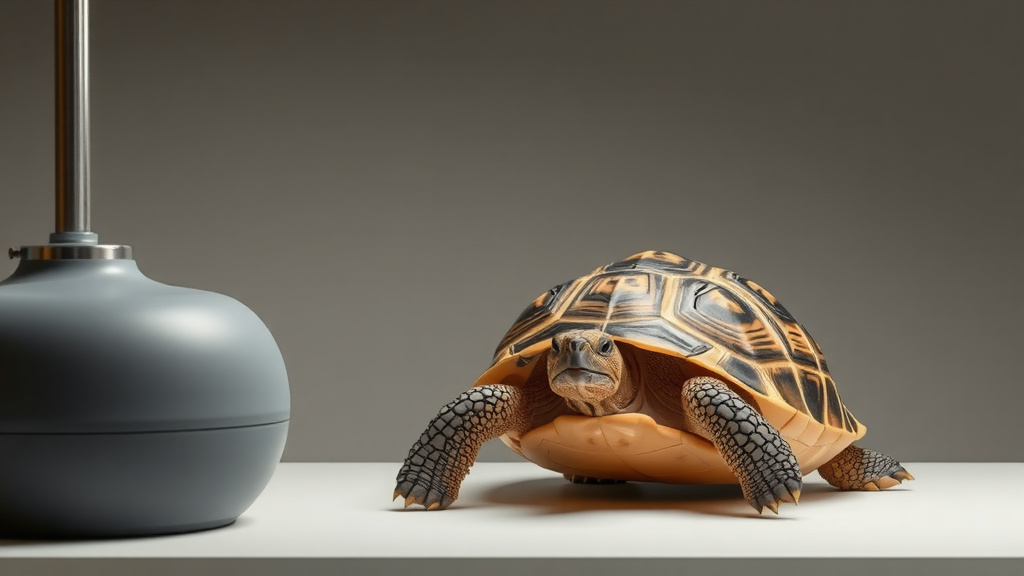
How Long Should a Tortoise Heat Lamp Be On? A Daily Guide
Your tortoise’s heat lamp should stay on for 10 to 12 hours per day, mimicking natural daylight. Then it should be switched off every night so your tortoise gets a proper day and night cycle.
Why does this timing matter so much? Reptiles depend on consistent light cycles to regulate their sleep, appetite, and body temperature. We researched what experienced keepers and vets recommend, and we found that leaving the lamp on 24/7 can actually stress your tortoise and mess with its natural rhythms. A simple timer makes this easy, by the way. Set it once and forget it, so you never have to guess again.
- Keep the heat lamp on for 10–12 hours during the day.
- Turn it off every night to mimic natural darkness.
- Use a timer plug to keep the schedule consistent.
- Match the light cycle to the season if you can.
- Pairs with a UVB lamp, which follows the same daytime schedule.
Below, we break down everything you need to know about how long should a tortoise heat lamp be on, including seasonal tweaks and common mistakes to avoid.
The Ideal Daily Light Schedule for Your Tortoise
The sweet spot is 10 to 12 hours of light during the day, followed by full darkness at night. Think of it as giving your tortoise its own personal sunrise and sunset. Many experts say this range matches the daylight hours most tortoise species would see in the wild (Association of Reptilian and Amphibian Veterinarians).
We found that consistency matters just as much as the number itself. A tortoise on a random schedule, 8 hours one day and 16 the next, can get stressed and go off its food.
Why Your Tortoise Needs a Day and Night Cycle
Tortoises are ectotherms, which is a fancy way of saying they rely on outside heat to regulate their body temperature. When the lamp goes off, their body naturally cools down. That cool-down tells them it’s time to rest.
Research on reptile husbandry shows that light cycles influence sleep, digestion, and even breeding behavior (NCBI). So leaving the heat lamp on 24/7 isn’t “extra care.” It’s actually the opposite.
What Happens If You Leave the Lamp On All Night
Constant light can throw off your tortoise’s internal clock. We found reports from keepers describing restless pacing at night and reduced appetite. Nobody wants a cranky tortoise at 2 a.m.
There’s also a practical problem: the enclosure never cools down. Tortoises need that nightly temperature drop to sleep well, much like how you can’t doze off in a stuffy room.
Signs Your Tortoise Isn’t Getting Proper Rest
- Pacing along the walls after lights-out.
- Eating less than usual, or ignoring favorites.
- Lethargy during the day instead of the night.
- Burying itself or hiding more than normal.
Any of these rings a bell? Check your light schedule first. It’s the easiest thing to fix.
Seasonal Adjustments to Your Heat Lamp Timing
In nature, days get longer in summer and shorter in winter. You can copy that rhythm without overthinking it. Here’s a simple guide we put together.
| Season | Hours On | Why It Helps |
|---|---|---|
| Spring | 10–12 hours | Wakes tortoises from brumation gradually |
| Summer | 12–14 hours | Matches peak activity and feeding season |
| Fall | 10 hours | Signals wind-down time |
| Winter | 8–10 hours | Supports a natural cool-down period |
Not keeping a species that brumates? Just stick with the steady 10–12 hour schedule year-round. Simpler is fine.
Should You Change the Schedule for Baby Tortoises?
Many experts say hatchlings and juveniles do best on a steady year-round schedule of about 12 hours. Skipping the seasonal shifts helps them keep growing without interruption (Association of Reptilian and Amphibian Veterinarians). Young tortoises need every calorie and every hour of proper heating they can get.
Heat Lamps vs. UVB Lamps: Do They Follow the Same Schedule?
Yes, and that trips up a lot of new keepers. Your UVB lamp should run on the same 10–12 hour daytime schedule as your heat lamp. Both represent “daytime” to your tortoise.
The difference is the job each lamp does. The heat lamp manages temperature. The UVB lamp lets your tortoise make vitamin D3, which it needs to process calcium and keep its shell strong (NIH).
Can You Combine Heat and UVB in One Bulb?
You can, with mercury vapor bulbs that do both jobs. Some keepers love the one-bulb simplicity. Others find the combined output runs too hot for smaller enclosures. If you go this route, measure the basking surface temperature and adjust the distance until it’s right.
Using a Timer Plug to Automate the Cycle
Here’s our favorite piece of gear for this topic, and it costs about ten bucks. A mechanical timer plug turns the lamps on and off at the exact same times every day. You set it once and stop worrying about whether you forgot.
Do you travel for work? Have a weekend trip coming up? A timer means your tortoise never notices you’re gone. That’s a win for everyone.
Quick Setup Checklist for Your Timer
- Pick a consistent on-time, like 7 a.m.
- Set the off-time for 10–12 hours later.
- Plug both heat and UVB lamps into the timer.
- Check the basking spot temp after a few days.
- Adjust hours slightly with the seasons if desired.
- Replace timer batteries or test it monthly.
What Temperature Should the Enclosure Reach Overnight?
Most tortoise species do fine with a nighttime drop into the 65–70°F range. That cool-down is the point of turning the lamp off. If your home dips below that, a ceramic heat emitter can help, because it gives off heat with no light.
We found that keepers in colder climates often pair a timer for the daylight lamps with a thermostat-controlled emitter for the coldest nights. Best of both worlds.
Common Mistakes With Tortoise Heat Lamp Timing
A few easy-to-make errors show up again and again. Skim this list and see if any sound familiar.
- Leaving the heat lamp on 24/7 “to be safe.”
- Running UVB at night, which wastes the bulb’s output.
- Guessing the schedule instead of using a timer.
- Letting the basking spot get too cold during shortened winter days.
- Forgetting to replace bulbs, since UVB output fades before the bulb burns out.
Every one of these has a simple fix, and most cost nothing but a little attention.
How Long Should You Wait After Lights-Out to Check on Your Tortoise?
Give it at least 30 to 60 minutes of true darkness before peeking. Tortoises settle slowly, just like you might toss and turn before drifting off. A quick glance with a dim red light is fine if you must check, since many keepers report red light disturbs tortoises far less than white light.
Conclusion
Getting your tortoise’s light cycle right comes down to three things: 10 to 12 hours of daytime light, complete darkness at night, and a consistent schedule. A cheap timer plug handles the consistency for you, and seasonal tweaks are optional unless you’re raising hatchlings or managing brumation. We found that most “mystery” tortoise problems, like poor appetite or restless nights, trace right back to a light schedule that never gives the animal a real sunset. Pick your on and off times today, plug both lamps into a timer, and check your basking temps this weekend. Your tortoise will settle into a healthy rhythm faster than you’d expect.
Frequently Asked Questions
Can I use a smart plug instead of a mechanical timer for my tortoise lamps?
Absolutely. Smart plugs work the same way and often let you adjust schedules from your phone when seasons change. We found they’re especially handy if you want to shift times gradually without walking over to the enclosure. Just make sure the plug you buy handles the wattage of your lamps.
Does a red night light count as light for my tortoise’s day cycle?
For rest purposes, dim red light is generally treated as darkness, since tortoises respond far less to the red end of the spectrum. That said, we’d still recommend true darkness when you can manage it. Use red light only for quick check-ins, not as a permanent night fixture.
What time of day should I turn my tortoise’s heat lamp on?
Many keepers aim for roughly 7 to 8 a.m. so the lamps come on with the household’s natural morning and shut off in the evening. The exact hour matters less than keeping it the same every day. Anchor it to a sunrise-style routine and let the timer do the rest.
How long do tortoise heat lamp bulbs last before I should replace them?
Standard basking bulbs usually last several months to a year, but we found that UVB output fades well before a bulb visibly burns out. Most manufacturers recommend replacing UVB bulbs every 6 to 12 months. Write the install date on the bulb with a marker so you never have to guess.
Do I need to turn the heat lamp off during brumation?
Yes. Once your tortoise is fully in brumation, the heat and UVB lamps should be off, because the whole point is letting its body cool down and slow its metabolism. Before that, you’ll shorten daylight hours gradually over a couple of weeks. If you’re new to brumation, check with an exotics vet first.
Is 10 hours enough light for my tortoise in a darker room?
Ten hours on a timer is fine even in a dim room, because the lamps themselves define the “day” for your tortoise. Avoid putting the enclosure in direct sunlight, though, since that can overheat the habitat unpredictably. Consistency from the lamps beats any ambient room light.