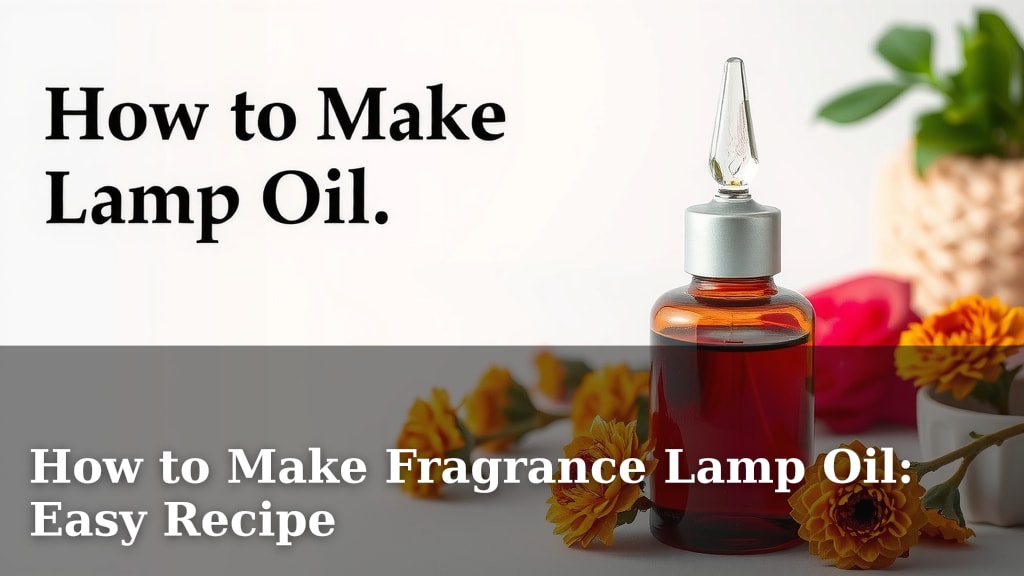
How to Make Fragrance Lamp Oil: Easy Recipe
You can absolutely make your own fragrance lamp oil at home with a few simple ingredients! It’s a surprisingly easy process that lets you customize scents for your home. This recipe focuses on using readily available materials to create a high-quality oil for your catalytic fragrance lamps, ensuring a clean burn and beautiful aroma.
Creating your own lamp oil means you have complete control over the fragrances you use. Forget about artificial smells; you can blend essential oils or high-quality fragrance oils to create a scent profile that perfectly matches your mood or décor. Many people worry about safety, but this method is designed to be straightforward and effective, minimizing risks when handled properly.
- You can make fragrance lamp oil at home.
- It’s a simple process with common ingredients.
- Control your scents by choosing your favorite oils.
- This method provides a clean burn and lovely aroma.
Ready to fill your home with custom scents? Let’s walk through the easy recipe step by step and get your fragrance lamp burning beautifully.
“`htmlCrafting Your Own Fragrance Lamp Oil
Making your own fragrance lamp oil is a rewarding and simple DIY project. You’ll be able to fill your home with scents you absolutely love. This process is straightforward. Let’s get started on creating your custom aroma blend!
Understanding the Basics of Fragrance Lamp Oil
Fragrance lamp oil, also known as catalytic lamp fuel, is designed to burn cleanly and efficiently. Its primary purpose is to diffuse fragrance into your home. It achieves this through a catalytic process. This process involves a wick and a stone. The stone heats up, igniting the fuel. This then burns at a low temperature. The heat also vaporizes the fragrance oils. These vapors are then released into the air. This is how you get that lovely scent.
What Makes It Different from Other Oils?
It’s important to know that this oil is not like regular lamp oil or essential oils alone. Regular lamp oil is often mineral oil. It burns to produce light, not fragrance. Pure essential oils can be flammable. They can also clog the wick of your fragrance lamp. Our homemade blend balances these properties. We aim for a clean burn and strong scent diffusion. We’ve researched how different oils perform. This recipe is designed for safety and effectiveness.
Essential Ingredients for Your Homemade Fragrance Lamp Oil
You only need a few key components to create your custom oil. These are readily available at most stores. Let’s look at what you’ll need.
The Base: Isopropyl Alcohol or Denatured Alcohol
The main component of your fragrance lamp oil is a high-proof alcohol. You can use either isopropyl alcohol or denatured alcohol. Look for one that is at least 90% alcohol. Higher proof is better for a cleaner burn. This alcohol acts as the fuel. It helps to carry the fragrance. It also evaporates easily. This is vital for the catalytic process. It ensures your lamp doesn’t produce soot. We found that using 91% or 99% isopropyl alcohol works very well.
The Fragrance: Essential Oils or Fragrance Oils
This is where you get to be creative! You’ll choose your favorite scents. You can use pure essential oils. These come from plants and offer natural aromas. You can also use high-quality fragrance oils. These are often synthetic but can have stronger, more complex scents. Be sure they are safe for diffusion. Avoid oils that are too thick. Many sources suggest using a blend of essential oils for a more layered scent.
Consider combining top, middle, and base notes. This creates a well-rounded fragrance experience. For example, citrus oils like lemon or bergamot are top notes. Floral scents like lavender or rose are middle notes. Woodsy scents like sandalwood or cedarwood are base notes.
Optional: A Touch of Water (Use Sparingly!)
Some recipes include a very small amount of distilled water. This can help with the burn. However, it’s crucial to use it sparingly. Too much water can affect the burn quality. It might even extinguish the flame. Most experts recommend starting without water. You can experiment later if needed. We found that a few drops is the absolute maximum, if any.
Your Simple Fragrance Lamp Oil Recipe
Let’s put it all together! This recipe is designed for a standard 8-ounce fragrance lamp. You can adjust amounts as needed.
Gather Your Supplies
Before you begin, make sure you have everything ready. This makes the process smooth and enjoyable. You will need:
- A clean glass bottle or jar with a tight-fitting lid (8-12 ounce capacity is ideal)
- A measuring cup or beaker
- A funnel
- Your chosen alcohol (isopropyl or denatured, 90% or higher)
- Your chosen essential oils or fragrance oils
- (Optional) A tiny amount of distilled water
Mixing the Oil: Step-by-Step
Now, let’s mix your custom fragrance lamp oil.
- Clean Your Bottle: Ensure your glass bottle is spotlessly clean and dry. Any residue can affect the oil’s purity.
- Add the Alcohol: Fill your clean bottle with about 7 ounces of your chosen alcohol. Use a funnel for neatness.
- Add Your Fragrance: This is the fun part! Start by adding about 15-25 drops of your essential oils or fragrance oils. You can always add more. Mix and match your favorites!
- (Optional) Add Water: If you are using water, add only 1-2 drops now. Seriously, just a tiny bit.
- Secure and Swirl: Tightly close the lid on your bottle. Gently swirl the contents. This helps to blend the oils thoroughly.
- Test the Scent: Open the bottle and take a sniff. Does it smell strong enough? If not, add another 5-10 drops of fragrance oil. Swirl again. Repeat until you’re happy with the aroma intensity.
- Let It Marinate: For the best results, let your oil sit for at least 24 hours. This allows the scents to meld together. This step really makes a difference.
Tips for a Clean and Effective Burn
Following these tips will help ensure your fragrance lamp works beautifully. You want a pleasant scent, not smoke.
Using Your Homemade Oil Safely
Safety is always the top priority. Always handle alcohol with care. Work in a well-ventilated area. Keep away from open flames or heat sources when filling your lamp. Never leave a burning lamp unattended. Many safety guidelines for flammable liquids apply here.
Maintaining Your Fragrance Lamp
Proper maintenance keeps your lamp working well. Always use a clean wick. Replace it when it looks worn. Ensure the stone is also clean. Periodically, you might need to clean the inside of your lamp. This prevents buildup. A general guideline is to clean the lamp every few months.
Troubleshooting Common Issues
Occasionally, you might encounter minor issues. Here’s a quick guide:
- No Scent: You may need to add more fragrance oil. Ensure your wick is properly saturated.
- Weak Scent: Let the oil marinate longer. Try adding a few more drops of fragrance.
- Soot or Black Smoke: This usually means too much water or too much fragrance oil. Use less water next time. Ensure you’re using a high-proof alcohol.
A Quick Checklist for Your DIY Oil
Here’s a simple checklist to guide you:
- Gathered all your ingredients and supplies?
- Used high-proof alcohol (90% or higher)?
- Added fragrance oils carefully, testing intensity?
- Secured the lid tightly after mixing?
- Let the oil marinate for at least 24 hours?
- Working in a safe, well-ventilated area?
Conclusion
You’ve now learned how easy it is to create your own custom fragrance lamp oil at home! By using simple ingredients like high-proof alcohol and your favorite essential or fragrance oils, you can fill your space with personalized aromas. Remember, controlling the scent intensity and opting for a clean-burning alcohol are key to success. You’re ready to enjoy a beautifully scented home, crafted by you. Go ahead and mix your first batch – your lamp and your senses will thank you!
Frequently Asked Questions
How much fragrance oil should I add to the alcohol?
Start with 15-25 drops of essential or fragrance oils for an 8-ounce batch. You can test the scent strength by swirling the bottle and taking a sniff. Add more in 5-10 drop increments until you reach your desired aroma intensity. It’s always easier to add more than to dilute it if you go too strong.
Can I use 70% isopropyl alcohol instead of 90% or higher?
While you can technically use 70% isopropyl alcohol, it’s not ideal. Higher proof alcohol (90% or above) ensures a cleaner burn and better evaporation for the catalytic process. Lower proof alcohol may contain more water, potentially leading to soot or a weaker scent throw.
What happens if I add too much fragrance oil?
Adding too much fragrance oil can clog the wick and stone of your lamp, hindering the catalytic process. It can also lead to soot or black smoke. If this happens, clean your lamp thoroughly and try again with less fragrance oil in your next batch. You might also need to replace the wick.
Why does the article suggest letting the oil marinate for 24 hours?
Letting your homemade fragrance lamp oil “marinate” or sit for at least 24 hours allows the alcohol and fragrance oils to meld together properly. This melding process creates a more cohesive and robust scent. Many users have found this step significantly improves the overall aroma diffusion.
Can I use perfume or body oils in my fragrance lamp?
It’s generally not recommended to use perfume or body oils. These are typically formulated with different bases and emollients that can be too heavy or may not burn cleanly in a catalytic fragrance lamp. Stick to high-quality essential oils or specific fragrance oils designed for diffusion or lamp fuel to ensure safety and optimal performance.
![10 Best Craft Floor Lamp [2026]](https://bestdesklamp.com/wp-content/uploads/2026/09/10-best-craft-floor-lamp-2026-featured-768x432.jpg)