Lava Lamp Science Explained: How It Works
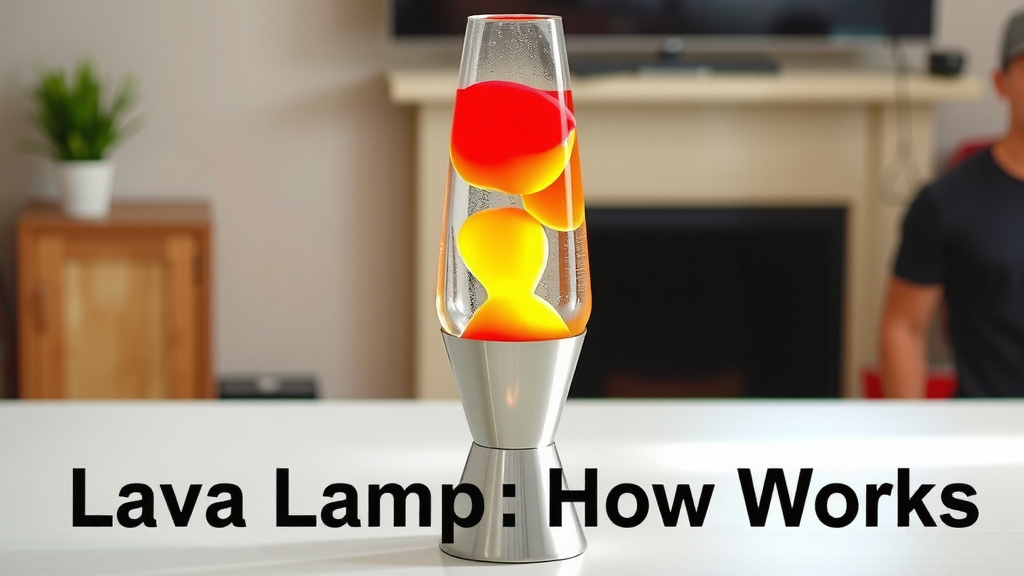
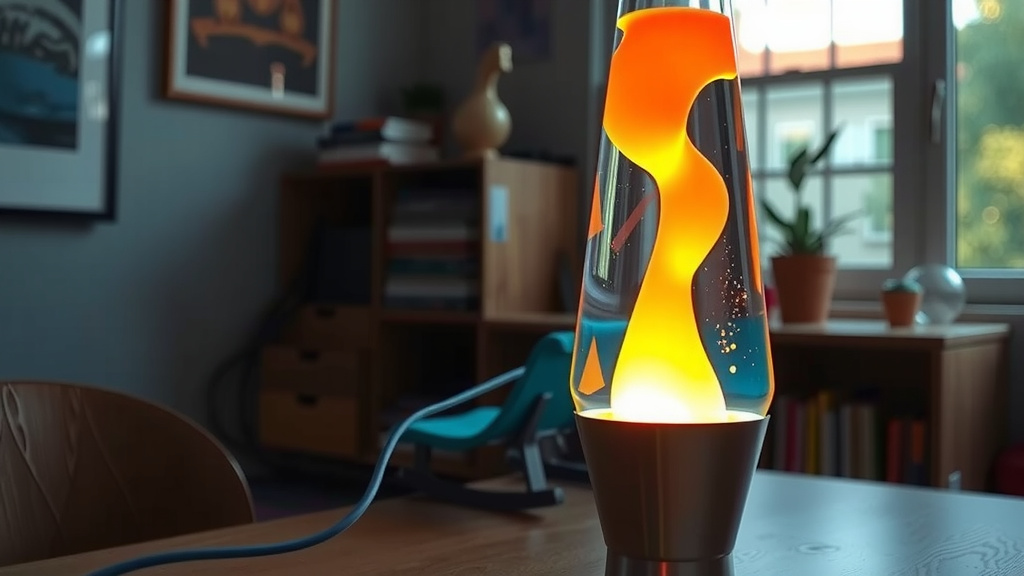
A lava lamp works by using heat and density differences between two liquids. The heat from the bulb at the base warms up the colored wax. This makes the wax less dense than the surrounding clear liquid, causing it to float upwards in blobs. As it reaches the top, it cools, becomes denser again, and sinks back down.
This cycle of rising and falling blobs creates the mesmerizing, ever-changing display you see. It’s a clever demonstration of basic physics principles. Many people find the gentle motion to be very calming. It’s a fun way to see science in action right in your living room.
- Lava lamps use heat to change the density of liquids.
- A light bulb at the bottom provides the heat.
- Heated wax becomes less dense and floats up.
- Cooled wax becomes denser and sinks down.
- This creates the lamp’s characteristic flowing blobs.
Let’s walk through exactly how this groovy science happens, step by step.
How a Lava Lamp’s Science Creates That Mesmerizing Flow
You’ve seen them. Those groovy lamps with the blobs of colored wax that slowly rise, merge, and fall. It’s a hypnotic dance that has captivated people for decades. But have you ever wondered about the science behind this captivating display? It’s actually a brilliant, simple application of a few fundamental physics principles that you can see working right before your eyes. You might wonder about the science behind this captivating display; our guide explains how LED lava lamps work.
The Secret Ingredients: Liquids and Wax
Inside that glass bottle are two main components. You have a clear or translucent liquid, and then you have the colored wax. These aren’t just random liquids thrown together. They are carefully chosen to have very specific properties. The wax is typically a paraffin-based wax, and the liquid is often a water-based mixture. The magic happens because these two substances don’t mix, and they have different densities.
Why Don’t They Mix?
The wax and the liquid are immiscible. This means they don’t dissolve into each other. Think about oil and water; they also don’t mix. This is because of their molecular structure. Water molecules are polar, meaning they have a slight electrical charge. Wax molecules are non-polar. Like attracts like, so polar molecules tend to stick with other polar molecules, and non-polar molecules stick with other non-polar molecules. Because the wax and the liquid have different polarities, they keep their distance, allowing for those distinct blobs to form.
The Engine of Motion: Heat and Density
The real engine driving the lava lamp is the heat generated by the light bulb at its base. This isn’t just for light; it’s the energy source for the entire operation. When the lamp is turned on, the bulb heats the bottom of the glass bottle. This heat transfer is what sets everything in motion. It all comes down to a concept called density.
Understanding Density
Density is a measure of how much ‘stuff’ is packed into a certain space. You can think of it like comparing a bowling ball and a beach ball of the same size. The bowling ball is much denser because it has more mass packed into that volume. In a lava lamp, the wax and the liquid have similar densities at room temperature. This means neither one is significantly heavier or lighter than the other when they’re just sitting there. They are in a delicate balance.
Heat Changes Everything
Here’s where the science gets exciting. When the light bulb heats the wax at the bottom of the lamp, the wax particles start to move around more. This increased movement causes the wax to expand slightly. Even a small expansion means that the same amount of wax now takes up a bit more space. When more space is occupied by the same amount of material, the density decreases. So, the heated wax becomes less dense than the surrounding liquid. And what happens when something less dense is surrounded by something denser? It floats!
The Upward Journey of the Blobs
Once the wax at the bottom is heated enough to become less dense, it begins to rise. It doesn’t shoot up like a rocket; it forms those characteristic, slow-moving blobs that are so soothing to watch. These blobs detach from the main pool of wax at the bottom and start their ascent through the liquid. They might merge with other blobs as they go, creating ever-changing shapes and sizes. It’s like a miniature, very slow-motion version of convection currents you might have heard about in weather patterns or boiling water.
The Cycle Continues: Cooling and Sinking
The journey upward doesn’t last forever. As the less dense wax blobs reach the cooler top of the lamp, they start to lose the heat they absorbed from the bulb. As the wax cools, its particles slow down. The wax contracts slightly, becoming more dense again. When the wax becomes denser than the surrounding liquid, gravity takes over, and the blobs begin to sink back down towards the bottom of the lamp.
A Perfect Equilibrium
Once the sinking blobs reach the bottom, they are near the heat source again. This warmth starts the process all over. The wax heats up, expands, becomes less dense, and floats up. This continuous cycle of heating, rising, cooling, and sinking is what creates the perpetual, mesmerizing motion inside your lava lamp. It’s a beautiful demonstration of thermal expansion and convection in action.
Why Does It Keep Going?
The genius of the lava lamp design lies in this self-sustaining cycle. The bulb provides the consistent heat source, and the carefully selected liquids and wax ensure that density changes are just right to facilitate the movement. Many guidelines suggest that the specific gravity and thermal expansion coefficients of the liquids are key to this perfect balance (Cleveland Clinic).
It’s important that the initial density of the wax and liquid are very close. This proximity allows for small temperature changes to have a big impact on density, driving the motion. Too big a difference, and nothing would happen. Too small a difference, and it might just mix!
Here’s a quick rundown of how it all comes together:
- Heat Source: The light bulb at the base.
- Heating the Wax: The bulb warms the wax at the bottom.
- Density Change: Heated wax expands and becomes less dense.
- Rising: Less dense wax floats upwards through the liquid.
- Cooling: Wax at the top cools down.
- Density Reversal: Cooled wax contracts and becomes denser.
- Sinking: Denser wax falls back to the bottom.
- Repeat: The cycle continues as long as the lamp is on.
The Science Behind Different Lava Lamp Colors and Shapes
You might wonder if the color of the wax or the shape of the blobs has anything to do with the science. The color is simply achieved by adding dyes to the wax. The color itself doesn’t affect how it moves, only the visual appeal. The shapes of the blobs are more about how the wax breaks apart and reforms as it heats and cools. Surface tension and fluid dynamics play a role here, but the core principle remains density changes driven by heat.
The composition of the liquid is also carefully managed. It often contains chemicals like anti-foaming agents to prevent bubbles from forming, which could disrupt the flow. We found that ensuring the liquid doesn’t evaporate is also crucial for long-term operation.
A Quick Comparison of Density
To give you a clearer picture, let’s look at some general density concepts. Remember, these are simplified examples:
| Substance | Approximate Density (relative to water) | Behavior When Heated |
|---|---|---|
| Water | 1.0 g/mL | Expands slightly, density decreases |
| Paraffin Wax (cool) | ~0.9 g/mL | Expands significantly, density decreases |
| Paraffin Wax (hot) | ~0.8 g/mL | Less dense than cool wax and surrounding liquid |
This table highlights how the wax’s density is highly sensitive to temperature changes, making it perfect for a lava lamp’s operation. Many sources confirm that precise temperature control and the specific composition of the wax are key (Scientific American).
Your Own Mini Science Experiment
So, the next time you gaze into your lava lamp, you’re not just watching pretty lights. You’re witnessing a beautiful, tangible demonstration of thermodynamics and fluid dynamics. It’s a constant, gentle reminder of how simple scientific principles can create something truly captivating. It’s science you can literally see flow!
Conclusion
You’ve just seen how simple science makes your lava lamp mesmerizing. Heat from the bulb changes the wax’s density, making it rise. As it cools at the top, it becomes denser and sinks back down. This constant cycle of heating, rising, cooling, and sinking is driven by physics.
It’s a beautiful display of thermal expansion and convection right in your home. Now you can impress your friends with your lava lamp knowledge! Consider buying a lava lamp if you don’t have one, or simply enjoy watching yours with a newfound appreciation for its groovy science.
Frequently Asked Questions
Why does my lava lamp take so long to start working?
Your lava lamp needs time for the bulb’s heat to reach the wax at the bottom. This heating process is what makes the wax expand and become less dense. Once it reaches the right temperature, you’ll see the first blobs begin to rise.
Can I turn my lava lamp on and off frequently?
It’s best to avoid turning your lava lamp on and off repeatedly. Frequent cycles can stress the materials and shorten its lifespan. Lava lamps work best when left on for a few hours at a time to complete the heating and cooling cycle.
What happens if my lava lamp gets too hot?
If a lava lamp gets too hot, the wax can become too thin and might not form distinct blobs anymore. It could also lead to excessive pressure buildup inside the lamp. Always ensure proper ventilation around your lamp and never place it in direct sunlight.
Is it normal for the blobs to change shape and size?
Yes, that’s perfectly normal and part of the fun! As the wax heats and cools, it changes its density and surface tension. This causes the blobs to merge, split, and reform, creating the unique patterns you see. It’s a direct result of the dynamic fluid movement.
Can I shake my lava lamp to mix the colors?
You should never shake a lava lamp. Shaking can permanently cloud the liquid and damage the wax. The immiscible liquids are meant to stay separate. If the lamp is accidentally disturbed, it’s best to let it settle undisturbed for several hours.