How Big Should a Lampshade Be Compared to the Lamp: The Complete Sizing Guide
Have you ever walked into a room and felt like something was off about the lighting setup, but couldn’t quite put your finger on it? Chances are, the lampshade size was throwing off the entire visual balance. I’ve been there too, standing in front of a lamp with a shade that looked either ridiculously oversized or comically small. The truth is, choosing the right lampshade size isn’t just about aesthetics—it’s about creating harmony in your space and ensuring your lamp functions properly.
Getting the proportions right between your lamp base and shade is one of those design details that separates a polished room from one that looks awkward. Let me walk you through everything you need to know about lampshade sizing so you can get it just right.
Understanding the Basic Lampshade Proportions
Think of your lamp the way you’d think about dressing yourself. If you wear pants that are too baggy with a tiny shirt, or vice versa, the whole outfit looks off-balance. Your lampshade and lamp base work the same way. The shade should complement the base, not compete with it or get lost beside it.
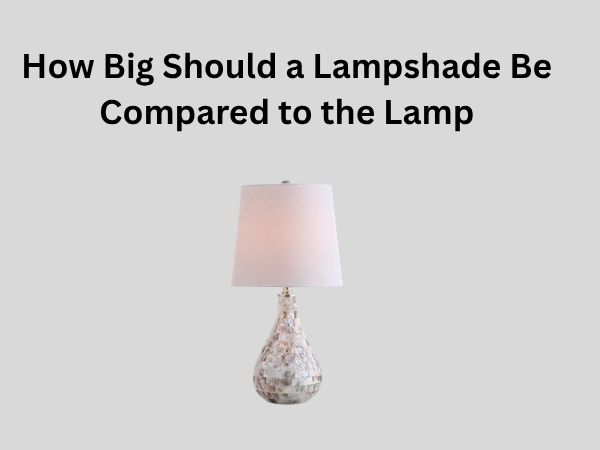
The golden rule I always follow is this: your lampshade should be approximately two-thirds to three-quarters the height of your lamp base. This creates a visually pleasing proportion that feels natural to the eye. If your lamp base is 12 inches tall, your shade should measure around 8 to 9 inches in height. Sounds simple enough, right? But there’s more to it than just height alone.
The Height-to-Width Relationship
The relationship between how tall your shade is and how wide it stretches is equally important. For most standard lampshades, the width should be roughly equal to or slightly larger than the height. A shade that’s 8 inches tall should have a diameter of about 8 to 10 inches at its widest point. This keeps things proportional and prevents that lanky or squashed appearance.
Measuring Your Lamp Base Correctly
Before you even think about shopping for a shade, you need accurate measurements of your lamp base. This is where a lot of people go wrong. They eyeball it or guess, and end up with something that doesn’t fit properly.
Taking Accurate Height Measurements
Use a measuring tape and measure from the very bottom of your lamp base to the point where the lamp physically meets the shade. Don’t include the bulb or any part of the electrical socket. You’re measuring just the structural base itself. Write this number down—you’ll need it when shopping.
Measuring the Base Diameter
For lamps with a round base, measure straight across the widest point. If your base is square or rectangular, measure both the length and width. This matters because your shade opening needs to fit securely on top of your base. A shade that’s too wide might slip off or look unstable, while one that’s too narrow won’t sit properly.
Different Lamp Types and Their Shade Sizing
Not all lamps are created equal, and the sizing rules shift depending on what type of lamp you’re working with. Let me break down the most common scenarios you’ll encounter.
Table Lamps and Standard Proportions
Table lamps are probably what most people think of when they picture a traditional lamp. These usually have a base between 8 and 16 inches tall. For a table lamp, stick to that two-thirds to three-quarters rule I mentioned earlier. This keeps the lamp from looking top-heavy or too delicate. A nice table lamp with an appropriately sized shade creates a cozy, balanced look that draws the eye without overwhelming the furniture it sits on.
Floor Lamps and Their Unique Challenges
Floor lamps are trickier because they operate on a much larger scale. The entire lamp—from base to the top of the shade—typically ranges from 60 to 72 inches. Here’s where many people mess up: they put a shade on a floor lamp that’s too small, making the lamp look spindly and unbalanced. For a floor lamp, your shade diameter should usually be at least 14 to 18 inches, and the height can be 10 to 14 inches. The larger dimensions help anchor the lamp visually and make it feel substantial in the room.
Desk Lamps and Compact Sizing
Desk lamps are the minimalists of the lamp world. They’re compact, functional, and don’t need a huge statement shade. These typically pair well with shades that are 6 to 10 inches in diameter and 5 to 8 inches tall. You want to keep the shade proportional to the base but not so large that it takes over your workspace.
Wall-Mounted Sconces
Sconces operate on different rules entirely because they’re attached to the wall rather than sitting on a surface. Your shade should generally be 6 to 12 inches wide, depending on how much wall space you’re working with and how far from the wall the fixture extends. The key is ensuring the shade doesn’t look cramped or so oversized that it dominates the wall.
The Visual Balance Principle
Beyond the numbers, there’s an art to lampshade sizing that goes beyond pure measurement. It’s about visual balance and how your lamp interacts with the surrounding space.
Imagine your lamp sitting in a room. Does the shade feel like it’s floating above the base, or does it feel grounded and secure? A shade that’s too small makes the base feel exposed and awkward—like wearing an oversized blazer with tiny pants. On the other hand, a shade that overwhelms the base looks cartoonish and unstable.
Creating Harmony with Your Interior Design
The style of your room matters too. In a minimalist space with clean lines and lots of open room, a smaller shade might actually work better even if it breaks the traditional proportion rule. Conversely, in a richly decorated room with lots of texture and pattern, a slightly larger shade can help it hold its visual weight. It’s not just about following rules—it’s about making your lamp feel right in its environment.
Common Lampshade Sizing Mistakes to Avoid
Let me share some of the most common errors I see people make when selecting lampshades, so you can steer clear of them.
- Buying a shade without measuring your base first. This is the biggest culprit. You end up with a shade that doesn’t fit, won’t stay in place, or looks completely wrong proportionally.
- Confusing diameter with radius. When a shade is listed as “12 inch,” that’s usually the diameter across, not the radius. Make sure you’re reading specifications correctly.
- Forgetting about the fitter size. The opening at the top and bottom of your shade needs to match your lamp’s socket and base diameter. A shade might look right size-wise but have the wrong fitter opening.
- Ignoring the depth of your base. A very ornate, thick base takes up more visual space than a thin, minimal one. You might need a slightly larger shade to balance an elaborate base.
- Not considering the shade’s material and color. A dark, opaque shade looks smaller and denser than a light, translucent one of the same size. Visually adjust your expectations accordingly.
Lampshade Width and Diameter Guidelines
Let’s get specific about width and diameter, because this is where precision really matters for both functionality and aesthetics.
For Small Table Lamps
If your lamp base is 8 to 10 inches tall, aim for a shade that’s 8 to 12 inches in diameter. This creates a proportional look that feels intentional and well-designed. The shade opening should fit snugly but not too tightly—you want to be able to slide it on and off without forcing it.
For Standard Table Lamps
With a 12 to 16 inch base, you’re looking at shades in the 10 to 14 inch diameter range. This is the sweet spot for most living rooms and bedside tables. It’s substantial enough to look intentional without being overwhelming.
For Larger Decorative Bases
Some lamps have incredibly ornate or sculptural bases that are wider and more substantial. In these cases, don’t be afraid to go up to a 16 to 20 inch diameter shade. The base demands more visual presence, and a properly sized shade will enhance rather than detract from it.
Fitter Sizes and How They Affect Your Choice
Here’s something that trips people up constantly: the fitter size. This is the opening at the top of your shade where it connects to the lamp. The two main types are spider fitters and harp fitters.
Understanding Spider Fitters
Spider fitters have a metal frame that sits inside the top of the shade, and the whole assembly hooks onto a ring that sits on top of your lamp base. These are super common and work with just about any lamp setup. When you’re shopping, look for the fitter size—it’s usually listed in inches—and make sure it matches your lamp’s base diameter or the ring it’ll sit on.
Harp Fitter Shades
Harp fitters work with the curved metal arms (called a harp) that come with many traditional lamps. The shade slides up the harp and is held in place with a finial. These shades need a harp fitter opening that matches the width of your lamp’s harp setup. Usually, this means the opening is slightly smaller than a comparable spider fitter shade.
Height Considerations for Different Spaces
The height of your shade matters more than you might think, especially in relation to where your lamp is positioned in the room.
Shades for Eye-Level Viewing
If your lamp is going on a table where you’ll be sitting across from it or at eye level, you want to be careful about shade height. A shade that’s too tall might block your view when you’re seated, while one that’s too short won’t hide the bright bulb. Aim for a shade height that’s roughly 8 to 10 inches when the lamp is on a typical side table or console.
Shades for Above Eye Level
With floor lamps or wall sconces that sit above eye level, you have more flexibility with height. The shade can be taller because you’re looking up at it. This is actually an advantage for floor lamps—the extra height fills the space above better and creates better lighting distribution throughout the room.
Material and Opacity Impact on Visual Size
This is a nuance that’s often overlooked but makes a real difference. The material and color of your shade change how large it appears, even if the actual measurements stay the same.
A linen shade in cream or white looks more open and takes up less visual space than a dark velvet shade of identical dimensions. The light passes through the light material, making it seem less dense. If you’re going with a darker or more opaque shade, you might want to size up slightly to ensure it doesn’t feel too heavy sitting on your lamp base.
Similarly, a pleated shade looks larger than a smooth one because of all the ridges and dimension. Keep this in mind when you’re making your final decision.
Practical Tips for Shopping for Lampshades
Now that you understand all the theory, let me give you some practical advice for actually finding the right shade.
- Always bring your lamp to the store if possible, or have precise measurements written down and with you when shopping online.
- Take a photo of your lamp and any measurements in case you need to reference them while browsing.
- Test the fit if you’re shopping in person. Put the shade on your lamp and look at it from different angles. Does it look balanced? Does it sit securely?
- Check the return policy. Even with careful measurements, sometimes a shade just doesn’t look right in your space. You want the option to return it if needed.
- Consider visiting a lighting specialty store rather than just a big box retailer. The staff can often help you navigate sizing issues and might have more variety to choose from.
- Don’t be swayed solely by price. A cheap shade that’s the wrong size will never look right, no matter how good a deal it was.
Special Considerations for Unusual Lamp Bases
Not every lamp has a simple, straightforward base. Some bases are sculptural, asymmetrical, or unusually shaped. How do you size a shade for these?
The principle remains the same, but you need to eyeball it more carefully. Measure the widest or most prominent part of your base, then select a shade that’s proportional to that measurement. Sometimes a slightly larger shade actually works better with an unusual base because it provides visual balance to the interesting shape below it.
Conclusion
Choosing the right lampshade size relative to your lamp base is a combination of following established proportional guidelines and trusting your visual instincts. The fundamental rule—keeping your shade at about two-thirds to three-quarters the height of the base, with a width that’s roughly equal to or slightly larger than the height—will serve you well in almost every situation.
Remember to measure carefully, consider the fitter size and type, think about your specific lamp style, and account for how the shade’s material and color will affect its visual presence. When you get these elements right, your lamp stops looking like an afterthought and becomes a piece that genuinely enhances your space. It’s one of those small design decisions that, when done correctly, people notice in a subconscious way—they just feel that the room looks balanced and put-together. That’s the goal, and with the knowledge you now have, it’s absolutely within reach.
Frequently Asked Questions
What is the ideal ratio between lampshade height and lamp base height?
The ideal ratio is typically two-thirds to three-quarters. If your lamp base is 12 inches tall, your shade should measure between 8 and 9 inches in height. This creates a balanced, proportional look that feels visually pleasing and intentional. However, always consider your specific lamp style and room design, as these ratios can flex slightly depending on the situation.
Can a lampshade be too large for a lamp base?
Absolutely, yes. A shade that’s too large will overwhelm the base, making it look top-heavy and unstable. It can also affect the lamp’s function by blocking too much light or creating an awkward aesthetic. As a rule, your shade diameter shouldn’t exceed the base diameter by more than 4 to 6 inches in most cases.
How do I know what fitter size I need for my lampshade?
You need to identify whether your lamp uses a spider fitter or harp fitter, then measure accordingly. For spider fitters, measure the ring diameter on your lamp’s base. For harp fitters, measure the width of the harp arms. Most shade packaging will clearly indicate what fitter type and size it uses, so you can match it to your lamp’s specifications.
Does the color or material of the shade affect how large it should be?
Yes, definitely. Dark or opaque shades appear denser and smaller visually, so you might consider sizing up slightly if you’re choosing a darker shade. Light, translucent materials appear more open and spacious. Also, pleated or textured shades look larger than smooth ones due to the added dimension, so factor this into your decision-making.

![10 Best Candle Warming Lamp [2026]](https://bestdesklamp.com/wp-content/uploads/2026/08/10-best-candle-warming-lamp-2026-featured-768x432.jpg)