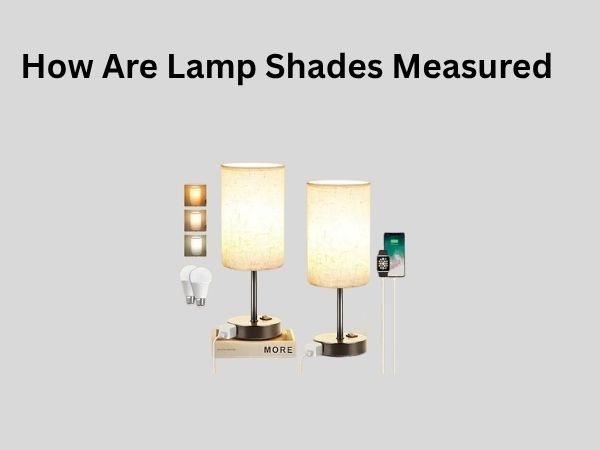
How Are Lamp Shades Measured Properly? A Complete Guide to Getting the Perfect Fit
Have you ever bought a lamp shade online, received it in the mail, and immediately realized it doesn’t fit your lamp base? Yeah, that’s frustrating. The truth is, measuring lamp shades isn’t rocket science, but it’s definitely something most people get wrong. I’ve been there myself—standing in my living room holding a beautiful shade that looks absolutely nothing like I expected because I didn’t measure correctly.
The good news? Once you understand the basics of lamp shade measurements, you’ll never have that problem again. Whether you’re replacing an old shade that’s seen better days or hunting for something that matches your new décor, knowing how to measure properly is your ticket to shopping success.
Understanding the Three Essential Measurements
Let’s talk about the elephant in the room first: lamp shades have three primary measurements you need to understand. Think of these three numbers as the holy trinity of shade shopping. Without all three, you’re basically flying blind.
The Top Diameter: Where It All Begins
The top diameter is the width across the opening at the top of your lamp shade. Picture looking directly down into a cup—that circle you see is basically what we’re measuring here. This measurement is absolutely crucial because it determines how the shade attaches to your lamp.
To measure the top diameter accurately, you’ll need a measuring tape. Place it across the widest point of the top opening, making sure it goes straight through the center. Write down this number—you’ll need it later. Most standard lamp shades have top diameters ranging anywhere from 4 inches to 12 inches, though specialty shades can vary.
The Bottom Diameter: The Wider Picture
Now, here’s where things get interesting. The bottom diameter is the measurement across the widest part of your lamp shade—the opening at the bottom. This is typically larger than the top diameter, which is why lamp shades have that classic tapered shape.
Just like with the top, you’ll measure straight across through the center point. This measurement matters because it determines how much light your shade disperses and how well it will sit on a lamp base. A shade with a much larger bottom diameter than top diameter will have a dramatic, flowy look, while a more subtle difference creates a sleeker appearance.
The Height: How Tall Should Your Shade Be?
The height is the vertical measurement from the top of the shade to the bottom. Don’t overthink this one—simply measure from the highest point to the lowest point. This determines how much of your bulb and lamp base the shade will cover.
Height matters for both aesthetics and function. Too short, and your shade looks like it’s barely there. Too tall, and you might have a lamp that looks disproportionate or unbalanced. Generally, the height should be roughly 60 to 70 percent of your lamp base’s height for a proportional, pleasing look.
Why These Measurements Matter So Much
You might be wondering why you can’t just eyeball it or make a rough guess. Here’s the thing: lamp shade dimensions affect everything about how your lamp functions and looks. The measurements determine whether your shade will fit your lamp base, how much light gets filtered through the fabric, whether your bulb gets adequate ventilation, and ultimately, whether the entire setup looks intentional or like something from a thrift store clearance bin.
The Connection Between Shade and Base
Your lamp base has a specific fitting size—usually the harp height and the diameter of the opening where the shade attaches. If your shade’s top diameter doesn’t match this opening, you’re in trouble. You might need a fitter ring, or worse, the shade simply won’t attach securely. Loose, wobbly shades are safety hazards and definitely not attractive.
Visual Balance and Proportion
Think about a toothpick with a beach ball on top—that’s what happens when your proportions are way off. A shade that’s too small for its base looks ridiculous, while a shade that’s too large makes the entire lamp look top-heavy and awkward. Getting the measurements right ensures your lamp looks intentional and well-designed, not like you grabbed whatever was on sale.
Step-by-Step: How to Measure an Existing Lamp Shade
Maybe you already have a lamp shade that fits perfectly, and you just want to replace it with something similar. Smart thinking! Measuring an existing shade is probably the easiest scenario you’ll encounter.
Gather Your Tools First
- A flexible measuring tape (fabric ones work best)
- A ruler or straight edge
- Paper and pen for notes
- Maybe your phone to take pictures
You don’t need anything fancy. Honestly, a measuring tape from the dollar store works just fine for this job. The most important thing is that you measure carefully and write everything down immediately. Your memory is not your friend here—trust me on this.
Taking the Top Measurement
Place your shade on a flat surface. Stretch your measuring tape across the top opening, making sure it passes through the center point. Keep the tape level and not twisted. Read the measurement where the tape crosses the circle. That’s your top diameter. Write it down.
Measuring the Bottom
This one’s equally straightforward. Flip your thinking—now you’re measuring the bottom opening in the same way. Straight across through the center. If your shade is a standard tapered design, this number will be larger than your top measurement. That’s completely normal.
Getting the Height Right
Stand your shade upright. Measure from the very top edge straight down to the very bottom edge. This is your height. Make sure your tape measure stays vertical and doesn’t angle or bend. You want a straight measurement, not a diagonal one.
How to Measure When Shopping for a New Shade
This is where things get a bit trickier. You’re trying to buy a shade that will work with your existing lamp base, but you need to make sure the measurements will actually work.
Knowing Your Lamp Base Specifications
Before you even open a browser to shop, you need to understand your lamp base. Specifically, you need to know the harp height—that’s the U-shaped metal piece that holds your shade. If your lamp doesn’t have a harp yet, you need to measure the opening where the shade would attach.
The top diameter of your new shade should be approximately the same size as the harp opening. If it’s significantly larger, you’ll need a fitter ring to make it work. If it’s significantly smaller, it simply won’t attach properly.
Considering the Overall Height Balance
Here’s a practical formula I’ve found works beautifully: your shade height should be about 60 to 70 percent of your lamp base height. So if your lamp base is 10 inches tall, your shade should be around 6 to 7 inches tall. This creates that visual harmony that makes a lamp look professionally designed.
But here’s the thing—this is a guideline, not a hard rule. Sometimes breaking the rule creates a stunning, modern look. It’s just something to keep in mind as you’re browsing options.
Understanding Different Shade Types and Their Measurements
Not all lamp shades are created equal. Different styles have different measurement considerations, and understanding these differences will make you a more informed shopper.
Drum Shades: The Simple Cylinder
Drum shades are probably the most straightforward to measure. They’re basically cylinders—straight sides, so the top diameter and bottom diameter are the same. This simplicity is exactly why they’re so popular. You measure the diameter and the height, and you’re done. Easy peasy.
Empire Shades: The Classic Tapered Look
Empire shades taper from a wider bottom to a narrower top. These are what most people picture when they think “lamp shade.” They require all three measurements because the top and bottom diameters are different. The height matters for the classic proportions this style is known for.
Cylinder Shades: The Modern Approach
These are similar to drum shades but usually a bit taller. They also have the same top and bottom diameter, making measurements straightforward. If you love a clean, contemporary aesthetic, these are your jam.
Bell Shades: The Sophisticated Choice
Bell shades look like, well, bells. They flare out dramatically from top to bottom, creating elegant curves. Measuring these requires attention to all three dimensions because the visual difference between top and bottom is significant.
Common Measurement Mistakes People Make
I’ve learned from experience what doesn’t work when measuring lamp shades. Let me save you from these headaches.
Measuring at an Angle Instead of Straight Across
This is the number one mistake I see people make. They measure diagonally instead of through the center. Guess what? That gives you the wrong number. Always measure straight across through the middle, keeping your tape level and perpendicular to the shade’s axis.
Forgetting to Account for Fitter Rings
Some shades come with fitter rings—these are metal rings that help the shade attach to different sized harps. If you assume your shade doesn’t need one when it actually does, you’re going to have a fit. Check the product description, and if you’re unsure, ask before you buy.
Ignoring the Harp Height
The harp is that U-shaped metal bracket holding your shade. If your new shade is too tall or too short for your harp, it won’t look right. Sometimes this is adjustable, but sometimes it’s not. Always consider harp height in your calculations.
Not Considering Bulb Type and Heat Dissipation
Different bulbs generate different amounts of heat. Halogen and incandescent bulbs get hot, while LEDs stay cool. Your shade height and materials need to accommodate your bulb type safely. A shade that’s too short for an incandescent bulb could be a fire hazard.
Special Considerations for Different Lamp Types
Not every lamp is a simple table lamp. Different lamp styles have different measurement considerations, and understanding these will help you navigate specialty purchases.
Measuring for Table Lamps
Table lamps are the standard, and they’re pretty forgiving. Generally, you want your shade to extend beyond the widest point of the base and be tall enough to hide the bulb and harp when you’re seated nearby. That’s your basic rule of thumb.
Floor Lamps: Going Bigger
Floor lamps can accommodate larger shades because they’re more proportionate to their height. Your shade height should still follow that 60 to 70 percent rule, but because floor lamps are taller overall, you’re working with bigger numbers. A floor lamp might have a 16 to 20-inch tall shade, which would look absurd on a table lamp.
Chandelier Shades: The Tricky Ones
Chandelier shades are mini shades designed for individual bulbs on a chandelier. These are typically 3 to 5 inches tall and have small top and bottom diameters. They’re much easier to measure because they’re so small, but you need to measure multiple shades if you’re replacing the whole chandelier.
Pendant Lights and Hanging Shades
These hang from above rather than sitting on a base. The measurements still matter for how light disperses and how the shade looks proportional to your space, but you have more freedom with proportions. Just ensure the opening is wide enough for your cord and bulb to fit properly.
Using Online Tools and Resources
In our digital age, there are actually some helpful resources for lamp shade shopping. If you’re not confident in your measurements, these can help.
Measurement Guides from Retailers
Many lamp shade retailers have detailed measurement guides on their websites. These show you exactly how to measure and often include comparison charts. It’s worth reading these before you measure anything yourself.
Size Comparison Charts
Some retailers provide charts showing what different measurements look like compared to common objects. This visual reference can help you understand if a 16-inch shade is actually the size you want for your space.
Virtual Try-On Features
A few high-tech retailers now offer augmented reality features that let you visualize how a shade will look on your lamp. If your favorite retailer has this feature, it’s absolutely worth using. It removes so much guesswork from the equation.
Converting Between Measurement Units
Sometimes you’ll find measurements in inches, sometimes in centimeters, and sometimes—if you’re shopping internationally—in other units entirely. Let me make this simple for you.
One inch equals 2.54 centimeters. So if a shade is listed as 30 centimeters in diameter, that’s approximately 11.8 inches. Most countries use one standard or the other consistently, so once you know what system your lamp base uses, you can easily convert any shade measurement you find.
Pro tip: when you’re shopping online, always note the unit of measurement. A 12-inch shade is radically different from a 12-centimeter shade, and you don’t want that confusion when your order arrives.
The Role of Shade Material in Measurements
Here’s something people don’t often think about: the material your shade is made from can affect how it measures and how it looks once it’s on your lamp.
Fabric Shades: The Flexible Option
Fabric shades, especially linen or cotton blends, are slightly flexible. They give a little when you install them. This means a fabric shade that measures exactly your harp diameter might be a tiny bit snug going on, but once it settles, it’ll fit perfectly. This is normal and actually a good thing—it means it won’t slip around.
Paper Shades: The Rigid Option
Paper shades are more rigid and less forgiving. If you have a paper shade with a top diameter that exactly matches your harp opening, you might have trouble getting it on and off. Always ensure paper shades have a bit of wiggle room—maybe a quarter-inch larger than your harp opening.
Glass and Metal Shades: The Precise Option
Glass and metal shades are completely rigid. Their measurements are exact and unforgiving. If you’re buying a glass or metal shade, ensure the measurements are spot-on. There’s no flexibility here, so precise measurement is even more critical.
When to Call in a Professional
Sometimes, despite your best efforts, you’re just not sure about your measurements. There’s no shame in that. Knowing when to ask for help is actually a sign of wisdom.
If you’re shopping locally at a lamp store, bring your lamp base with you. Let the salesperson measure it. They do this all day and can instantly tell you what will work. If you’re shopping online and feeling uncertain, use the retailer’s customer service. Most legitimate lamp shade companies are happy to help you get the right shade.
You can also take your lamp to a professional lampshade maker or restorer. These craftspeople have been measuring lamps for decades and can guide you toward the perfect shade. Sure, it costs a bit of money, but it’s worth it compared to buying the wrong shade multiple times.

![10 Best Cheap Desk Lamp [2026]](https://bestdesklamp.com/wp-content/uploads/2026/08/10-best-cheap-desk-lamp-2026-featured-768x432.jpg)