How Many Heat Lamps Do 25 Chickens Need? A Coop Guide
For25 chickens, you typically need one 250-watt heat lamp — and only if they’re young chicks. Fully feathered adult chickens almost never need a heat lamp at all, even in cold weather. So before you buy anything, ask yourself: how old are your birds?
We researched this topic and found that most backyard keepers overestimate their heat needs. Chicks under four weeks are the ones that truly depend on a safe, reliable heat source. Adult chickens handle chilly nights just fine by fluffing their feathers and huddling together. The bigger risk isn’t cold — it’s a heat lamp fire hazard in a dusty coop.
- 25 chicks need just one 250-watt heat lamp, hung 18–24 inches above the brooder floor. If you’re still choosing a fixture, our guide to the best brooder lamps compares safe, well-reviewed options for chick brooders.
- Adjust the height as chicks grow, and watch their behavior to spot overheating or chilling.
- Adult chickens rarely need heat, even in winter — their feathers and flocking do the work.
- Many experts say a red bulb works better than a clear one, since it calms pecking behavior.
- Always secure the lamp with two attachments and keep bedding clear of it.
Below, we break down everything you need to know about sizing heat lamps for your flock — from chick stage to cold snaps, plus the safety details that could save your coop. Let’s dive in.
Getting the Heat Lamp Setup Right for a Flock of 25
So you’ve got 25 birds and one big question: what does the brooder setup actually look like? Here’s the short version. A single 250-watt lamp covers roughly a 4×4 foot warm zone, and 25 chicks need about 20 to 25 square feet of brooder space in their first weeks. That means one lamp creates the cozy hotspot while the rest of the space lets them cool off when they want.
Think of it like a campfire. Nobody stands inside the fire — they sit near it and back away when they’re warm. Your chicks want the same choice. One lamp gives them that option. Two lamps often just turn the whole brooder into a sauna.
Brooder Size and Lamp Placement
We found that lamp placement matters more than lamp count. Hang your lamp off to one side of the brooder, not the middle. This creates a temperature gradient — warm on one end, cooler on the other. Chicks then vote with their feet, and you can read their comfort level at a glance.
Start the lamp about 18 to 24 inches above the bedding. Use a thermometer at chick level to check that the warm zone sits around 95°F for week one. Extension cords should be heavy-duty and rated for the bulb’s wattage. A flimsy indoor cord under a 250-watt bulb is a problem waiting to happen.
Reading Your Chicks’ Behavior
Your chicks will tell you everything if you pay attention. When they spread out evenly and act busy, the temperature is just right. When they pile up under the lamp and chirp loudly, they’re cold — lower the lamp a few inches. When they press themselves against the brooder walls, wings drooping and beaks open, they’re too hot. Raise the lamp.
- Evenly scattered, happily peeping: temperature is perfect.
- Huddling in a pile under the lamp: raise the heat or lower the lamp.
- Crowded at the far edge, panting: too hot, lift the lamp right away.
- Noisy all night long: something’s off — usually temperature or a draft.
Adjusting Heat as Your Chicks Grow
Here’s where many new keepers get it wrong: they keep the same setup for eight weeks. Your chicks’ heat needs drop about 5 degrees each week until they’re fully feathered. Week one sits at 95°F. By week six, they’re comfortable near 65 to 70°F and ready to say goodbye to the lamp entirely.
The simplest way to lower the temperature? Raise the lamp a few inches each week. Or switch to a lower-wattage bulb. We found that watching feather development is your best cue — once wings and backs look fully feathered, usually around five to six weeks, the lamp can come down.
| Chick Age | Target Temp | Lamp Height Tip |
|---|---|---|
| Week 1 | 95°F | 18–24 inches above bedding |
| Week 2–3 | 90–85°F | Raise lamp 2–3 inches |
| Week 4–5 | 80–75°F | Raise again or drop to 150 watts |
| Week 6+ | 70°F or ambient | Retire the lamp if fully feathered |
When Can the Lamp Come Out for Good?
Fully feathered birds can handle surprisingly cold weather without help. Many experts say healthy adult chickens do fine well below freezing, thanks to their insulating feathers and the body heat a flock generates together (University of New Hampshire Extension and similar state extension services agree on this). A coop that stays dry and blocks drafts matters far more than added heat.
Do Adult Chickens in a Coop of 25 Need Winter Heat?
Almost never — and this surprises a lot of people. Twenty-five adult chickens huddled on a roost create their own little furnace. Add dry bedding, a draft-free coop, and proper ventilation, and most US winters are a non-event. We found that backyard keepers in Minnesota and Maine routinely skip heat lamps for adult flocks.
There’s also a biological wrinkle. When chickens stay warm through winter under artificial heat, their bodies don’t shift into cold-weather mode. Then one power outage hits, and a heat-dependent flock faces a sudden, dangerous shock. Birds allowed to acclimate naturally handle the same cold snap without drama.
Rare Exceptions Worth Knowing
A few situations do call for extra warmth. Extreme cold snaps well below zero, a sudden wet-and-windy storm, or a bird recovering from illness or injury might need temporary support. Frostbite on large combs becomes more likely in damp, unventilated coops — but the fix there is airflow and dry bedding, not a heat lamp.
Better Winter Prep Than a Heat Lamp
Want your flock to cruise through winter? Do these instead:
- Seal drafts at roost level but keep high vents open for moisture.
- Pile up deep, dry bedding — pine shavings work great.
- Offer warm water in the morning during freezes.
- Give scratch grains in the evening for an overnight digestion warm-up.
- Choose cold-hardy breeds with smaller combs if winters are brutal.
Safety Checklist for Running a Heat Lamp Around 25 Birds
Here’s the part that keeps us up at night: heat lamps and chicken coops are a leading cause of coop fires. Dust builds up fast, bedding is flammable, and chickens flap into things. The National Fire Protection Association notes that heating equipment is a top cause of barn and agricultural structure fires. Treat your lamp like the small space heater it basically is.
Run through this checklist every single time you set up or adjust a lamp:
- Secure the lamp with two independent attachments — a chain or clamp plus a zip tie or carabiner as backup.
- Keep all bedding, shavings, and straw at least 18 inches below the bulb.
- Blow dust off the bulb and fixture weekly; dust plus heat equals fire risk.
- Use a lamp rated for 250 watts with a ceramic socket, not plastic.
- Plug into a heavy-duty cord on its own circuit, away from waterers.
- Check the setup daily — a loose clamp at bedtime is a fire at 3 a.m.
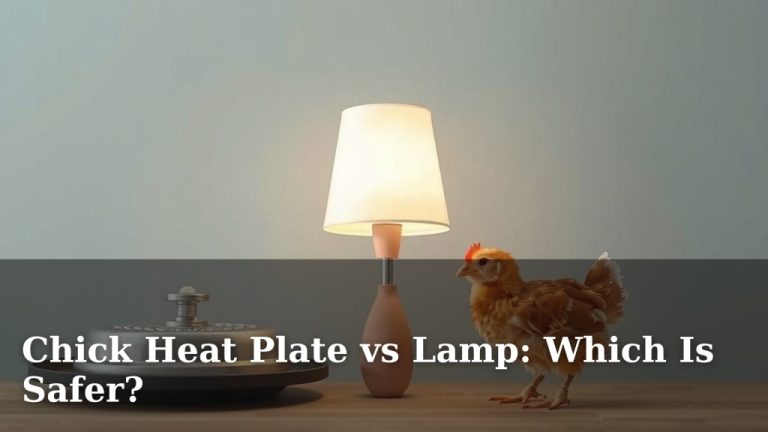
One more tip many experts recommend: consider a radiant heat plate instead of a lamp for chicks. These flat panels mimic a mother hen, use far less electricity, and can’t shower hot glass onto bedding if they slip. They cost more upfront, but we found that keepers who switch rarely go back.
Bottom line for your 25 birds: one good lamp, hung right, secured twice, and retired the moment feathers come in. Your chicks stay warm, your coop stays standing, and you get to sleep at night — which, let’s be honest, is what we’re all really after.
Conclusion
Raising 25 chickens is easier on the heating budget than most people expect. One 250-watt lamp covers your chick stage, behavior tells you when to raise or lower it, and fully feathered birds retire it for good around week six. Adults handle winter on their own with a dry, draft-free coop. The real job isn’t keeping birds warm — it’s keeping your setup fire-safe and knowing when the lamp can go. So before you click “buy,” double-check your birds’ age. If they’re chicks, grab one solid lamp with a ceramic socket. If they’re adults, skip the lamp and spend that money on extra bedding instead.
Frequently Asked Questions
Can I use two 250-watt heat lamps for 25 chicks instead of one?
You can, but it’s usually unnecessary and doubles your fire risk. We found that one 250-watt bulb creates enough of a warm zone for 25 chicks as long as your brooder is big enough for them to move away from it. Two lamps make more sense only in an unheated barn in genuinely freezing conditions.
How much electricity does a 250-watt heat lamp cost to run?
At the US average rate of roughly 17 cents per kilowatt-hour, a 250-watt bulb costs about 35 to 40 cents per day if it runs 24 hours. Over a six-week brooder period, that’s around $15 to $17 total. Radiant plates use less power, so many keepers consider them a long-term money saver.
Should I leave the heat lamp on all night for my chicks?
Yes, chicks need steady warmth day and night until they’re feathered. A sudden overnight temperature drop can chill young birds fast. This is exactly why securing the lamp properly before bed matters so much — a loose clamp is far more dangerous than the dark.
What happens if the power goes out while my chicks are under a heat lamp?
Chicks under two weeks old can chill quickly, so have a backup plan ready. A well-sealed brooder in a warm room holds heat for a few hours. For longer outages, keep hand warmers, a covered hot water bottle, or a battery-powered setup on hand. Older, feathered chicks usually ride out short outages just fine.
Can a heat lamp be too strong for chicks?
Absolutely. A 250-watt bulb hung too low can overheat chicks within an hour, and panting, spread wings, and crowding at the brooder edges are the warning signs. Always start the lamp high, check the thermometer at chick level, and adjust down. A bulb that’s too strong is a bigger risk than one that’s slightly too far away.
Do red heat lamps bother chickens at night?
Not at all — red light is actually easier on a flock than bright white bulbs. It doesn’t disrupt sleep the way full-spectrum light can, and we found it reduces pecking between chicks. That’s why red bulbs remain the go-to choice for most brooder setups.