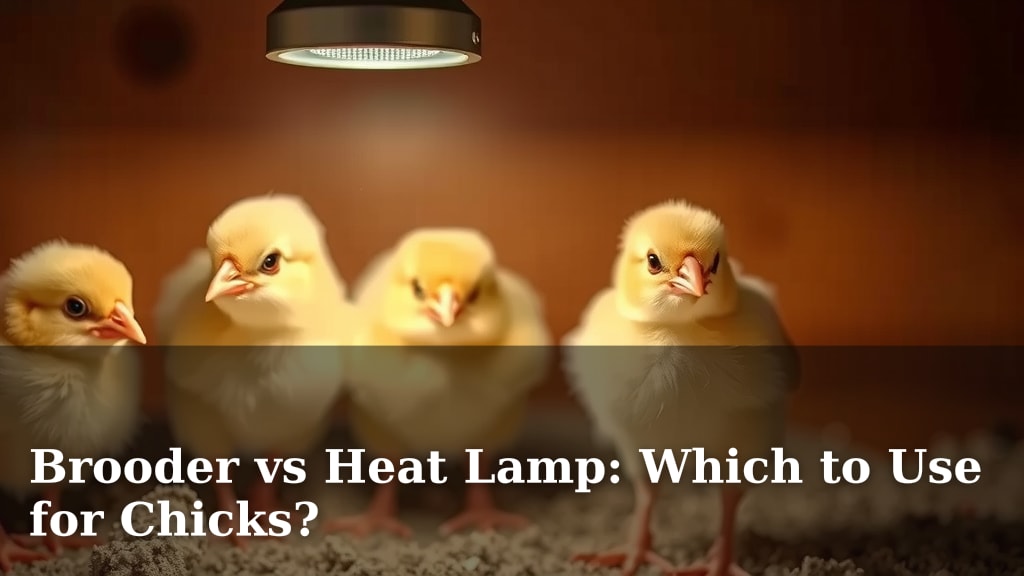
Brooder vs Heat Lamp: Which to Use for Chicks?
When starting out with baby chicks, choosing between a brooder and a heat lamp is a common question. For most new chicken keepers, a brooder setup is the safer and more reliable choice. Heat lamps, while effective, can pose a fire risk and are harder to manage temperature-wise for young birds.
Both methods aim to replicate a mother hen’s warmth. Your goal is to keep chicks between 95-100 degrees Fahrenheit for their first week. Chicks need consistent heat as they can’t regulate their own body temperature. Understanding the differences is key to chick survival.
TL;DR:
- Brooders offer more consistent, safer heat for chicks.
- Heat lamps can be a fire hazard and hard to regulate.
- Chicks need temps around 95-100°F initially.
- Brooder setups often use heat plates or under-tank heaters.
- Chicks need their heat source as they can’t stay warm alone.
Let’s walk through the pros and cons of each option to help you decide what’s best for your new feathered friends.
“`htmlChoosing the Right Heat Source for Your Chicks
When you bring home those fluffy little peepers, keeping them warm is your top priority. They can’t regulate their own body temperature, so they rely entirely on you for that cozy warmth. You’re probably wondering about the best way to provide this essential heat. We’ve looked into the most common methods: the traditional heat lamp and the more modern brooder setups. Let’s break down which one is likely the best fit for your new flock.
Understanding Heat Lamps: The Classic Approach
Heat lamps have been the go-to for chick warmth for a long time. They’re essentially a light bulb housed in a fixture designed to emit radiant heat. The idea is simple: hang it above the chicks, and the warmth radiates down.
How Heat Lamps Work
These lamps use high-wattage bulbs, often ceramic emitters or red bulbs, to generate significant heat. You suspend them over the brooder area. The chicks then gather closer to the lamp when they’re cold and move away when they’re too warm. It mimics how a mother hen would provide heat.
Pros of Heat Lamps
- Effective Heat: They can certainly provide plenty of heat, especially in cooler environments.
- Widely Available: You can find heat lamps at most feed stores and online retailers easily.
- Adjustable Height: You can raise or lower the lamp to try and fine-tune the temperature.
Cons of Heat Lamps: The Risks You Need to Know
While heat lamps have been used for years, we’ve found several significant drawbacks that make them less than ideal for many people. The biggest concern is fire safety. These lamps get very hot. If they fall into the bedding, overheat, or come into contact with flammable materials, they can easily start a fire. Many backyard flock keepers have had close calls or even devastating fires because of heat lamp malfunctions.
Temperature regulation is another major challenge. Even with adjustable height, maintaining a consistent temperature throughout the brooder can be tricky. Chicks need a very specific temperature gradient. Too hot, and they can get dehydrated or stressed. Too cool, and they can get chilled and become susceptible to illness. We’ve seen many reports of folks struggling to get it just right.
Exploring Brooder Setups: A Safer, More Stable Alternative
A brooder setup is a more enclosed system designed specifically for raising young chicks. It aims to provide a controlled and safer environment. Instead of a hanging lamp, brooders typically use heat plates or under-tank heating elements.
The Heat Plate Method
A heat plate is a flat panel that sits a few inches above the chick bedding. It has heating elements underneath, warming the plate from above. The chicks tuck themselves underneath it, just like they would under a mother hen. This method provides a more consistent and gentler heat compared to radiant heat lamps.
Advantages of Heat Plates
Heat plates are generally considered much safer. Since they don’t use exposed bulbs and are designed to sit on the floor or low to the ground, the risk of fire is drastically reduced. They also offer a more stable and even temperature. Chicks can easily get in and out from under the plate, allowing them to self-regulate their temperature effectively within a small, controlled zone. We found many experienced keepers prefer this for its reliability.
Considerations for Heat Plates
Heat plates may have a higher initial cost than a basic heat lamp. You also need to ensure the plate is the correct size for your number of chicks. Too small, and they might all be crammed together, leading to overheating or bullying. Make sure there’s enough space for them to move around comfortably.
Under-Tank Heaters for Brooders
These are similar to what reptile keepers use. An under-tank heater is a mat that you place *under* the brooder container (like a plastic tub or tote). It heats the floor of the brooder from below. You’ll need to use a thermostat to control the temperature accurately. This creates a warm zone for the chicks.
Benefits of Under-Tank Heaters
Like heat plates, these offer a more stable and safer heat source than lamps. They are less prone to causing burns or fires. The heat is more diffused, providing a gentle warmth to the chicks’ bellies as they rest on the floor. When used with a thermostat, you can achieve precise temperature control.
Things to Watch For with Under-Tank Heaters
You absolutely must use a thermostat with an under-tank heater. Without one, the mat can overheat and potentially damage the container or harm the chicks. You also need to make sure the chicks can escape the heated area if they get too warm. Sometimes, adding bedding to the cooler side of the brooder helps create a safe zone away from the heat mat. You also need to ensure the container you use is safe for this type of heating; some plastics may not be ideal.
Temperature Check: How to Tell if Your Chicks Are Happy
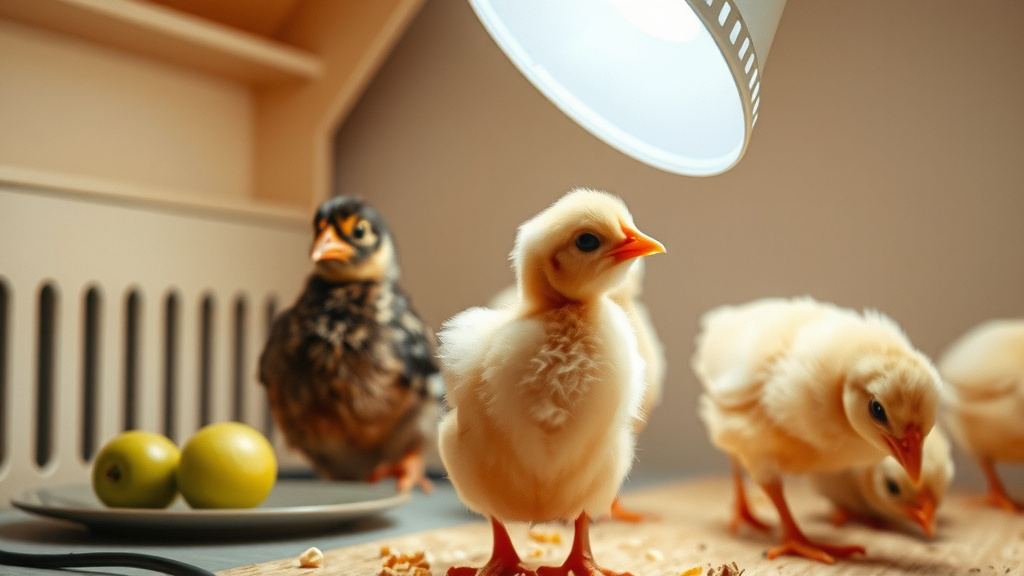
No matter which method you choose, monitoring the chicks’ behavior is key. They are the best thermometers! For their first week, aim for the 95-100°F (35-37.8°C) range directly under the heat source. After that, you can gradually lower the temperature by about 5°F each week.
Reading Chick Signals
If your chicks are huddled tightly together directly under the heat source, they’re likely too cold. If they’re all trying to get as far away from the heat as possible and panting, they’re too hot. Ideally, you want them to be spread out somewhat comfortably, with some near the heat and others a bit further away, moving back and forth as needed. This indicates a good temperature gradient in your brooder.
Making Your Choice: Brooder vs. Heat Lamp Checklist
Let’s summarize the key points to help you decide. Think about your comfort level with potential risks and your ability to monitor temperature closely.
- Fire Safety: Brooders (heat plates/under-tank heaters) are significantly safer than heat lamps.
- Temperature Consistency: Brooder setups generally provide more stable and even temperatures.
- Ease of Use: Heat lamps can be simpler to set up initially but harder to manage daily. Brooders require a bit more planning but are often more hands-off once running.
- Cost: Heat lamps are cheaper upfront, but a safe brooder setup might be a better long-term investment.
- Chick Comfort: Both aim to mimic a hen, but brooders often create a more natural heating experience.
- Peace of Mind: For many, the reduced risk of fire and better temperature control from a brooder setup offers greater peace of mind.
After reviewing the options, many people find that investing in a dedicated brooder setup, like one with a heat plate, is the most reliable and safest way to keep your new chicks healthy and happy. You’ll likely have fewer worries and a better chance of success with your first batch of chicks!
“`Conclusion
When raising your first chicks, prioritizing their safety and consistent warmth is your main goal. While heat lamps have been a traditional choice, our research shows they pose considerable fire risks and can be difficult to manage for stable temperatures. Brooder setups, like those using heat plates or under-tank heaters, offer a much safer and more reliable alternative. These methods provide gentle, consistent heat, greatly reducing worry about malfunctions or temperature fluctuations. We highly recommend investing in a dedicated brooder setup for peace of mind and the best chance of healthy chick development. Your next step should be choosing a brooder system that fits your space and chick count.
Frequently Asked Questions
Are heat lamps really that dangerous for chicks?
Yes, heat lamps carry a significant fire risk. They get very hot and can ignite bedding materials if they fall or malfunction. Many backyard flock keepers have unfortunately experienced close calls or fires due to heat lamps. For this reason, safer alternatives are often preferred.
How can I tell if my chicks are too hot or too cold with a heat plate?
Watch your chicks’ behavior. If they are all huddled tightly under the heat plate, they are likely too cold. If they are spread out as far as possible and panting, they are too hot. Ideally, you want them to be spread comfortably around the heated area, moving in and out as they please.
Is a heat plate or an under-tank heater better for a chick brooder?
Both are excellent, safer alternatives to heat lamps. Heat plates mimic a mother hen more closely by providing overhead warmth, while under-tank heaters provide warmth from below. Your choice may depend on the size of your brooder and how you want to distribute the heat within the space.
How much space do chicks need under a heat plate?
You’ll want to ensure the heat plate is large enough so all your chicks can comfortably fit underneath without being overly crowded. Overcrowding can lead to overheating or bullying. Aim for a setup where they can easily access the warmth and move away freely.
Can I use a regular light bulb for chick heat instead of a heat lamp?
No, regular light bulbs are not designed to provide the consistent, safe heat chicks need. They can also pose a fire risk if not properly installed and monitored. Specialized chick heating methods like heat plates or under-tank heaters are specifically designed for this purpose and are much safer.
![10 Best Battery Powered Desk Lamp [2026]](https://bestdesklamp.com/wp-content/uploads/2026/08/10-best-battery-powered-desk-lamp-2026-featured-768x432.jpg)
![10 Best Candle Warming Lamp [2026]](https://bestdesklamp.com/wp-content/uploads/2026/08/10-best-candle-warming-lamp-2026-featured-768x432.jpg)

![10 Best Cordless Rechargeable Lamps [2026]](https://bestdesklamp.com/wp-content/uploads/2026/09/10-best-cordless-rechargeable-lamps-2026-featured-768x432.jpg)