How Long to Keep a Heat Lamp On for Bearded Dragons Daily
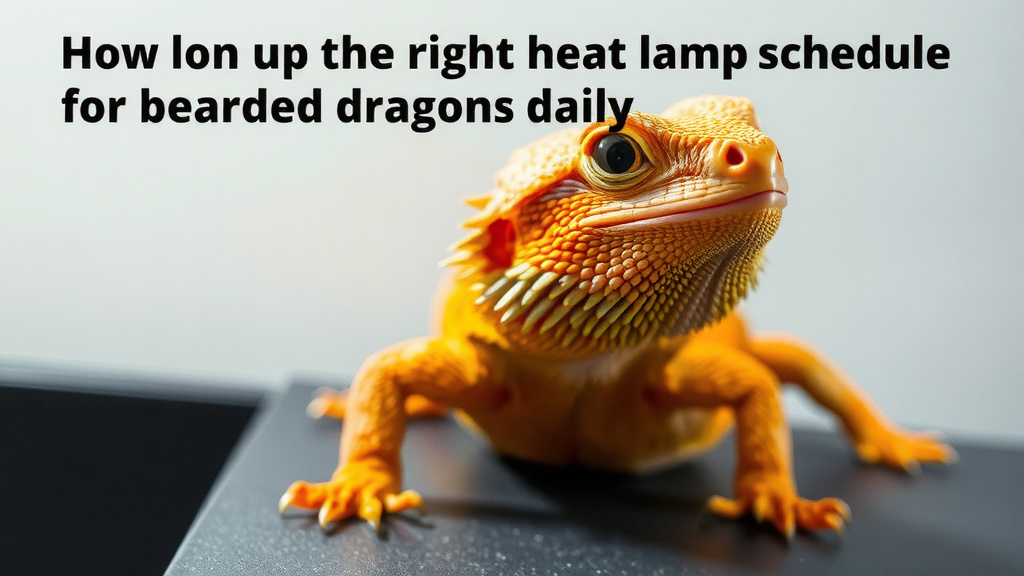
You should keep your bearded dragon’s heat lamp on for 10 to 12 hours every day, mimicking a natural daylight cycle. The easiest way to get this right is to turn it on in the morning and shut it off at night, every single day. Yes, that means weekends and holidays too — your dragon doesn’t take days off, and neither does its schedule.
Here’s why it matters: bearded dragons are cold-blooded, so they rely on that lamp to digest food and stay active. At night, the heat lamp should be turned off completely to let your dragon cool down and rest. We found that many experts recommend pairing the heat lamp with a UVB light on the same timer, so both switch on and off together.
- Keep the heat lamp on 10–12 hours during the day.
- Turn it off completely at night so your dragon can rest.
- Use a timer to keep the schedule consistent.
- Match the light cycle to the seasons if you want to be extra precise.
- Check the basking spot temperature — it should stay around 95–105°F.
Below, we break down everything you need to know about heat lamp timing, including what to do at night, how seasons change things, and the mistakes that trip up new owners. Let’s get your dragon’s lighting schedule dialed in.
Setting Up the Right Heat Lamp Schedule for Your Beardie
The best schedule mirrors the sun: lights on in the morning, off in the evening. Think of it as giving your dragon its own little sunrise and sunset. Your beardie’s body runs on this rhythm, and consistency keeps everything working smoothly.
We found that most keepers aim for a 12-hour on, 12-hour off cycle. In summer, you can stretch the daylight to about 14 hours. In winter, pull it back to 10 hours. This seasonal shift mimics what bearded dragons experience in the Australian outback, their natural home.
Why Consistency Beats Perfection
Here’s some good news: your dragon won’t fall apart if the lights come on at 7:15 instead of 7:00. What matters is the pattern, not the exact minute. Reptile keepers and vets alike agree that a steady routine supports healthy eating, digestion, and sleep.
The simplest fix? Buy a $10 lamp timer from any hardware store. Plug your heat lamp into it, set it, and forget it. Your dragon gets its schedule, and you get to sleep in on Saturdays without guilt.
What Happens at Night: Lights Off, Period
At night, turn the heat lamp all the way off. Bearded dragons need a temperature drop to rest properly, just like you sleep better in a cool room. Leaving the basking bulb on 24/7 can stress your dragon and mess with its sleep.
Many reptile care guides note that beardies can see light well into the evening, so that glowing bulb isn’t cozy for them. It’s more like someone shining a flashlight in your face at bedtime.
But What If My House Gets Cold?
Great question, and a fair worry. If nighttime temps in your home dip below 65°F, your dragon may need a little help. We found that most healthy adult beardies handle a nighttime drop into the low 60s just fine.
If you do need supplemental heat, skip the bright bulb. Instead, consider one of these:
- A ceramic heat emitter — it makes heat with zero light.
- A deep heat projector — another lightless option.
- A thermostat to keep things from overheating.
Your dragon should still sleep in the dark. Warm and dark is the goal, not warm and glowing.
Signs Your Nighttime Setup Is Off
Watch for clues. A dragon that’s lethargic during the day, skittish at night, or refusing food might be dealing with a lighting or temperature problem. Small adjustments often fix big behaviors.
Temperatures to Aim For Alongside Your Light Cycle
The heat lamp isn’t just about hours — it’s about the temps it creates. Here’s a quick reference table many keepers keep handy:
| Zone | Daytime Target | At Night |
|---|---|---|
| Basking spot | 95–105°F | Off |
| Warm side | 80–90°F | 65–75°F |
| Cool side | 75–80°F | 65–75°F |
Grab a digital thermometer or a temperature gun. The little stick-on dials are cute but often off by 10 degrees or more. Your dragon’s digestion depends on accurate basking heat, so measure like you mean it.
Pairing the Heat Lamp With UVB Lighting
Heat and UVB are a team. The heat lamp warms your dragon so it can digest, while UVB light lets it make vitamin D3 and absorb calcium. Without UVB, bearded dragons can develop metabolic bone disease, a serious and painful condition.
We found that UVB bulbs should run on the same 10–12 hour daytime schedule as the heat lamp. Both go on in the morning, both go off at night. Put them on one timer, and your whole lighting setup handles itself.
Do the Bulbs Need Different Timers?
Not usually. Since both follow the day cycle, one timer on a power strip works for both. Just remember that UVB bulbs lose strength over time even when they still glow, so replace them about every 12 months (many bulb makers recommend this).
Common Heat Lamp Timing Mistakes to Avoid
Even caring owners slip up here. These are the ones we see most often:
- Leaving the lamp on 24/7 — your dragon needs darkness to sleep.
- Random on-off schedules — reptiles thrive on routine.
- Guessing temperatures — measure, don’t assume.
- Using a red bulb at night — beardies can still see that glow.
- Skipping timers — memory fails, timers don’t.
One of these fixes takes five minutes. Pick the one that applies to you and knock it out today.
The Red Light Myth
Pet stores love selling red “night bulbs.” Here’s the catch: research on reptile vision shows bearded dragons perceive red light, so it can disturb their rest. If you need nighttime warmth, a ceramic heat emitter is the better pick. Your dragon gets heat, and you get to keep your conscience clean.
Your Quick Daily Heat Lamp Checklist
Tape this near the tank. It takes about 60 seconds a day.
- Lights on by mid-morning, off 10–12 hours later.
- Basking spot reads 95–105°F.
- Cool side stays in the mid-to-upper 70s.
- Nighttime temps don’t fall below 65°F.
- Full darkness at night — no glow, no exceptions.
- Timer checked weekly so the schedule never slips.
A Note on Brumation
Some adult bearded dragons slow way down in winter — sleeping more, eating less. This is called brumation, and it’s normal. Many keepers shorten the light cycle to 8–10 hours during this stretch. If your dragon suddenly naps for weeks, don’t panic, but do check with a reptile vet to rule out illness first.
When to Call a Reptile Vet
Proper lighting prevents problems, but it can’t fix everything. If your dragon stops eating for more than a few days, loses weight, or seems wobbly when it walks, get professional help. Metabolic bone disease and impaction are serious, and vets who specialize in exotics can spot them early.
You’re already doing the hard part: learning. A solid light schedule, accurate temps, and a watchful eye will keep that scaly friend happy for years. We’d call that a win.
Conclusion
Getting your bearded dragon’s heat lamp schedule right comes down to a simple formula: 10–12 hours on, full darkness off. Pair that with accurate basking temps, a UVB bulb on the same timer, and a $10 plug-in timer that does the remembering for you. We found that the owners who nail this routine end up with dragons that eat well, digest properly, and sleep soundly — and honestly, it’s one of the easiest wins in reptile care. So here’s your next move: grab a timer today, set it for your local sunrise and sunset, and check your basking spot with a temp gun this week. Your beardie’s body will thank you within days.
Frequently Asked Questions
Can I leave my bearded dragon’s heat lamp on 24 hours a day?
No — leaving it on around the clock disrupts your dragon’s sleep cycle and can cause stress. Bearded dragons need a genuine temperature drop and full darkness at night. If cold rooms worry you, use a ceramic heat emitter instead of the basking bulb after lights-out.
Should I turn off the heat lamp when my dragon is brumating?
Not necessarily. During brumation, most keepers shorten the light cycle to 8–10 hours rather than shutting it off completely. Your dragon may still wake occasionally to warm up or drink, so keeping a daytime heat source available is the safer route.
How long should a baby bearded dragon’s heat lamp stay on?
Juveniles follow the same 10–12 hour daytime schedule as adults. They do tend to bask more frequently, so it’s worth double-checking that your basking surface hits the warmer end of the range — roughly 100–105°F for young dragons still growing fast.
What happens if my heat lamp turns on late once or twice?
Don’t panic — a missed or shifted schedule now and then won’t harm a healthy dragon. Just reset it as soon as you notice. It’s the repeated inconsistency that causes trouble, which is exactly why we keep recommending that inexpensive timer.
Do I need to change the heat lamp hours as seasons change?
It’s a nice touch, but optional. Research on captive care suggests a fixed 12-hour cycle works year-round for most households. If you enjoy fine-tuning, stretch daylight toward 14 hours in summer and trim it to 10 in winter to mimic Australia’s seasonal swings.