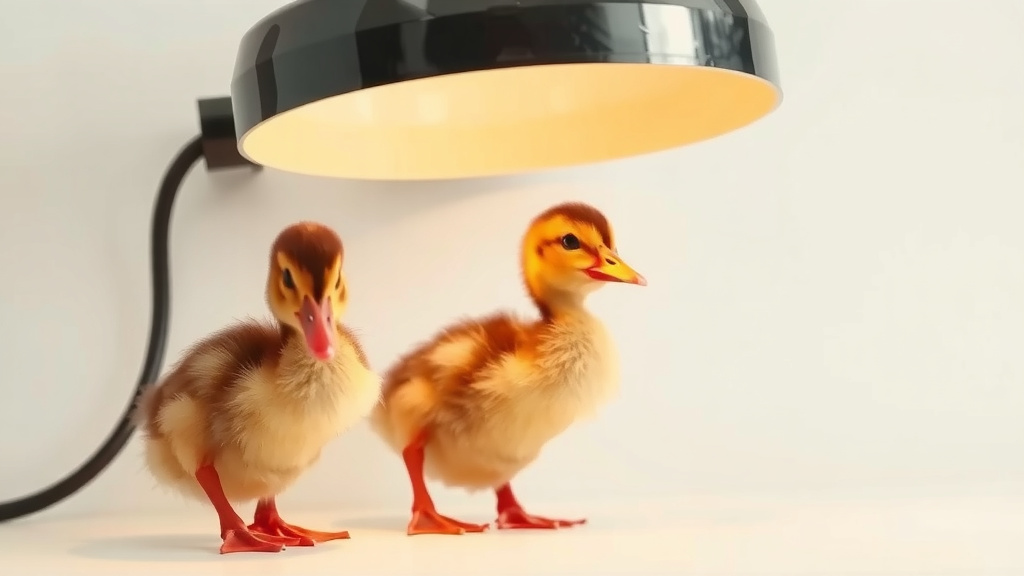
How Long Should Ducklings Be Under a Heat Lamp?
Ducklings should stay under a heat lamp until they’re about 6 weeks old, or until they’ve grown their first full set of feathers. If you’re wondering how long ducklings need a heat lamp, the short answer is roughly 4 to 6 weeks, depending on the temperature and how quickly they feather out. Keep the brooder starting at 90°F for the first week, then lower it by about 5 degrees each week.
Why does the timeline vary so much? Because feather growth, brooder temperature, and even the season all play a role. A duckling that’s fully feathered can regulate its own body heat, while a fluffy little one can’t. We found that most experts watch the ducklings’ behavior more than the calendar — if they’re huddling under the lamp, they’re cold; if they’re panting far away from it, they’re too hot.
- Ducklings need heat from hatch until about 6 weeks old.
- Start the brooder at 90°F and drop it 5 degrees each week.
- Fully feathered ducklings can go without the lamp.
- Watch their behavior — it tells you more than any date on the calendar.
- Cold weather outside may mean keeping the lamp a little longer.
Below, we break down everything you need to know about heat lamp timing, temperature settings, and the warning signs that tell you your ducklings are ready to fly solo. Let’s walk through it step by step.
The Duckling Heat Lamp Timeline Week by Week
The honest answer is this: your ducklings need heat until they’re fully feathered, which usually lands between 4 and 6 weeks. Feathers are nature’s winter coat. Until they grow in, your fuzzy little marshmallows can’t hold onto their own body heat.
We found that many hatcheries and poultry guides, including resources from Cornell University’s Extension programs, recommend the same gradual approach. Start warm, back off slowly, and let the ducklings tell you when they’re ready. Here’s how that looks on a calendar.
| Age | Brooder Temperature | What You’ll Notice |
|---|---|---|
| Week 1 | 90°F | Tiny fluffballs, sleep a lot, need constant warmth |
| Week 2 | 85°F | Wing feathers start poking through |
| Week 3 | 80°F | Tail feathers appear, more playful |
| Week 4 | 75°F | Body feathers filling in, less time under the lamp |
| Week 5 | 70°F | Mostly feathered, short trips away from heat |
| Week 6 | 65°F or ambient | Fully feathered, ready to go without the lamp |
Why Feathering Matters More Than Age
Baby ducks are born without the oil gland that adult ducks use to waterproof themselves. Until that gland kicks in and feathers replace fluff, they have zero insulation strategy. Think of fluff as a cotton T-shirt in January. Sweet, but not effective.
We found that ducklings raised in warm climates often feather out faster and ditch the lamp sooner. Ducklings brooded in a chilly garage in February? They may need that lamp a week or two longer than average. Your zip code matters.
Reading Your Ducklings’ Behavior
Signs They’re Too Cold
Watch the crowd, not the clock. Cold ducklings do something called piling, where they huddle so tightly under the lamp that the ones on the bottom can get crushed. That’s not cuddling — that’s a distress signal.
- Huddling in a tight bunch under the lamp
- Loud, distressed peeping that doesn’t stop
- Shivering or hunched posture
- Refusing food and water
Signs They’re Too Hot
Hot ducklings spread out to the far edges of the brooder, often as far from the bulb as physically possible. Some will pant with open beaks, like a dog on a summer sidewalk. If you see this, raise the lamp or lower the wattage right away.
One quick note: if your ducklings avoid the heat zone but seem happy, eating, and napping comfortably in the middle, that’s usually a good sign they’re ready for a slightly cooler brooder. Behavior beats the thermometer sometimes.
Setting Up the Brooder for Safe Heat
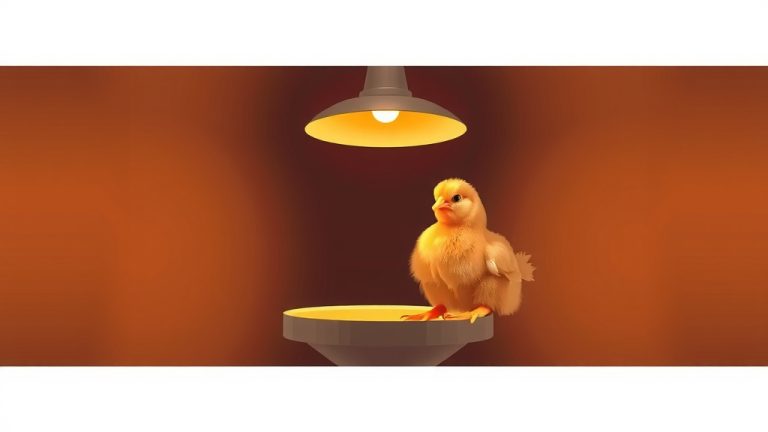
Here’s where many first-time duck keepers learn a hard lesson: the brooder needs a temperature gradient. That’s a fancy way of saying your ducklings need a warm side and a cool side. They should be able to walk in and out of the heat zone freely, like choosing between the fireplace and the kitchen.
- Place the lamp at one end only, never centered over the whole brooder
- Give enough space that all ducklings can move fully away from the heat
- Use a thermometer at chick level, not your best guess
- Secure the lamp so it cannot fall — fires and broken bulbs are real risks
- Add a low dish of water deep enough for dabbling but shallow enough to escape
Heat Lamps vs. Alternative Heat Sources
Heat lamps aren’t your only option. Many duck keepers now use radiant heat plates, which mimic a mother duck’s warmth from above. We found that plates reduce fire risk and let ducklings self-regulate — they scoot under when cold and pop out when warm. That said, a plain lamp works fine when set up safely.
Red bulbs are a popular choice because bright white light can encourage picking and disrupt sleep. A dim, warm glow lets ducklings rest like they would under mom. Whatever you choose, check it twice daily. Bulbs burn out, and a cold night can sneak up on you.
Making the Transition Off Heat Gradually
Don’t yank the lamp one frigid morning and call it character building. Ducklings do best with a gentle weaning process. Around week 4 or 5, start turning the lamp off for a few hours during the warmest part of the day. Watch what happens.
If they forage, splash, and carry on like usual — great. If they regroup and shiver, turn it back on and wait another week. Once they spend full days comfortably without heat and nighttime temperatures stay above about 65°F, they’re ready. Many extension guides suggest matching this timeline to mild spring or summer weather when possible.
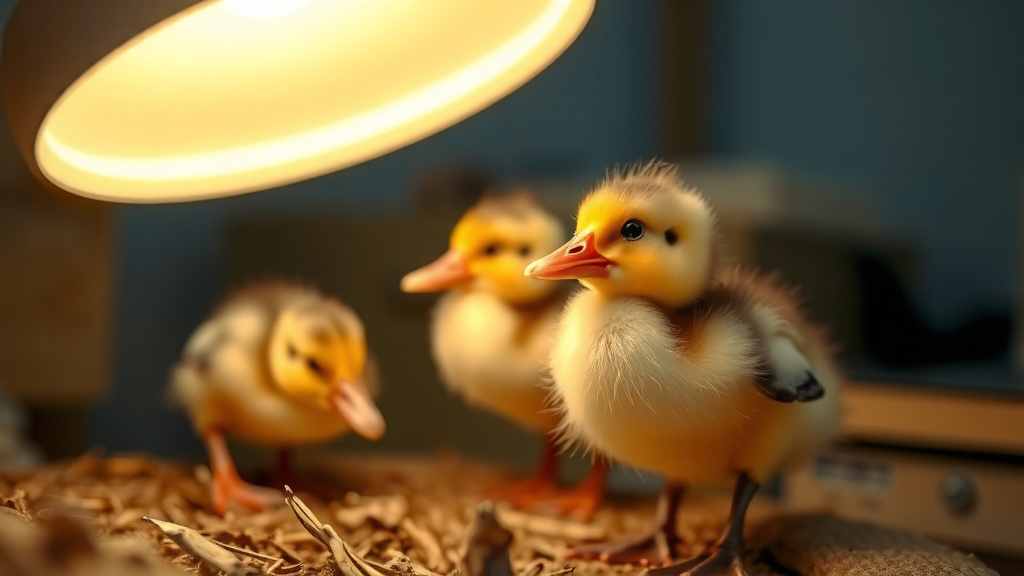
Common Heat Lamp Mistakes to Avoid
We’ve all been there — well-meaning, exhausted, and holding a heat lamp like it’s a magic wand. A few classic mistakes cause most of the trouble, so here’s your quick checklist of things not to do:
- Guessing the temperature — use a cheap thermometer at duckling level, always
- Keeping the brooder too small, so ducklings can’t escape the heat
- Dropping the temperature too fast — stick to about 5 degrees per week
- Judging by the calendar alone instead of feather growth and behavior
- Leaving an unsecured lamp that can swing, fall, or ignite bedding
- Forgetting drafts — a chilly breeze can undo a perfectly warm brooder
One more thing worth mentioning: wet bedding and young ducklings are a rough combo. Ducklings are messier than chicks and love to splash. Damp bedding steals body heat fast, so dry bedding makes your lamp’s job much easier and keeps your flock healthier.
And hey, don’t beat yourself up if week five rolls around and your ducklings still act like they need the lamp. Some birds are just drama queens. The calendar is a guide, not a rulebook — your ducklings, behaving like tiny feathered thermostats, will always give you the truest reading.
Conclusion
Raising ducklings isn’t complicated once you know what to watch for. Keep the brooder at 90°F for week one, drop it 5 degrees each week, and plan on the lamp until about 6 weeks old. Then let feather growth and behavior make the final call, not the calendar. A fully feathered duckling that eats, plays, and naps comfortably away from the heat is telling you it’s ready. If yours need an extra week, give it to them. Trust what you see over any chart. Your next step is simple: check your brooder today, hang a thermometer at duckling level, and make sure the lamp is secure. Your future flock will thank you.
Frequently Asked Questions
Can I leave a duckling heat lamp on all night?
Yes, especially during the first few weeks. Young ducklings can’t hold their body heat overnight, so continuous warmth is safest. Just make sure the lamp is securely fastened and use a red bulb so their sleep isn’t disturbed. If you’re still shopping, our roundup of the best brooder lamps highlights safe, reliable options.
What happens if ducklings get too cold?
Chilled ducklings stop eating, pile on top of each other, and can die within hours if they can’t warm up. The bottom birds in a pile can also get crushed. If you spot huddling or constant distress peeping, warm them up right away.
Do ducklings need a heat lamp indoors?
Often yes, at least early on. Indoor rooms usually sit around 68 to 72°F, which is still too cool for week-old ducklings. Once they’re mostly feathered and the room stays above about 65°F, you can usually skip the lamp.
Is a heat lamp or a heating pad better for ducklings?
Neither works quite like a radiant heat plate, which warms from above like a mother duck and lets ducklings move in and out freely. Heat pads under bedding don’t work well because ducklings need warmth directed down at them, and pads pose burning and fire risks.
Can 4-week-old ducklings go outside during the day?
They can on warm, calm, sunny days above 70°F, with supervision and for short stretches. Bring them back in well before evening chill sets in. Fully feathered birds handle outdoor life much better than partially feathered ones.