How Long Should a Salt Lamp Be On? Safe Hours Explained
You can keep your salt lamp on as long as you want. There’s no strict limit, and most salt lamps are designed to run safely for hours at a time. Many people leave theirs on all day without any issues.
That said, a few things matter. How long a salt lamp stays on depends on heat, humidity, and the bulb inside it. We researched what experts and manufacturers say, and the answer is simple: use common sense, keep an eye on the cord and bulb, and turn it off when you leave home for long periods. Worried about your lamp getting too hot or “sweating”? You’re not alone, and it’s an easy fix. Our guide to fixing a leaking salt lamp explains why the sweating happens and how to stop it.
- Salt lamps can safely stay on 24/7 if they’re in good condition.
- Turn your lamp off if you’re leaving the house or going on vacation.
- Keep it away from humid rooms like bathrooms to prevent leaking and sweating.
- Use the right bulb wattage so the lamp stays warm without overheating.
- Replace bulbs or cords if you notice flickering, buzzing, or damage.
Below, we break down exactly how long you should leave a salt lamp on, when to switch it off, and a few simple safety tips to keep your glow going. Let’s dive in.
How Long You Can Leave a Salt Lamp On
The short answer: as long as you like. We found that salt lamps have no set time limit from manufacturers. They’re designed to stay warm for long stretches, just like a nightlight.
That said, most people run theirs for 8 to 12 hours a day. That matches typical waking hours and keeps the lamp warm enough to do its thing. Many experts say a lamp left on also stays drier, since steady heat keeps moisture from pooling on the salt.
Why Salt Lamps Can Stay On for Hours
Salt lamps use a low-wattage bulb, usually 15 to 25 watts. That’s about the same heat as an old holiday light. The bulb gently warms the salt block, which is the whole point.
Why does heat matter so much? Salt pulls moisture from the air. If the lamp stays warm, that moisture evaporates instead of collecting. Leave it off in a damp room, and you’ll come back to a puddle. Warm lamp, dry lamp. It’s that simple.
The Bulb Is Doing More Work Than You Think
That little bulb isn’t just for glow. It’s the heat source that keeps your lamp from “sweating.” This is why LED bulbs are a poor swap. LEDs stay cool, so the salt stays damp.
If your lamp came with an incandescent bulb, stick with it. When it burns out, replace it with the same type and wattage.
When You Should Turn Your Salt Lamp Off
Safety first here. Fire risk from a salt lamp is very low but not zero. The main culprits are damaged cords, loose bulb sockets, and cheap dimmer switches. We found that cord and switch failures cause most lamp-related problems, not the salt itself.
- Turn it off when you leave the house for more than a few hours.
- Switch it off before bed if your cord or switch feels hot.
- Unplug it during storms or if you’ll be on vacation.
- Shut it down if you notice flickering, buzzing, or a burning smell.
Think of it like a candle, minus the flame. You wouldn’t leave a candle burning in an empty house. A lamp is safer, but the same gut check applies.
Signs Your Lamp Needs a Break
Give your lamp a quick once-over now and then. Here’s what to watch for:
- Hot cord or plug — unplug it right away.
- Flickering light — the bulb may be loose or dying.
- Buzzing or crackling — the socket or dimmer could be failing.
- Lamp “crying” — too much moisture, or the wrong bulb.
- Cracked base or frayed cord — stop using it until repaired.
Does Humidity Change How Long It Should Run?
Yes, big time. Humidity is the number one factor in how long your lamp can comfortably run. Salt is hygroscopic, which is a fancy way of saying it drinks moisture from the air.
In dry climates like Arizona or Colorado, your lamp can run all day without a drip. In humid spots like Florida or a steamy kitchen, the salt may weep even while it’s on. If that happens, don’t panic. It’s normal, not a defect.
Rooms to Avoid (and Rooms That Love a Lamp)
Where you place the lamp matters more than how long it runs.
| Room | Lamp Performance | Our Advice |
|---|---|---|
| Bedroom | Great, low humidity | Perfect nightlight, run it daily |
| Living room | Great | Safe for all-day use |
| Bathroom | Poor, very humid | Skip it or expect heavy sweating |
| Kitchen | Mixed | Keep it away from the stove and sink |
| Basement | Risky, often damp | Use a dehumidifier nearby |
Choosing the Right Bulb for Long Run Times
If you plan to leave your lamp on for 10+ hours, the bulb makes all the difference. We found that the original-style incandescent bulb is still the best choice. It provides steady, gentle heat.
Match the wattage to your lamp’s size:
- 15-watt bulb — small lamps under 7 pounds.
- 25-watt bulb — medium lamps, roughly 8 to 15 pounds.
- 40-watt bulb — large lamps over 15 pounds.
Going too high wastes energy and can overheat the cord socket. Going too low leaves the lamp cool and damp. Match it like you’d match a pan to a burner.
What About LED Bulbs?
We get this question a lot. LEDs are energy savers, but they don’t produce heat. A lamp with an LED will look pretty and weep within days in humid air. If you want efficiency plus warmth, some brands sell small halogen bulbs made for salt lamps. Those work well.
Electricity Cost of Running a Salt Lamp
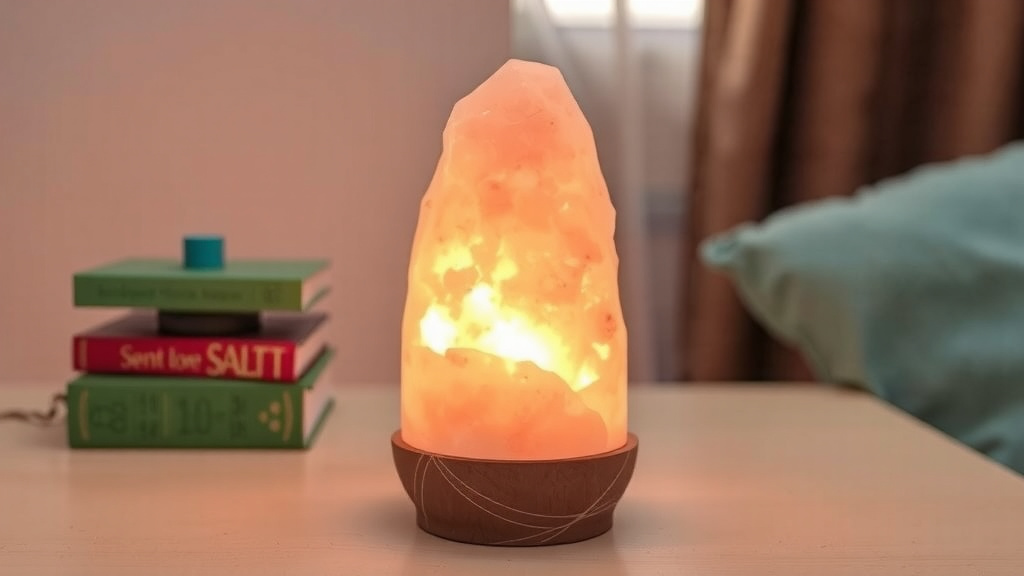
Worried about your power bill? Don’t be. A 15-watt bulb running 12 hours a day uses about 5 to 6 kilowatt-hours per month. At average US rates, that’s roughly a dollar or less monthly. Less than one fancy coffee a year.
Quick Safety Checklist Before Leaving It On
Run through this list anytime you plan a long session or an overnight glow:
- Check the cord for frays, kinks, or chew marks (yes, pets love cords).
- Make sure the bulb is the right wattage and screwed in snugly.
- Feel the switch and plug after 30 minutes — warm is fine, hot is not.
- Set the lamp on a tray or coaster to protect furniture from moisture.
- Keep it away from curtains, bedding, and anything flammable.
- Place it out of reach of kids and pets who might knock it over.
Many experts say these small habits prevent nearly every common salt lamp problem. A two-minute check beats a soggy nightstand every time.
What Happens If You Never Turn It Off?
Good news here. We found no evidence that a well-built lamp wears out from constant use. The bulb will burn out eventually, just like any light bulb, and salt doesn’t get “used up.”
The real risks come from neglect, not runtime. A dusty lamp can attract moisture and grime. A cord left bent behind furniture for years can crack. So keep it clean and check the cord now and then.
How to Clean a Lamp That’s Been On for Weeks
Unplug it first, always. Then use a slightly damp cloth to wipe the surface. Don’t spray water directly on the salt or submerge it. Salt dissolves in water — that’s chemistry, not a cleaning tip gone wrong. For a full walkthrough with supplies and steps, see our guide to cleaning a salt lamp safely.
Pat the lamp dry, plug it back in, and let the bulb’s warmth finish the job. It’ll look brand new in an hour.
Conclusion
So, how long should a salt lamp be on? As long as you want. Your lamp is built to run for hours, and the bulb’s warmth actually keeps the salt dry and happy. Just match your bulb wattage to your lamp’s size, keep it out of humid rooms, and give the cord a quick check now and then. Flip it off when you leave the house or head out of town, and you’ve covered the basics. We found that a little attention goes a long way with these lamps. Go ahead and pick a cozy spot, plug it in, and enjoy that warm glow tonight.
Frequently Asked Questions
Can I leave my salt lamp on overnight while I sleep?
Yes, if your lamp is in good shape and the cord and switch stay cool to the touch. Many people use theirs as a nightlight every night. If anything feels hot or you notice flickering, switch it off before bed until you’ve fixed the issue.
Do salt lamps use a lot of electricity if left on all day?
No, they’re one of the cheapest lights in your home. A typical 15-watt bulb costs roughly a dollar a month to run for 12 hours a day. You’ll barely notice it on your power bill.
Why is my salt lamp wet even when it’s turned on?
That usually means the room is too humid or the bulb isn’t warm enough. Try swapping in a higher-wattage incandescent bulb or moving the lamp to a drier room. A dehumidifier nearby can also help in damp spaces.
Can I use a dimmer switch with my salt lamp?
You can, but quality matters here. Many salt lamp problems trace back to cheap dimmer switches that fail over time. If you use one, buy a well-made replacement and check that it doesn’t get hot during use.
How long does a salt lamp bulb last with daily use?
Most incandescent salt lamp bulbs last around 1,000 to 1,500 hours, so expect a few months of nightly use. Keep a spare or two on hand so you’re not left in the dark. Swap in the same wattage when it burns out.