How Long Do Chicks Need a Heat Lamp? A Week-by-Week Guide
Most chicks need a heat lamp for 4 to 6 weeks after they hatch. Your chicks are ready to wean off the heat once they have their full feathers, which usually happens around 5 weeks old. The exact timing depends on the temperature in your brooder and the season.
Why does this matter so much? Baby chicks can’t regulate their own body temperature during their first weeks of life. Without a reliable heat source, they can get chilled, stop eating, or worse. We researched what poultry experts recommend, and the good news is that watching your chicks’ behavior tells you almost everything you need to know about weaning them off heat.
- Chicks typically need a heat lamp for 4 to 6 weeks total.
- Start at 95°F for the first week, then drop the temperature by 5°F each week.
- Fully feathered chicks (around 5 to 6 weeks) can usually handle room temperature.
- Watch for signs like huddling (too cold) or panting at the brooder’s edge (too hot).
- Warm weather can shorten the timeline; cold winters can stretch it.
Below, we break down the week-by-week schedule, how to read your chicks’ behavior, and the safest way to lower the heat without stressing your little flock. Let’s get your chicks off to a strong start.
Your Week-by-Week Heat Lamp Schedule
Chicks need warmth that steps down each week, not a flat one-size-fits-all temperature. Start the brooder at 95°F under the lamp during week one. Then drop the temperature by about 5°F every week until you reach around 65 to 70°F.
Think of it like weaning a baby off a pacifier. You don’t yank it away; you ease it out gently. Many extension offices and hatchery guides, including advice shared by University extension programs, recommend this same weekly step-down approach.
| Chick’s Age | Brooder Temperature |
|---|---|
| Week 1 | 95°F |
| Week 2 | 90°F |
| Week 3 | 85°F |
| Week 4 | 80°F |
| Week 5 | 75°F |
| Week 6 | 70°F or room temp if feathered |
If you can’t measure the temp right at chick level, don’t panic. A basic thermometer from any farm store works fine. Place it on the brooder floor directly under the lamp edge.
Why Weekly Temperature Drops Matter
Each small drop nudges your chicks to grow the insulating feathers they’ll need for life outside the brooder. Keep the heat constant too long, and feathering can actually slow down. Rush the drops, and you’ll get chilled, chirpy babies.
We found that slow and steady wins here. A 5-degree dip per week is gentle enough that most chicks barely notice the change.
Reading Your Chicks’ Behavior Like a Pro
Your chicks will tell you everything, if you know their language. Behavior is honestly a better gauge than any thermometer. Watch them for a few minutes after each temperature change.
Signs Your Chicks Are Too Cold
- They huddle in a tight pile directly under the lamp.
- You hear loud, constant distress peeping.
- Chicks sit fluffed up and inactive.
- Some chicks may pile so hard that weaker ones get trapped underneath.
That last one is serious. Piling can cause smothering in extreme cases. If you see it, lower the lamp or add a bulb right away.
Signs Your Chicks Are Too Hot
- They spread out to the far edges of the brooder, away from the light.
- Chicks pant with open beaks.
- Wings droop or held away from the body.
- You notice anyone acting sleepy or wobbly from heat stress.
Panting is the big one. If your babies look like tiny, exhausted marathon runners, raise the lamp a few inches. Heat stress can kill faster than a chill, so act quickly.
The Perfect Picture
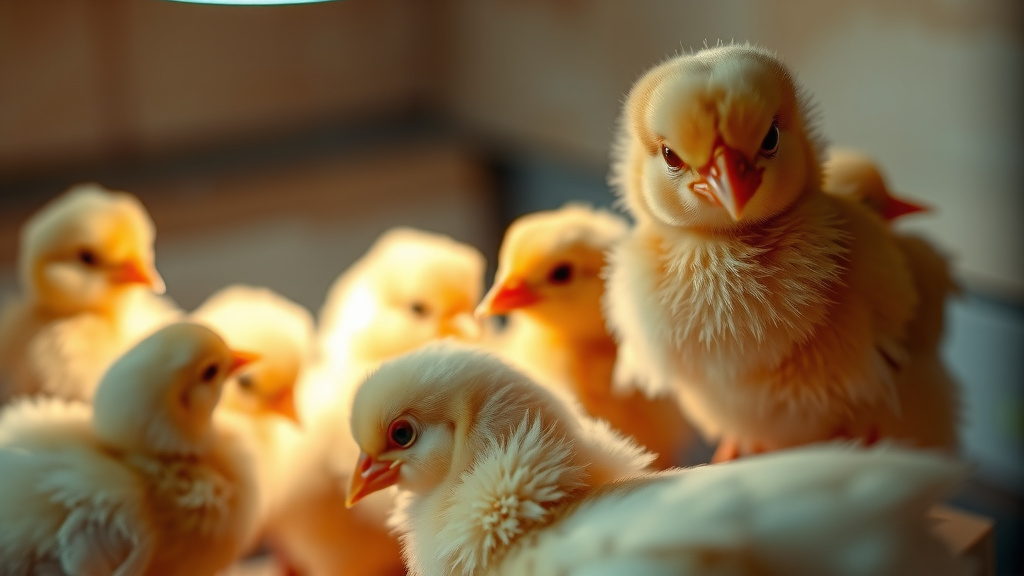
Happy chicks look evenly spread across the brooder floor. Some eat, some nap, some chase gnats they hallucinated five minutes ago. That calm, scattered pattern means your temperature is right.
Weaning Chicks Off the Heat Lamp Safely
Once your chicks hit the fully feathered mark, usually week 5 or 6, start easing the lamp back. Raise it a few inches every couple of days, or use a lower-wattage bulb. Many experts say a gradual taper beats going cold turkey.
Warm daytime weather helps here. Let chicks enjoy a supervised outdoor pen on a mild day if you have one. Just bring them back in before evening temps fall.
The Full-Feather Check
Not sure if your chick is ready? Look at the neck, back, and wings. When those areas show no pink down and only real feathers remain, your chick has its natural insulation. Head feathers come in last, which is why some chicks rock that awkward mohawk look for a week.
How the Season Changes Your Timeline
Calendar chicks hatched in a July heat wave may need the lamp far less. Winter chicks in a drafty barn may need extra weeks, or a second lamp for backup. The 4-to-6-week window is a range, not a deadline.
We found that ambient brooder location matters as much as the calendar. A brooder in a heated garage weans faster than one in a cold shed. Trust the thermometer and the chicks over the date on your calendar.

Heat Lamp Safety Checklist
Heat lamps are the leading cause of small-coop fires, and fire safety groups warn about any heat source near bedding (NFPA). Before lights-out each night, run through this quick list. Our heat plate vs lamp safety comparison explains why many keepers switch heat sources.
- Secure the lamp with a chain or clamp, never just the bulb socket.
- Keep the lamp at least 18 inches from bedding and chicks.
- Use a bulb guard or wire cage around the bulb.
- Check that cords sit outside pecking and chewing range.
- Keep a working thermometer in the brooder at chick level.
- Have a backup bulb on hand before the old one burns out.
Some keepers swap heat lamps for radiant brooder plates, which run cooler and cut fire risk. Chicks warm themselves under the plate and self-regulate naturally. Many experts say plates also make weaning simpler, since chicks simply stop using them when they’re ready.
What Happens If You Remove Heat Too Soon
Chilled chicks stop eating and digesting properly, and young animals lose body heat fast because of their small size. Veterinary guidance on young animals, including poultry care notes from extension services, warns that a cold stress event can stunt growth or turn fatal within hours.
Watch for droopiness, hunching, and refusal to eat in the first 48 hours after a big change. If you spot it, restore warmth immediately. There’s no shame in backing up a week; every flock moves at its own pace.
Quick Answers for Common Brooder Setups
Do Chicks Need Heat at Night Longer Than Daytime?
Sometimes, yes. Nighttime temps drop hard, even in late spring. If days are warm but nights dip below 65°F, keep a low-wattage lamp running overnight for another week or two.
Can You Use a Regular Light Bulb Instead?
You can, but we’d steer you toward a red brooder bulb instead. Red light discourages pecking and lets chicks sleep normally. Standard bulbs run bright and can spark picking behavior in a crowded brooder.
What If Some Chicks Feather Faster Than Others?
That’s normal, especially in mixed flocks. Feathering speed varies by breed. Give the whole brooder one more week of low heat until even your slowest, baldest-looking straggler is dressed for the occasion.
Conclusion
Raising chicks is equal parts exciting and nerve-wracking, but the heat lamp part doesn’t have to be complicated. Plan on 4 to 6 weeks of warmth, drop the temperature 5°F each week, and let your chicks’ feathers and behavior have the final say. If they’re evenly spread out and calm, you’re doing it right. If they huddle or pant, adjust the lamp and watch again. When your slowest featherer is fully dressed and nighttime temps stay mild, you can switch that lamp off for good. Before your next batch arrives, grab a backup bulb and a thermometer so your brooder is ready on day one.
Frequently Asked Questions
Should I turn the heat lamp off at all once I start weaning?
Yes, many keepers turn it off during the warmest part of the day first, then run it again overnight. This day-off, night-on rhythm helps chicks ease into the change. Once they handle cool nights without huddling, you’re done.
Can chicks get by with just a heating pad instead of a lamp?
Not safely for young chicks. Heating pads don’t warm the air enough and can create hot spots if chicks sit on them directly. A lamp or a radiant brooder plate designed for poultry is the better choice for the first several weeks.
How far should the heat lamp be from the brooder floor?
Start with the lamp about 18 inches above the bedding, then adjust based on the thermometer reading. If the brooder runs too hot, raise the lamp a few inches at a time. Hanging it by a chain makes those daily tweaks much easier.
What temperature should the brooder be at night for week-old chicks?
Week-old chicks still need roughly 95°F around the clock, day and night. Nighttime is when drafts and temperature drops catch new keepers off guard, so check the reading before bed. A lamp that holds steady overnight removes the guesswork.
Do older chickens ever need a heat lamp again?
Most healthy, fully feathered adult chickens handle cold weather well without added heat. We found that many keepers only consider a lamp during extreme cold snaps, wet weather, or for a sick bird. Insulation and draft protection usually matter more than added heat for the main flock.