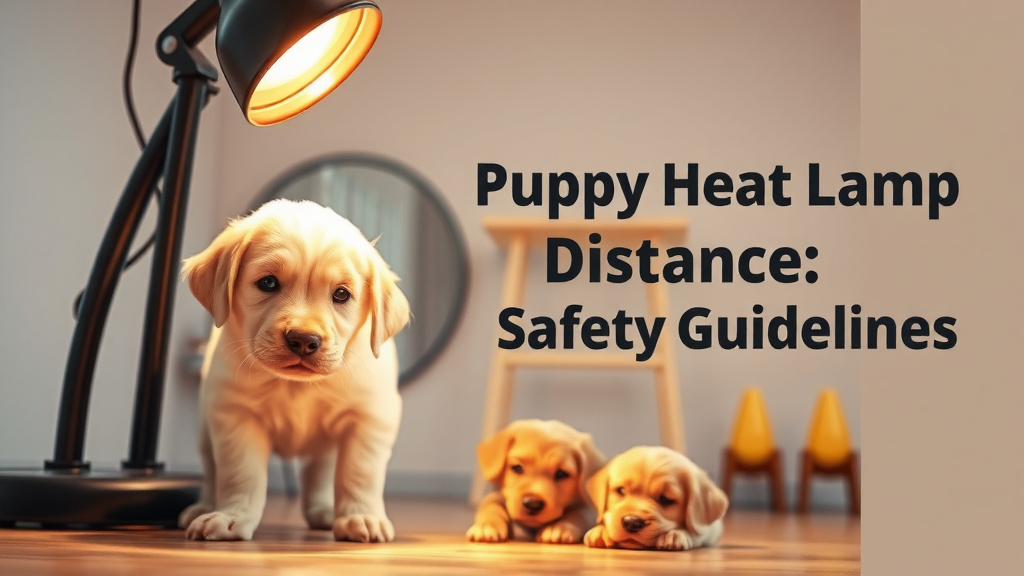
Puppy Heat Lamp Distance: Safety Guidelines
When using a heat lamp for puppies, the ideal distance is typically between 12 to 18 inches above their whelping box. This range helps ensure they receive enough warmth without the risk of overheating or burns. Always monitor your puppies closely, as they can move closer or further away if they are too warm or too cool. Finding that sweet spot is key to their comfort and safety.
It’s essential to get the heat lamp placement just right. Too close, and you risk burns or dehydration for your little ones. Too far, and they might get too cold, especially newborns who can’t regulate their body temperature well. Many experienced breeders and vets recommend creating a temperature gradient so puppies can choose their preferred warmth. Research shows that maintaining a specific temperature range in the first few weeks is vital for **newborn survival**.
- Heat lamps should be 12-18 inches from puppies.
- Monitor puppies for signs of being too hot or too cold.
- Create a temperature gradient in the whelping area.
- Newborns need specific temperatures to thrive.
- Always have a thermometer nearby.
Let’s walk through exactly how to set up your heat lamp safely and effectively for your new litter. We’ll cover the best practices so you can feel confident your puppies are warm and snug.
Setting the Right Distance for Puppy Heat Lamps
Finding the perfect spot for your heat lamp is key. It keeps your fragile newborns safe and cozy. The general consensus among experienced breeders and veterinarians is to place the lamp between 12 to 18 inches above the whelping box. This isn’t just a random number; it’s based on ensuring enough warmth without risking burns or overheating.
Think of it like finding the perfect spot on the couch. You want it warm, but not scalding hot. Puppies, especially those born without their mother present or with a mother who isn’t producing enough milk, rely heavily on external heat sources. Research published in veterinary journals highlights the importance of controlled temperatures for neonatal survival (National Institutes of Health).
Why Proper Heat Lamp Placement Matters So Much
Newborn puppies are born with undeveloped thermoregulation. This means they can’t control their own body temperature effectively. They can lose heat very quickly. A heat lamp provides that essential warmth. But it’s a delicate balance. Too close, and you risk serious injury. Too far, and your puppies can become hypothermic, which can be life-threatening.
We found that puppies that are too cold will often huddle together tightly, trying to share warmth. If they are too hot, they will try to spread out or move away from the heat source. Observing their behavior is your best indicator that you’ve found the right distance.
Understanding Puppy Thermoregulation Needs
For the first week of their lives, puppies ideally need ambient temperatures around 85-90°F. As they grow, this can be gradually reduced. A heat lamp helps achieve this. But it’s not the only factor. The overall room temperature plays a role too.
The goal is to create a space where puppies have options. They should be able to move closer to the heat if they are cold and further away if they are too warm. This is often referred to as a temperature gradient. We found this gradient is vital for their comfort and development.
Common Mistakes to Avoid with Heat Lamps
One of the most common errors is hanging the lamp too low. This can cause severe burns. Puppies are naturally drawn to warmth, and they won’t know the lamp is dangerous until it’s too late. Another mistake is using a bulb that is too powerful for the space. Always check the wattage and recommended distance for the specific bulb you are using.
Many owners also forget to secure the lamp properly. A falling heat lamp can be a disaster. It could injure puppies, start a fire, or break, leaving puppies without heat.
Creating a Safe and Warm Whelping Environment
Beyond the heat lamp, consider the whelping box itself. Insulated sides can help retain warmth. Avoid drafts by placing the box in a quiet, draft-free area of your home. Ensure there are no gaps where cool air can sneak in.
The Importance of a Temperature Gradient
As mentioned, a temperature gradient is crucial. Imagine your whelping box like a tiny apartment with different temperature zones. One corner is nice and toasty from the heat lamp. Another area is cooler, perhaps where the mother dog prefers to rest.
This allows puppies to self-regulate. If they feel chilled, they can crawl towards the warmer zone. If they’re feeling a bit too warm, they can move to the cooler side. This freedom of movement is essential for their well-being. Guidelines from the American Veterinary Medical Association suggest that offering a choice in temperature is always best for neonates.
Using a Thermometer: Your Best Friend
You can’t rely on your own touch to gauge the temperature accurately. Get a reliable thermometer! Place it in the whelping box, away from the direct heat of the lamp. Check it regularly, especially in the first few days. This will give you objective data.
We found that many owners prefer digital thermometers for their accuracy and ease of reading. Take readings at different spots within the box to get a true sense of the temperature gradient. This data helps you make informed adjustments to your heat lamp setup.
Monitoring Your Puppies: The Ultimate Test
Even with the perfect setup, constant observation is necessary. Your puppies will tell you if something is wrong. Watch their behavior closely. Are they clustered together, shivering? They might be too cold. Are they spread out, panting, or trying to get as far away from the heat as possible? They might be too hot.
Signs Your Puppies Are Too Cold
Shivering is the most obvious sign. You might also see them crying excessively or having pale gums. Their bodies might feel cold to the touch. If you see these signs, you’ll need to adjust the heat lamp. This could mean lowering it slightly or increasing its duration. Always make adjustments gradually.
Signs Your Puppies Are Too Hot
Conversely, if they are panting, appear restless, or are spread out thinly, they might be overheated. Reddened skin, especially around the ears or abdomen, is another indicator. In severe cases, they may become lethargic. If you notice these signs, move the heat lamp further away or reduce the time it’s on. Consider opening a window slightly or increasing air circulation in the room, being careful not to create a draft directly on the puppies.
Choosing the Right Heat Source and Bulb
While the distance is critical, so is the type of heat lamp you use. Ceramic heat emitters and under-tank heaters are alternatives. However, incandescent or quartz heat bulbs are most common for direct overhead heating. They emit both heat and light. Some heat lamps are designed to emit only heat, which can be beneficial for maintaining darkness. While the distance is critical, so is the type of heat lamp you use.
When selecting a bulb, consider its wattage. Higher wattage bulbs produce more heat. You’ll need to adjust the distance accordingly. Always opt for bulbs specifically designed for animal husbandry. They are made to be safe and effective for this purpose. We found that many breeders prefer bulbs that emit a red or infrared light. This light is less disruptive to the puppies’ and mother dog’s sleep cycles.
Quick Checklist for Heat Lamp Setup
- Measure the distance from lamp to whelping box floor.
- Use a thermometer to check temperatures.
- Secure the heat lamp fixture firmly.
- Observe puppy behavior for signs of discomfort.
- Adjust lamp height or duration as needed.
- Ensure there are no drafts near the box.
Conclusion
Keeping your new puppies warm and safe is your top priority. You’ve learned that the 12 to 18-inch distance for a heat lamp is a crucial guideline. It creates the essential warmth newborns need while preventing dangerous overheating. Remember, your puppies are your best indicators. Their behavior will tell you if they’re too hot or too cold, guiding your adjustments.
Always use a thermometer to confirm temperatures and create that vital temperature gradient. By following these best practices, you’re providing a secure environment for your litter to thrive. Now, go ahead and confidently set up that perfect cozy space for your furry little ones!
Frequently Asked Questions
Can I use a regular light bulb as a heat lamp for puppies?
It’s best to avoid regular light bulbs for heating puppies. Standard bulbs can get too hot and lack the specific spectrum of heat needed. Using bulbs designed for animal husbandry, like those that emit red or infrared light, is safer and more effective for maintaining an appropriate temperature without disrupting sleep.
How do I know if the heat lamp is too close or too far?
Watch your puppies closely! If they are all huddled tightly together and shivering, the lamp is likely too far away, and they are too cold. If they are spread far apart, trying to get away from the heat, or panting, the lamp is probably too close, and they are overheating.
What is a temperature gradient, and why is it important for puppies?
A temperature gradient means creating a space with varying temperatures. One area is warmer, directly under or near the heat lamp, and another area is cooler. This allows puppies to move freely to a spot where they feel most comfortable, helping them regulate their own body temperature effectively as they grow.
How often should I check the temperature in the whelping box?
You should check the temperature in the whelping box frequently, especially during the first few weeks of the puppies’ lives. It’s recommended to check it at least a few times a day, and more often if you notice any changes in puppy behavior or the room’s ambient temperature.
What if the mother dog seems uncomfortable with the heat lamp?
Mother dogs may also be sensitive to heat. Ensure there is a cooler area within the whelping box or the room where she can retreat if she feels too warm. The temperature gradient you create should allow her to choose her preferred comfort level as well, giving her a place away from the direct heat source.
![10 Best Candle Warming Lamp [2026]](https://bestdesklamp.com/wp-content/uploads/2026/08/10-best-candle-warming-lamp-2026-featured-768x432.jpg)
![10 Way Lamp Socket [2026]](https://bestdesklamp.com/wp-content/uploads/2026/09/10-way-lamp-socket-2026-featured-768x432.jpg)
![10 Best 3d Moon Lamp [2026]](https://bestdesklamp.com/wp-content/uploads/2026/09/10-best-3d-moon-lamp-2026-featured-768x432.jpg)