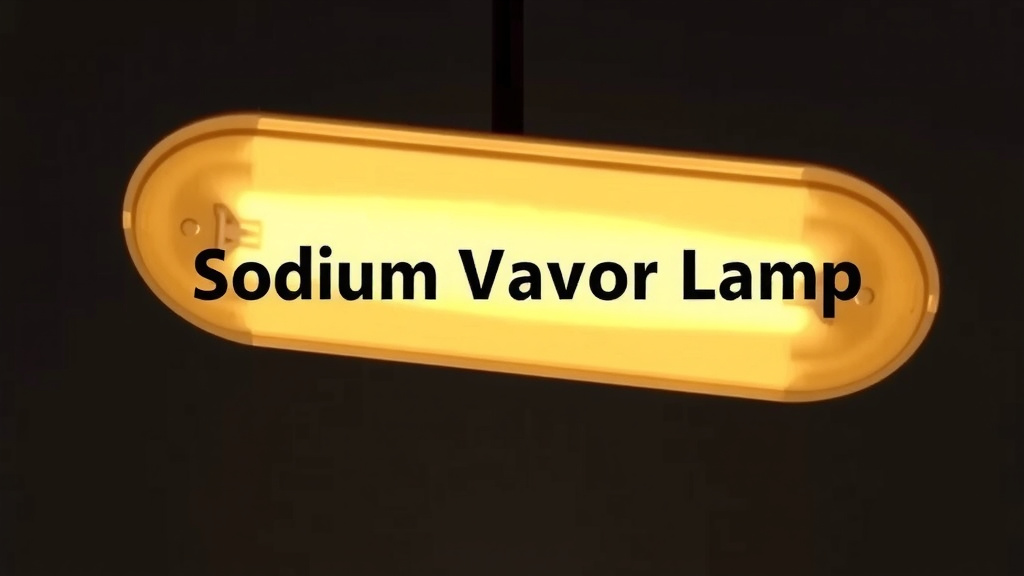
Sodium Vapor Lamp: How It Works Explained Simply
A sodium vapor lamp works by passing an electric current through a tube filled with sodium metal. This electricity excites the sodium, causing it to emit a bright, characteristic yellow-orange light. It’s a pretty neat process that creates that familiar glow you see on many streets and in tunnels.
These lamps are known for their energy efficiency and long lifespan. While they might not produce the most natural-looking light, their durability and low operating costs make them a popular choice for outdoor lighting. Many experts agree they offer a practical lighting solution for various settings.
- Sodium vapor lamps use electricity to excite sodium gas.
- This excitation produces a distinct yellow-orange light.
- They are known for being very energy-efficient.
- These lamps also tend to last a very long time.
- Their bright, penetrating light is useful in many outdoor areas.
Let’s walk through exactly how this happens, step by step, so you can understand the science behind that glowing streetlamp.
“`htmlUnderstanding the Glow: How Sodium Vapor Lamps Function
You’ve seen them everywhere, right? Those streetlights casting a warm, yellow-orange hue over roads and parking lots. Ever wondered what’s going on inside those lamps to create that distinctive glow? It all comes down to a fascinating process involving electricity and a special metal called sodium.
The Core Components of a Sodium Vapor Lamp
Before we dive into the light-making magic, let’s look at what’s inside. A sodium vapor lamp isn’t just a simple bulb. It has a few key parts working together to produce light efficiently.
The Arc Tube: Where the Magic Happens
At the heart of every sodium vapor lamp is a small, sealed tube. This tube is typically made of a strong ceramic material, like alumina. Why ceramic? Because it can withstand the high temperatures and corrosive nature of the sodium vapor once the lamp heats up. Inside this arc tube, you’ll find a small amount of solid sodium metal. There’s also a low-pressure gas, often a noble gas like neon or argon, and a small amount of starting material.
The Ballast: The Unsung Hero
You might not see it, but a ballast is essential for your sodium vapor lamp to work. Think of it as a traffic controller for electricity. When you first turn the lamp on, it needs a big jolt of voltage to get things started. A ballast provides this initial surge. Once the lamp is running, the ballast then regulates the electrical current, preventing too much electricity from flowing through the tube and damaging it.
The Outer Bulb: Protection and Insulation
Surrounding the inner arc tube is a larger, clear glass bulb. This outer bulb serves a couple of important purposes. Firstly, it protects the delicate arc tube from physical damage and the elements, like rain or dust. Secondly, it helps to insulate the arc tube, maintaining the high operating temperatures needed for efficient light production. Some outer bulbs might also have a special coating to filter the light, but this is less common in the high-pressure sodium lamps.
The Step-by-Step Process of Light Production
Now, let’s put all these pieces together and see how light is actually made. It’s a sequence of events that happens quite quickly once you flip the switch.
Starting the Discharge: The Initial Spark
When you turn on the lamp, the ballast sends a high-voltage pulse to the electrodes at either end of the arc tube. This high voltage breaks down the starting gas (like neon) inside the tube. The gas molecules become ionized, meaning they lose electrons. This creates a plasma, a state of matter where charged particles can flow. You’ll notice a faint, reddish-orange glow at this stage, similar to a neon sign. This is the initial discharge through the starting gas.
Heating Up the Sodium: The Transformation
As the electric current flows through the starting gas plasma, it generates heat. This heat begins to vaporize the solid sodium metal inside the arc tube. As more sodium melts and turns into a gas, the amount of sodium vapor in the tube increases. The plasma then starts to interact more with the sodium vapor.
Exciting the Sodium Atoms: Creating the Light
Here’s where the characteristic yellow-orange light comes from. As the electric current flows through the mixture of starting gas and sodium vapor, the electrons in the current collide with the sodium atoms. These collisions transfer energy to the sodium atoms, exciting their electrons to higher energy levels. This excited state is unstable. When the electrons return to their normal, lower energy levels, they release the extra energy as photons of light. For sodium atoms, this released energy corresponds to specific wavelengths, which our eyes perceive as a bright yellow-orange color.
Achieving Full Brightness: The Stabilization Phase
It takes a few minutes for a sodium vapor lamp to reach its full brightness. During this warm-up period, the arc tube continues to heat up, more sodium vaporizes, and the pressure inside the tube increases. This higher pressure and increased sodium vapor density lead to a more intense and consistent yellow light. The lamp stabilizes at its operating temperature and pressure, and the ballast ensures the current remains steady.
Types of Sodium Vapor Lamps: A Quick Look
You might be surprised to learn there are actually two main types of sodium vapor lamps, each with slightly different characteristics.
Low-Pressure Sodium Vapor (LPS) Lamps
These are the older type. They produce a very monochromatic yellow light, meaning it’s almost purely one color. Because of this, they are extremely energy-efficient. However, the light doesn’t show colors very well, making them less suitable for areas where accurate color rendering is important. You’ll often find them in tunnels or areas where efficiency is the top priority.
High-Pressure Sodium (HPS) Lamps
These are much more common today. They operate at higher pressures and temperatures. This results in a brighter, more golden-white light compared to LPS lamps. While still very efficient, they aren’t quite as efficient as LPS. The advantage of HPS lamps is that they provide much better color rendering, making them suitable for street lighting, security lighting, and even some horticultural applications.
Why They Are So Popular: Efficiency and Longevity
So, why do we still see so many of these lamps even with newer lighting technologies emerging? It largely comes down to their practical benefits.
Energy Efficiency: A Big Win
Sodium vapor lamps, especially the low-pressure ones, are incredibly energy-efficient. They convert a large percentage of electrical energy directly into visible light. For example, studies show that LPS lamps can produce up to 200 lumens per watt, which is significantly more than many other lighting technologies (National Renewable Energy Laboratory).
Long Lifespan: Set It and Forget It
Another major advantage is their durability. Sodium vapor lamps are known for their exceptionally long operational life. Many can last for 20,000 hours or more. This means fewer replacements, less maintenance, and reduced costs over time, which is a big deal for municipalities and businesses managing large lighting installations.
Here’s a quick way to remember the key takeaways:
- The arc tube contains sodium metal and a starting gas.
- A ballast controls the electricity flow.
- Electricity heats and vaporizes the sodium.
- Excited sodium atoms release yellow-orange light.
- High-pressure types offer better color than low-pressure types.
- They are favored for efficiency and long life.
Conclusion
You’ve learned how sodium vapor lamps transform electricity into that signature yellow-orange glow. It’s a process involving a carefully controlled electric discharge through sodium vapor, all managed by essential components like the arc tube and ballast. These lamps continue to be a practical choice for many outdoor lighting needs due to their remarkable energy efficiency and long operational life. For your next lighting project, consider if their durability and cost-effectiveness align with your goals, perhaps as a reliable solution for large-area illumination.
Frequently Asked Questions
Why do sodium vapor lamps turn on slowly?
Sodium vapor lamps need time to warm up. First, the starting gas inside the arc tube ignites, creating a faint glow. This initial heat then vaporizes the solid sodium metal. As the sodium vapor increases and the arc tube reaches its operating temperature, the lamp achieves its full, bright yellow output.
Can I replace a regular light bulb with a sodium vapor bulb?
Generally, no. Sodium vapor lamps require a special fixture and a ballast to operate correctly. They are not a direct replacement for standard incandescent or LED bulbs in typical home light sockets. The voltage and current requirements are very different.
What makes the light color unique to sodium vapor lamps?
The distinct yellow-orange color comes from the sodium atoms themselves. When electricity excites the electrons in sodium atoms, they jump to higher energy levels. As they fall back to their normal state, they release this energy as light, and for sodium, this is primarily in the yellow-orange spectrum.
Are there any environmental concerns with sodium vapor lamps?
While efficient, older sodium vapor lamps contain mercury, which requires careful disposal. Newer high-pressure sodium lamps are generally considered safer, but responsible recycling practices are still recommended at the end of their long lifespan.
How does the ballast help a sodium vapor lamp work?
The ballast is crucial for two main reasons. It provides the initial high voltage needed to start the electric arc inside the tube. Once the lamp is on, it then limits and regulates the electrical current flowing through the arc tube to prevent it from burning out.



![10 Best Battery Operated Lamp [2026]](https://bestdesklamp.com/wp-content/uploads/2026/08/10-best-battery-operated-lamp-2026-featured-768x432.jpg)