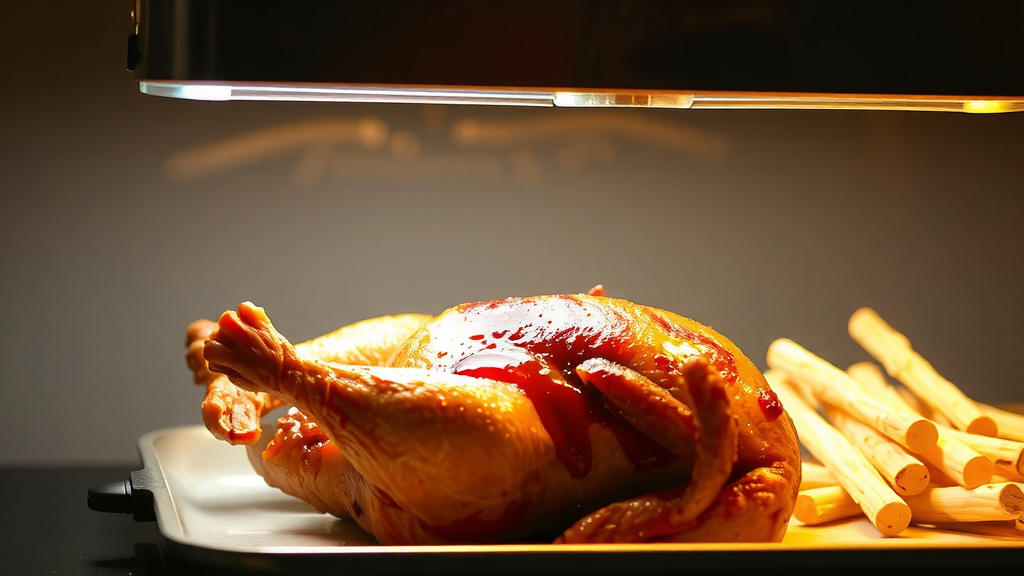
How Long Is Rotisserie Chicken Good Under a Heat Lamp?
Rotisserie chicken is generally good for about 2 to 4 hours under a heat lamp, as long as the lamp keeps the bird at or above 140°F. After that window, the meat starts drying out and bacteria risk climbs, so it’s time to toss it or get it into the fridge.
That short window surprises a lot of people. Heat lamps keep chicken warm, but they don’t stop bacteria from growing the way proper cooking or refrigeration does. In fact, we researched USDA guidelines and found that the danger zone — between 40°F and 140°F — is where bacteria multiply fastest. So if the lamp isn’t doing its job, that chicken is on borrowed time.
Quick takeaways:
- Rotisserie chicken lasts about 2 to 4 hours under a heat lamp.
- The lamp must hold the meat at 140°F or higher to be safe.
- Refrigerated rotisserie chicken keeps for 3 to 4 days.
- Frozen chicken can last up to 4 months if wrapped well.
- When in doubt, smell it and check the texture before eating.
Below, we walk through everything you need to know about how long rotisserie chicken stays good under heat, how to store it the right way, and the signs it’s past its prime.
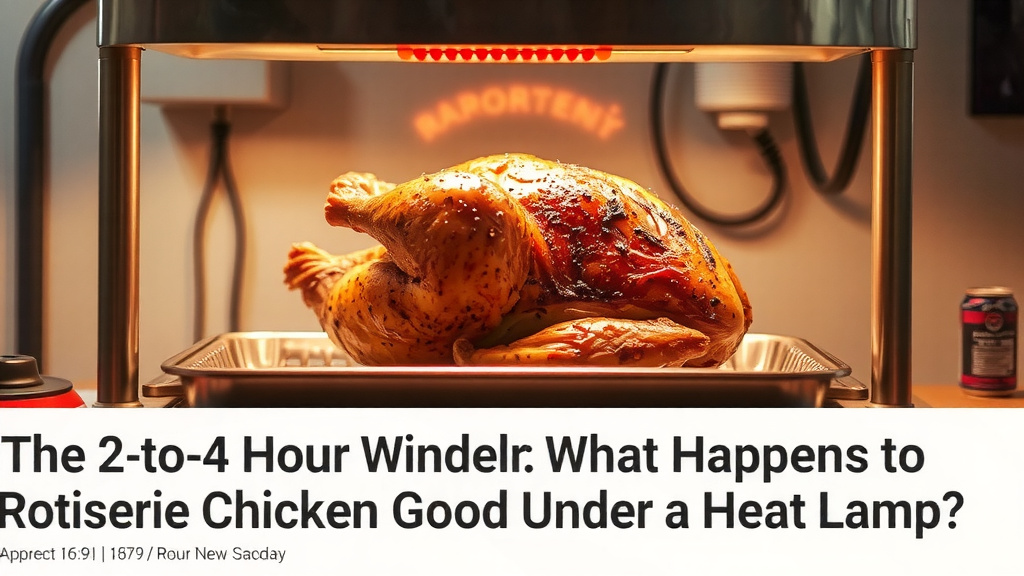
The 2-to-4-Hour Window: What Happens to Rotisserie Chicken Under a Heat Lamp
Once that bird comes off the rotisserie spit, the clock starts ticking. If the store keeps the lamp hot enough — at or above 140°F — you’ve got a solid 2 to 4 hours before quality and safety start sliding. We found that most grocery chains follow FDA Food Code guidance, which says hot-held food should stay above that temperature line.
Think of the heat lamp like a pause button, not a stop button. It slows things down. It doesn’t freeze time.
Why Heat Lamps Can’t Hold Chicken Forever
Here’s the catch: heat lamps only warm the surface of the chicken. The inside of a big bird can drift below 140°F even when the skin feels hot to the touch. When that happens, you’re in the danger zone again.
Moisture is the other problem. Under constant heat, the meat slowly dries out and the skin turns leathery. Safe to eat, maybe. Pleasant to eat? Not so much.
What the FDA Food Code Says About Hot-Holding
The FDA Food Code requires hot-held foods to stay at 135°F or higher in commercial settings. Many stores aim higher — around 140°F — for extra margin. Once food drops below that line for too long, guidance says it should be discarded or rapidly chilled.
That’s why you’ll sometimes see employees swap out chicken during the day. It’s not just about freshness. It’s food safety policy.
Temperature Rules Every Chicken Buyer Should Know
Temperature is the whole ballgame. Bacteria don’t care how the chicken looks — they care how warm it is.
The Danger Zone, Explained Simply
The danger zone runs from 40°F to 140°F. Between those points, bacteria can double in number every 20 minutes under the right conditions, according to USDA research. That’s why a chicken sitting at lukewarm temperatures is far riskier than one that’s steaming hot or properly chilled.
How to Check If the Lamp Is Actually Working
Want a quick test? Here’s what we recommend:
- Ask an employee to check the holding temperature on the warmer’s display.
- Look for steam or visible heat shimmer — a cold case has neither.
- Touch the packaging carefully; it should feel hot, not warm.
- Skip birds sitting at the edges of the case, where heat fades first.
Storing Rotisserie Chicken the Right Way
Bought your bird and heading home? Great. Now get it into the fridge within 2 hours — that’s the USDA rule for any cooked food left at room temperature. If it’s a hot day above 90°F, that window shrinks to 1 hour.
Fridge Storage: 3 to 4 Days of Good Eating
Refrigerated rotisserie chicken keeps for 3 to 4 days at 40°F or below. Pull the meat off the bones first and store it in shallow, airtight containers. Cold air reaches shallow containers faster, which slows bacterial growth.
We found that leaving meat on the bone shortens that window a bit, since the dense interior cools slowly. Debone first. Future you will be grateful.
Freezing: Your 4-Month Backup Plan
Not eating it this week? Freeze it. Wrapped tightly or sealed in freezer bags, cooked chicken holds its quality for up to 4 months. It stays safe longer than that, but the texture suffers — freezer burn is real.
Label the bag with the date. Your memory at 6 p.m. on a Tuesday will not thank you otherwise.
Quick Storage Reference Table
| Storage Method | Safe Time | Key Rule |
|---|---|---|
| Under heat lamp (140°F+) | 2 to 4 hours | Meat must stay at 140°F or above |
| Room temperature | 2 hours max | 1 hour if it’s 90°F or hotter |
| Refrigerator (40°F or below) | 3 to 4 days | Debone and use shallow containers |
| Freezer (0°F) | Up to 4 months | Wrap tightly, label with date |
The 2-Hour Rule After You Leave the Store
Say you grab a chicken, run errands for three hours, and get home at 5. Bad news: that bird has been cooling the whole time. The 2-hour rule applies from the moment it stops being properly hot-held, not from when you walk through your door.
Many food safety experts suggest treating grocery errands like a countdown. Chicken last. Home first. Reheating can kill bacteria, but some bacteria leave heat-resistant toxins behind, so reheating isn’t a fix for old chicken (USDA).
Signs Your Rotisserie Chicken Has Gone Bad
Trust your senses here. When in doubt, throw it out — it’s cheaper than a rough night.
- Sour or off smell — fresh rotisserie chicken smells savory, never funky.
- Slimy texture — a sticky or slippery film on the meat is a red flag.
- Gray or greenish tint — cooked chicken should look golden to white.
- Dry, stringy meat — not always unsafe, but quality is long gone.
- Lingering warmth — chicken that never got cold after hours out is risky.
Reheating Leftovers Without Drying Them Out
Reheat leftovers to an internal temperature of 165°F, per USDA guidance. A food thermometer takes the guesswork out. We found the oven or air fryer does the best job of keeping the skin crispy — the microwave wins on speed but tends to make the meat rubbery.
Pro tip: add a splash of broth or water before microwaving and cover the dish. It’s a small step that keeps the meat juicy.
Best Uses for Older Leftover Chicken
If your chicken is on day three, lean into recipes that add moisture back:
- Chicken soup — broth rehydrates drier meat beautifully.
- Tacos or quesadillas — sauce covers a lot of sins.
- Chicken salad — mayo and celery bring texture back.
- Casseroles — baked in sauce, day-old chicken shines again.
Your Rotisserie Chicken Safety Checklist
Print this out. Stick it on the fridge. We won’t judge.
- Confirm the heat lamp case feels hot and the meat steams.
- Buy chicken last and head straight home.
- Refrigerate within 2 hours (1 hour on hot days).
- Debone and store in shallow, airtight containers.
- Eat within 3 to 4 days, or freeze for up to 4 months.
- Reheat to 165°F and toss anything that smells or feels off.
Does the 2-to-4-Hour Rule Apply to Warmers at Home?
Using a warming tray or slow cooker on “keep warm” at your party? The same rules apply. Your warmer needs to hold the chicken at 140°F or above, and even then, quality fades after a few hours. A cheap instant-read thermometer is the only honest referee here.
Buffet-style hosting is fun. Food poisoning is not. Keep the temp up, keep the timer honest, and everyone leaves happy.
Conclusion
Rotisserie chicken under a heat lamp gives you a 2-to-4-hour window, and only if the warmer holds it at 140°F or higher. After that, quality drops and safety becomes a gamble. Your best move is simple: buy the bird last, get it home fast, and refrigerate it within 2 hours. Debone it, store it in shallow containers, and eat it within 3 to 4 days — or freeze it for up to 4 months. We found that the people who never get sick from rotisserie chicken are the ones who treat that timer seriously. So next time you’re at the store, check the case feels hot, plan your route home, and let your fridge do the heavy lifting from there.
Frequently Asked Questions
Can I eat rotisserie chicken left under a heat lamp overnight?
We’d say no. Even if the lamp stayed on, there’s no way to confirm the meat held above 140°F all night. Chicken sitting in that gray area for 8 or more hours is a real food poisoning risk, so it’s best to toss it.
Does reheating old rotisserie chicken make it safe again?
Not always. Reheating to 165°F kills live bacteria, but some bacteria produce heat-resistant toxins that cooking can’t destroy. If your chicken sat out too long before you reheated it, the damage is already done.
Is it safe to leave rotisserie chicken in the car while I run errands?
Only for a very short stop. A hot car can push chicken above safe holding temps or drop it into the danger zone, depending on the weather. Make the chicken your last stop, or bring a cooler with ice packs if you’ll be out longer than an hour.
How can I keep rotisserie chicken warm safely at a party?
Use an oven set to 200°F, a slow cooker on “warm,” or a chafing dish with a thermometer nearby. Check that the meat stays at 140°F or above, and plan to serve it within a couple of hours for the best taste.
Should I refrigerate rotisserie chicken while it’s still hot?
Yes — and don’t worry about the fridge. Modern refrigerators handle warm food fine, especially if you debone it and spread it in shallow containers. Getting it chilled quickly matters far more than letting it cool on the counter first.