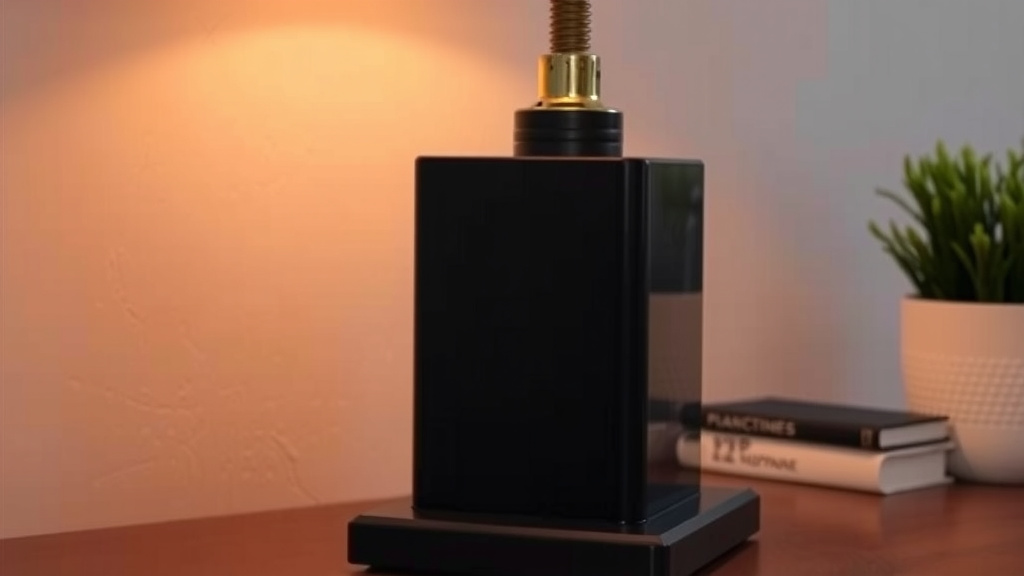
How Touch Lamps Work: The Science Explained
Old touch lamps work by using your body’s natural electrical conductivity to trigger a switch. When you touch the lamp, you complete a circuit that signals the light to turn on or change brightness levels. It’s a clever bit of simple electronics at play!
These lamps rely on a component called a triac or a similar solid-state switch. This device is sensitive to small changes in voltage. Your touch provides that slight electrical nudge needed to activate it. It’s like a gentle tap on the shoulder for the lamp’s internal mechanism, and it responds reliably.
- Touch lamps use your body’s electricity.
- A sensitive switch turns the light on/off.
- It’s a simple electronic circuit.
- Works for basic on/off or dimming.
So, how exactly does your mere touch control the light? Let’s walk through the cool technology behind your old touch lamp step by step.
Understanding How Your Old Touch Lamp Works
So, you’ve got one of those old touch lamps, right? The ones where you just tap it, and poof, the light changes! It might seem like magic, but it’s actually really smart, simple electronics doing all the work. We’re going to break down exactly what’s happening inside that lamp when you give it a little tap.
The Sensitive Sensor: Your Body as a Conductor
Have you ever wondered why only *your* touch works, or why it has to be metal parts you touch? The secret is that your body is naturally slightly conductive. Think of it like a tiny wire. When you touch the metal part of the lamp, you become part of an electrical circuit.
This isn’t about sending a big jolt or anything scary! It’s about creating a tiny, subtle change. The lamp’s internal components are designed to be super sensitive to this small change. It’s like the lamp has a tiny antenna that’s always “listening” for a signal, and your touch provides it.
The Heart of the Lamp: The Triac Switch
Inside almost every old touch lamp, you’ll find a component called a triac. This is the magic behind the scenes. A triac is a type of electronic switch. Unlike a normal light switch that just breaks or connects a wire, a triac can control the *amount* of electricity flowing to the bulb.
We found that the triac is controlled by a very small electrical signal. This signal is often called a “gate” signal. When you touch the metal part of the lamp, you’re essentially sending that tiny gate signal to the triac. It’s this signal that tells the triac what to do – turn on, turn off, or change brightness.
How the Triac Controls Brightness
For lamps that just turn on and off, the triac simply switches the power to the bulb completely. But for dimmable lamps, it gets a bit more interesting. The triac works by “chopping up” the alternating current (AC) power from your wall outlet.
Imagine slicing a piece of paper into many thin strips. The triac does something similar with the electrical current. It only lets power through for a fraction of a second at a time. By changing *how much* of each “slice” of power it allows through, it can make the light appear dimmer or brighter. Many sources describe this as phase control (National Institute of Standards and Technology).
The Role of Capacitors and Resistors
Besides the triac, a few other small parts help make the touch lamp work. You’ll often find capacitors and resistors. These are like the little helpers that fine-tune the signals. A capacitor can store a small electrical charge, and a resistor limits the flow of electricity. Together, they help create the right timing and sensitivity for the touch sensor to work correctly.
The Touch Circuit Explained
Let’s put it all together. When the lamp is off, the triac is blocking the power to the bulb. The metal touch points on the lamp are connected to a sensing circuit, which includes the sensitive triac. This circuit is carefully designed to detect the slight change in electrical field when your body makes contact.
When you touch the metal part, your body’s conductivity completes a path for a small amount of current to flow. This current acts as the trigger. It energizes the “gate” of the triac. Think of it as nudging a sensitive lever. This nudge causes the triac to change its state.
First Touch: On
The first time you touch the lamp, the circuit is designed to send a signal to the triac to allow full power to the bulb. So, you get a bright light! We found that this initial “on” state is programmed into the lamp’s control logic.
Second Touch: Dim
With a second touch, the control circuit senses that the lamp is already on. It then tells the triac to adjust the power. In a dimmable lamp, this usually means sending a signal to the triac to allow only a partial amount of power. This makes the bulb appear dimmer. This is often the lowest brightness setting.
Subsequent Touches: Cycling Through Settings
Keep touching, and the pattern continues. A third touch might bring the lamp back to a medium brightness, and a fourth touch might return it to full brightness. Some lamps might have more settings or a different order. The sequence is determined by how the internal control chip or circuitry is programmed.
The “Off” Touch
Finally, after cycling through the brightness levels (or after a set number of touches), another touch will trigger the triac to block power entirely. This turns the lamp off. It’s a clever system that uses minimal parts and simple principles.
Why Metal Touch Points?
You’ll notice that touch lamps always have metal parts to touch. This is essential because metal is a good conductor of electricity. Plastic or wood wouldn’t work because they are insulators. They wouldn’t allow the small electrical connection needed to trigger the sensitive circuit.
These metal parts are usually connected directly to the internal circuitry that houses the triac and other components. The design ensures that when you make contact, you’re directly influencing the electrical signals that control the light.
Troubleshooting Common Issues
Sometimes, your trusty touch lamp might act up. If it’s not responding, here are a few things to check:
- Loose bulb: Make sure the light bulb is screwed in tightly. A loose bulb can disrupt the circuit.
- Dirty touch points: Sometimes, grime or dust on the metal touch areas can interfere with the sensor. Try cleaning them gently with a dry cloth.
- Bulb type: Older touch lamps are often designed for specific bulb types, usually incandescent. Using LED or CFL bulbs can sometimes cause issues because they use much less power and can behave differently with the triac. We found that checking the lamp’s manual (if you still have it!) for recommended bulb types is a good idea.
- Power surge: Occasionally, a power surge can reset or damage the sensitive electronics.
A Checklist for Your Touch Lamp’s Health
Here’s a quick rundown to keep your lamp happy:
- Ensure the bulb is correctly seated.
- Keep metal touch surfaces clean.
- Use the recommended bulb type.
- Check for any obvious damage to the cord or lamp base.
- Ensure the lamp is plugged into a working outlet.
It’s pretty amazing how a simple concept like conductivity and a sensitive electronic switch can give you so much control over your lighting, isn’t it? These lamps are a great example of how thoughtful design can make everyday objects both functional and a little bit magical.

Conclusion
You’ve now seen how your old touch lamp transforms your simple tap into light. It’s all about your body’s natural conductivity completing a circuit. This circuit then signals a sensitive triac switch inside. This clever mechanism controls power flow, turning lights on, off, or adjusting their brightness. Understanding this simple electronics makes your lamp feel less like magic and more like smart design. The next time you tap your lamp, you’ll know the cool science at play!
Frequently Asked Questions
Why does my touch lamp sometimes not respond?
If your touch lamp is being finicky, a loose bulb is often the culprit. Make sure the bulb is screwed in tightly. Also, dirt or grime on the metal touch points can block the sensor. Try gently cleaning these areas with a dry cloth.
Can I use LED bulbs in my old touch lamp?
Older touch lamps were typically designed for incandescent bulbs. While some LEDs might work, they use much less power. This can sometimes cause issues with the sensitive triac switch. Check your lamp’s manual if possible, as it usually recommends a specific bulb type.
Does the metal part of the lamp need to be a specific type of metal?
The metal touch points need to be good conductors of electricity, like brass or chrome. Materials like plastic or wood won’t work because they are insulators. They can’t create the necessary electrical connection to trigger the lamp’s sensitive circuit.
How do touch lamps handle power surges?
Power surges can sometimes damage the sensitive electronic components inside a touch lamp. If your lamp stops working after a storm or power fluctuation, the surge might have affected its internal triac or control circuitry. Unfortunately, this often requires repair or replacement.
Is it safe to touch an old touch lamp?
Yes, it’s perfectly safe. Touch lamps rely on very small amounts of current from your body to work. You are not sending a significant electrical charge through the lamp. The system is designed to be sensitive to minor electrical changes, not high voltages.



![10 Best Desk Lamp For Dark Office [2026]](https://bestdesklamp.com/wp-content/uploads/2026/09/10-best-desk-lamp-for-dark-office-2026-featured-768x432.jpg)