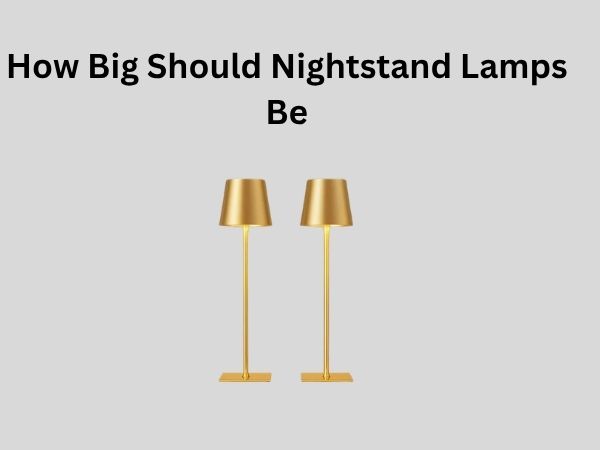
How Big Should Nightstand Lamps Be: A Comprehensive Guide to Perfect Bedroom Lighting
Have you ever found yourself squinting at your phone in bed, wishing you had better lighting? Or maybe you’ve bought a lamp that looks absolutely massive on your tiny nightstand, and now it’s taking up half the surface space? You’re not alone. Choosing the right size nightstand lamp is one of those decisions that seems simple on the surface but actually involves quite a bit of thought and consideration.
When it comes to creating the perfect bedroom environment, lighting plays a role that’s just as important as your mattress or pillows. Yet so many people overlook this crucial element when decorating their bedrooms. The truth is, getting your nightstand lamp sizing just right can transform your entire sleep routine and make your bedroom feel more inviting and functional.
Understanding Nightstand Lamp Proportions
Let’s start with the basics. A nightstand lamp isn’t just about looking pretty on your furniture—it’s about balance, functionality, and aesthetics working together. Think of it like seasoning a meal. Too little salt and your food tastes bland, but too much and it’s inedible. The same principle applies to lamp sizing.
The Height Factor: Why It Matters More Than You Think
The height of your nightstand lamp is perhaps the most critical measurement you need to consider. Ideally, the bottom of your lamp shade should sit at approximately eye level when you’re lying in bed. This isn’t just a random guideline—it’s based on practical lighting principles that ensure you’re getting adequate illumination without creating shadows or glare that might disturb your rest.
Most nightstands typically stand between 24 to 28 inches tall. When you add a lamp with a base of about 4 to 6 inches and a shade height of 8 to 10 inches, you’re looking at a total height of roughly 36 to 44 inches. This range works beautifully for most standard beds and sleeping positions, placing light sources right at that sweet spot where they’re effective without being intrusive.
Base Width: Finding Your Sweet Spot
Now, let’s talk about how wide your lamp base should be. This is where many people make mistakes. You want your lamp base to be proportional to your nightstand surface—typically no wider than about one-third of your nightstand’s width. If your nightstand is 24 inches wide, your lamp base shouldn’t exceed 8 inches in diameter.
Why does this matter? A lamp that’s too wide makes your nightstand look cluttered and reduces the space available for your phone, books, glasses, or water glass. A lamp that’s too narrow, on the other hand, can look spindly and unstable, creating visual imbalance in your bedroom design.
The Relationship Between Your Bed and Lamp Size
Your bed size plays a surprisingly significant role in determining what lamp size works best in your bedroom. It’s all about proportion and visual harmony. Just like you wouldn’t wear an oversized coat that hangs past your knees, you shouldn’t position a lamp that dwarfs your sleeping space.
Twin and Single Beds
If you’re working with a twin or single bed, you’re dealing with a more compact sleeping arrangement. This calls for a more modest lamp. Look for nightstand lamps that have a total height of around 24 to 32 inches (from base to top of shade). The lamp base should be relatively small—ideally 4 to 6 inches in diameter. This ensures your lamp complements your space without overwhelming it.
Full and Queen-Sized Beds
Most people sleep on full or queen-sized beds, and these are the sweet spot for standard nightstand lamp sizing. For these bed sizes, a lamp standing 28 to 36 inches tall with a base diameter of 5 to 8 inches creates ideal proportions. Your lamp becomes a functional element that enhances the bedroom rather than competing for attention with your bed.
King-Sized Beds
King beds are the monarchs of sleeping arrangements, commanding substantial space in any bedroom. For these larger beds, you can go bigger with your lamps. Consider lamps that reach 32 to 40 inches in total height with slightly wider bases of 6 to 10 inches. Some people even opt for matching pairs of larger lamps on either side of a king bed to maintain symmetry and balance.
Shade Size Considerations
The lamp shade is where many people go wrong without even realizing it. Too many people focus on the base and ignore the shade, but here’s the thing—the shade is arguably more important than the base when it comes to visual impact and light distribution.
Width of Your Lamp Shade
Your lamp shade width should typically be about one-and-a-half times the width of your lamp base. If your base is 6 inches in diameter, your shade should be around 8 to 9 inches wide at its widest point. This creates a visually pleasing proportion that looks intentional rather than haphazard. When the shade is properly proportioned to the base, the entire lamp appears as a cohesive unit rather than mismatched components.
Shade Height and Light Distribution
The height of your lamp shade directly impacts how light is distributed in your space. A shade that’s too short restricts light flow, creating harsh shadows below the lamp. A shade that’s too tall can look ungainly and may actually block light from spreading naturally around your bedroom. Most nightstand lamp shades measure between 8 and 12 inches tall, and this range typically provides excellent light diffusion for bedside use.
Functional Lighting Needs: What Should Your Lamp Do?
Before you settle on a lamp size, consider what you actually need that lamp to accomplish. Are you reading in bed? Do you just need ambient light to move around your room safely at night? Do you want to be able to see your reflection if you’re doing any grooming tasks? Your functional needs directly influence what size and style of lamp will serve you best.
Reading Lamps vs. Ambient Lamps
If you’re an avid reader, you might want a lamp that’s slightly brighter and better positioned for directing light onto your book or tablet. This might mean choosing a lamp with a slightly larger shade to spread more light across your lap and bed. Conversely, if your lamp is purely for ambient lighting to help you navigate the room or create atmosphere, a more modest size might work perfectly.
Brightness Levels and Size Correlation
Here’s an interesting fact: lamp size doesn’t directly determine brightness, but it does influence how light is distributed. A larger shade can diffuse light more gently across a wider area, while a smaller shade concentrates light more intensely. Consider your brightness preferences when choosing shade size. If you’re sensitive to bright light, a larger shade might provide the softer, more diffused lighting you prefer.
Nightstand Dimensions: The Foundation of Your Decision
You can’t talk about lamp sizing without discussing the nightstand itself. Your nightstand dimensions form the foundation of this entire decision-making process. Let’s break this down into practical measurements.
Standard Nightstand Measurements
Most nightstands fall into these categories:
- Small nightstands: 18 to 22 inches wide and 16 to 20 inches deep
- Medium nightstands: 22 to 28 inches wide and 16 to 24 inches deep
- Large nightstands: 28 to 36 inches wide and 18 to 30 inches deep
For smaller nightstands, you’ll want a lamp with a base no larger than 5 inches in diameter. For medium nightstands, 6 to 8 inches works well. For larger nightstands, you have more flexibility and can go up to 10 inches in diameter without looking out of proportion.
Accounting for Other Items on Your Nightstand
Let’s be honest—most of us use our nightstands for more than just our lamps. You’ve got your phone charging there, maybe a glass of water, perhaps a book, alarm clock, or personal items. When you’re considering lamp size, factor in these other elements. A lamp that takes up half your nightstand surface area might look fine in a store, but in your actual bedroom, it creates stress and clutter. Leave at least 40 to 50 percent of your nightstand surface clear for these daily essentials.
Style and Design Influences on Lamp Sizing
Interestingly, the style of your lamp can influence how large or small it should be. A modern minimalist lamp might look appropriate at a slightly smaller size, while a traditional or ornate lamp might need to be proportionally larger to make a design statement.
Minimalist and Modern Styles
Contemporary bedroom designs often feature sleek, smaller lamps that emphasize clean lines and functionality over ornamentation. In these spaces, a lamp that might seem almost delicate in a traditional bedroom looks absolutely perfect. You might go slightly smaller than standard proportions and still achieve excellent results.
Traditional and Classic Styles
Traditional bedroom designs often accommodate larger, more substantial lamps with ornate bases and detailed shades. These lamps command more visual presence, and rightfully so—they’re meant to be design features as much as functional light sources. In classic bedrooms, you might choose lamps that are at the larger end of the recommended size range.
Industrial and Eclectic Designs
Industrial-style lamps often feature unexpected proportions and sizes, sometimes deliberately playing with scale for dramatic effect. In these spaces, you have more freedom to experiment with non-standard sizing, as long as the lamp still functions properly and doesn’t compromise your nightstand’s usability.
Material and Weight Considerations
Here’s something people don’t always think about: the material of your lamp affects how large it can be. A lamp made of lightweight materials like paper or thin metal can be slightly larger without feeling imposing. A lamp made of heavy materials like ceramic or solid wood needs to be more carefully sized to avoid looking too substantial for your space.
Heavy Base Materials
If your lamp has a ceramic, stone, or heavy wooden base, stick to the smaller to mid-range of recommended sizes. These materials are visually and physically heavy, so they naturally look larger than their actual dimensions. A 7-inch ceramic base might feel more imposing than an 8-inch metal base.
Lightweight Materials
Lamps with metal or paper-thin shade materials can push toward the larger end of sizing recommendations. These materials have an airy quality that prevents them from feeling overwhelming, even at slightly larger proportions.
The Role of Lamp Shade Opacity
The transparency level of your lamp shade plays a subtle but important role in how the lamp’s size is perceived. A completely opaque shade makes a lamp appear more substantial, while a translucent or linen shade makes it feel lighter and more open.
Opaque Shades
Opaque shades create a more defined silhouette and make your lamp appear larger visually. If you choose an opaque shade, you might want to err slightly toward the smaller end of recommended sizing to prevent your lamp from feeling too dominant in your space.
Translucent and Linen Shades
Translucent materials allow light to pass through, creating a softer visual presence. These shades can be slightly larger without appearing overwhelming, as the light passing through them creates a more delicate appearance.
Practical Tips for Measuring and Choosing Your Lamp
Now that we’ve covered all the theory, let’s talk practical application. How do you actually use this information to choose a lamp?
The Measurement Checklist
Before you shop, measure these dimensions:
- Your nightstand width in inches
- Your nightstand height in inches
- The height from your mattress surface to your eye level when lying down
- The available depth on your nightstand after accounting for other items
These measurements give you concrete parameters to work within. When you’re shopping, check each lamp’s specifications against these measurements. Most quality lamp retailers provide exact dimensions—if they don’t, that’s a red flag that you might want to shop elsewhere.
The Visual Comparison Method
Here’s a trick many interior designers use: compare the lamp size to familiar objects. If you’re shopping online, check if the product photos show the lamp next to a coffee cup, book, or other item that can give you scale perspective. This helps tremendously when you’re trying to visualize how large a lamp actually is.
Testing Before Buying
Whenever possible, test lamps in person. Stand them on a similar-height surface and step back to view them from across the room. This gives you a much better sense of proportion than looking at them on a shelf at eye level in a store. If shopping online, check return policies carefully—you want the option to return if the lamp doesn’t work in your actual space.
Common Mistakes to Avoid
Let me share some of the most common lamp-sizing mistakes I’ve observed, so you can learn from others’ experiences.
Going Too Large
The most common mistake is choosing a lamp that’s too large for the space. People often fall in love with a lamp’s design without considering practical proportions. A gorgeous lamp that dominates your nightstand stops being beautiful and starts being a problem. Remember that less is often more when it comes to bedroom lighting.
Ignoring the Shade-to-Base Ratio
Many people buy a lamp base they love, then pair it with whatever shade happens to be available, without considering if they’re proportionally matched. An enormous shade on a tiny base looks as awkward as an oversized head on a small body. Always ensure your shade is appropriately proportioned to your base.
Neglecting Functional Needs
Choosing a lamp purely for aesthetic reasons, without considering whether it actually provides adequate lighting for your needs, is a recipe for disappointment. You might end up with a beautiful lamp that you never actually use because it doesn’t provide the light you need.
Conclusion
Choosing the right size for your nightstand lamp is ultimately about balancing three key elements: proportion, function, and personal preference. There’s no single “perfect” size that works for everyone, but rather a range of guidelines that help you make an informed decision based on your specific bedroom setup.
Start by measuring your nightstand and bed, then use the proportional guidelines we’ve discussed to narrow down your options. Consider what you actually need from your lamp—is it reading light, ambient illumination, or purely decorative? Think about your style preferences and how the lamp fits into your overall bedroom design.
Remember that the most important thing is finding a lamp that works for your life. A lamp that sits perfectly proportioned on your nightstand but never gets used because it doesn’t provide adequate light is a failure, no matter how beautiful it is. Conversely, a lamp that might not be a perfect design statement but provides exactly the light you need when you need it is a success.
Take your time with this decision, do your measurements, and don’t be afraid to return something if it doesn’t work in your actual space. Your bedroom should be a sanctuary where everything, including your nightstand lamp, works together to create the perfect environment for rest and relaxation.
![10 Best Cheap Table Lamps [2026]](https://bestdesklamp.com/wp-content/uploads/2026/08/10-best-cheap-table-lamps-2026-featured-768x432.jpg)
![10 Best Buffet Lamps [2026]](https://bestdesklamp.com/wp-content/uploads/2026/08/10-best-buffet-lamps-2026-featured-768x432.jpg)
![10 Best 3d Moon Lamp [2026]](https://bestdesklamp.com/wp-content/uploads/2026/09/10-best-3d-moon-lamp-2026-featured-768x432.jpg)