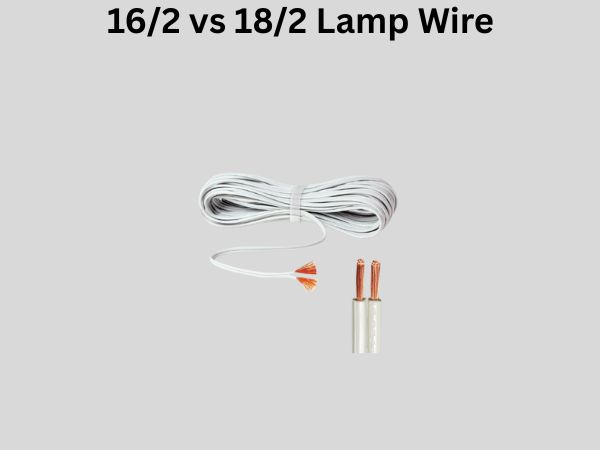
16/2 vs 18/2 Lamp Wire: What’s the Difference and Which Should You Use?
Have you ever stood in an electrical supply store, staring at different wire gauges and wondering what on earth the difference actually is? You’re not alone. When it comes to lamp wiring, choosing between 16/2 and 18/2 lamp wire can feel like picking between two nearly identical twins when you’re colorblind. But here’s the thing—these wires have some genuinely important differences that affect safety, performance, and longevity of your lighting projects.
In this comprehensive guide, I’m going to walk you through exactly what makes these wires different, why those differences matter, and most importantly, which one you should actually be using for your specific project.
Understanding Lamp Wire Basics: The Foundation You Need
Before we dive into the nitty-gritty details, let me explain what we’re actually talking about here. When you see a designation like “16/2” or “18/2,” you’re looking at a standardized way of describing electrical wire. Think of it like a recipe—each number tells you something essential about what you’re getting.
The first number represents the gauge of the wire, while the second number indicates how many conductors (or strands) are inside the insulation. So a 16/2 wire has two conductors of 16-gauge thickness, while an 18/2 wire has two conductors of 18-gauge thickness. Straightforward, right? Well, the devil is always in the details.
What Does Wire Gauge Actually Mean?
Wire gauge might sound technical, but it’s really just a measurement of thickness. Here’s something that trips up a lot of people: the higher the gauge number, the thinner the wire becomes. It’s backwards from what most people intuitively expect. A 16-gauge wire is noticeably thicker than an 18-gauge wire. Picture it this way—if numbers got bigger as wires got fatter, that would make intuitive sense. But the electrical industry decided to go the opposite direction, and we’re stuck with it.
This thickness difference is crucial because thicker wires can handle more electrical current safely. That’s the fundamental principle underlying everything we’ll discuss today.
The Structural Differences Between 16/2 and 18/2 Wire
Let’s get down to the physical differences you’d actually notice if you held these wires in your hand.
Gauge and Diameter Comparison
The 16/2 lamp wire has a conductor diameter of approximately 0.0508 inches, while the 18/2 wire measures about 0.0403 inches. Now, that might not sound like much difference—we’re talking a fraction of an inch. But when you’re dealing with electrical current, even tiny differences in wire diameter create significant variations in how the wire performs.
This is where material science gets interesting. A thicker wire (16-gauge) has more copper material to carry electrical current, which means it experiences less resistance. Less resistance equals less heat generation, which is exactly what you want in any electrical application.
Insulation and Durability
The insulation surrounding 16/2 wire is typically slightly thicker than that on 18/2 wire. This means the outer jacket is more resistant to cuts, abrasions, and general wear and tear. If you’re running wire through walls, across doorways, or anywhere it might get bumped, pinched, or damaged, that extra insulation protection becomes genuinely valuable.
Current Capacity: The Most Important Factor
Now we’re getting to the real meat of the matter. Current capacity is where these two wire types really diverge in meaningful ways.
Amperage Ratings Explained
The 16/2 lamp wire typically has a maximum safe current capacity of around 13 amps under standard residential conditions. The 18/2 wire maxes out at approximately 10 amps. This isn’t arbitrary—these numbers come from extensive testing and safety standards established by organizations like the National Electrical Code (NEC).
Why does this matter for your lamps? Most household lamps don’t draw much current. A standard incandescent bulb might draw 0.5 to 1.5 amps. LED bulbs draw even less. So for basic lamp applications, both wires would work fine from a pure amperage perspective.
However—and this is a big however—the real-world situation gets more complex when you factor in other variables.
Heat Generation and Wire Resistance
Here’s a fundamental principle of physics: when electrical current flows through a conductor, it generates heat. The amount of heat generated depends on both the current flowing and the resistance of the wire. With a thinner wire (18-gauge), you’ve got more resistance, which means more heat generation for the same amount of current.
That might not sound like a problem, but accumulated heat in electrical components is the enemy of longevity and safety. If heat builds up in your lamp wire’s insulation, it can eventually degrade the insulation material itself, potentially leading to shorts or other dangerous situations. The 16/2 wire, being thicker, generates less heat for the same workload, giving you a safety margin.
Voltage Drop Considerations
There’s another factor that many people overlook entirely: voltage drop. When electrical current travels through a wire, there’s a small loss of voltage along the way. The longer the wire and the smaller its diameter, the greater this voltage drop becomes.
What Voltage Drop Means in Practice
Imagine water flowing through a pipe. If the pipe is narrow and the distance is long, you experience more friction and pressure loss. Electrical current behaves similarly in wires. With 18/2 wire, you experience slightly more voltage drop than with 16/2 wire across the same distance.
For most lamp applications with reasonable distances (under 50 feet), this difference is negligible. Your lamp will work just fine with either wire. But if you’re running a very long lamp cord or operating in less-than-ideal conditions, that voltage drop with 18/2 wire could theoretically affect bulb brightness or lamp performance.
When to Use 16/2 Lamp Wire
So when should you reach for the thicker 16/2 wire? Let me break down the scenarios where it makes sense.
High-Power Applications
If you’re wiring lamps that will draw significant current—maybe you’re working with high-wattage halogen bulbs, heat lamps, or multiple bulbs in a single fixture—the 16/2 wire is your safer choice. It provides that extra capacity cushion you need.
Extended Wire Runs
Are you running the lamp wire across a long distance? Perhaps through an attic, down a wall, or across a room? The longer the run, the more sense it makes to use 16/2 wire. That extra gauge helps compensate for the natural voltage drop that occurs over distance.
Heavy-Duty or Commercial Use
If this lamp is going into a commercial setting, a workplace, or anywhere it will get heavy use, the 16/2 wire’s superior durability becomes valuable. The thicker insulation resists wear better, and the higher amperage capacity provides a larger safety margin.
Future-Proofing Your Installation
Sometimes it makes sense to go with the heavier-duty option simply because you’re not sure how the lamp will be used in the future. If you’re installing permanent or semi-permanent wiring, choosing 16/2 gives you flexibility. Someone down the road might want to use a brighter bulb or upgrade to higher-wattage lighting.
When 18/2 Lamp Wire Is Perfectly Adequate
On the flip side, there are plenty of situations where 18/2 wire is completely appropriate and will serve you well.
Standard Residential Lamps
For your typical table lamps, floor lamps, and desk lamps operating in a home environment, 18/2 wire is the industry standard for good reason. These applications involve modest power draw and reasonable wire distances, making the thinner wire perfectly safe and appropriate.
LED and CFL Bulb Applications
Modern lighting has shifted dramatically toward LED and CFL technology. These bulbs draw significantly less power than traditional incandescent bulbs. When your lamp is powering an LED bulb that draws maybe 0.1 amps, the difference between 18/2 and 16/2 wire becomes even less meaningful.
Short-Run Installations
If you’re wiring a lamp where the cord runs just a few feet from the switch to the fixture, voltage drop is essentially non-existent. The 18/2 wire is entirely adequate and gives you a lighter, more flexible cord that’s easier to route and conceal.
Cost-Conscious Projects
Let’s be honest—18/2 wire costs less than 16/2 wire. For budget-conscious DIY projects where safety margins aren’t critical concerns, the 18/2 option makes economic sense.
Installation and Practical Considerations
Beyond pure electrical specifications, there are practical installation differences you should consider.
Wire Flexibility and Handling
The thinner 18/2 wire is more flexible and easier to route through tight spaces. If you’re working in confined areas or need to bend the wire around corners, the 18/2 is genuinely easier to work with. The 16/2 wire, being thicker, is somewhat stiffer and less forgiving when you’re trying to fit it through conduit or around obstacles.
Terminal and Connector Compatibility
Most standard lamp sockets, switches, and terminals work with both wire gauges without issue. However, if you’re working with specialized connectors or very tight terminal spaces, you might find the thinner 18/2 wire sits better. This is rarely a serious problem, but it’s worth considering during installation.
Safety Standards and Code Compliance
Both 16/2 and 18/2 lamp wires are widely available and code-compliant for typical lamp applications. The National Electrical Code (NEC) doesn’t prohibit either wire gauge for standard lamp cord applications under normal conditions.
However, if you’re working in a jurisdiction with specific electrical codes or for a commercial application that requires certification, you should verify local requirements. Some applications might specifically mandate 16/2 wire or higher for liability and safety reasons.
Cost Analysis: Is the Premium Worth It?
Typically, 16/2 lamp wire costs about 20-30 percent more than 18/2 wire. For a 50-foot spool, you might be looking at a difference of a few dollars. For most DIY projects, this price difference is negligible.
The real question is whether that extra cost buys you meaningful benefits for your specific application. If you’re doing multiple lamp installations, the cost adds up. But if you’re just replacing a single lamp cord or building one lamp, the difference is usually just a couple of dollars. At that price point, many electricians and savvy DIYers simply opt for 16/2 as a matter of principle—better safe than sorry.
Environmental Factors That Affect Wire Performance
Your operating environment influences how much the gauge difference matters.
Temperature Considerations
If your lamp operates in a hot environment—say, near a heat source or in a very warm climate—the thicker 16/2 wire’s superior heat dissipation becomes more valuable. Higher ambient temperatures reduce the safe operating capacity of electrical wire, so having that extra gauge provides a useful safety buffer.
Moisture and Humidity
In damp environments, both wire types should have appropriate insulation rated for the conditions. However, the thicker insulation of 16/2 wire provides somewhat better protection against moisture intrusion. If your lamp operates in a bathroom, basement, or outdoor location, 16/2 is the smarter choice.
Real-World Testing and Performance Data
In practical testing conditions, both wires perform admirably for standard lamp applications. The differences become noticeable only under extreme conditions—very high current draw, very long runs, or very hot environments. For normal residential use, both wires are genuinely safe and appropriate.
That said, the slight extra investment in 16/2 wire provides a safety margin that many professionals recommend as best practice, even if it’s not strictly necessary.
Making Your Final Decision: A Practical Checklist
To help you decide which wire to use, consider these factors:
- What’s the power rating of your lamp or lighting fixture?
- How far will the wire run from the power source to the lamp?
- Will this be a permanent installation or temporary?
- Are there any local electrical codes that apply?
- What’s your budget for this project?
- Is safety margin important to you, or are you operating in a basic scenario?
Answer these questions honestly, and you’ll have a clear sense of which wire makes sense for your situation.
Conclusion
The difference between 16/2 and 18/2 lamp wire comes down to gauge—thickness—and the electrical consequences that flow from that difference. The 16/2 wire is thicker, can safely carry more current, generates less heat, experiences less voltage drop, and features thicker insulation. The 18/2 wire is thinner, more flexible, less expensive, and perfectly adequate for standard lamp applications.
For most household lamps with normal power requirements and reasonable wire distances, either wire will work safely and effectively. The 18/2 wire is the industry standard precisely because it’s adequate for these applications. However, if you’re building a higher-power lamp, running long distances, installing in a challenging environment, or simply want the peace of mind that comes with a safety margin, the 16/2 wire is the better choice.
Ultimately, you can’t go wrong with either option for standard applications. But if you’re willing to spend a couple of extra dollars, choosing 16/2 wire is a smart, conservative approach that eliminates any lingering questions about safety or performance. It’s the professional choice, and for good reason.
Frequently Asked Questions
Can I use 16/2 wire in place of 18/2 wire in any application?
Absolutely. The 16/2 wire is essentially a “heavier duty” version of 18/2 wire, so it will work anywhere 18/2 would work. You’ll simply have the benefit of extra capacity and safety margin. The only potential downside is that 16/2 is slightly stiffer and less flexible, so in very tight spaces, it might be slightly more difficult to route. But functionally and safely, it’s entirely compatible.
Is it safe to use 18/2 wire for high-wattage bulbs?
It depends on how high we’re talking. For standard household lighting—even higher-wattage incandescent bulbs in the 100-watt range—18/2 wire is perfectly safe. However, if you’re working with specialty high-intensity lighting, heat lamps, or anything drawing significant current, you should calculate the actual amperage draw and verify it stays well within the 10-amp capacity of 18/2 wire. When in doubt, consult an electrician or go with 16/2 wire for peace of mind.
Do I need to worry about voltage drop for a standard lamp cord?
For typical lamp cords under 50 feet, voltage drop is negligible with either wire gauge.


![10 Best Designer Floor Lamps For Living Room [2026]](https://bestdesklamp.com/wp-content/uploads/2026/09/10-best-designer-floor-lamps-for-living-room-2026-featured-768x432.jpg)