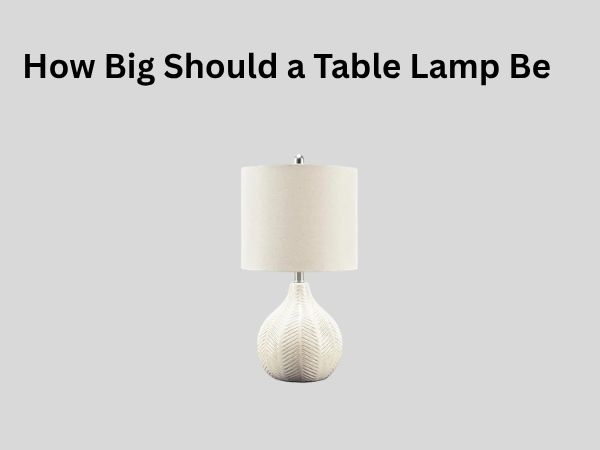
How Big Should a Table Lamp Be? The Complete Guide to Finding Your Perfect Fit
When you’re standing in front of a lamp display or scrolling through online retailers, you might find yourself asking a simple yet surprisingly complex question: how big should a table lamp actually be? It’s one of those design decisions that seems straightforward until you realize there’s actually quite a bit to consider. You’re not just picking a lamp based on what looks nice in a photo—you’re choosing something that needs to fit your space, complement your furniture, provide adequate lighting, and enhance your room’s overall aesthetic.
Let me be honest with you: I’ve made plenty of mistakes with lamp sizing over the years. I’ve bought lamps that towered over my nightstand like skyscrapers, and others so tiny they looked lost on my desk. Through trial and error, and plenty of research, I’ve learned that lamp sizing is actually an art and science combined. This guide will walk you through everything you need to know about selecting the right size table lamp for your specific situation.
Understanding the Basics of Table Lamp Proportions
Before diving into specific measurements and scenarios, you need to understand the fundamental principle behind lamp sizing: proportion. Think of your lamp as an accessory to your room, much like a necklace is an accessory to an outfit. Just as you wouldn’t wear a massive statement necklace with a delicate evening gown, you shouldn’t pair a massive lamp with a tiny side table.
The key relationship exists between three elements: your table’s size, your room’s dimensions, and the lamp’s height and shade width. These three factors work together to create visual harmony. When they’re balanced, your space feels intentional and well-designed. When they’re off, something just feels wrong, even if you can’t quite put your finger on why.
The Rule of Thirds in Lamp Selection
One of the most practical guidelines I’ve discovered involves thinking about proportions relative to your furniture. Many interior designers follow what I call the “rule of thirds” when it comes to lamp sizing. Your lamp should be approximately one-third the height of the surface it sits on, when measuring from the table surface to the top of the lampshade.
Let’s say you have a console table that’s 30 inches tall. A lamp that stands about 28 to 32 inches from the table surface to the shade top would typically look proportional. This isn’t a rigid rule—sometimes going slightly larger or smaller works beautifully depending on your design aesthetic—but it’s an excellent starting point for decision-making.
Measuring Table Height and Its Impact on Lamp Size
Standard Table Heights and Corresponding Lamp Dimensions
Different types of tables have different standard heights, and knowing these measurements helps tremendously when selecting your lamp. Understanding these baseline measurements gives you a framework to work within.
- Bedside tables typically range from 24 to 28 inches tall
- Desk surfaces usually measure between 28 and 30 inches in height
- Console tables often stand 30 to 36 inches high
- Sofa end tables frequently measure 24 to 26 inches tall
- Coffee tables are typically 16 to 18 inches above the floor
Once you know your table height, selecting an appropriate lamp becomes much easier. For a bedside table that’s 26 inches tall, you’d ideally want a lamp that sits somewhere between 20 to 28 inches from the table to the top of the shade. This creates that pleasing proportion we discussed.
Why Table Height Matters More Than You Think
Have you ever wondered why some lamps look awkwardly tall or uncomfortably short on certain surfaces? It’s usually because the relationship between table and lamp height is off. When a lamp is too tall for its table, it can obstruct your view, create an unbalanced appearance, and sometimes even become a safety hazard if it’s prone to tipping.
Conversely, when a lamp is too short, it doesn’t provide adequate task lighting, creates shadowy areas, and looks disproportionate—almost like a dollhouse lamp on adult furniture. The height relationship directly impacts both function and aesthetics, which is why getting it right matters.
Considering Lampshade Width and Diameter
The Relationship Between Shade Size and Table Proportions
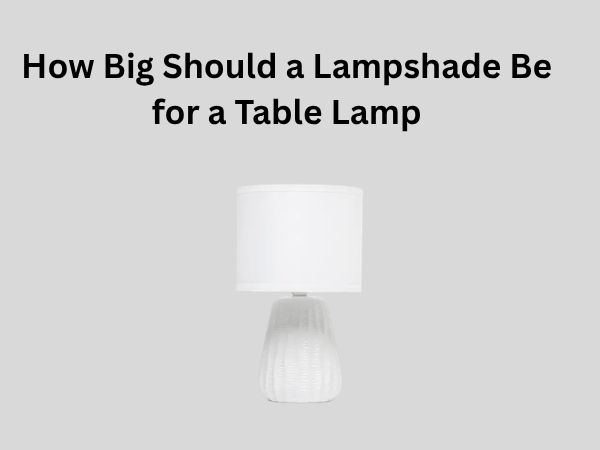
Height isn’t the only dimension that matters. The width of your lampshade plays an equally important role in creating visual balance. A common guideline is that your lampshade should be approximately the same width as the lamp’s base, or perhaps slightly wider.
Think about it logically: if you have a delicate, narrow lamp base topped with a massive drum shade, the proportions look off. Conversely, a chunky base with a tiny shade creates an equally awkward appearance. The shade should feel like a natural extension of the base, not an afterthought.
Shade Diameter Guidelines for Different Settings
Different rooms and different table sizes call for different shade widths. For a standard bedside lamp, you’d typically want a shade somewhere between 10 and 14 inches in diameter. For a desk lamp, you might go slightly smaller—perhaps 8 to 12 inches—since you want to avoid obstruction. For a more statement-making lamp on a large console table, you could easily go up to 16 to 18 inches in diameter.
A helpful way to visualize this: your shade width should ideally be about half to two-thirds the width of your table surface. If your nightstand is 24 inches wide, a 12 to 14-inch shade diameter would be proportional. If your desk is narrower at 18 inches, you’d want a shade diameter closer to 10 to 12 inches.
Room Size and Lamp Scale Considerations
How Your Overall Room Dimensions Affect Lamp Choice
Here’s something many people overlook: the size of your entire room impacts how large your lamp should be. A lamp that looks perfectly proportional in a spacious master bedroom might feel oversized in a cozy guest bedroom. Similarly, a lamp that’s appropriate for a large living room might look lost in a compact bedroom.
Think of it this way: your eye naturally compares everything in a space to everything else in that space. A 28-inch lamp looks much larger in a 10-by-12-foot bedroom than it does in a 20-by-20-foot living room, even though it’s the same physical size.
Small Rooms Require Thoughtful Lamp Selection
In smaller spaces—think dorm rooms, studio apartments, or compact bedrooms—you’ll want to be more conservative with lamp size. This doesn’t mean your lamp has to be tiny, but it should feel appropriately scaled to the room. A lamp that’s 20 to 24 inches tall typically works well in these settings, as it provides good lighting without dominating the visual space.
Larger Spaces Can Accommodate Bolder Lamp Choices
In spacious rooms, you have more flexibility to go larger. A statement lamp that’s 30 to 36 inches tall can look perfectly proportional in a large bedroom or living room. These rooms have the visual real estate to accommodate more substantial pieces without feeling overwhelming.
Task Lighting Needs and Lamp Size
How Function Influences Your Size Decision
Beyond aesthetics, you need to consider what you’ll actually be doing near this lamp. Are you reading in bed, working at a desk, creating ambiance in a living room, or providing general illumination in an entryway? Your functional needs directly impact the size lamp you should choose.
For task lighting—like reading or working—you generally want a slightly larger lamp that can accommodate a shade positioned to direct light downward effectively. This might mean a lamp that’s 24 to 30 inches tall. For ambient lighting—where the goal is general illumination and mood—you might opt for something more modest in size, perhaps 18 to 24 inches tall.
Bedside Table Lamp Sizing for Reading
If you’re someone who loves reading in bed, lamp size becomes especially important. You want your light source at approximately eye level when you’re sitting up in bed, which usually means a lamp that’s 20 to 26 inches from the nightstand surface to the bottom of the shade. The light should illuminate your page or screen without creating glare or shadows.
Desk Lamp Considerations for Work and Study
Desk lamps need special consideration because they’re so central to your comfort and productivity. A desk lamp should typically be 15 to 20 inches tall so the light spreads across your work surface adequately. You don’t want the shade to obstruct your view of your monitor or work area, so sometimes a slightly smaller lamp than the “rule of thirds” suggests actually works better functionally.
Style and Aesthetic Considerations in Lamp Sizing
How Your Design Style Influences Size Choices
Your personal design aesthetic also plays a role in lamp sizing decisions. Minimalist design typically favors smaller, more restrained pieces, while maximalist or traditional design styles can accommodate larger, more statement-making lamps.
If your design preference leans toward modern minimalism, you might choose a 20 to 24-inch lamp with clean lines and a simple shade. If you love traditional or eclectic design, a 28 to 32-inch lamp with a more elaborate base and shade might feel more appropriate to your aesthetic.
Lamp Base Size Relative to Overall Height
The proportions between your lamp’s base and its overall height matter significantly. A lamp with a chunky, substantial base might actually look better at a slightly shorter overall height because the base commands visual attention. Conversely, a lamp with a slim, delicate base might benefit from being slightly taller to maintain visual interest.
The Three-Part Lamp Proportion Check
Evaluating Your Lamp Choice Before Purchasing
Before you commit to any lamp purchase, I’ve developed a simple three-part check to ensure you’re making the right size choice:
First, check the height proportion. Measure your table and ensure your lamp will be roughly one-third the table height (from table surface to shade top). If your table is 28 inches tall, your lamp should be around 24 to 28 inches total.
Second, assess the shade width proportion. Make sure the shade diameter is roughly the same as the base width, or perhaps slightly larger. This creates visual harmony from base to top.
Third, evaluate the room scale. Consider whether the lamp seems appropriately sized for your overall room dimensions and whether it will provide adequate light for your intended use.
Common Lamp Sizing Mistakes and How to Avoid Them
Mistake One: Choosing by Picture Alone
One of the biggest mistakes people make is selecting lamps based solely on how they look in product photos. Online images don’t convey scale, and what looks modest in a photo might be enormous in real life—or vice versa. Always check the actual measurements before purchasing, and if possible, look at the lamp in person or read reviews mentioning how sizeable it actually appears in a real room.
Mistake Two: Ignoring Table Dimensions
I’ve seen people fall in love with a lamp without ever measuring their table. Then it arrives and sits awkwardly on a surface that’s either too large or too small for it. Always measure your table before shopping. Know its height, width, and depth. These measurements are your anchor point for everything else.
Mistake Three: Forgetting About Headroom
Another common error involves forgetting about vertical clearance. If you’re placing a lamp on a nightstand against a wall with a floating shelf above it, you need to ensure your lamp doesn’t hit that shelf. Measure not just your table height, but the vertical space available above it.
Mistake Four: Prioritizing Style Over Function
Sometimes a lamp is absolutely gorgeous but fails functionally—maybe the shade is too opaque and doesn’t provide adequate light, or the design places the bulb at an awkward height. Don’t sacrifice function for style. The best lamp is one that’s both beautiful and works perfectly for your needs.
Specific Room-by-Room Lamp Sizing Guidelines
Bedroom Bedside Lamps
For your bedroom nightstand, aim for a lamp that’s 20 to 28 inches tall from the nightstand surface to the shade top. The lamp should be tall enough to illuminate your reading area without creating harsh shadows, but not so tall that it obstruction your view past the bed. A shade diameter of 10 to 14 inches typically works well for standard nightstands.
Living Room and Sofa Table Lamps
End tables next to sofas are typically 24 to 26 inches tall, so your lamp should be about 22 to 26 inches from the table to the shade top. This height ensures good light for reading or conversation without being so tall that it creates an awkward sight line when you’re sitting on the sofa. Larger shade diameters (12 to 16 inches) work well in living rooms since these are often more spacious areas.
Desk and Work Table Lamps
Desk lamps need to be shorter and more focused than ambient lamps. Since desks are typically 28 to 30 inches tall, a lamp that’s only 15 to 20 inches tall (measured from desk surface to shade top) actually works better for task lighting. This height allows light to spread across your work surface without obstructing your view.
Console Table and Entryway Lamps
Console tables are often taller—30 to 36 inches—so you have more flexibility here. A lamp that’s 26 to 34 inches tall can look perfect on a console table. These settings often benefit from slightly more substantial lamps that make a visual statement, so going toward the larger end of the range often looks great.
The Importance of Seeing Lamps in Person When Possible
Why In-Store Shopping Still Has Advantages
While online shopping is convenient, I still recommend visiting a furniture or lighting store to see lamps in person when you’re making a significant purchase. Standing next to a lamp gives you an immediate sense of its scale in relation to your body. If a lamp is eye-level height with you when you’re standing, you get an intuitive feel for how it will look on your furniture.
Many stores even display lamps on tables of various heights, allowing you to visualize how different size combinations work together. This visual reference is invaluable when making your final decision.
Online Shopping Tips for Getting Size Right
Making the Most of Product Measurements and Reviews
If you’re shopping online, become obsessive about measurements. Look for the overall height, base width, and shade diameter in the product specifications. Check multiple listings—sometimes the same lamp is described differently across sites, so verify measurements match.
Read customer reviews carefully, especially ones where people mention the lamp’s size in their actual homes. Comments like “This looks much larger in person than expected” or “The shade is smaller than I thought” provide valuable real-world context that product photos can’t convey.
Many online retailers also offer size comparison photos showing the lamp next to a common object like a coffee mug or next to a person, which helps you gauge actual scale.
Adjusting Your Expectations Based on Budget
What Size Options Your Budget Allows
Budget often constrains choices, and that’s okay. Even if you can only afford a smaller lamp right now, choosing the correctly proportioned smaller lamp beats choosing an incorrectly proportioned large one.