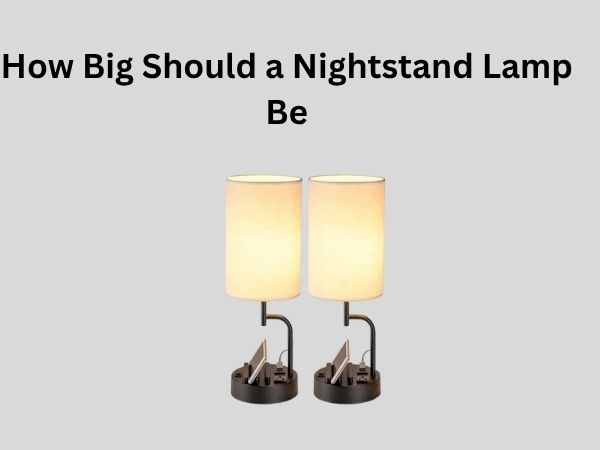
Sleep Sanctuary: How Big Should a Nightstand Lamp Be?
Have you ever tried reading in bed, only to find yourself squinting because your lamp is too dim? Or perhaps you’ve experienced that annoying moment when a bulky nightstand lamp takes up half your nightstand space, leaving nowhere for your phone, water glass, or book? These frustrations happen more often than you’d think, and they all boil down to one fundamental question: what’s the ideal size for a nightstand lamp?
Your bedroom isn’t just a place to sleep—it’s your personal sanctuary. And the lighting in that sanctuary plays a crucial role in how you feel when you wake up, how well you can relax before sleep, and whether you can comfortably read or work in bed. Getting the nightstand lamp size right is more important than most people realize, and I’m here to walk you through everything you need to know.
Understanding the Purpose of Your Nightstand Lamp
Before we dive into measurements and dimensions, let’s talk about what your nightstand lamp actually needs to do. Think of it as the unsung hero of your bedroom—it serves multiple purposes simultaneously. Your lamp needs to provide enough light for reading without being so bright that it becomes harsh and unwelcoming. It needs to fit comfortably on your nightstand without overwhelming the space. And it should contribute to the overall aesthetic of your room rather than clashing with your décor.
Many people make the mistake of choosing a lamp based solely on appearance, without considering its practical function. This is like buying a car because you love its paint job while ignoring whether it actually runs well. Your nightstand lamp needs to work as hard as it looks good.
The Different Roles Your Lamp Plays
Your nightstand lamp serves as a reading light, an ambient light source, a decorative element, and a functional tool all rolled into one. Each of these roles has different size implications.
- Reading Light: When you’re settling in with a book or catching up on emails, you need focused illumination. A lamp that’s too small might cast shadows across your pages, while one that’s too large could feel overwhelming.
- Ambient Lighting: In the evenings and mornings, your lamp sets the mood for your bedroom. A properly sized lamp contributes to a cozy atmosphere without dominating the visual landscape.
- Decorative Element: Your nightstand lamp is visible every single day. Its size and style should complement your furniture and room design.
- Safety Tool: When you need to get up in the middle of the night, your lamp provides necessary visibility. A lamp that’s too small might not illuminate your path adequately.
The Perfect Nightstand Lamp Height: Finding Your Sweet Spot
Height is perhaps the most critical dimension when it comes to nightstand lamp sizing. This isn’t something you should guess about—there’s actually a standard that interior designers and lighting experts recommend, and it’s based on ergonomics and functionality.
The 24 to 27-Inch Rule Explained
Most design professionals recommend that your nightstand lamp, when fully assembled (including the shade), should measure between 24 and 27 inches tall. Why these specific measurements? Well, when you’re lying in bed, a lamp in this height range positions the light source just above your eye level. This prevents the bulb from creating direct glare while still providing adequate illumination for reading or working.
Think about it this way: if your lamp is too short, light will shine directly into your eyes when you’re propped up on pillows. Too tall, and it might cast awkward shadows across your bed or create an unbalanced visual appearance on your nightstand. The sweet spot of 24 to 27 inches is like the Goldilocks zone—it’s just right.
Measuring Your Current Setup
If you already have a nightstand lamp, grab a measuring tape and check its height. Start from the base and measure all the way to the top of the shade. Does it fall within the recommended range? If not, this might explain some of the lighting issues you’ve been experiencing.
Your nightstand height also matters. A standard nightstand is typically 24 to 28 inches tall. Your lamp should be proportional to this, so it doesn’t look like a giant tower or a tiny totem pole next to your bed.
Lamp Base Diameter: Not Too Wide, Not Too Narrow
While height gets most of the attention, the width of your lamp base is equally important. A lamp base that’s too narrow can look unstable and feel wobbly, which is especially problematic if you have cats that like to investigate everything or kids who might bump into it. Conversely, a base that’s too wide takes up valuable nightstand real estate.
The Ideal Base Width
For most nightstands, a lamp base diameter between 4 and 6 inches works beautifully. This provides adequate stability without consuming your entire nightstand surface. If your nightstand is particularly small (under 18 inches wide), you might want to stay toward the narrower end of this range, around 4 to 5 inches. For larger nightstands, you have more flexibility and can accommodate bases up to 6 inches or even slightly larger.
A practical tip: measure your nightstand width and divide it in half. Your lamp base should take up no more than one-quarter of that space. This leaves you room for necessities like your phone, a lamp, water, and a book or two.
Shade Size: Creating the Right Visual Balance
The shade is where many people go wrong with nightstand lamp sizing. Your shade doesn’t just affect how light distributes—it dramatically impacts how proportional your lamp looks on your nightstand.
Understanding Shade Diameter
A common rule of thumb is that your lampshade diameter should be roughly equal to the height of your lamp’s base. So if your base is 6 inches tall, your shade should be roughly 6 inches in diameter. This creates visual harmony and proper light distribution.
For most nightstand lamps, a shade diameter between 10 and 14 inches is standard. A 10 to 12-inch shade is ideal for smaller nightstands or minimalist décors, while 12 to 14-inch shades work well for larger nightstands or rooms with higher ceilings.
The Proportion Test
Here’s a quick way to evaluate whether your shade is the right size: stand back and look at your nightstand from your bed. Does the lamp look balanced, or does it seem top-heavy? If the shade looks disproportionately large compared to the base, it’s probably too wide. If it looks like a lollipop—a thin base with a tiny head—you need a larger shade.
Considering Your Nightstand Dimensions
There’s no one-size-fits-all answer to nightstand lamp sizing because, well, nightstands come in all sizes. Let’s break this down by common nightstand dimensions.
Small Nightstands (16 to 18 Inches Wide)
If your nightstand is on the smaller side, you need a lamp that doesn’t dominate the space. Aim for a total height of 22 to 25 inches, a base diameter of 4 to 5 inches, and a shade that’s 10 to 12 inches in diameter. This keeps proportions balanced and functional.
Standard Nightstands (20 to 24 Inches Wide)
Most people have standard-sized nightstands, and these offer more flexibility. A lamp standing 24 to 27 inches tall with a 5 to 6-inch base and 12 to 14-inch shade works beautifully. You’ll have plenty of surface space left over for other items.
Large Nightstands (26 Inches or Wider)
Larger nightstands can handle more substantial lamps. You can confidently go with the full 27-inch height range, a 6-inch base, and up to a 16-inch shade without the lamp feeling undersized. In fact, a smaller lamp on a large nightstand can look lonely and out of place.
Bulb Type and Light Output: Size Isn’t Everything
Here’s something crucial that often gets overlooked: a physically larger lamp isn’t necessarily a brighter lamp, and brightness matters for functionality. You could have a gorgeous oversized lamp that barely illuminates your book, or a compact lamp that floods your room with light.
LED Bulbs Have Changed the Game
Modern LED bulbs have revolutionized how we think about lamp sizing. An LED bulb can produce the same light output as a much larger incandescent bulb while running cooler and using less energy. This means you can have a compact, sleek nightstand lamp that’s incredibly bright and functional.
When shopping for bulbs, look for lumens rather than wattage. A lamp with a 60-watt equivalent LED bulb (typically 800 lumens) provides excellent reading light without excessive brightness.
Color Temperature Matters Too
Beyond brightness, consider your bulb’s color temperature. For nightstands, warm white light (2700K) creates a cozy, restful atmosphere and is easier on your eyes before bedtime. Brighter, cooler white light (4000K or higher) is better if you need focused reading light, but it might make it harder to fall asleep afterward.
Common Nightstand Lamp Size Mistakes
Let me share some errors I see people make repeatedly when choosing nightstand lamps. Learning from others’ mistakes can help you avoid frustration.
Mistake One: Choosing Based on Price Alone
Budget matters, but the cheapest lamp often comes with a price—usually poor proportions and dim lighting. A mid-range lamp with proper dimensions and a quality bulb will serve you far better than a bargain-basement option.
Mistake Two: Buying Without Measuring
I can’t stress this enough: always measure your nightstand and compare those measurements to the lamp you’re considering. Online shopping has made this even more important since you can’t stand in your bedroom and check proportions in person.
Mistake Three: Ignoring Light Distribution
Some lamps cast light primarily upward, while others spread it more evenly. Opaque shades create focused light, while translucent shades provide softer ambient lighting. Think about how you use your lamp before deciding on shade material.
Mistake Four: Forgetting About Functionality
A lamp that looks stunning but is difficult to use—maybe the switch is positioned awkwardly, or the shade isn’t removable for cleaning—will eventually become more frustration than joy. Aesthetics matter, but functionality matters more.
The Importance of Balance and Proportion
Getting the right-sized nightstand lamp is fundamentally about creating balance. Your lamp should work in harmony with your nightstand, your bed, and your room overall. Think of it as part of a visual ecosystem.
Visual Weight and Room Perception
A lamp that’s too large can make a small bedroom feel cramped and crowded. Conversely, a lamp that’s too small on a spacious nightstand can make the room feel sparse and unfinished. The right-sized lamp creates visual satisfaction—that feeling that everything is exactly where it should be.
This is why designers spend so much time thinking about proportions. It’s not just about fitting things physically; it’s about how those things make you feel when you look at them.
Shopping for Your Perfect Nightstand Lamp
Now that you understand what makes a properly-sized nightstand lamp, let’s talk about the practical aspect of finding and purchasing one.
What to Know Before You Shop
Before heading to a lighting store or browsing online, gather this information:
- Your nightstand dimensions (width, depth, and height)
- Your bed height (this affects how light falls when you’re lying down)
- Your room’s overall style and color scheme
- How you primarily use your nightstand lamp (reading, ambiance, both)
- Your budget range
- Any specific lighting needs (are you a light sleeper? Do you need bright reading light?)
Where to Shop
Physical stores like furniture retailers and lighting specialists allow you to see lamps in person and understand their actual size and weight. However, online retailers often have more variety and competitive pricing. Consider shopping online but reading detailed reviews and specifications carefully.
Reading Product Specifications
When shopping online, don’t just look at pictures. Check the product description for exact measurements, bulb type and wattage, shade diameter, and customer reviews mentioning size and brightness. Many online retailers include photos showing lamps next to common objects for scale—use this information.
Adjusting Your Existing Lamp to the Right Size
If you already have a nightstand lamp that’s almost right but just not quite perfect, you might be able to adjust it rather than buying a new one.
Shade Replacement
Most lamps accept universal shades. If your base is the right size but the shade is too large or too small, you can simply replace it. Shades are often inexpensive, making this an affordable solution.
Adding a Lamp Riser or Reducing Height
If your lamp is too short, you can place it on books or a small platform to raise it. Conversely, if it’s slightly too tall, you might be able to adjust the harp (the metal support holding the shade). Some lamps also allow for shorter harp options.
Bulb Upgrades
If your lamp is physically the right size but too dim, upgrading to a brighter bulb or a different bulb type can transform it. An LED upgrade often provides dramatically better light while actually reducing heat and energy consumption.
Lighting Styles That Work Well for Nightstands
Different lamp styles naturally lend themselves to different sizes. Let’s explore some popular options.
Table Lamps
Traditional table lamps are the most common nightstand choice and offer the most variety in sizing. They typically fall right into the 24 to 27-inch height range naturally and come in countless styles.
Arc Lamps
Arc lamps curve over your bed, positioning light exactly where you need it. However, they require more nightstand space and careful placement. They’re excellent for reading but take up more room than traditional lamps.
Swing-Arm Lamps
These lamps extend and retract, offering flexibility. A properly sized swing-arm lamp can be adjusted to different positions depending on your needs—great for reading or keeping light out of your face while sleeping.
Touch Lamps and Smart Lamps
Modern touch and smart lamps come in various sizes and offer convenient controls. Size guidelines still apply, but the bonus of dimming features means you get flexibility in brightness without needing multiple lamps.
Conclusion
Choosing the right-sized nightstand lamp is an important decision that affects both the functionality and aesthetics of your bedroom sanctuary. While there’s no absolutely universal answer, the guidelines we’ve discussed—24 to 27 inches in height, 4 to 6-inch base diameter, and 10 to 16-inch shade diameter depending on your nightstand size—provide an excellent framework for making your choice.
Remember that proper sizing isn’t about following arbitrary rules; it’s

![10 Best Battery Operated Table Lamp [2026]](https://bestdesklamp.com/wp-content/uploads/2026/08/10-best-battery-operated-table-lamp-2026-featured-768x432.jpg)