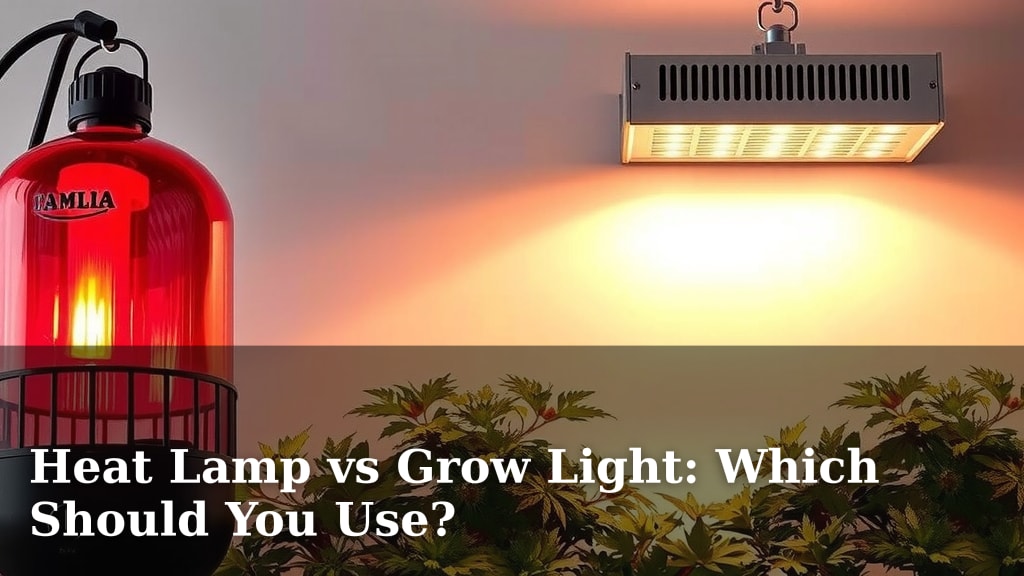
Heat Lamp vs Grow Light: Which Should You Use?
When deciding between a heat lamp and a grow light for your plants, understand that grow lights are generally better for plant growth. Heat lamps primarily offer warmth, while grow lights provide the specific light spectrum plants need to photosynthesize and thrive. Using the wrong one can stunt growth or even harm your plants.
Many home gardeners get confused by these two types of lamps. While both emit light and heat, their intended purposes differ greatly. Choosing the right light source depends entirely on what your plant actually needs – be it warmth, specific light wavelengths, or both. We found that understanding this core difference is key.
- Heat lamps provide warmth, not ideal light for plant growth.
- Grow lights offer specific light spectrums for photosynthesis.
- Plants need the right light wavelengths to thrive.
- Using a heat lamp for growth can lead to poor results.
Let’s break down the differences and help you pick the perfect lighting solution for your green friends. We’ll walk through exactly how each type of lamp works for your plants.
Understanding Your Plant’s Lighting Needs: Heat Lamp vs. Grow Light
So, you’re trying to figure out the best way to light up your plant’s world. It’s a common question for many plant parents. Should you go for a simple heat lamp, or invest in a specialized grow light? We found that understanding the core purpose of each is key to making the right choice for your green buddies.
What Exactly is a Heat Lamp?
Think of a heat lamp like a little sun-warmer for your plants. Its main job is to provide ambient warmth. You know how reptiles need a specific temperature to thrive? Heat lamps are often used for that very reason, or to take the chill off a cold room. They emit infrared radiation, which we feel as heat. While they do produce light, it’s not the kind plants are designed to use for making their food.
How Heat Lamps Work for Plants
When you use a heat lamp, you’re primarily boosting the temperature around your plant. This can be helpful for seedlings that need a cozy environment to sprout. It can also help plants that struggle in cooler climates. However, the light spectrum from a standard heat lamp isn’t optimized for photosynthesis. Plants use specific colors of light to convert sunlight, water, and carbon dioxide into energy. A heat lamp just doesn’t deliver those essential wavelengths very well.
What is a Grow Light?
A grow light is a lamp specifically designed to emit light that plants can use for photosynthesis. Scientists have studied what light wavelengths plants need most. They found that blues and reds are particularly important for healthy growth. Grow lights are engineered to provide these specific colors, mimicking sunlight in a way that a heat lamp simply cannot. They come in various types, like LED, fluorescent, and HID, each with its own strengths.
How Grow Lights Work for Plants
These lights are essentially giving your plants a tailored diet of light. They provide the blue light spectrum, which encourages leafy growth and healthy foliage. They also offer the red light spectrum, which is vital for flowering and fruiting. Some full-spectrum grow lights even include other colors to provide a more complete light experience, much like natural sunlight. This targeted approach ensures your plants get what they need to grow strong and vibrant.
LED Grow Lights: A Popular Choice
LED grow lights are becoming incredibly popular, and for good reason. We found they are energy-efficient and produce less heat than other types. This means you can place them closer to your plants without worrying about scorching them. They also have a long lifespan, making them a cost-effective option over time. Many gardeners appreciate their ability to be customized for specific light spectrum needs.
Other Grow Light Types
While LEDs are a top pick, other options exist. Fluorescent grow lights, like T5s, are a good choice for seedlings and low-light plants. They are relatively inexpensive to buy. High-Intensity Discharge (HID) lights, including metal halide and high-pressure sodium, are powerful but produce a lot of heat and consume more energy. We found that for most home growers, LEDs offer the best balance of performance and efficiency.
When to Choose Which Lamp
Deciding between a heat lamp and a grow light really boils down to your plant’s primary need. Are you trying to keep your little sprout cozy, or are you trying to help it grow big and strong?
Using a Heat Lamp: When is it Appropriate?
A heat lamp is best used when your main goal is simply to increase the temperature for your plants. This is often the case for:
- Seedlings and young plants that need a warmer environment to germinate and get started.
- Tropical plants that require consistently warm temperatures, especially if your home tends to get chilly.
- Reptiles and amphibians, though this is outside the scope of plant care!
Remember, the key here is warmth, not optimal light for growth. Using a heat lamp alone for an extended period can lead to leggy, weak plants because they aren’t getting the right light.
Using a Grow Light: When is it Essential?
A grow light is your go-to when you want to actively promote plant growth. You’ll need one if:
- You’re starting seeds indoors and need to supplement natural light.
- You have houseplants that don’t get enough natural sunlight (like those in a dark corner).
- You’re growing plants that need specific light cycles, like vegetables or flowering plants.
- You want to extend your growing season indoors.
We found that for anyone serious about indoor gardening, a quality grow light is an essential tool for success.
Can You Use Both?
Absolutely! Many gardeners find that combining both types of lamps offers the best of both worlds. You might use a heat lamp to maintain a cozy temperature for germination, and then switch to or supplement with grow lights once the seedlings emerge. This ensures your plants get both the warmth they need and the light spectrum required for robust development.
A Quick Comparison Table
To make it even clearer, let’s look at a side-by-side comparison. We found this helps many people visualize the differences.
| Feature | Heat Lamp | Grow Light |
|---|---|---|
| Primary Function | Provides warmth | Provides specific light spectrum for photosynthesis |
| Light Spectrum | Not optimized for plant growth (mostly infrared) | Tailored to plant needs (blues and reds) |
| Best Use Case | Increasing ambient temperature for seedlings/certain plants | Promoting plant growth, supplementing natural light |
| Energy Efficiency | Varies, often less efficient for light output | Generally high, especially LEDs |
| Heat Output | Can be high | Generally lower, especially LEDs |
Key Takeaways for Your Plant’s Lighting Choice
Making the right choice will help your plants thrive. Here’s a quick checklist to guide you:
- Assess your plant’s primary need: warmth or light for growth?
- Consider the stage of growth: seedlings might need more warmth initially.
- Evaluate your available natural light: is it enough, or does it need supplementing?
- Research the specific light spectrum requirements for your plant type.
- LED grow lights are often the most versatile and energy-efficient option.
- Don’t be afraid to use both if your situation calls for it.
Conclusion
You now understand the key differences between heat lamps and grow lights. Remember, heat lamps are for warmth, while grow lights are for plant photosynthesis. Your plant’s specific needs should guide your choice. Assess if your plant primarily needs a cozy environment or the right light wavelengths to thrive. If you’re unsure, consider the plant’s growth stage and its access to natural light. Making an informed decision will help your plants flourish indoors. For most indoor gardeners looking to actively grow plants, an LED grow light is often the most efficient and effective solution.
Frequently Asked Questions
Can a heat lamp actually harm my plants?
Yes, a heat lamp can harm your plants if used incorrectly. While it provides warmth, its light spectrum isn’t suitable for photosynthesis, which can lead to weak, leggy growth. If placed too close, the intense heat can also scorch your plant’s leaves or damage its delicate tissues.
How close should I place a grow light to my plants?
The distance depends on the type and wattage of your grow light. LED grow lights generally produce less heat and can be placed closer, often 6-12 inches away. More powerful lights like HIDs may need to be placed further back to avoid burning your plants. Always check the manufacturer’s recommendations for your specific light.
Do I need a grow light if my plants are near a sunny window?
You might still need a grow light even with a sunny window. Many indoor spaces don’t receive enough direct sunlight throughout the day. If your plants appear leggy, pale, or aren’t flowering or fruiting as expected, they likely need supplemental light from a grow lamp.
Are all LED grow lights the same?
No, LED grow lights vary greatly. Look for lights that offer a full spectrum or specific wavelengths like blue and red, which are essential for plant growth. The intensity (PPFD) and coverage area are also important factors to consider based on the type and number of plants you are growing.
Can I use a regular incandescent bulb as a grow light?
A standard incandescent bulb is not a good choice for a grow light. It primarily emits heat and a very narrow spectrum of light that plants cannot efficiently use for photosynthesis. You’ll find it ineffective for promoting healthy growth and it will likely lead to stunted or unhealthy plants.
![10 Best Cheap Lamp Shades [2026]](https://bestdesklamp.com/wp-content/uploads/2026/08/10-best-cheap-lamp-shades-2026-featured-768x432.jpg)
![10 Best Chest Lamp For Running [2026]](https://bestdesklamp.com/wp-content/uploads/2026/08/10-best-chest-lamp-for-running-2026-featured-768x432.jpg)