Heat Lamp vs Flood Light: What’s the Difference?
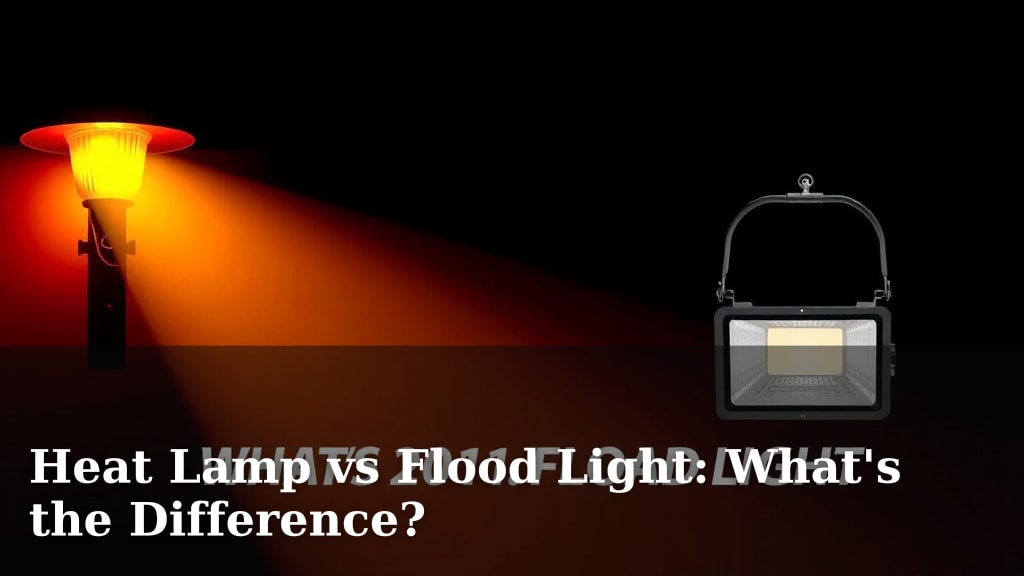
When you’re choosing a light for your project, knowing the difference between a heat lamp and a flood light is key. A heat lamp is designed to provide warmth and a focused beam of infrared light, often used for keeping food warm or in agricultural settings. A flood light, on the other hand, is built to illuminate a wide area with bright, visible light, perfect for security or highlighting features.
Think of it this way: you wouldn’t use a heat lamp to light up your backyard for a party, and you wouldn’t rely on a flood light to keep baby chicks warm. They serve distinct purposes, even though both involve light bulbs. Understanding their primary function – warmth versus illumination – will guide your choice.
- Heat lamps provide warmth and infrared light.
- Flood lights offer bright, widespread visible light.
- Choose heat lamps for heating applications.
- Choose flood lights for area illumination.
Let’s break down exactly what makes these lights different and when you’d want to use each one.
“`htmlUnderstanding Heat Lamps vs. Flood Lights
So, you’re trying to figure out which light is right for your needs. It’s a common question! Heat lamps and flood lights look similar, but they do very different jobs. Think of them as cousins, not twins. One is all about making things warm, and the other is about making things visible. We’re here to help you sort out the real difference so you can make the best choice for your project.
What Exactly is a Heat Lamp?
A heat lamp’s main job is to generate **heat**. It does this by emitting infrared radiation. This type of light isn’t really meant for seeing by. Instead, it’s designed to transfer warmth to objects or spaces. You’ll often find them used where temperature control is important.
How Do Heat Lamps Work?
Heat lamps work by heating up a filament inside the bulb. This filament gets very hot and radiates infrared energy. This energy then travels outwards and warms up surfaces it hits. Many heat lamps are designed to emit a specific spectrum of infrared light. This helps them be efficient at transferring heat without producing too much visible light.
Types of Heat Lamps
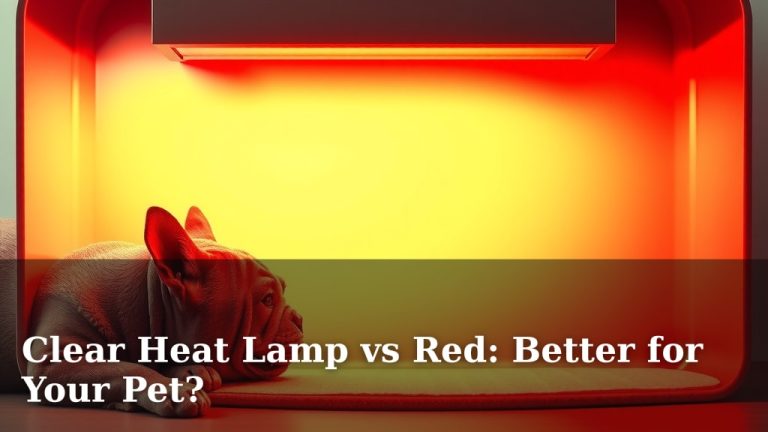
There are a few main types you might encounter. Some are designed for very specific uses, like keeping food warm in restaurants. Others are more general-purpose. You might see lamps that are red, clear, or even ceramic. The color often relates to the type of infrared light they emit. For instance, clear heat lamps produce more heat and less visible light than red ones.
Common Uses for Heat Lamps
You’ll see heat lamps in many places. They are essential in **agriculture** for keeping young animals like chicks and piglets warm. In kitchens, they keep food at the perfect serving temperature. You might also find them used in therapeutic settings for muscle relief. Sometimes, people use them for drying paint or other materials quickly.
What Exactly is a Flood Light?
A flood light’s primary purpose is **illumination**. It’s built to cast a wide, bright beam of light over a large area. Think of it as a spotlight, but spread out. Its goal is to make things visible, not necessarily to warm them up.
How Do Flood Lights Work?
Flood lights use a reflector to spread the light from the bulb in a broad pattern. This is different from a spotlight, which focuses light into a narrow beam. The bulb itself produces visible light, and the reflector helps direct it outwards. Many modern flood lights use LED technology, which is very energy-efficient.
Beam Spread and Brightness
Flood lights are categorized by their beam spread. A “wide flood” covers a very large area, perfect for lighting up your entire backyard. A “narrow flood” or “spot” beam is more focused, like for highlighting a single tree or a building feature. The brightness is measured in lumens, and flood lights typically have high lumen outputs to cover large spaces.
Common Uses for Flood Lights
Flood lights are everywhere you need to light up a big area. They are common for **security lighting** around homes and businesses. You’ll see them on sports fields, in parking lots, and illuminating building exteriors. They can also be used for outdoor events or to highlight landscaping. Some are even used for photography and film production.
Key Differences at a Glance
Let’s lay out the core differences in a simple way. This table should help you quickly see which is which:
| Feature | Heat Lamp | Flood Light |
|---|---|---|
| Primary Function | Provide warmth (infrared radiation) | Illuminate a wide area (visible light) |
| Light Type | Mostly infrared, little visible light | Bright visible light |
| Energy Output | Focuses on heat energy | Focuses on light energy |
| Typical Use Cases | Keeping things warm, agriculture, food service | Security, area lighting, sports fields |
| Beam Pattern | Often focused on a target area for heat | Wide, dispersed beam for coverage |

Making the Right Choice for Your Needs
Now that you know the differences, how do you pick the right one? It really comes down to your goal. If your main concern is keeping something warm, a heat lamp is your friend. If you need to see clearly in a large outdoor space, a flood light is the way to go.
When to Choose a Heat Lamp
You’ll want a heat lamp if you need to:
- Keep baby animals comfortable and warm.
- Maintain the temperature of food in a serving area.
- Speed up the drying process for paint or glue.
- Provide targeted warmth for therapeutic reasons.
When to Choose a Flood Light
You should opt for a flood light if your goal is to:
- Deter potential intruders with bright outdoor lighting.
- Light up your entire backyard for safety or enjoyment.
- Highlight architectural features on your home.
- Illuminate a driveway or pathway for easy navigation at night.
Are There Any Overlaps?
Sometimes, the lines can seem a little blurred, especially with older incandescent bulbs. A very bright, basic incandescent bulb might give off some heat and light. However, it won’t be as efficient as a dedicated heat lamp for warmth or as effective as a flood light for wide-area illumination. Modern LED flood lights are designed purely for light output and produce very little heat compared to their energy consumption.
Many sources, like energy efficiency guides from the Department of Energy, highlight that specialized bulbs are best for specialized tasks. Using the wrong type of bulb can lead to wasted energy and less effective results. So, while a bulb might technically do both a little, it won’t do either job well if it’s not designed for it.
Quick Checklist: Heat Lamp or Flood Light?
To quickly decide, ask yourself these questions:
- Do I need to raise the temperature of an object or area? (If yes, lean towards heat lamp).
- Is my main goal to make a large space visible and bright? (If yes, lean towards flood light).
- Will the light be used in a kitchen to keep food warm? (Heat lamp).
- Is this light primarily for security purposes around a building? (Flood light).
- Does the application require infrared radiation specifically? (Heat lamp).
- Am I trying to light up a wide outdoor area like a yard or driveway? (Flood light).
Conclusion
Choosing between a heat lamp and a flood light is all about your main goal. If you need to generate warmth, especially for applications like keeping food hot or ensuring baby animals stay cozy, a heat lamp is your best bet. Its infrared output is designed for heating. On the other hand, if your priority is to brighten a large area for visibility, safety, or ambiance, a flood light is the clear choice. Modern flood lights offer powerful illumination without excessive heat.
By understanding their distinct functions—heat versus light—you can confidently select the right bulb for your specific needs. Always consider the primary task at hand to make an energy-efficient and effective decision.
Frequently Asked Questions
Can I use a flood light to keep my pet warm?
Generally, no. Flood lights are designed for illumination, not for generating heat. While any light bulb produces some warmth, a flood light won’t provide the focused, consistent heat needed to keep a pet comfortable and safe. You’d want a specialized pet heat lamp for that purpose.
Do heat lamps produce any visible light?
Yes, most heat lamps produce some visible light, but their primary output is infrared radiation for heat. The amount and color of visible light can vary depending on the type of heat lamp. Some, like red bulbs, emit more visible light than clear ceramic heat emitters.
Are LED flood lights more energy-efficient than old incandescent flood lights?
Yes, LED flood lights are significantly more energy-efficient than older incandescent models. They use much less electricity to produce the same amount of light and generate less heat as a byproduct. This can lead to substantial savings on your energy bills.
Can I use a heat lamp for outdoor security lighting?
No, a heat lamp is not suitable for security lighting. Its purpose is to create warmth, not to broadly illuminate an area for visibility and deterrence. For security, you need a flood light that casts a bright, wide beam of visible light.
What is the difference between a flood light and a spotlight?
The main difference is the beam spread. A flood light casts a wide, dispersed beam of light to cover a large area. A spotlight, however, focuses its light into a narrow, concentrated beam, ideal for highlighting a specific object or small area.
![10 Best Coastal Lamps [2026]](https://bestdesklamp.com/wp-content/uploads/2026/08/10-best-coastal-lamps-2026-featured-768x432.jpg)