Accent Lamp vs Table Lamp: Key Differences and Best Uses Explained
When you’re shopping for lighting solutions for your home, you’ve probably stumbled across two terms that seem to get thrown around interchangeably: accent lamps and table lamps. But here’s the thing—they’re not actually the same, and understanding the differences between them can transform how you light your spaces. Whether you’re decorating a cozy reading nook or trying to create ambient lighting in your living room, knowing what sets these two apart will help you make smarter decisions.
Let me walk you through everything you need to know about accent lamps versus table lamps, so you can confidently choose the right lighting for your needs.
Understanding the Basics: What Exactly Is a Table Lamp?
A table lamp is essentially what most people think of when they imagine a lamp sitting on a nightstand or desk. It’s a versatile fixture that combines a light source, a shade, and a base all in one compact unit. You plug it in, flip the switch, and boom—you’ve got light.
The beauty of table lamps lies in their practicality. They’re designed to provide general or task lighting, which means they’re meant to help you actually see what you’re doing. If you’re reading a book, working on your laptop, or applying makeup, a quality table lamp does the heavy lifting for you.
Key Characteristics of Table Lamps
- Typically stand between 24 to 36 inches tall
- Designed to provide functional, task-oriented lighting
- Usually feature a lampshade that directs light downward and outward
- Come in countless styles, from modern to traditional
- Generally affordable and widely available
- Perfect for bedside tables, desks, and living room side tables
When you’re choosing a table lamp, you’re really choosing a workhorse. It needs to do its job reliably and effectively. Most people keep table lamps on for extended periods throughout the day and evening, so they’re built to handle consistent use.
Getting to Know Accent Lamps: The Styling Specialists
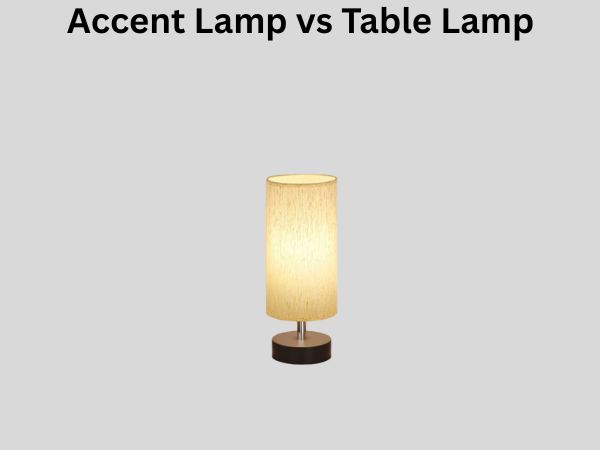
Now, accent lamps are a different beast altogether. These are the show-offs of the lighting world. An accent lamp is primarily designed to add visual interest and ambiance to a room rather than provide bright, functional lighting. Think of it as jewelry for your interior design—it’s there to make a statement.
Accent lamps are typically smaller, more decorative, and more intentional in their placement. They’re meant to draw your eye, complement your décor, and create mood lighting. Have you ever walked into a room and felt immediately relaxed? There’s a good chance an accent lamp played a role in that atmosphere.
Core Features of Accent Lamps
- Usually smaller, ranging from 12 to 24 inches in height
- Prioritize aesthetic appeal and decorative value
- Emit softer, more subdued lighting
- Feature unique, eye-catching designs or materials
- Often used strategically to highlight specific areas or objects
- Create ambient or mood lighting rather than task lighting
The main difference in philosophy is this: a table lamp asks, “How can I help you work and see better?” An accent lamp asks, “How can I make this space more beautiful?” Both questions are valid, and both types of lamps have their place.
Size and Height: More Than Just a Number
Why Table Lamp Height Matters
Table lamps are typically taller because their job demands it. When you’re sitting at a desk or in a chair reading, you need light positioned at a height that doesn’t create glare or cast awkward shadows. Most table lamps stand about 24 to 36 inches tall, which places the light source at an optimal level for visibility.
Think about it like this: if your lamp is too short, you’re basically reading with your own shadow in the way. If it’s too tall, the light spills everywhere except where you actually need it. Table lamp height is engineered for performance.
Accent Lamp Proportions and Placement
Accent lamps are generally more compact, usually ranging from 12 to 24 inches tall. This smaller stature makes sense because they’re not meant to be your primary light source. Instead, they’re positioned to enhance specific areas or objects in a room. You might place a small accent lamp on a shelf to highlight a collection of books, or position it in a corner to create a cozy pocket of light.
The smaller size also makes accent lamps more flexible. You can move them around easily, experiment with different placements, and use them to create dynamic lighting scenarios that shift with your mood.
Brightness Levels and Light Output: The Functional Divide
Here’s where the practical differences really shine through. Table lamps and accent lamps operate under completely different brightness philosophies.
Table Lamp Brightness: Designed for Functionality
Table lamps are typically equipped with higher wattage bulbs or multiple bulbs to produce substantial brightness. You might find a table lamp using a 60-watt equivalent LED bulb or even higher. The goal is to provide enough light that you can comfortably read, write, work on a computer, or perform other tasks that require visibility.
This brightness is intentional. When you’re spending an evening with a book, you don’t want to strain your eyes. When you’re working at your desk, you need crisp, clear illumination. Table lamps deliver that.
Accent Lamp Illumination: Subtlety Is the Goal
Accent lamps, by contrast, often use lower wattage bulbs—think 25 to 40 watts equivalent. Sometimes they might use even less. The idea is to create a gentle glow that enhances the space without overwhelming it. You’re not trying to read by an accent lamp; you’re trying to feel something when you look at it.
Many accent lamps are specifically designed to work with dimmer switches, allowing you to control the mood even more precisely. This flexibility is one of their greatest strengths for creating atmosphere.
Design and Aesthetic: Where Personality Comes In
Table Lamp Styles: Functional Beauty
Table lamps come in virtually every style imaginable. You’ve got minimalist designs with clean lines, ornate Victorian-inspired fixtures, industrial metal bases, rustic wooden options, and everything in between. However, there’s usually a practical consideration underlying the design. The shade needs to diffuse light effectively, the base needs to be stable enough to support the lamp without tipping, and the overall form needs to work in a functional space.
This doesn’t mean table lamps are boring—far from it. But their design is typically a conversation between aesthetics and practicality.
Accent Lamp Creativity: Design Takes Center Stage
Accent lamps are where designers get to play. You’ll find accent lamps shaped like animals, made from reclaimed materials, featuring artistic glass work, incorporating unconventional color schemes, and pushing boundaries in ways that purely functional lighting simply can’t.
An accent lamp might be a sculptural piece first and a light source second. You might fall in love with how it looks long before you consider how bright it is. That’s the magic of accent lighting—it prioritizes visual impact.
Best Locations for Table Lamps Throughout Your Home
Bedroom Table Lamps
Your bedroom nightstand is probably the most common home for a table lamp. A bedside lamp gives you reading light without flooding the entire room with brightness. It’s perfect for that moment when your partner is sleeping but you want to finish a chapter.
Office and Desk Setups
If you work from home, a desk lamp isn’t optional—it’s essential. The right table lamp reduces eye strain, creates focused lighting on your work surface, and actually makes you more productive. Poor desk lighting is genuinely exhausting.
Reading Nooks and Seating Areas
That cozy armchair where you love to settle down with a book? It needs a table lamp nearby. Position it slightly to the side so light falls on your reading material without creating glare on the page.
Entryways and Hallways
While you might not think of these spaces as needing dedicated lamps, a small table lamp on an entry table or console provides both practical illumination and a welcoming focal point when guests arrive.
Ideal Placements for Accent Lamps: Creating Ambiance
Shelving and Display Areas
An accent lamp positioned on a bookshelf or display shelf highlights the items you want people to notice. It creates depth and visual interest while drawing attention to your favorite pieces.
Corner Installations
A corner accent lamp can completely transform an empty corner from dead space into an inviting pocket of light. It adds dimension to your room and makes the space feel more intentional and designed.
Side Tables and Console Surfaces
While a table lamp might sit on a side table for functional purposes, an accent lamp sits there to be admired. It’s a design element that just happens to emit light.
Accent Walls and Feature Areas
Position an accent lamp to highlight an accent wall, artwork, or architectural feature. This creates a layered lighting effect that makes your space feel sophisticated and intentional.
Price Considerations: Understanding the Investment
Table lamps range dramatically in price. You can find a functional table lamp for twenty dollars at a big box store, or invest in a designer lamp that costs several hundred dollars. The price typically reflects durability, materials, and brand reputation rather than basic functionality.
Accent lamps also vary widely, but they’re often positioned as design investments. You might pay more for an accent lamp with unique materials or artistic merit than you would for a table lamp that’s purely functional. However, many beautiful accent lamps are quite affordable, especially if you’re shopping online or looking for vintage options.
Energy Efficiency: Modern Considerations
Here’s something wonderful about modern lighting: both table lamps and accent lamps have become significantly more energy-efficient. LED bulbs have revolutionized the lighting industry. You can now get bright, warm light from table lamps using a fraction of the energy that older incandescent bulbs required.
This matters more for table lamps since they typically stay on longer. If you’re running a desk lamp eight hours a day, LED technology saves you real money over time. Accent lamps, which are usually on for shorter periods and at lower brightness levels, already have minimal energy consumption.
Making Your Choice: Table Lamp or Accent Lamp?
Choose a Table Lamp If You Need:
- Functional, task-oriented lighting for work or reading
- Reliable light for extended use throughout the day
- A fixture that performs well and doesn’t compromise on brightness
- Something that serves a practical purpose in a specific location
- Comfortable visibility for detailed work or hobbies
Choose an Accent Lamp If You Want To:
- Add visual interest and personality to a space
- Create mood lighting and ambiance
- Highlight specific areas, objects, or architectural features
- Make a design statement with your lighting
- Layer your lighting for more sophisticated illumination
Can You Use Them Together? Absolutely!
Here’s the secret that interior designers know: you don’t have to choose between table lamps and accent lamps. In fact, the most beautifully lit homes use both strategically. A reading chair might have a functional table lamp for when you’re actually reading, but nearby might sit an accent lamp that creates lovely ambient light for other times of day.
Think about layering your lighting. You might have overhead ceiling lights for general illumination, a table lamp for task lighting, and accent lamps scattered throughout for mood and visual interest. This creates a dynamic space that adapts to your needs and looks fantastic at every hour of the day.
Maintenance and Durability Differences
Table lamps, because they’re used more frequently, need to be built for durability. You’re flipping them on and off regularly, potentially moving them around, and relying on them day after day. Quality matters here.
Accent lamps can be more delicate because they’re typically used less intensively. You might have a beautiful, decorative accent lamp that’s more fragile because it’s not meant to withstand constant use. That said, good accent lamps are still well-made; they just prioritize appearance over industrial durability.
Smart Lighting Considerations
Both table lamps and accent lamps now come in smart versions that connect to your home automation system. You can dim them from your phone, set schedules, change colors, or integrate them with other smart home features.
This technology is particularly interesting for accent lamps, where the ability to adjust brightness and sometimes even color temperature adds another layer of flexibility for creating different moods. Smart table lamps are equally useful, especially if you want to turn on your reading light without getting out of bed.
Conclusion
The difference between accent lamps and table lamps ultimately comes down to purpose and philosophy. Table lamps are the practical professionals of the lighting world—they’re there to help you work, read, and see clearly. Accent lamps are the artists—they’re there to make your space more beautiful and to create atmosphere.
Neither type is better than the other. Instead, they serve different roles in creating a well-lit, beautifully designed home. The smartest approach is to understand what each offers and use them intentionally throughout your spaces. Your table lamp handles the functional lighting needs while your accent lamps create the ambiance that makes a house feel like a home.
Next time you’re shopping for lighting, ask yourself what you’re trying to accomplish in that space. Do you need to see clearly and work effectively? Reach for a table lamp. Do you want to add beauty, warmth, and visual interest? An accent lamp is your answer. And if you’re really smart, you’ll get both and let them work together to create something truly special.
Frequently Asked Questions
Can I use an accent lamp as my only light source in a room?
Technically you could, but it’s not ideal. Accent lamps are designed to create mood lighting and visual interest, not to provide sufficient illumination for everyday tasks. If you used only an accent lamp, you’d likely find yourself straining to see clearly after dark. Accent lamps work best as part of a layered lighting scheme alongside brighter light sources like table lamps or overhead fixtures. The only exception might be if you’re only using the space for relaxation and don’t need to see detail.
What’s the difference between an accent lamp and a decorative lamp?
These terms are often used interchangeably, and for good reason—there’s significant overlap. However, a decorative lamp emphasizes visual appeal as its primary function, while an accent lamp is specifically designed to accent or highlight a particular area or object in your room. You might call all accent lamps decorative, but not all decorative lamps serve an accent lighting purpose. The key distinction is intentionality: accent lamps are placed with a specific lighting goal in mind, while decorative lamps might simply look good without necessarily creating a particular lighting effect.
How bright should a table lamp be for reading?
For comfortable reading, most experts recommend a table lamp that produces between 40 to