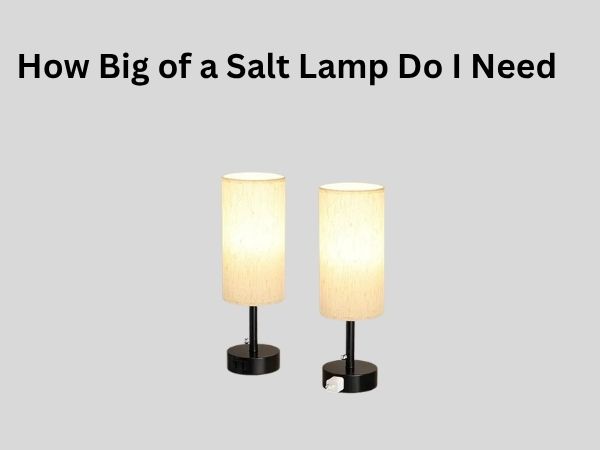
The Ultimate Guide: How Big of a Salt Lamp Do I Need?
When you’re standing in a shop staring at rows of glowing salt lamps in different sizes, you might find yourself asking the same question I did years ago: how big should my salt lamp actually be? It’s one of those questions that seems simple on the surface, but there’s actually quite a bit to consider. Let me walk you through everything you need to know to pick the perfect salt lamp for your space.
Understanding Salt Lamp Sizes and Dimensions
Salt lamps come in a surprisingly wide range of sizes. We’re talking anywhere from tiny decorative pieces that weigh just a pound or two, all the way up to massive statement lamps that can weigh over fifty pounds. Think of it like choosing a houseplant—you wouldn’t put a delicate succulent in a mansion’s foyer, and you wouldn’t stick a full-grown tree in a bedroom corner. The same logic applies to salt lamps.
Most manufacturers measure salt lamps by their weight rather than their physical dimensions, which is actually pretty helpful. A small lamp typically weighs between one and three pounds, a medium lamp sits around five to nine pounds, and large lamps usually tip the scales at fifteen to twenty pounds or more. Understanding these weight categories helps you visualize what you’re getting.
Room Size: The Foundation of Your Decision
The most important factor when determining salt lamp size is the room you’re placing it in. Your bedroom closet needs something completely different than your living room, and that’s just common sense. But how do you actually figure out what works best?
Small Rooms and Personal Spaces
If you’re looking to place a salt lamp in a bedroom, small office, or bathroom, you’re probably thinking about a lamp that weighs between one and five pounds. These compact versions typically sit about eight to ten inches tall and produce a soft, ambient glow that won’t feel overwhelming in an intimate space. I’ve found that small rooms actually benefit more from the lamp’s aesthetic appeal than from any significant air-purifying effect, so aesthetics matter just as much as functionality here.
Medium-Sized Rooms
For most living rooms, dining areas, or larger bedrooms, you’ll want to look at lamps in the five to fifteen pound range. These are the sweet spot for many households. They’re substantial enough to make a visual impact without dominating the room, and they provide a noticeable ambient light that most people find genuinely pleasant. A medium-sized lamp in a fifteen-by-twenty-foot room creates that cozy atmosphere everyone seems to love.
Large Rooms and Open Spaces
If you’ve got a spacious living area, open floor plan, or even a home office that doubles as a creative studio, you might want to consider lamps that weigh twenty pounds or more. Some people even use multiple medium-sized lamps in larger spaces instead of one enormous piece. It’s like the difference between one loud speaker and a well-balanced sound system—distribution sometimes works better than concentration.
The Relationship Between Size and Light Output
Here’s something that surprises people: a bigger salt lamp doesn’t necessarily mean exponentially more light. The relationship isn’t linear. A lamp that weighs twice as much won’t produce twice the brightness because salt lamps work through a relatively limited mechanism. The light comes from the bulb inside, not from the salt itself, so the lamp’s size affects the glow’s diffusion rather than its raw power.
Smaller lamps tend to create more focused, concentrated light, while larger lamps distribute that same light over a bigger surface area, resulting in a softer, more ambient effect. If you want your lamp to be a reading light, go smaller. If you want it to set a mood in a larger space, go bigger.
Purpose and Functionality Considerations
Using Salt Lamps for Air Purification
Let’s address the elephant in the room—or rather, the ion in the room. Many people buy salt lamps believing they’ll purify their air, and while the science behind this is somewhat debated, salt lamps do release negative ions when heated. If this is your primary goal, size does matter somewhat. A larger lamp has more surface area to potentially release these ions, though the effect remains modest regardless of size.
For air purification purposes, you’d want at least a medium-sized lamp, ideally in the eight to fifteen pound range. Anything smaller might feel more like a decorative gesture than a functional tool, though I’ll be honest—the purification effect is subtle in either case.
Salt Lamps as Mood Lighting
If you’re primarily interested in creating ambiance, size becomes less critical. Even a small lamp can create a beautiful, warm glow that transforms how a space feels. The key is placement and brightness control. A well-positioned small lamp often outperforms a poorly-placed large one.
Salt Lamps as Nightlights
Using a salt lamp as a nightlight in a child’s room or hallway requires only a small lamp. These applications actually benefit from the understated illumination that compact lamps provide. A one to three pound lamp works perfectly as a gentle guide through darkness without being disruptive to sleep.
Calculating Based on Square Footage
If you want a more scientific approach to sizing, here’s a rough formula some experts suggest: for every one hundred square feet of space, consider getting a lamp that weighs approximately five to seven pounds. Let me break this down for you.
- A one-hundred-square-foot room: three to five pound lamp
- A two-hundred-square-foot room: seven to ten pound lamp
- A three-hundred-square-foot room: twelve to fifteen pound lamp
- Rooms over four hundred square feet: twenty-plus pound lamp or multiple medium lamps
Keep in mind this is more of a guideline than a hard rule. Ceiling height, color of walls, furniture density, and other factors all play roles in how much lamp you actually need.
Placement Matters as Much as Size
Here’s something crucial that people often overlook: where you place your lamp matters almost as much as how big it is. A medium-sized lamp placed on a shelf at eye level creates more visual impact than a large lamp shoved in a corner. Think about sightlines, ambient light sources, and what you want the lamp to illuminate or influence.
If you’re placing your lamp next to your bed, a smaller version makes more sense both practically and aesthetically. If you’re putting it in an entryway where it’ll be seen from multiple angles, you might want something more substantial. I like to picture the room and imagine where the lamp’s glow will actually reach before deciding on size.
Aesthetics and Interior Design Impact
Let’s be honest—you’re probably buying a salt lamp because it looks amazing, not just for functionality. The visual impact should definitely factor into your sizing decision. A lamp that looks proportional to your space will seem like it was meant to be there, while an undersized lamp might look like an afterthought, and an oversized one could feel oppressive.
Minimalist and Scandinavian Spaces
If your style leans toward clean lines and simplicity, smaller to medium lamps work best. You want the lamp to complement your space without becoming the focal point unless that’s intentional.
Eclectic and Bohemian Interiors
Boho spaces often embrace larger, more dramatic pieces. A substantial salt lamp can serve as a gorgeous centerpiece in these environments. The warm glow complements the eclectic, earthy aesthetic perfectly.
Modern and Contemporary Designs
Contemporary spaces might benefit from sleek, medium-sized lamps that don’t overwhelm minimalist color palettes. The goal is integration, not distraction.
Budget Considerations and Cost Scaling
I’d be remiss not to mention that larger salt lamps cost significantly more than their smaller counterparts. It’s not just about the extra salt—there’s also the base, the electricity requirements, and the shipping. A one-pound lamp might cost fifteen to thirty dollars, while a twenty-pound lamp could run you one hundred to three hundred dollars.
This is where being honest about your actual needs becomes important. Do you really need the largest lamp available, or would a medium lamp achieve your goals at half the price? Sometimes the most practical choice is going slightly smaller than you initially think, especially if you’re unsure about commitment.
Electricity Usage and Heat Generation
Larger salt lamps require more powerful bulbs to heat them adequately, which means slightly higher electricity consumption. We’re not talking about anything dramatic—even a large salt lamp uses minimal power compared to most household appliances—but it’s worth considering. If you’re particularly energy-conscious, a smaller lamp might align better with your values.
Additionally, larger lamps generate more heat when running for extended periods. This is rarely a problem, but if you’re placing a lamp in a small, enclosed space like a tight closet, you might want to stick with something modest to avoid any overheating issues.
Multiple Smaller Lamps Versus One Large Lamp
Here’s a strategy that more people should consider: using multiple small to medium lamps instead of one huge lamp. In a large living room, placing a medium lamp in two or three different corners creates more balanced lighting and visual interest than one massive lamp. It’s also more flexible—you can adjust your setup as you rearrange furniture.
This approach also addresses a common problem: if you have one enormous lamp and you decide you don’t like it, you’re stuck. With multiple lamps, you have more options and can distribute them throughout your home.
Climate and Environmental Factors
Interestingly, where you live affects how quickly your salt lamp works and thus how much size you might need. In very dry climates, salt lamps activate faster and may perform their function (if you believe in the ionization benefits) more efficiently. In humid climates, the process is slower. This is another subtle point that might influence your choice, though I wouldn’t let it be the deciding factor.
Testing Before Committing
If possible, try to see salt lamps of different sizes in person before purchasing. What seems like an ideal size in a shop might feel different in your actual home. The lighting conditions are different, the room proportions are different, and your eye will naturally adjust differently. Some retailers allow exchanges, which can be incredibly helpful if your first choice doesn’t feel right once you get it home.
Maintenance and Durability by Size
Larger lamps require more careful handling during cleaning. The bigger your lamp, the more responsibility you take on in terms of maintenance. Smaller lamps are easier to move around, clean, and reposition if needed. If you value low-maintenance decor, this might push you toward a smaller option.
Conclusion
So, how big of a salt lamp do you need? The honest answer is that it depends on multiple factors working together: your room size, your purpose for the lamp, your aesthetic preferences, your budget, and your practical constraints. There’s no universal perfect size, but there is definitely a perfect size for your specific situation.
Start by honestly assessing your space. Measure your room, think about where you’ll place the lamp, and consider what you want it to accomplish. For most people, a medium-sized lamp in the five to fifteen pound range proves to be the most versatile choice. It’s substantial enough to make an impact without overwhelming your space, and it strikes a balance between functionality and aesthetics.
Don’t get caught up in the assumption that bigger is always better. A thoughtfully chosen lamp that fits your space perfectly will bring more joy and value than an oversized statement piece that doesn’t quite work. Take your time with the decision, and you’ll end up with a lamp you genuinely love living with.
Frequently Asked Questions
What size salt lamp is best for a bedroom?
For most bedrooms, a small to medium salt lamp weighing between two and eight pounds works perfectly. The goal in a bedroom is to create a gentle, relaxing ambiance without producing too much light that might interfere with sleep. Placement matters greatly here—a lamp on your nightstand or dresser should be on the smaller end, while one placed across the room could be medium-sized. A salt lamp’s warm glow actually complements bedroom environments beautifully, making even compact versions feel luxurious.
Can a small salt lamp actually purify air?
This is where I need to be straight with you: the air-purifying claims around salt lamps are somewhat exaggerated. While salt lamps do release negative ions when heated, the effect is modest at best. That said, even a small lamp produces some ionization, so if this benefit interests you, go for at least a medium-sized lamp rather than a tiny one. However, if air purification is your primary goal, you’d be better served by an actual air purifier alongside your decorative salt lamp.
Is it better to buy one large lamp or multiple smaller ones?
Multiple smaller lamps often work better than one large lamp, especially in bigger spaces. This approach gives you more flexibility, better light distribution, and the ability to rearrange as your needs change. Plus, if you eventually move or redecorate, you can repurpose the lamps more easily. The only advantage of a single large lamp is visual simplicity and impact if that’s your aesthetic goal.
How do I know if my salt lamp is too big for my space?
Your lamp is too big if it visually overwhelms the room, makes you feel like you need to work around it when placing furniture, or produces so much glow that it becomes distracting. A properly-sized lamp should enhance your space naturally, not dominate it. Trust your instincts—if it feels like too much when you first set it up, it probably is, and you might want to consider a smaller option.
What’s the ideal placement for maximizing a salt lamp’s effect?
For maximum visual impact, place your lamp where it can be seen from multiple angles, perhaps on a shelf, console table, or corner position. For ambient lighting purposes, position it where the glow naturally spreads throughout your main living area. Avoid tucking it away in dark corners where its beautiful light won’t be appreciated. If you’re concerned about air purification effects, place the lamp somewhere with decent air circulation so any ions have a chance to disperse throughout the room. Generally, eye-level or slightly elevated placement works best for both aesthetics and function.
“`

![10 Best Buy Projector Lamps [2026]](https://bestdesklamp.com/wp-content/uploads/2026/08/10-best-buy-projector-lamps-2026-featured-768x432.jpg)