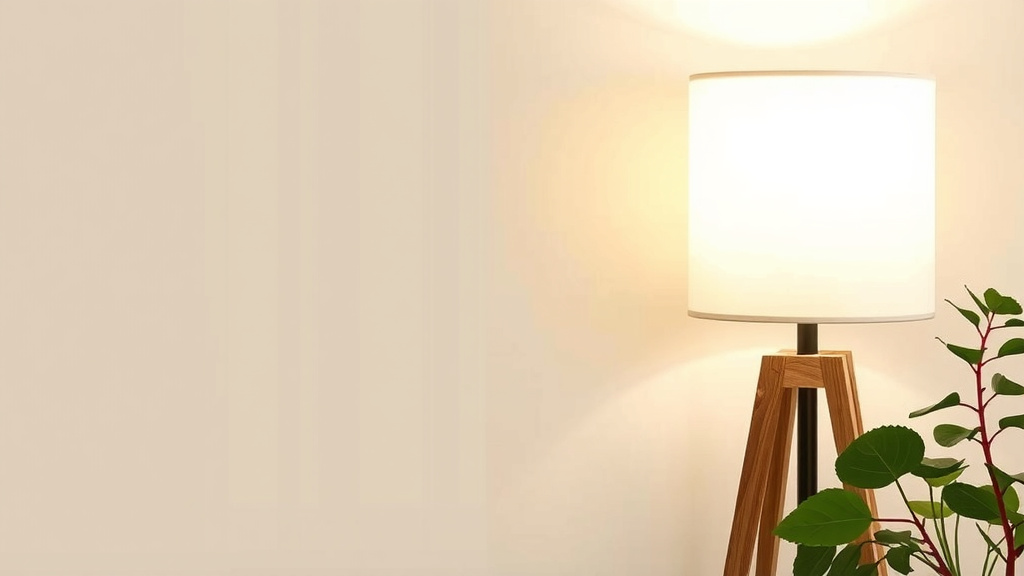
How to Pick the Right Lamp Shade Size
Choosing the right size lampshade is surprisingly simple when you know the basic rules. Generally, your lampshade should be about Our guide to choosing the right size lampshade explains how to achieve a balanced and proportionate look.two-thirds the height of the lamp base and twice as wide as the widest part of the base. This simple guideline helps create a balanced and proportionate look for any lamp.
Getting the size wrong can make your lamp look awkward or even unstable. A shade that’s too big can overpower your table, while one that’s too small might look lost. We found that paying attention to these simple proportions makes a big difference in how your lighting enhances your room’s decor.
- Measure your lamp base height.
- Compare shade width to the base’s widest point.
- Aim for a shade width that’s twice the base’s widest point.
- Ensure the shade’s height is about two-thirds of the base’s height.
- Consider the lamp’s overall scale in your room.
Let’s walk through exactly how to measure and select the perfect lampshade size for your lamp.
Finding the Perfect Lampshade Size for Your Lamp
Choosing the right lampshade is about balance and proportion. It’s not just about looks; it impacts light distribution. We found that following a few key measurements ensures your lamp is both functional and stylish.
The Golden Rules of Lampshade Sizing
Most experts agree on a few basic guidelines. These rules help create harmony between your lampshade and the lamp base. They ensure your lamp looks good from every angle. It’s like finding the right shoes for an outfit – they just have to fit!
Height Matters: The 2/3 Rule
For the lampshade’s height, aim for about two-thirds the height of your lamp base. Measure from the very bottom of the base to the top where the finial or harp attaches. This measurement is your baseline. Then, look for a lampshade that is roughly 67% of that height. This proportion helps prevent the shade from looking too tall or too short. A shade that’s too short can make the bulb visible and create glare. Conversely, a shade that’s too tall can make the lamp base look stubby.
Width is Key: The 2x Rule
When it comes to width, the general rule is that the lampshade should be twice as wide as the widest part of the lamp base. Measure the widest point of your lamp base, usually the middle or the very bottom. Then, double that number. This width ensures the shade doesn’t look too narrow or too wide. A shade that’s too narrow doesn’t provide enough light. A shade that’s too wide can overwhelm the base. This 2x rule is a fantastic starting point for most lamps.
Measuring Your Lamp Base Accurately
Before you start shopping, get out your measuring tape. Accurate measurements are the foundation for a good fit. Don’t guess; measure carefully.
Step 1: Measure the Base Height
Place your lamp on a flat surface. Measure from the bottom of the lamp base straight up to the point where the socket or harp begins. This is your base height. Record this number.
Step 2: Measure the Base Width
Find the widest part of your lamp base. This might be the bottom, the middle, or a decorative element. Measure across its widest point. Record this number. You now have the two critical measurements for your lamp base.
Considering Shade Style and Shape
The shape of your lampshade also plays a role. Different shapes can affect how light is cast and how the proportions appear. We found that certain shapes work better with specific base styles.
Drum Shades
Drum shades have straight sides, meaning the top and bottom diameters are the same. They offer a clean, modern look. For a drum shade, the width rule (twice the base width) is especially important because there’s no tapering to distract the eye. The height rule still applies for balance.
Tapered Shades (Cone or Empire)
Tapered shades are wider at the bottom than at the top. This shape is very traditional and works well with many lamp bases. When measuring for a tapered shade, use the bottom diameter of the shade to ensure it’s twice the width of your base. The top diameter will naturally be smaller.
Coolie Shades
Coolie shades are a type of tapered shade that is much wider at the bottom and has a very low profile. They are often seen on buffet lamps or smaller table lamps. The same rules for tapered shades apply, focusing on the bottom diameter relative to your base.
Lampshade Attachment Types: How They Affect Fit
The way your lampshade attaches to the lamp can influence your final choice. There are a few common types, and knowing them helps you select a shade that will actually fit.
Uno Fitter
An uno fitter is a ring that sits inside the lampshade. It rests directly on top of the bulb socket or a threaded nipple. This type of fitter is very common and straightforward. The size of the shade is determined by its diameter and height.
Harp Fitter
A harp fitter is a U-shaped metal piece that attaches to the lamp socket. The lampshade then attaches to the top of the harp via a finial. This is perhaps the most common type. For a harp fitter, you need to consider the height and width of the shade, but also ensure the harp itself is the right height. A common mistake is having a harp that is too tall or too short for the shade.
Bridge Fitter
Bridge fitters are often seen on floor lamps and attach directly to the lamp pole, not the socket. They typically hold a shade with clips that attach directly to a light bulb. These are less common for table lamps but good to know.
When to Bend the Rules (and When Not To!)
While these guidelines are excellent starting points, sometimes you might need to adjust them. Your lamp needs to fit your space and your personal style.
For Very Tall Lamps
If you have a very tall, slender lamp base, like a floor lamp, you might want a slightly wider shade than the 2x rule suggests. This adds visual stability. Consider a shade width that is closer to 2.5 times the base width. This can prevent the lamp from looking top-heavy.
For Very Wide Bases
Conversely, if your lamp base is quite wide and short, you might opt for a shade that is slightly narrower than the 2x rule. A shade that’s too wide could overpower a short, stout base. Aim for a shade width that feels balanced, perhaps 1.75 times the base width.
Desk and Task Lamps
Desk lamps often have unique shapes and are designed for focused light. For these, prioritize functionality. You might need a shade that directs light downward, so the proportions might differ from standard table lamps. Measure the intended workspace to ensure adequate lighting.
A Quick Checklist for Shade Shopping
Ready to find that perfect lampshade? Keep this checklist handy:
- Measure your lamp base height (bottom to socket).
- Measure your lamp base width (widest point).
- Calculate your target shade height (2/3 of base height).
- Calculate your target shade width (2x base width).
- Note your lampshade’s fitter type (uno, harp, etc.).
- Consider the shade’s shape and how it complements your base.

Conclusion
You’ve now got the tools to choose the perfect lampshade size. Remember, it’s all about creating balance. Aim for that two-thirds height and twice the width rule as your starting point. These simple proportions will make your lamp look just right in your space. So, grab your measuring tape and get ready to transform your lamp. Your next step is to measure your current lamp base, calculate those ideal shade dimensions, and start browsing. You’ll be surprised at the difference the right size makes!
Frequently Asked Questions
What if my lamp base has an unusual shape?
For irregularly shaped bases, measure the widest point across the entire base. Then, apply the 2x width rule to that measurement. You might also want to consider how the shade’s shape will visually balance the base’s form.
How do I know if my lampshade is too big or too small?
If a shade looks like it’s overwhelming your lamp base, it’s likely too wide. If the light bulb is very visible from a normal viewing angle or the base looks disproportionately large, the shade is probably too small.
Does the harp height affect lampshade size selection?
Yes, the harp height is very important, especially for shades with a harp fitter. The top of the shade should generally align with or slightly exceed the top of the harp. A harp that’s too tall or too short will throw off the entire proportion.
Can I use a different shade shape than my original one?
Absolutely! You can change the shade shape. Just ensure the new shade adheres to the size rules (height and width) and its fitter type is compatible with your lamp. A drum shade on a traditional base can offer a modern twist.
What is the “fall” of a lampshade?
The “fall” refers to how far down the shade extends past the light bulb. You want to avoid seeing the bulb directly from most angles. This is where proper height and width measurements ensure good light diffusion and prevent glare.
![10 Best Bulb For Bedside Lamp [2026]](https://bestdesklamp.com/wp-content/uploads/2026/08/10-best-bulb-for-bedside-lamp-2026-featured-768x432.jpg)
![10 Best Daylight Magnifying Lamp [2026]](https://bestdesklamp.com/wp-content/uploads/2026/09/10-best-daylight-magnifying-lamp-2026-featured-768x432.jpg)
![10 Best Battery Lamp [2026]](https://bestdesklamp.com/wp-content/uploads/2026/08/10-best-battery-lamp-2026-featured-768x432.jpg)