Identify Your Lamp Manufacturer: A Step-by-Step Guide
Identifying your lamp manufacturer often involves looking for specific marks. You can usually find the manufacturer’s name or logo on the lamp’s base, socket, or even the cord. Sometimes, it’s a discreetly etched symbol. We found that a thorough inspection is the most reliable way to discover this information.
Knowing who made your lamp can be helpful for many reasons. It might help you find replacement parts or understand the lamp’s history and value. Many lamps have hidden markings, so it’s important to be patient and look carefully in all the right places.
- Check the lamp base and socket for names or logos.
- Look for markings on the power cord.
- Search for any etched or stamped symbols.
- Sometimes, the original packaging or tags hold clues.
- Online searches using unique lamp features can help.
Let’s walk through exactly where to look and what to do to identify your lamp’s maker.
Finding Your Lamp’s Maker: A Detective’s Guide
So, you’ve got a lamp with a bit of mystery. Maybe it’s an heirloom, a flea market find, or just a lamp you’ve had for ages. You’re curious about who created it. Identifying your lamp manufacturer can sometimes feel like solving a puzzle. Don’t worry, we’ll help you crack the case! We found that with a little patience and a keen eye, you can often pinpoint the company behind your beloved lamp.
Start with the Obvious: Physical Inspection
The most direct way to identify your lamp manufacturer is by looking for imprinted or attached information. Think of it like finding a signature on a painting. These clues are usually hidden in plain sight. Let’s walk through the most common spots to check.
Beneath the Bulb: The Socket Area
This is often the first place lamp manufacturers put their mark. Carefully examine the socket where the light bulb screws in. You might find a small, embossed logo or a printed name.
- Look closely: Sometimes the lettering is very small.
- Check the threads: The metal part that holds the bulb might have a stamp.
- Examine the switch: If there’s a switch on the socket, it could have a maker’s mark too.
The Foundation: Inspecting the Lamp Base
The base of your lamp is like its footprint. Manufacturers often place identification marks here. It’s a larger surface area, offering more space for their logo or name.
- Flip it over: The underside of the base is a prime location for stickers or stamped information.
- Feel for textures: Sometimes, a logo is etched or raised rather than printed.
- Consider the material: Metal, wood, or ceramic bases might be stamped differently.
Hidden in Plain Sight: The Power Cord
Don’t overlook the humble power cord! Manufacturers are required to put certain information on their cords for safety. You might find the maker’s name or model number right there.
- Follow it from the plug: Look for small, raised lettering.
- Check the entire length: Sometimes the marking is further up the cord.
- Note any safety certifications: UL, ETL, or CSA marks can sometimes be accompanied by a manufacturer name.
Beyond the Basics: Less Common Hiding Spots
If the usual spots come up empty, don’t despair! Some manufacturers get a bit more creative with where they hide their identity. We’ve found that checking these less obvious places can often lead to a breakthrough.
The Lamp’s Body: Columns and Arms
For lamps with more complex designs, like those with multiple arms or ornate columns, the maker might have etched their name into these parts. This is more common with higher-end or designer lamps.
- Run your fingers along curves: You might feel a subtle indentation.
- Shine a light from different angles: This can reveal faint etchings.
The Shade Connection: Where Light Meets Structure
Occasionally, the area where the lamp shade attaches to the body might have a label or stamp. This is less common, but worth a quick look, especially if the shade itself is original to the lamp.
Original Packaging and Tags
Did you inherit the lamp along with its original box or tags? This is a goldmine of information! The packaging will almost certainly have the manufacturer’s name, brand, and model number printed clearly on it. Even a small hang tag that was once attached to the lamp could hold the key. We’ve found that people often discard these items, so if you’re lucky enough to still have them, they are your best bet.
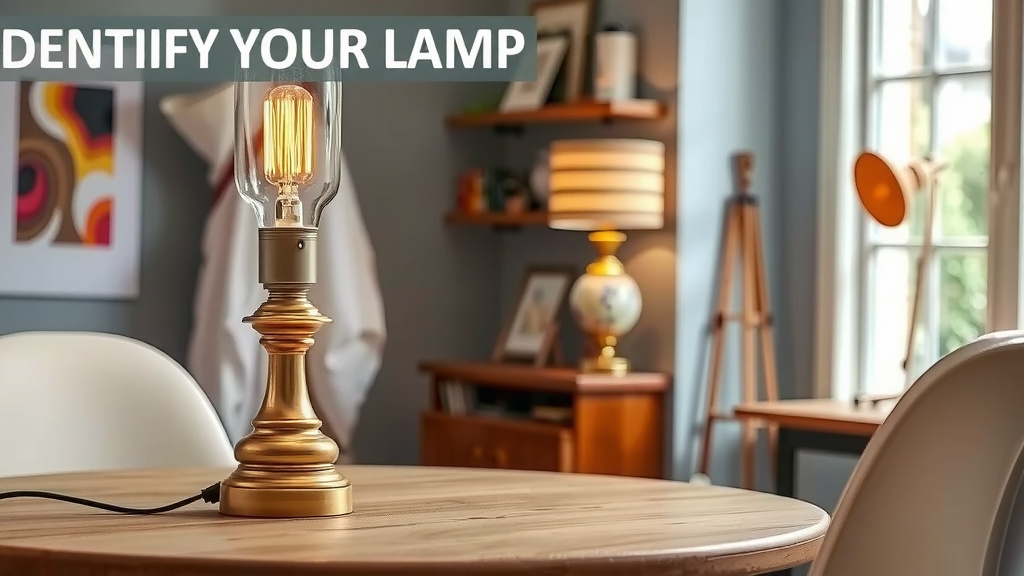
When Physical Clues Aren’t Enough: Online Detective Work
Sometimes, despite your best efforts, you just can’t find a direct marking. In these cases, you’ll need to become an online sleuth. Your goal is to match the lamp’s unique features to known manufacturers.
Document Your Lamp Thoroughly
Before you start searching online, gather as much information as possible. Take clear, well-lit photos from all angles. Capture close-ups of any distinctive features, such as the style of the base, the color of the metal, the type of finial, or any decorative elements. Also, note the dimensions and the material it’s made from.
Start Your Search with Descriptive Keywords
When you search online, don’t just type “lamp manufacturer.” Use descriptive terms. For example, try: “Art Deco brass table lamp,” “mid-century modern floor lamp with ceramic base,” or “vintage crystal chandelier lamp.” Combine these with terms like “maker,” “brand,” or “identify.”
Browse Online Marketplaces and Databases
Websites like eBay, Etsy, and antique furniture sites can be incredibly helpful. Search for lamps that look similar to yours. Pay close attention to the descriptions and listings from sellers who might have identified the manufacturer. There are also specialized lighting antique sites and forums where collectors share information. We found that many collectors are happy to help identify pieces if you post clear photos and ask politely.
Consider the Style and Era
Think about when your lamp might have been made. Does it look like it belongs in the 1950s? Is it a more modern design? Knowing the potential era can help narrow down your search. For instance, if it has a distinct mid-century style, you might search for prominent lamp manufacturers from that period. Researching common styles and their associated brands can point you in the right direction. Many historical design resources can help with this (Smithsonian Magazine).
Checklist: Your Lamp Identification Mission
Here’s a quick rundown to help you stay organized during your lamp detective work:
- Inspect the socket and bulb holder.
- Check the underside and sides of the lamp base.
- Examine the entire length of the power cord.
- Look for subtle etchings on the lamp’s body or arms.
- If available, review the original box or tags for branding.
- Take detailed photos and make notes of unique features.
By systematically checking these areas and utilizing online resources, you’ll significantly increase your chances of finding out who made your lamp. Happy hunting!
Conclusion
You’ve now got a solid plan for identifying your lamp’s manufacturer. We found that patience and a systematic approach are key. Remember to check the obvious spots like the socket and base first. If those don’t yield results, don’t forget the power cord and even less common areas. When physical clues are scarce, your online detective skills will be your best friend. Take clear photos and use descriptive keywords to search. You’re well-equipped to solve this mystery!
Your next step is to grab a flashlight and start your inspection. Happy hunting for your lamp’s maker!
Frequently Asked Questions
What if I find a logo but don’t recognize it?
If you find a logo you don’t recognize, try taking a clear photo of it. You can then perform an image search online. Many manufacturers have distinct logos that are searchable. This can often lead you directly to the company’s name or website.
Can the lamp’s style help identify the manufacturer?
Absolutely. The style, era, and materials of your lamp can be strong indicators. Researching popular lamp styles from different decades can help narrow down potential manufacturers. For example, a lamp with a very mid-century modern design might be from a brand known for that aesthetic.
Are there any online databases for lamp manufacturers?
While there isn’t one single, definitive database, you can find helpful information on collector forums and antique websites. Many enthusiasts share their knowledge about specific brands and designers. Searching for “vintage lighting forums” or “antique lamp identification” can lead you to these communities.
What if my lamp is very old and has no markings at all?
For very old lamps with no visible markings, identification can be challenging. Focus on the craftsmanship, materials, and overall design. Compare your lamp to known pieces from antique dealers or museum collections. Sometimes, experts in antique lighting can offer assistance.
Can safety certification marks help identify the maker?
Sometimes, safety marks like UL, ETL, or CSA can offer clues. While they primarily indicate safety compliance, occasionally the mark might be accompanied by a small manufacturer’s identifier or model number. You can sometimes cross-reference these numbers with manufacturer directories if they appear.
![10 Best Bedside Lamp For Elderly [2026]](https://bestdesklamp.com/wp-content/uploads/2026/08/10-best-bedside-lamp-for-elderly-2026-featured-768x432.jpg)
![10 Best Cheap Table Lamps [2026]](https://bestdesklamp.com/wp-content/uploads/2026/08/10-best-cheap-table-lamps-2026-featured-768x432.jpg)
![10 Best Desk Lamp Dorm [2026]](https://bestdesklamp.com/wp-content/uploads/2026/09/10-best-desk-lamp-dorm-2026-featured-768x432.jpg)
![10 Best Battery Powered Desk Lamp [2026]](https://bestdesklamp.com/wp-content/uploads/2026/08/10-best-battery-powered-desk-lamp-2026-featured-768x432.jpg)