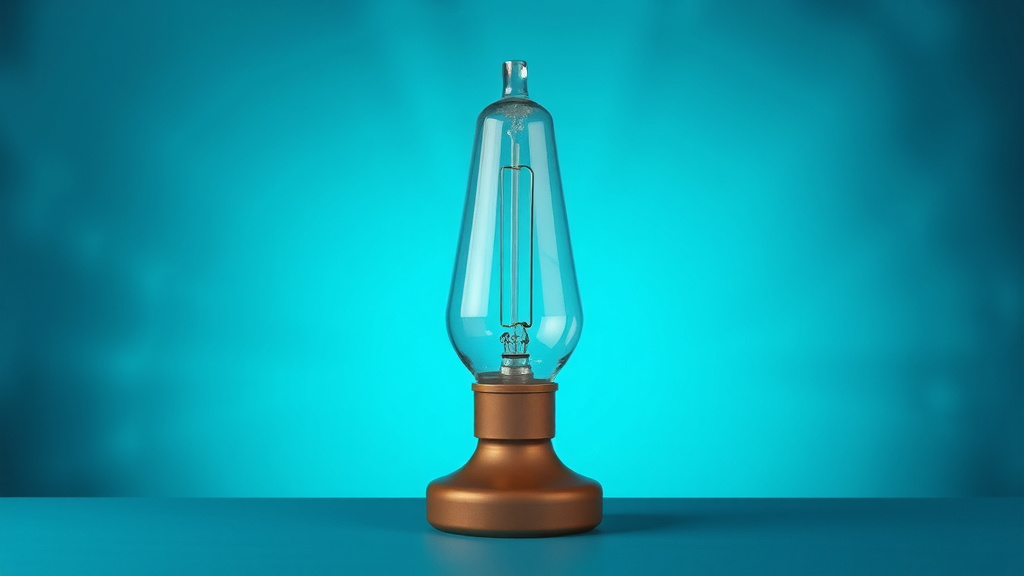
How a Mercury Lamp Works: A Simple Explanation
A mercury lamp works by passing an electric current through mercury vapor. This process excites the mercury atoms, causing them to emit ultraviolet (UV) light. The inside of the bulb is coated with a phosphor material that absorbs this UV light and re-emits it as visible light. So, it’s really a two-step process to get your bright light! A mercury lamp’s process is similar to how a fluorescent lamp works, involving mercury vapor and phosphor coatings.
Mercury vapor lamps are known for their high efficiency. They produce a bright, bluish-white light that is good for illuminating large outdoor areas. While they’ve been around for a while, they were a **major step forward** in lighting technology. Understanding how they function helps appreciate their **lasting impact** on how we light our world.
- Mercury lamps use electricity to excite mercury vapor.
- This creates UV light, which hits a phosphor coating.
- The phosphor coating then glows, producing visible light.
- They’re very efficient for bright, widespread lighting.
Ready to get a clearer picture of these fascinating lamps? Let’s dive deeper into the science behind how a mercury lamp works.
“`htmlInside the Spark: How a Mercury Lamp Generates Light
Ever wondered what happens when you flip that switch and a mercury lamp hums to life? It’s a pretty neat process. Think of it like a tiny lightning storm happening inside a glass bulb. This storm is what ultimately gives you that bright, widespread light you see. We’re going to break down exactly what’s going on in there.
The Core Components: What Makes It Tick
A mercury lamp isn’t just a simple bulb. It has a few key parts working together. The main players are the mercury itself, an inert gas like argon, and the special coating inside the glass. You also have electrodes at each end. These all team up to create the light. It’s a clever design that has served us well for many years.
The Role of Mercury Vapor
The star of the show is the mercury. But it’s not just liquid mercury sitting there. The lamp contains a small amount of liquid mercury. When the lamp heats up, this mercury turns into vapor. This mercury vapor is essential for the light-producing reaction. Without it, the whole process wouldn’t kick off.
Inert Gas for a Smooth Start
You’ll also find an inert gas, often argon, inside the bulb. This gas has a very important job. It helps start the arc. When you first turn the lamp on, the gas conducts electricity easily. This initial electrical flow makes the mercury vapor heat up and vaporize. It’s like the opening act getting the main performer ready.
The Arc Tube: Where the Magic Happens
All this action, the mercury vapor and the gas, is contained within a smaller, inner tube. This is called the arc tube. It’s made of a material that can handle the high temperatures and pressures generated. The arc tube is the heart of the mercury lamp. This is where the electricity truly does its work.
The Electrical Journey: From Current to Light
Now, let’s follow the electricity. When you power up the lamp, an electric current flows. This current travels between the electrodes at each end of the arc tube. It has to jump across the space, creating an electric arc. This arc is like a controlled lightning bolt.
Exciting the Mercury Atoms
This electric arc is incredibly hot. It zips through the mercury vapor. As the electricity passes through, it **collides** with the mercury atoms. These collisions are energetic. They knock electrons in the mercury atoms into higher energy levels. Think of it like pushing a spring down – it stores energy.
The Ultraviolet Emission: An Invisible Light Show
Once those electrons are in a higher energy state, they don’t stay there long. They want to return to their normal, lower energy levels. When they do, they release the energy they absorbed. For mercury atoms, this energy is released primarily as **ultraviolet (UV) light**. You can’t see this light with your eyes. It’s a bit like a secret signal being sent out.
Transforming UV to Visible Light: The Phosphor Coating
So, we have invisible UV light. But we want visible light to see by, right? This is where the outer glass bulb comes into play. The inside surface of the bulb is coated with a special powder. This powder is made of phosphors. Phosphors are substances that glow when hit by certain types of radiation, like UV light.
The Phosphor’s Glow: Re-emission in Action
When the UV light produced by the mercury vapor strikes the phosphor coating, the phosphors absorb this energy. They then **re-emit** this energy as visible light. This is a key step in getting the light you actually see. The type of phosphors used determines the color of the light produced. Many mercury lamps produce a **bluish-white** light, which is good for general illumination.
It’s a bit like a relay race for light. The mercury starts by sending out a UV baton. The phosphor coating catches it and then runs the rest of the way, finishing with a visible light finish line. Many industrial and street lighting applications benefited from this efficient process (US Department of Energy).
A Quick Comparison: Mercury vs. Other Lights
Mercury lamps offered a big improvement over older lighting technologies when they were introduced. They are known for their **energy efficiency**. This means they use less electricity to produce the same amount of light compared to incandescent bulbs. They also have a longer lifespan, saving on replacement costs. However, they can take a few minutes to reach their full brightness after being turned on. This warm-up period is something to consider.
| Feature | Description |
|---|---|
| Light Source | Mercury vapor discharge |
| Initial Output | Moderate, takes time to reach full brightness |
| Color | Often bluish-white, can vary with phosphors |
| Efficiency | Good, better than incandescent |
| Lifespan | Longer than incandescent |
| Warm-up Time | Yes, several minutes |
The Practicalities: What to Know About Using Them
Mercury lamps are often found in places where bright, widespread light is needed. Think of streetlights, sports stadiums, and large industrial spaces. Their **durability** and efficiency made them a popular choice for these applications for many years. They provided a cost-effective way to light up large areas.
A Note on Mercury Content
It’s important to remember that these lamps contain mercury. This is why proper disposal is essential. You can’t just toss them in the regular trash. Many local recycling centers and hazardous waste facilities accept them. Checking with your local waste management authority is the best way to find out how to dispose of them safely (EPA).
So, the next time you see that bright, somewhat bluish light, you’ll know the science at play. It’s a fascinating blend of electricity, vapor, and special coatings. Here’s a quick rundown of what makes them work:
- Electricity sparks a current through mercury vapor.
- This creates invisible UV light.
- A phosphor coating on the bulb absorbs UV light.
- The coating then glows, emitting visible light.
- They are efficient for lighting large outdoor spaces.
- Proper disposal is key due to mercury content.
Conclusion
You now have a clear picture of how mercury lamps work! It’s a fascinating journey from electric current to visible light, involving excited mercury atoms and a clever phosphor coating. While technology has moved on, understanding this process highlights a key step in modern lighting. You’ve learned about the arc tube, UV emissions, and the transformation into the light you can see. Remember to always dispose of these lamps responsibly due to their mercury content. Take this knowledge with you the next time you encounter this type of lighting.
Frequently Asked Questions
Why do mercury lamps take time to warm up?
Mercury lamps need a warm-up period because the mercury must first vaporize. The electric arc then needs to reach a stable temperature. This process excites the mercury atoms efficiently. This is why they take a few minutes to reach full brightness.
Can mercury lamps be used indoors?
While mercury lamps can be used indoors, they are not ideal for residential settings. Their light can be harsh and they have a significant warm-up time. They are best suited for large spaces needing bright, general illumination like warehouses or gyms.
What makes the light from a mercury lamp bluish?
The bluish hue often seen in mercury lamps comes from the specific phosphors used inside the bulb. These phosphors are chosen to emit light in that part of the spectrum when energized by the UV output of the mercury vapor.
Are mercury lamps still the best choice for lighting?
For many applications, newer lighting technologies like LEDs offer better efficiency and performance. However, mercury lamps were a major advancement and still exist in some older installations where replacement hasn’t occurred yet.
How is mercury vapor created inside the lamp?
The lamp contains a small amount of liquid mercury. When you turn on the lamp, electricity flows, heating the mercury. This heat causes the liquid mercury to turn into vapor, which is then energized by the electric arc.



![10 Best Cordless Led Table Lamp [2026]](https://bestdesklamp.com/wp-content/uploads/2026/09/10-best-cordless-led-table-lamp-2026-featured-768x432.jpg)