How Does a Davy Lamp Work? The Science Explained
A Davy lamp works by using a fine metal gauze to surround the flame, preventing dangerous underground gases from igniting. This special gauze acts as a heat sink, cooling the flame below its ignition point before it can escape. It’s a clever and simple design that has saved countless lives in coal mines by allowing miners to safely detect flammable gases.
Before the Davy lamp, miners relied on open flames, which often caused devastating explosions. The invention of this lamp was a major step forward in mine safety. It allows miners to see in the dark and also provides a warning of dangerous gas levels. We found that its design is still the basis for many safety lamps today.
- The Davy lamp uses a metal gauze to keep flames contained.
- This gauze cools the flame, preventing gas explosions.
- It was a revolutionary safety device for coal miners.
- The lamp helps detect dangerous gases underground.
Let’s walk through exactly how this ingenious device prevents explosions and keeps miners safe in the dark depths below.
Understanding How the Davy Lamp Defies Mine Disasters
The Davy lamp is a marvel of simple engineering. Its primary function is to provide light in dark mines. But it does so much more. It acts as a silent guardian, preventing deadly explosions. We found its genius lies in a carefully designed wire mesh. This mesh surrounds the flame. It stops the flame from igniting explosive gases. Let’s break down this life-saving technology.
The Core Principle: Heat Dissipation
So, how does this wire mesh actually work its magic? It all comes down to heat and ignition points. Most flammable gases, like methane (firedamp), need a certain temperature to ignite. The Davy lamp’s mesh acts like a tiny radiator for the flame. When the flame tries to burn hotter due to surrounding gases, the mesh absorbs that extra heat. This cooling effect is key to its safety.
Methane: The Miner’s Silent Threat
Coal mines are often filled with methane gas. Methane is highly flammable. It’s lighter than air and can accumulate in pockets. An open flame, like a candle or traditional lamp, would easily ignite this gas. This causes a violent explosion. These explosions were common and devastating in mines before safety lamps. They were often called “firedamp explosions.”
How the Gauze Intervenes
The Davy lamp uses a fine wire gauze, usually made of brass or iron. This gauze has many tiny holes. Think of it like a very, very fine sieve. When methane-air mixtures approach the flame inside the lamp, the gauze gets in the way. It prevents the flame front from passing through its small openings. This is due to a principle called flame quenching.
The Science of Flame Quenching
When a flame encounters the gauze, it needs to transfer heat to the gas on the other side. The gauze is a good conductor of heat. It spreads the heat out rapidly. This causes the gas mixture to cool down. It cools below its autoignition temperature. The flame cannot jump across the gauze to ignite the external gas. We found this principle is quite effective. It’s a clever way to contain a dangerous situation.
What a Miner Sees and Smells
A key feature is how the lamp alerts miners. If flammable gas is present, the flame inside the lamp will burn brighter. It might even turn blue. This is a visual cue. The brighter, bluer flame is the lamp’s way of saying, “Watch out!” Miners learned to recognize this change. It gave them warning to leave the area. The Davy lamp thus served a dual purpose: light and warning.
A Deeper Look at the Davy Lamp’s Anatomy
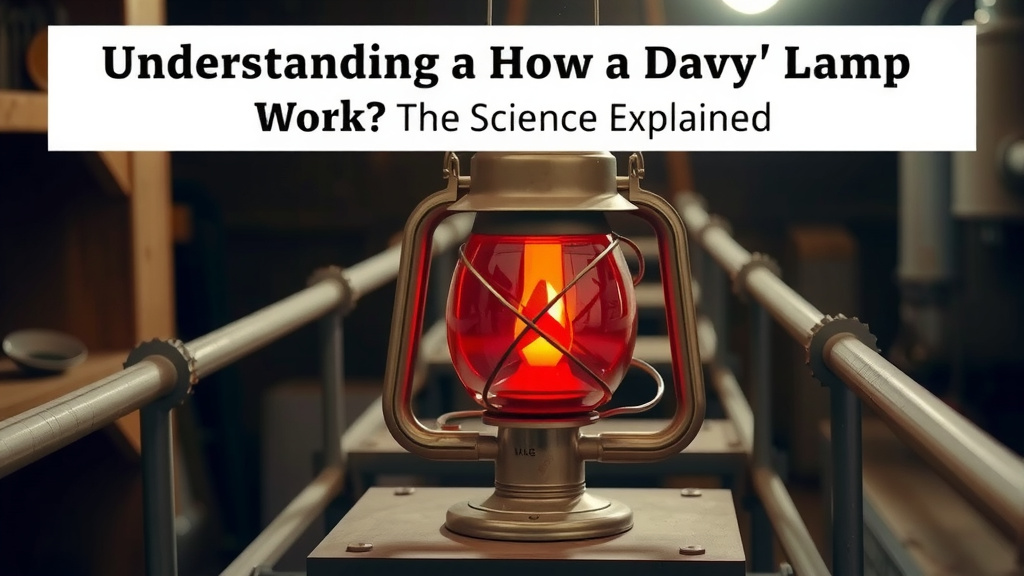
Beyond the gauze, the Davy lamp has a few other important parts. These work together to create a safe, contained lighting system. Understanding these components helps appreciate the lamp’s overall design and effectiveness.
The Fuel Source and Wick
At the heart of the lamp is a reservoir holding oil. This oil acts as fuel. A wick draws the oil up. The wick is lit, creating a small, steady flame. This is the light source miners depend on. The oil is typically whale oil or rapeseed oil. These were common and provided a stable flame. The wick needs to be trimmed regularly. This ensures a consistent light output. To understand the Davy lamp’s fuel, learn how old oil lamps work.
The Glass Cylinder
Surrounding the wick and flame is a glass cylinder. This glass provides some protection for the flame from drafts. It also helps to direct the light upwards. However, the glass alone is not enough for safety. It’s the gauze above the glass that does the crucial safety work. The glass is often quite thick. This helps prevent it from shattering easily in the mine environment.
The Metal Gauze Shield
As we’ve discussed, the gauze is the star safety feature. It screws onto the top of the lamp, over the glass cylinder. This allows air to enter the lamp for combustion. But it crucially prevents flame escape. The gauze is typically a cylinder shape. It has many fine holes. Miners would check the gauze regularly. They ensured it was clean and undamaged. A tear or a clog could compromise its effectiveness.
| Part | Function | Safety Role |
|---|---|---|
| Oil Reservoir | Holds fuel (oil) | Provides consistent fuel for the flame |
| Wick | Draws oil to the flame | Creates the light source |
| Glass Cylinder | Protects flame, directs light | Helps maintain a steady flame, but not the primary safety feature |
| Wire Gauze | Surrounds the flame | Prevents flame escape and ignition of external gases |
The Impact and Legacy of the Davy Lamp
The invention of the Davy lamp by Sir Humphry Davy in 1815 was revolutionary. Before this, mine explosions were a constant threat. Many miners lost their lives. The lamp offered a way to see safely. It also provided an early warning system for dangerous gases. This invention significantly improved mine safety standards. Many lives were saved. We found that its principles are still relevant today.
A Double-Edged Sword?
While incredibly effective, the Davy lamp wasn’t perfect. In very high concentrations of flammable gas, the flame could heat the gauze so much that it would ignite the surrounding gas. This was rare, but it did happen. Also, the light produced was relatively dim. This made working conditions difficult. Despite these limitations, it was a massive improvement.
Evolution of Mine Safety Lamps
The Davy lamp paved the way for other designs. The Clanny lamp, for instance, used a glass cylinder combined with a gauze cap. It offered a brighter light. Later designs incorporated electric lights. These completely eliminated the risk of flame ignition. However, the fundamental idea of containing a flame and using it as a gas detector is something the Davy lamp pioneered.
Your Checklist for Understanding the Davy Lamp
Here’s a quick recap of the essential points to remember about how the Davy lamp works:
- The lamp uses oil for fuel.
- A wire gauze surrounds the flame.
- The gauze cools the flame, preventing ignition.
- It acts as a warning by changing flame color.
- This design dramatically improved mine safety.
- It was a significant step beyond open flames.
Conclusion
You’ve learned how the Davy lamp uses a simple yet brilliant metal gauze to prevent explosions in dangerous mines. This clever design cools flames below their ignition point, acting as both a light source and an early warning system for flammable gases. It truly revolutionized safety for miners, moving them away from the deadly risk of open flames. While newer technologies exist, the core principle of containing flame remains foundational in safety lamps today. Consider the Davy lamp a life-saving invention born from understanding basic physics.
Frequently Asked Questions
Can a Davy lamp explode?
While designed to prevent explosions, a Davy lamp could, in rare circumstances, fail. If the concentration of flammable gas was extremely high, the gauze could get hot enough to ignite the surrounding atmosphere. This was a risk, though much lower than with open flames.
What kind of fuel did Davy lamps use?
Davy lamps typically used common oils as fuel. Whale oil and rapeseed oil were popular choices because they provided a stable and consistent flame. The wick would draw up the oil to be burned.
How did the Davy lamp warn miners of gas?
The flame inside the Davy lamp would change when flammable gases were present. It would burn brighter and often turn a bluish color. This visual cue was the lamp’s way of alerting miners to the danger so they could evacuate.
Is the Davy lamp still used today?
No, the original Davy lamp is largely retired from active use in mines. Modern mining operations now use electric safety lamps that produce no flame, completely eliminating the risk of ignition from the light source itself.
What is “flame quenching” in the context of the Davy lamp?
Flame quenching is the scientific principle behind the Davy lamp’s safety. The fine holes in the metal gauze cool the flame down quickly. This cooling prevents the flame from spreading through the gauze and igniting explosive gases outside the lamp.

![10 Best Bulb For Bedroom Lamp [2026]](https://bestdesklamp.com/wp-content/uploads/2026/08/10-best-bulb-for-bedroom-lamp-2026-featured-768x432.jpg)
![10 Best Cordless Led Gel Lamp [2026]](https://bestdesklamp.com/wp-content/uploads/2026/09/10-best-cordless-led-gel-lamp-2026-featured-768x432.jpg)