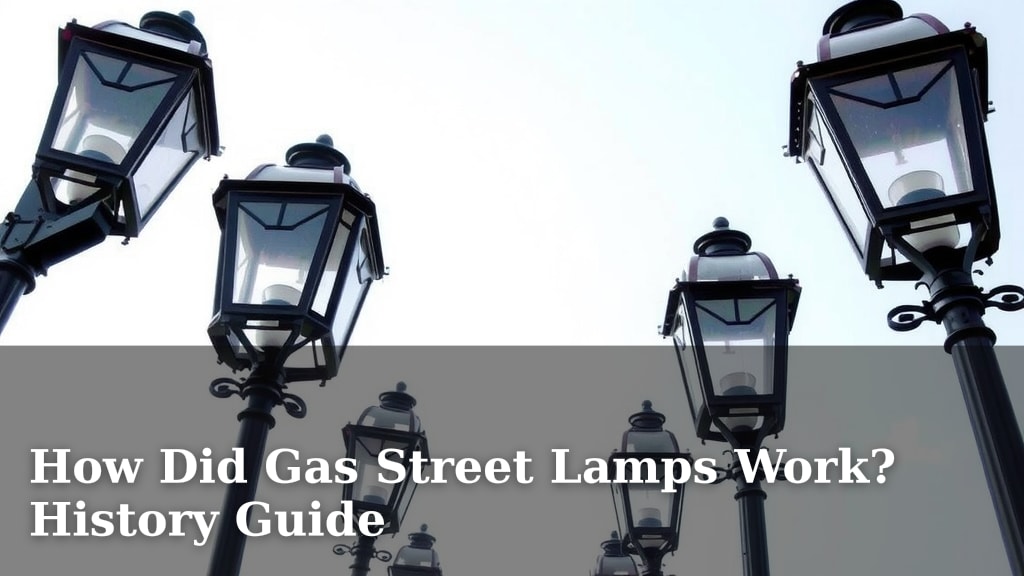
How Did Gas Street Lamps Work? History Guide
Gas street lamps worked by burning a mixture of coal gas and air. This burning gas produced a bright, steady flame. The flame was enclosed in a glass lantern to protect it from the weather. This simple process lit up streets for centuries.
Before electricity, these lamps were a major innovation. They transformed city life by extending the day. Many people relied on them for safety and convenience. Understanding how they functioned reveals a lot about our past and the ingenuity of early lighting systems.
- Gas street lamps burned coal gas mixed with air.
- This created a bright, reliable flame.
- A glass lantern protected the flame.
- They were a key part of urban development before electricity.
Let’s walk through exactly how these fascinating lamps illuminated our cities and the history behind them.
Understanding How Old Gas Street Lamps Actually Worked
Ever wondered about those old-timey streetlights? You know, the ones you see in historical movies or in older parts of cities. They looked so elegant, but how did they actually produce that light? It’s a fascinating bit of history that transformed urban life. We’re going to break down the mechanics and the journey of gas street lighting.
The Science Behind the Glow: Coal Gas and Combustion
At its heart, the gas street lamp was a brilliant application of a simple chemical reaction. The main ingredient was something called coal gas. This gas was produced by heating coal in the absence of air. Think of it like baking coal until it releases its flammable vapors.
Creating the Fuel: From Coal to Gas
The process of making coal gas was called destructive distillation. It involved heating coal in sealed retorts. These retorts were then heated to high temperatures, causing the coal to break down. This breakdown released various gases, including hydrogen, methane, and carbon monoxide. These gases were collected and purified. This purification step was important to remove impurities that could cause unpleasant smells or clog the lamps.
The Burner: Where the Magic Happened
Once the coal gas was produced and piped to the lamps, it met the air. A special burner head controlled the flow of gas. This burner was designed to mix the gas with air before it ignited. This mixture is key. Too much gas and not enough air would create a sooty, yellow flame. Too much air and not enough gas would result in a weak, inefficient burn.
Achieving the Perfect Flame
The goal was a bright, steady flame. This was achieved by carefully regulating the gas and air mixture. Early burners were quite basic. Later designs incorporated features to improve efficiency and light output. The flame itself was usually a simple, open flame, much like a Bunsen burner you might see in a science lab. This flame produced light by heating tiny particles of carbon in the gas to incandescence, making them glow brightly.
From Gasworks to Street Corners: The Distribution Network
Making the gas was only half the battle. Getting it to the lamps was a huge engineering feat. This involved creating an extensive network of pipes beneath the city streets. Imagine digging up entire cities to lay down thousands of miles of pipes!
The Pipe System: A City’s Lifelines
Gasworks were typically located on the outskirts of cities. From there, large mains ran into the city center. Smaller pipes branched off to individual streets and then to each lamp post. This was a continuous flow of fuel. Pressure had to be carefully managed. Too much pressure could cause explosions. Too little pressure would mean dim or no light.
Maintaining the Flow: Pressure and Regulation
Controlling the gas pressure was vital. Gasometers, large storage tanks, helped regulate the supply. They would expand as gas was pumped in and contract as gas was used. This helped ensure a consistent supply. Lamp lighter, a profession that no longer exists, played a crucial role here. They would manually light and extinguish each lamp every day.
The Lamp Itself: Protection and Illumination
The light source needed protection. That’s where the lantern part of the gas street lamp came in. It wasn’t just for show; it served a practical purpose.
The Lantern: Shielding the Flame
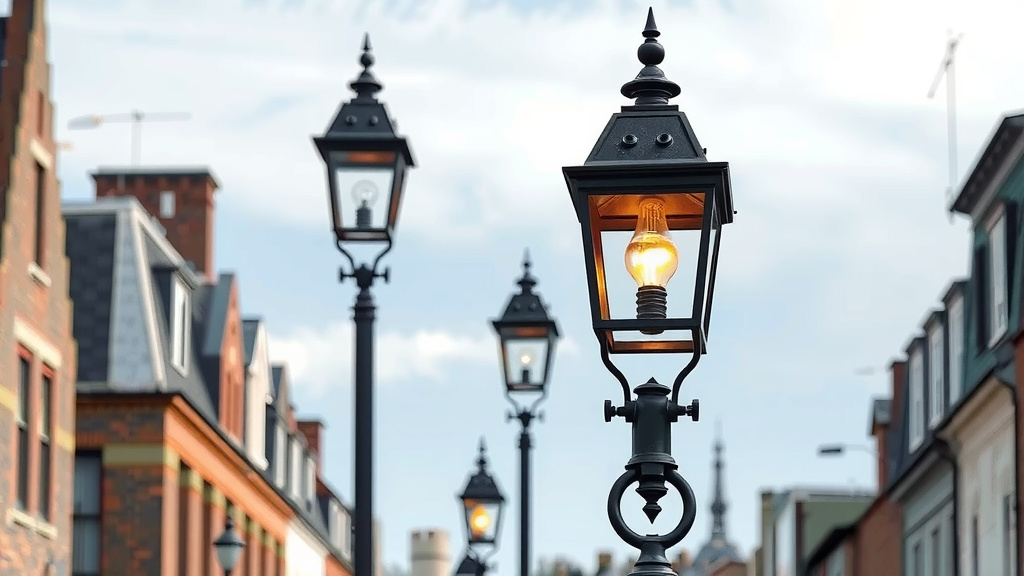
The glass enclosure, or lantern, protected the flame from wind and rain. Without it, the flame would be extinguished or flicker wildly, making it useless. The glass also helped direct the light downwards and outwards. This was important for illuminating the street below. Different designs existed, from simple globes to more ornate structures. These often matched the architectural style of the surrounding buildings.
The Mantle: An Evolutionary Leap
Early gas lamps used an open flame, which wasn’t incredibly bright. A significant improvement came with the invention of the incandescent mantle. This was a small, sock-like fabric bag. It was made of materials like thorium and cerium oxides. When heated by the gas flame, the mantle would glow with an intense, white light. This was a huge upgrade in brightness and efficiency. Many later gas lamps used this technology, making them far more effective.
Who Made It Happen? Early Pioneers and Innovations
The development of gas lighting wasn’t the work of a single person. It was a series of innovations built upon each other. It involved inventors, engineers, and entrepreneurs.
From Homes to Streets: A Gradual Adoption
Gas lighting first appeared in homes and businesses in the early 19th century. It gradually moved to public spaces. William Murdoch is often credited with early practical demonstrations of gas lighting. He worked for James Watt. He lit his own house in 1798 and a factory in 1802. By the 1820s, cities like London and Paris were installing extensive gas street lighting systems.
The Impact on City Life
The effect on cities was profound. Streets were no longer plunged into darkness at night. This made cities safer. It allowed businesses to stay open later. People could travel more freely after dark. It fundamentally changed the rhythm of urban living. You could imagine the feeling of relief and newfound freedom that came with these illuminated streets. It was a true transformation.
A Quick Checklist of How Gas Street Lamps Operated:
- Coal was heated to produce flammable gases (coal gas).
- The coal gas traveled through underground pipes.
- Gas mixed with air at the lamp’s burner.
- This mixture ignited, creating a flame.
- A glass lantern protected the flame from weather.
- Later, mantles greatly increased the light’s brightness.
Conclusion
You’ve learned how gas street lamps brought light to our cities. It started with heating coal to create flammable gas. This gas then traveled through underground pipes to reach each lamp post. At the burner, it mixed with air and ignited, producing a steady flame. The glass lantern protected this flame from the elements. Later, mantles made the light much brighter. These lamps truly transformed urban life, making nights safer and cities more vibrant. Now that you understand their workings, next time you see an old gas lamp, you can appreciate the ingenuity behind it.
Frequently Asked Questions
How often did lamp lighters have to light the gas street lamps?
Lamp lighters would typically light the lamps at dusk each evening. They would also extinguish them at dawn. This was a daily ritual that ensured the streets were illuminated when needed. It was a demanding job that required them to traverse entire neighborhoods.
Were gas street lamps safe to have in cities?
Generally, gas street lamps were considered safe when properly maintained. However, leaks could occur, posing a fire hazard. The distribution networks were built with careful engineering to minimize these risks. Accidents were rare, but they did happen.
Did all gas street lamps use mantles?
No, not all gas street lamps used mantles. Early designs relied on an open flame. The incandescent mantle was an invention that significantly improved brightness and efficiency. Many later lamps incorporated them, but older or simpler models might not have.
Where did the coal gas come from before it reached the street lamps?
Coal gas was produced at facilities called gasworks. These plants heated coal in sealed ovens, a process known as destructive distillation. The resulting gas was then purified before being sent into the city’s pipe network. Gasworks were often located on the outskirts of urban areas.
Could you smell the gas from the street lamps?
Yes, you could often smell the gas, especially if there was a slight leak or the mixture wasn’t burning perfectly. Early purification methods weren’t as advanced, so some odors might have been present. The flame itself, when burning correctly, produced light rather than a strong smell.
![10 Best Color Changing Floor Lamp [2026]](https://bestdesklamp.com/wp-content/uploads/2026/09/10-best-color-changing-floor-lamp-2026-featured-768x432.jpg)
![10 Best Clip On Desk Lamp [2026]](https://bestdesklamp.com/wp-content/uploads/2026/08/10-best-clip-on-desk-lamp-2026-featured-768x432.jpg)
![10 Best Brand For Himalayan Salt Lamp [2026]](https://bestdesklamp.com/wp-content/uploads/2026/08/10-best-brand-for-himalayan-salt-lamp-2026-featured-768x432.jpg)