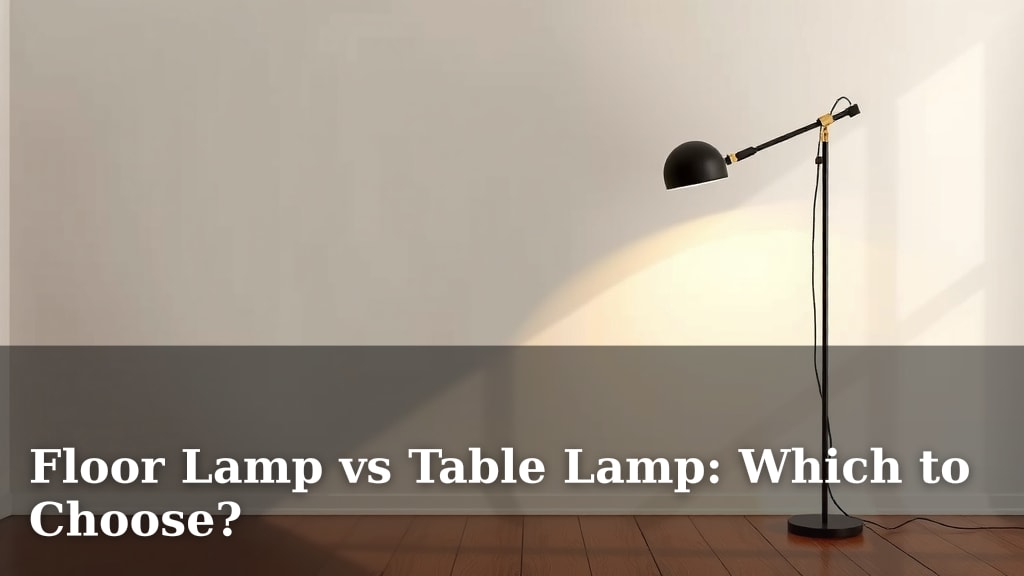
Floor Lamp vs Table Lamp: Which to Choose?
When deciding between a floor lamp and a table lamp, the best choice depends on your specific needs for lighting and space. Floor lamps offer general or accent lighting and are great for larger areas, while table lamps provide task lighting and are ideal for smaller surfaces like desks and nightstands. We found that both serve unique purposes in a room’s design.
Understanding the difference helps you create the perfect ambiance. Floor lamps can make a room feel more complete and help fill empty corners. Table lamps are excellent for focused tasks like reading or crafting. Many designers agree that a well-placed lamp can transform a space, so choosing the right type is key to your home’s functionality and style.
- Floor lamps are best for general room lighting or accenting larger spaces.
- Table lamps are perfect for task lighting on desks, tables, or nightstands.
- Consider the height and reach needed for your specific lighting goals.
- Think about the overall room size and existing furniture layout.
- Both types of lamps play a vital role in a room’s layered lighting scheme.
Let’s break down the pros and cons of each to help you make the perfect decision for your home.
Floor Lamp vs. Table Lamp: Making the Right Choice for Your Home
When you’re looking to brighten up a room, both floor lamps and table lamps can be fantastic additions. They both serve the primary purpose of providing light. But they do it in very different ways. Understanding these differences is key to choosing the lamp that will work best for your space. We found that thinking about the room’s layout and your lighting needs first makes the decision much easier.
Let’s get down to the nitty-gritty. A floor lamp is typically taller, standing on its own base on the floor. A table lamp, as its name suggests, rests on a piece of furniture. This simple difference in placement affects how each lamp illuminates a room. It also influences their role in your home’s decor. We researched how each type contributes to a room’s overall feel and function.
Understanding Floor Lamps
Floor lamps are the tall, standing soldiers of the lighting world. They can stand anywhere from 5 to 6 feet tall. Because of their height, they can cast light over a larger area. This makes them great for general room illumination. Think of them as filling those empty corners or adding a soft glow to a whole section of a room. We found that they can make a space feel more complete and inviting.
The Versatility of Floor Lamps
Floor lamps come in many styles, from sleek, modern arc lamps that reach over a sofa to classic torchiere styles that send light upwards. An arc lamp, for example, is perfect for adding light above a reading chair without taking up much floor space. A torchiere lamp bounces light off the ceiling. This creates a diffused, ambient light that is easy on the eyes. Many designers agree this upward-facing light is great for reducing glare.
Placement and Purpose
Where you place a floor lamp matters. Put one next to a sofa to create a cozy reading nook. Place it in a dark corner to brighten the space. Or, use a stylish one as a decorative accent piece. We found that they can act as both a functional light source and a statement piece in your decor. They often help to anchor a seating area.
Pros and Cons of Floor Lamps
The biggest advantage of a floor lamp is its ability to provide broad lighting. It doesn’t require a surface to sit on, offering more flexibility in placement. However, they can take up a bit more floor space. This might be a concern in smaller rooms. Also, their height can sometimes obstruct views if not placed carefully. We found that their larger footprint is their main drawback.
Exploring Table Lamps
Table lamps are your go-to for focused light. They are smaller than floor lamps and designed to sit on tables, desks, nightstands, or consoles. Their primary role is often task lighting. This means providing light for specific activities. Think reading, writing, crafting, or even working on your computer. We found they are indispensable for these close-up tasks.
The Role of Table Lamps in Task Lighting
A table lamp’s shade helps direct light downward, onto the surface where you need it most. This is why they are so effective for reading. You can place a table lamp right beside your favorite armchair. This ensures you have ample light without straining your eyes. Many ophthalmologists recommend good task lighting for reading to prevent eye fatigue (American Academy of Ophthalmology).
Style and Size Considerations
Table lamps come in a vast array of sizes and styles. You can find tiny accent lamps to add a touch of light to a shelf. Or, you can find larger ones that provide substantial illumination for a desk. The style should complement your existing decor. A sleek ceramic lamp might suit a modern room, while a brass lamp could fit a more traditional setting. We found that the sheer variety makes them adaptable to any design scheme.
Pros and Cons of Table Lamps
The main benefit of a table lamp is its precision. It offers targeted light where you need it for specific tasks. They also don’t take up floor space, which is a huge plus for smaller apartments. The downside? You need a surface to place them on. This limits their placement options. Also, a poorly placed table lamp can cast shadows or create glare. We found that needing a surface is their most significant limitation.
Key Differences at a Glance
To make your decision easier, let’s look at the core differences. It’s like comparing apples and oranges, but both are delicious in their own way! Here’s a quick rundown:
| Feature | Floor Lamp | Table Lamp |
|---|---|---|
| Height | Tall (5-6+ feet) | Short (1-3 feet typically) |
| Placement | Floor, corners, beside furniture | Table, desk, nightstand, shelf |
| Primary Use | General room lighting, accent | Task lighting, accent |
| Space Requirement | Floor space | Surface space |
| Portability | Less portable once placed | More portable |
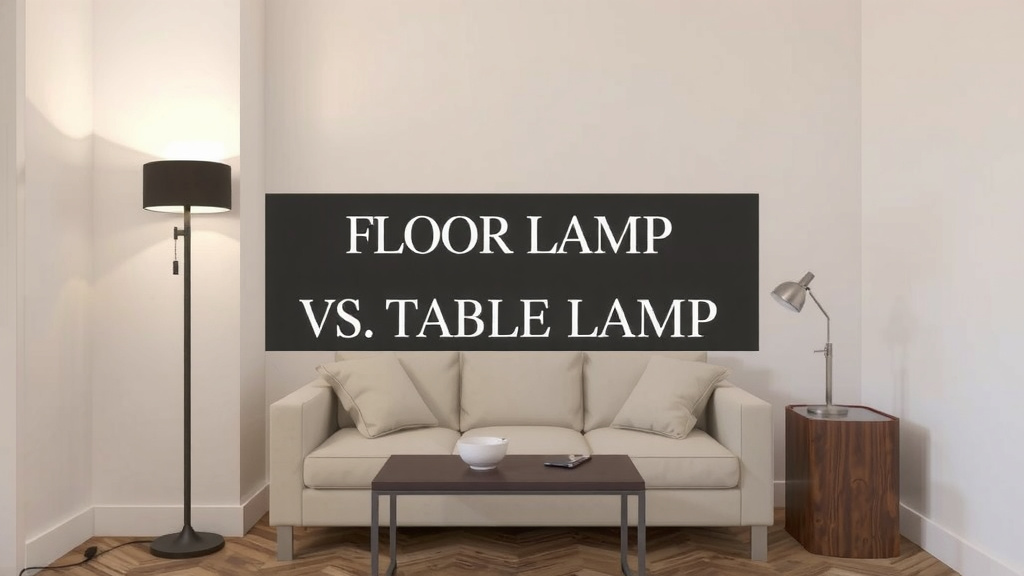
Making Your Final Decision
So, which lamp is right for you? The answer often lies in a combination of where you need light and what kind of light you need. Do you have a dark corner that feels a bit neglected? A floor lamp can transform it. Do you love to read in your favorite armchair and find the overhead light too harsh? A table lamp is your new best friend. Many interior designers recommend using both types of lamps.
Layering your lighting is key to a well-designed room. A floor lamp can provide the ambient base layer. Then, a table lamp can add focused task lighting where needed. This approach creates depth and makes your space more functional and inviting. We found that most rooms benefit from having multiple light sources at different heights.
Consider Your Room’s Layout
Think about the size of your room. In a large living room, a tall floor lamp can help fill the space and provide general illumination. In a small bedroom, a table lamp on your nightstand might be all you need for bedside reading. If you have a large desk, a substantial table lamp can ensure good lighting for work. Always consider how the lamp’s size will fit without overwhelming the space.
Evaluate Your Lighting Needs
What do you *do* in the room? If it’s primarily for relaxing and watching TV, a floor lamp might be sufficient. If you do a lot of reading, crafting, or homework, a table lamp is essential. Some floor lamps also have adjustable arms or heads, offering a bit more flexibility for task lighting. Always think about the activities that happen in the space.
Checklist: Your Perfect Lamp Choice
Here’s a quick way to check if you’re leaning towards the right lamp:
- Do I need light for a specific task like reading? (Favor table lamp)
- Is there an empty corner or large wall that needs filling? (Favor floor lamp)
- Do I have a suitable surface (table, desk) for a lamp? (Table lamp option)
- Is floor space limited, or is my floor already cluttered? (Favor table lamp)
- Do I want to cast light upwards or downwards? (Consider lamp type)
- Does my room need a general ambient glow or focused light? (Both can contribute, but differ)
Conclusion
Choosing between a floor lamp and a table lamp truly comes down to your personal needs and room design. We found that floor lamps excel at providing general room illumination and filling larger spaces, while table lamps shine when you need focused task lighting. Don’t be afraid to use both! Layering light sources at different heights creates depth and makes your space feel more inviting and functional. Take a moment to assess your room’s layout and consider what activities you do most often. Then, you can confidently select the perfect lamp to brighten your home and enhance your style.
Frequently Asked Questions
Can I use a floor lamp for reading?
Yes, you absolutely can! Many floor lamps have adjustable arms or heads that allow you to direct light precisely where you need it for reading. If you choose a torchiere-style floor lamp, you can also place it near a reading chair to bounce light off the ceiling for a softer, more ambient glow.
What if my room is very small?
In smaller rooms, table lamps are often the better choice because they don’t take up precious floor space. If you need general illumination, consider a brighter table lamp on a console or a slim floor lamp that has a smaller footprint. You can also use multiple smaller table lamps to distribute light effectively.
How many lamps do I need in a room?
Most designers recommend having at least three light sources in a room for good layered lighting. This usually includes overhead lighting, a floor lamp for general or accent light, and a table lamp for task lighting. This approach creates a warm and functional atmosphere.
Can a floor lamp be used as decor?
Definitely! Floor lamps come in so many stylish designs, from modern arc lamps to more traditional bases. A unique or statement floor lamp can act as a beautiful decorative piece, anchoring a seating area or adding visual interest to an empty corner even when it’s turned off.
Are table lamps too basic for a stylish room?
Not at all! The style and material of a table lamp can greatly impact your room’s aesthetic. You can find table lamps made from ceramic, metal, wood, and even unique materials like crystal or resin. Choosing a lamp that complements your decor, rather than clashes with it, ensures it adds to your room’s style.
![10 Best Chest Lamp For Running [2026]](https://bestdesklamp.com/wp-content/uploads/2026/08/10-best-chest-lamp-for-running-2026-featured-768x432.jpg)

![10 Best Budget Lamps [2026]](https://bestdesklamp.com/wp-content/uploads/2026/08/10-best-budget-lamps-2026-featured-768x432.jpg)
![10 Best Affordable Uv Nail Lamp [2026]](https://bestdesklamp.com/wp-content/uploads/2026/09/10-best-affordable-uv-nail-lamp-2026-featured-768x432.jpg)