Fluorescent Lamp vs CFL: The Difference
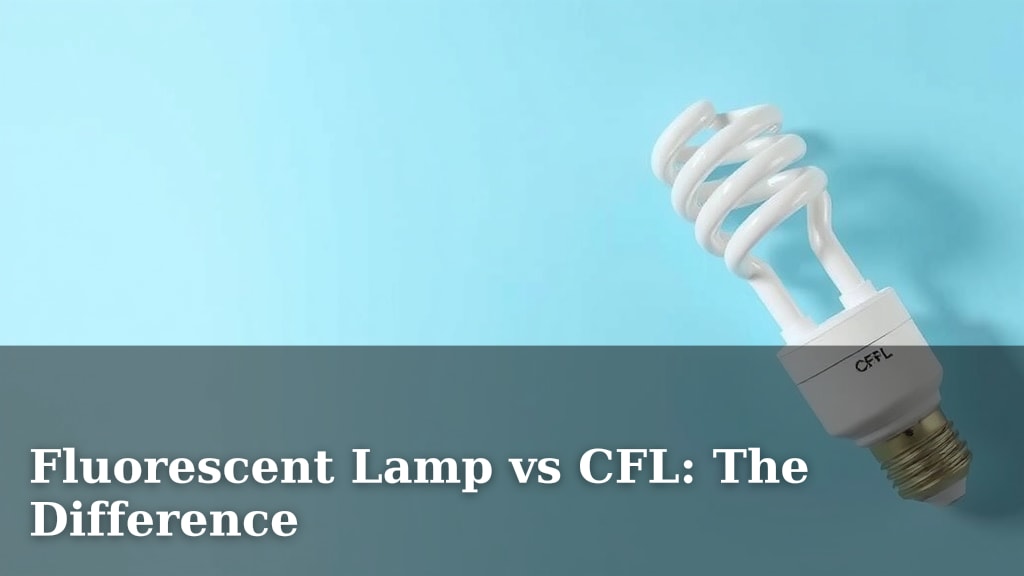
When comparing fluorescent lamps and CFLs, the main difference is that CFLs are a type of fluorescent lamp, but they are more energy-efficient and come in familiar bulb shapes. Both use gas and mercury to create light, but CFLs have a ballast built inside, making them a more advanced version. You might be wondering which is the better choice for your home.
For years, the standard fluorescent tube was the go-to for bright, efficient lighting. Then came the CFL, or Compact Fluorescent Lamp. These bulbs were designed to fit into traditional light sockets, offering a more convenient and energy-saving alternative. Many experts agree that CFLs represent a significant improvement in household lighting technology over older fluorescent types.
- CFLs are a type of fluorescent lamp.
- They use less energy than older fluorescent tubes.
- CFLs fit in standard light sockets.
- Both use mercury vapor to produce light.
Let’s break down what makes these two lighting types different and help you decide which is best for your needs.
Understanding Fluorescent vs. Compact Fluorescent Lamps
You’re probably familiar with both fluorescent tubes and those twisty-looking bulbs that replaced them in many homes. But what’s the real difference between a fluorescent lamp and a CFL? Think of it like this: all CFLs are fluorescent lamps, but not all fluorescent lamps are CFLs. A CFL is essentially a more compact and refined version of the older fluorescent technology.
We’ve all seen those long tubes in garages, basements, or older office buildings. Those are traditional fluorescent lamps. CFLs, on the other hand, were designed to screw into the same sockets as your old incandescent bulbs, making them an easy upgrade for your everyday lighting needs.
How Fluorescent Lighting Works
At their core, both types of lamps work on a similar principle. They use a small amount of mercury vapor sealed inside a glass tube. When you flip the switch, an electric current passes through this vapor.
This current excites the mercury vapor, causing it to produce ultraviolet (UV) light. Now, you can’t see UV light, so the inside of the tube is coated with a phosphor powder. When the UV light hits this powder, it glows, producing visible light that illuminates your room.
The Role of the Ballast
Both fluorescent and CFL lamps need a ballast. You can think of the ballast as the “brain” of the operation. Its job is to regulate the amount of electricity flowing to the lamp. Without it, the lamp would draw too much power and burn out instantly. It also helps to start the arc of electricity across the tube.
Different Types of Ballasts
Older fluorescent tubes often used magnetic ballasts. These are heavier and can sometimes cause a slight flickering or humming sound. Most modern fluorescent fixtures and all CFLs use electronic ballasts. These are lighter, more energy-efficient, and provide a much more stable, flicker-free light.
Key Differences: CFLs vs. Traditional Fluorescent Tubes
The main distinctions come down to design, efficiency, and application. While the underlying technology is the same, CFLs represent a significant advancement.
Size and Shape
This is perhaps the most obvious difference. Traditional fluorescent lamps are long, straight tubes. They require specific fixtures designed for their shape and size. CFLs, however, were engineered to be much smaller and fit into standard screw-in sockets, like those used by incandescent bulbs. This allowed for a direct replacement, making the transition to energy-saving lighting simple for homeowners.
Energy Efficiency and Lifespan
Here’s where CFLs really shine. They are considerably more energy-efficient than older fluorescent tubes. While fluorescent tubes have always been more efficient than incandescent bulbs, CFLs take it a step further. They typically use about 25% less energy than a comparable fluorescent tube and can last much longer.
Research indicates that CFLs can last anywhere from 6,000 to 15,000 hours, whereas traditional fluorescent tubes might offer around 10,000 to 20,000 hours. While a traditional tube might sometimes offer a slightly longer *maximum* lifespan, the energy savings over that time with a CFL are substantial. Many experts say this makes CFLs a winner for your electricity bill.
Built-in vs. External Ballast
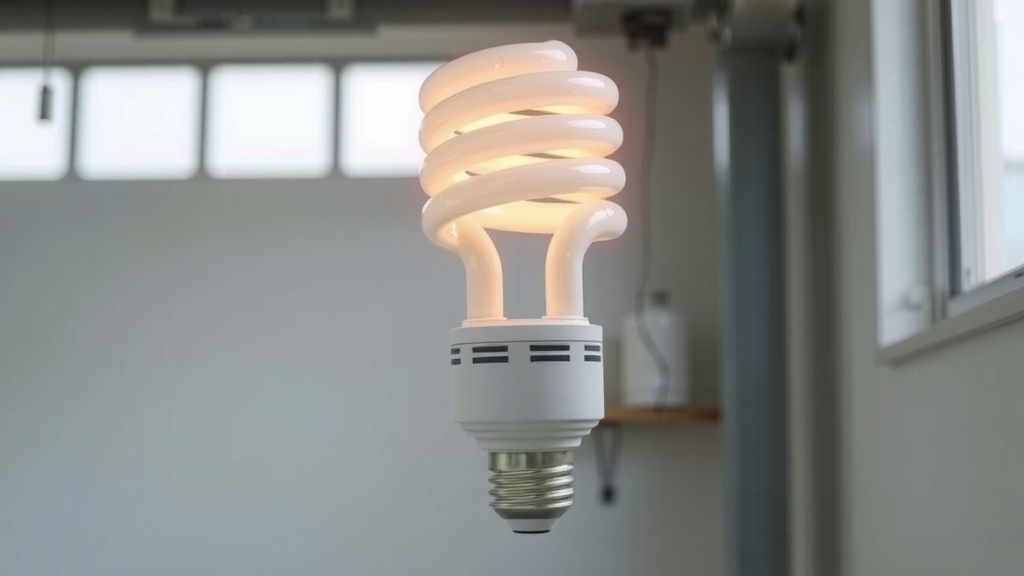
A crucial design difference is the ballast. Traditional fluorescent tubes require an external ballast, usually housed within the fixture itself. CFLs, on the other hand, have the ballast built right into the base of the bulb. This integrated design is what makes them compact and allows them to be used in standard light fixtures.
Light Quality and Warm-up Time
Many people notice a difference in how the light looks. Older fluorescent tubes, especially those with magnetic ballasts, could sometimes produce a cooler, harsher light and might take a moment to reach full brightness. CFLs have improved significantly in this area.
While some early CFLs had a noticeable warm-up period, modern versions are much quicker. You can find CFLs that offer a warm, inviting light similar to incandescent bulbs, as well as cooler, brighter options for task lighting. The color rendering index (CRI), which measures how accurately a light source reveals the colors of objects, has also improved in CFLs over the years.
Cost and Durability
Initially, CFLs had a higher upfront cost compared to traditional fluorescent tubes. However, as they became more widespread and manufacturing processes improved, their price has become much more competitive. Considering their longer lifespan and energy savings, the overall cost of ownership is lower for CFLs.
In terms of durability, both types of bulbs contain glass and are more fragile than incandescent bulbs. However, the compact design of CFLs might make them slightly more resilient to vibration than long, thin fluorescent tubes. Still, careful handling is recommended for both.
Making the Right Choice for Your Home
So, which technology is better for your lighting needs? For general home use, especially in lamps and ceiling fixtures where you’d typically use standard bulbs, CFLs are the clear winner. Their ease of use, energy efficiency, and improving light quality make them an excellent choice.
Traditional fluorescent tubes still have their place, particularly in larger spaces like garages, workshops, or commercial settings where bright, widespread lighting is needed and specialized fixtures are common. However, for most residential applications, the convenience and efficiency of CFLs are hard to beat.
Quick Comparison at a Glance
| Feature | Traditional Fluorescent Lamp | Compact Fluorescent Lamp (CFL) |
|---|---|---|
| Size/Shape | Long tubes | Compact, familiar bulb shapes |
| Ballast | External (in fixture) | Internal (in bulb base) |
| Energy Efficiency | Good (better than incandescent) | Excellent (better than traditional fluorescent) |
| Lifespan | Long | Very Long |
| Socket Type | Requires specific fixtures | Standard screw-in sockets |
| Common Use | Garages, workshops, commercial spaces | Homes, offices, general lighting |
Your Lighting Checklist
Ready to make a decision or just want to recap? Here’s a quick rundown to help you think about your lighting:
- Consider where the light will be used.
- Think about the energy savings you’re aiming for.
- Check the type of light fixtures you have.
- Decide on the color and brightness of the light.
- Factor in the bulb’s lifespan for long-term value.
Conclusion
You’ve learned that CFLs are a more advanced type of fluorescent lamp. They offer greater energy efficiency and convenience for your home. While traditional fluorescent tubes still serve purposes in garages or workshops, CFLs are the clear choice for general household lighting. Their smaller size, built-in ballast, and improving light quality make them an easy upgrade. Consider your specific lighting needs and fixture types to make the best selection. Making the switch to CFLs is a smart step toward saving energy and reducing your utility bills.
Frequently Asked Questions
Are CFL bulbs safe to use in my home?
Yes, CFL bulbs are safe for home use when handled properly. Like traditional fluorescent tubes, they contain a small amount of mercury. However, the amount is very small, and the bulb is designed to contain it. If a CFL breaks, it’s recommended to air out the room and carefully clean up the debris without vacuuming.
Do CFLs really save that much energy compared to older bulbs?
Yes, CFLs are significantly more energy-efficient than older incandescent bulbs and even traditional fluorescent tubes. They use about 75% less energy than incandescent bulbs and typically around 25% less than comparable fluorescent tubes. This energy saving translates directly into lower electricity bills for you.
What does the “warm-up time” for CFLs mean?
Some CFLs may take a short while to reach their full brightness after you turn them on. This is known as the warm-up time. While older CFLs had a more noticeable warm-up period, newer models often reach full brightness very quickly, similar to incandescent bulbs. You can find CFLs designed for instant-on performance.
Can I use CFLs in dimmable light fixtures?
Most standard CFL bulbs are not designed for use in dimmable fixtures. Using a non-dimmable CFL with a dimmer switch can cause it to flicker, hum, or fail prematurely. However, you can now find specially designed dimmable CFL bulbs that work with compatible dimmer switches, so be sure to check the packaging.
How should I dispose of old CFL bulbs?
Due to the small amount of mercury they contain, it’s best to recycle CFL bulbs rather than throwing them in the regular trash. Many retailers and local recycling centers offer CFL recycling programs. Check with your local waste management authority for proper disposal options in your area.
![10 Best Bulb For Bedroom Lamp [2026]](https://bestdesklamp.com/wp-content/uploads/2026/08/10-best-bulb-for-bedroom-lamp-2026-featured-768x432.jpg)