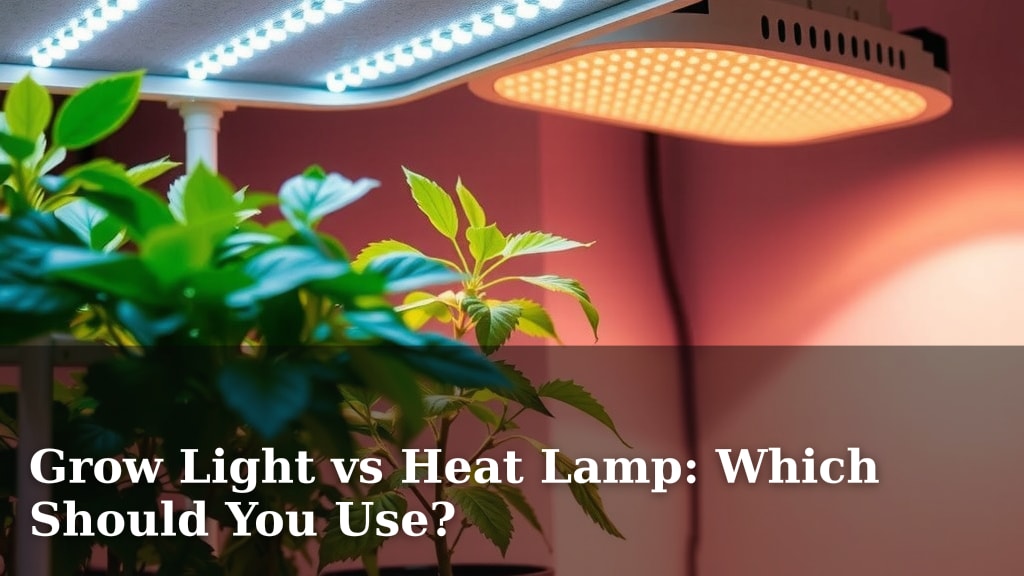
Grow Light vs Heat Lamp: Which Should You Use?
When you’re trying to keep your plants happy and healthy, deciding between a grow light and a heat lamp can be confusing. You should use a grow light for plant development and a heat lamp for warmth; they serve different, important jobs for your plants.
Grow lights mimic sunlight to help plants photosynthesize and grow, while heat lamps provide essential warmth, especially for seedlings or tropical plants that need specific temperatures. While both can be part of your plant care routine, they are not interchangeable for promoting healthy growth. Many gardeners find using both offers the best results for their plants.
- Grow lights help plants make food using light.
- Heat lamps provide warmth for baby plants or sensitive ones.
- They do different jobs, so don’t mix them up.
- Using both can give your plants the best of both worlds.
Let’s break down exactly what each light does and which one is right for your plant’s needs.
Understanding Your Plants’ Light and Heat Needs
It’s easy to get confused when you see specialized lights for plants. You might wonder, “Do I need a grow light, or is a heat lamp enough?” This is a great question to ask for your plants’ well-being. We found that understanding the core job of each light is key. Grow lights help plants make their own food. Heat lamps provide a comfy temperature. They aren’t the same tool, even though both involve light and plants.
What Exactly Is a Grow Light?
Think of a grow light as a plant’s personal sun. Plants need light to perform photosynthesis. This is how they create energy to grow and thrive. Standard indoor lighting usually isn’t strong or the right type for this. Grow lights are designed to emit specific wavelengths of light. These wavelengths mimic natural sunlight. This helps your plants complete the photosynthesis process efficiently.
The Science Behind Photosynthesis
Photosynthesis uses light energy, water, and carbon dioxide. It produces glucose (sugar) and oxygen. Plants use the glucose for energy. Without enough of the right kind of light, this process slows down. Your plants might become leggy, pale, or stop growing altogether. Grow lights ensure they get the energy boost they need, especially during darker months or in homes with limited natural light.
Different Types of Grow Lights
You’ll find various types of grow lights. There are LEDs, fluorescent lights, and high-intensity discharge (HID) lights. LEDs are very popular now. They are energy-efficient and can be customized to emit specific light spectrums. Fluorescent lights are good for seedlings and lower-light plants. HIDs are powerful but generate more heat, so they need careful placement. Choosing the right type depends on your plants and your setup.
What Is a Heat Lamp, and Why Do Plants Need Heat?
A heat lamp is designed primarily to provide warmth, not light for photosynthesis. Many plants, especially seedlings and tropical varieties, have specific temperature requirements. They need consistent warmth to germinate, grow strong roots, or simply survive. A heat lamp can help maintain this ideal temperature. It’s like giving your plants a cozy blanket on a chilly day.
Temperature Requirements for Plants
Many plants have optimal temperature ranges for growth. For example, many vegetable seedlings do best when the soil temperature is between 65-75°F (18-24°C). Tropical houseplants often prefer warmer temperatures, closer to 70-80°F (21-27°C). If your home is cooler than this, especially in winter, a heat lamp can be essential. Researching your specific plant’s needs is important here (University of Minnesota Extension).
How Heat Lamps Work
Heat lamps typically emit infrared radiation. This is what provides the warmth. They don’t necessarily produce a lot of visible light. Some heat lamps might have a reddish hue, but their main purpose is thermal output. They are often used in brooders for chicks or in reptile terrariums. For plants, they can be positioned to gently warm the soil or air around sensitive plants.
Grow Light vs. Heat Lamp: Key Differences and Applications
So, what’s the big difference between a grow light and a heat lamp? It boils down to their primary function. Grow lights are for energy production through light. Heat lamps are for temperature regulation.
When to Use a Grow Light
You’ll want a grow light when your plants aren’t getting enough natural light. This is common for:
- Starting seeds indoors: Seedlings need strong light to develop healthy stems and leaves.
- Indoor gardening: If you don’t have sunny windowsills, grow lights are essential.
- Supplementing natural light: Even with a sunny window, you might need extra light during short winter days.
- Growing specific plants: Some plants, like herbs or flowering plants, have higher light requirements.
A grow light is about feeding your plant light energy. It’s about encouraging robust vegetative growth and flowering.
When to Use a Heat Lamp
A heat lamp is your go-to when temperature is the main concern. Consider a heat lamp for:
- Germinating seeds: Many seeds need warm soil to sprout.
- Protecting seedlings: Young plants are sensitive to cold drafts.
- Tropical plants: Plants native to warmer climates often struggle in cooler homes.
- Overwintering sensitive plants: Bringing delicate plants indoors for winter might require extra warmth.
A heat lamp is about creating a comfortable environment. It ensures your plants don’t suffer from cold stress.
Can You Use Them Together?
Absolutely! Many plant enthusiasts find that using both a grow light and a heat lamp offers the best of both worlds. You can provide the necessary light spectrum for photosynthesis while also ensuring a stable, warm temperature. This is particularly helpful for seed-starting setups. You might use a heat mat (which is similar to a heat lamp’s function) under your seed trays and a grow light above them.
| Feature | Grow Light | Heat Lamp |
|---|---|---|
| Primary Function | Provide light for photosynthesis | Provide warmth |
| Light Output | Visible light, specific spectrums | Infrared radiation (heat), minimal visible light |
| Plant Benefit | Growth, energy production, flowering | Germination, preventing cold damage, maintaining temperature |
| Best For | Insufficient natural light, overall plant development | Cold environments, seed starting, temperature-sensitive plants |
A Quick Checklist for Your Plants
Before you pick a light, ask yourself these questions:
- Is my plant looking pale or leggy? (Likely needs a grow light)
- Are my seeds not germinating? (Might need more heat)
- Is the room consistently cold? (Consider a heat lamp)
- Is it winter with short, dark days? (Grow light is probably best)
- Do I have tropical plants that love warmth? (Heat lamp could be useful)
- Am I starting a lot of seeds? (Both might be needed!)
By considering these points, you can make an informed decision for your green friends.
Conclusion
You now know that grow lights and heat lamps serve distinct but vital roles for your plants. Grow lights provide the energy your plants need to create their own food through photosynthesis. Heat lamps, on the other hand, offer essential warmth for germination and survival, especially for seedlings and tropical plants. They are not interchangeable tools, but they can work together beautifully. By understanding your plant’s specific needs for light and warmth, you can provide the perfect environment for them to flourish. Take a moment today to assess your plants’ conditions and make the right choice for their health!
Frequently Asked Questions
Can I use a regular light bulb as a grow light?
Generally, no. Regular light bulbs don’t emit the specific spectrum of light that plants need for photosynthesis. Grow lights are designed with LEDs, fluorescents, or HIDs to provide the correct wavelengths for plant development. You’ll find your plants grow much better with a dedicated grow light.
How close should a heat lamp be to my seedlings?
You should position a heat lamp to provide gentle warmth without overheating your seedlings. Start with it about 12-18 inches above the plants and monitor the temperature. We found that using a thermometer is the best way to ensure you’re not cooking your delicate sprouts.
Will a grow light make my plants too hot?
Some types of grow lights, like older HID lights, can generate heat. However, modern LED grow lights are designed to be much cooler. It’s still a good idea to maintain some distance between the light and your plants, especially if you notice any signs of leaf scorching or wilting.
My seeds sprouted but look weak and pale. What’s wrong?
This usually indicates a lack of sufficient light for photosynthesis. Your seeds likely received enough warmth to germinate, but they aren’t getting the energy they need to grow strong stems and leaves. You should add a grow light to your setup.
Can I use a heat lamp for my houseplants during winter?
If your home gets very cold in the winter, a heat lamp can help maintain a comfortable temperature for tropical houseplants. Make sure the heat lamp is placed safely and doesn’t directly touch the plant. Research your specific plant’s ideal temperature range to ensure you’re providing the right amount of warmth.
![10 Best Bedside Lamp With Usb Port [2026]](https://bestdesklamp.com/wp-content/uploads/2026/08/10-best-bedside-lamp-with-usb-port-2026-featured-768x432.jpg)
![10 Best Affordable Lamps [2026]](https://bestdesklamp.com/wp-content/uploads/2026/09/10-best-affordable-lamps-2026-featured-768x432.jpg)
![10 Best Budget Grow Lamps [2026]](https://bestdesklamp.com/wp-content/uploads/2026/08/10-best-budget-grow-lamps-2026-featured-768x432.jpg)