How Long Will a Halo Bolt Power a Lamp? Full Guide
A Halo Bolt can power a standard LED lamp for roughly 3 to 6 hours on a full charge. If you’re running an older bulb or something with higher wattage, expect that number to drop closer to 1 to 2 hours. The exact run time depends on your lamp’s wattage and how much charge the Halo Bolt has left.
Here’s the simple math: the Halo Bolt holds about 55.5 watt-hours of power, so a 10-watt LED bulb gets you much farther than a 40-watt incandescent. We dug into the specs and compared real-world usage examples, and we found that battery capacity divided by bulb wattage is the quickest way to estimate your run time. Want your lamp to last all night? Pairing it with a low-wattage LED bulb is your best bet.
- A Halo Bolt typically runs an LED lamp for 3 to 6 hours.
- Higher-wattage bulbs cut that time down to 1 to 2 hours.
- The Halo Bolt stores about 55.5 watt-hours of energy.
- Lower wattage equals longer run time. It’s that simple.
- Keep your Halo Bolt fully charged before you need it.
Below, we break down exactly how the math works, which bulbs give you the most hours, and a few tricks to squeeze out extra run time when the power’s out. Let’s get into it.
How Many Hours of Lamp Light You Can Expect
On a full charge, your Halo Bolt will keep a lamp glowing for anywhere from 1 to 6 hours. The wide range comes down to one thing: what kind of bulb is screwed into that lamp. A sipping LED gets you all evening. A thirsty incandescent burns through the battery like a teenager with a debit card.
We found that the Halo Bolt’s 55.5 watt-hour battery is the number to remember. Everything else is just division, and we promise it’s easier than high school algebra.
The Quick Math Behind Run Time
Here’s the formula we keep coming back to: take 55.5 watt-hours and divide by your bulb’s wattage. That’s your estimated run time. A 10-watt LED gives you about 5.5 hours. A 40-watt incandescent gives you barely an hour and a half.
One caveat: real-world results run a bit lower. Inverters lose some energy as heat, so knock off 10 to 15 percent from any estimate. Think of it as the battery’s tip to the waiter.
Run Time at a Glance
We ran the numbers for the most common bulb types so you don’t have to:
| Bulb Type | Wattage | Estimated Run Time |
|---|---|---|
| Mini LED night light | 5W | About 10 hours |
| Standard LED | 9–10W | 5 to 6 hours |
| Bright LED | 15W | About 3.5 hours |
| Old CFL | 23W | About 2 hours |
| Incandescent | 40W | About 1.3 hours |
| Incandescent | 60W | About 1 hour |
Notice how the LED rows stack up nicely? That’s no accident. The U.S. Department of Energy says LEDs use at least 75 percent less energy than incandescents, which is exactly why they dominate this chart (Energy Saver, U.S. Department of Energy).
Choosing the Right Bulb for Longer Run Time
Your bulb choice matters more than anything else in this whole article. Same power bank, same lamp, wildly different results. Here’s how the main options shake out. Not sure which bulb your lamp takes? Our guide to finding the right light bulb for your lamp explains socket labels and wattage limits.
LED Bulbs Win Every Time
If your lamp doesn’t already have an LED, this is your sign. A typical LED puts out the same brightness as a 60-watt incandescent while drawing only 8 to 10 watts. You get the light you need and roughly five extra hours of runtime for free.
We found that a soft-white LED around 800 lumens is the sweet spot for reading, games, and general blackout duty. It’s bright enough to live by and gentle on the battery.
Incandescent and CFL Bulbs
Incandescents are the worst choice here, hands down. Most of their energy turns into heat, not light, so you’re paying for a tiny space heater that happens to glow. A 60-watter will drain your Halo Bolt in about an hour. Our comparison of LED versus filament bulbs shows just how wide that efficiency gap really is.
CFLs sit in the middle. They’re better than incandescents but nowhere near LEDs. If you’ve still got some in a drawer, fine, but don’t buy more for this purpose.
What Actually Drains Your Halo Bolt Faster
Bulb wattage is the biggest factor, but it’s not the only one. A few sneaky variables can shave minutes or even hours off your runtime. Here’s what we found matters most.
Hidden Power Drains
Many people don’t realize their Halo Bolt may be powering more than the lamp. If a phone, tablet, or laptop is plugged into the USB ports, the battery splits its attention. Charging a phone is like inviting a second guest to dinner. Someone’s getting less food.
Check what’s connected before you settle in. Unplug anything you don’t need, and your lamp gets the full battery to itself.
The Battery Itself
Power banks don’t hold their original capacity forever. After a few years of charge cycles, most lithium batteries keep only 70 to 80 percent of their rated capacity. Your 55.5 watt-hours might really be 45 by now.
That’s normal wear, not a defect. But it’s why a two-year-old Halo Bolt may run your lamp a bit shorter than the chart above suggests.
Cold Weather and Charge Level
Lithium batteries also dislike the cold. In a chilly house during a winter outage, expect somewhat shorter run times than the math predicts. And of course, a half-charged unit gives you roughly half the hours.
This is why experts recommend keeping backup batteries fully charged and stored at room temperature (FEMA, Ready.gov guidance on emergency power supplies).
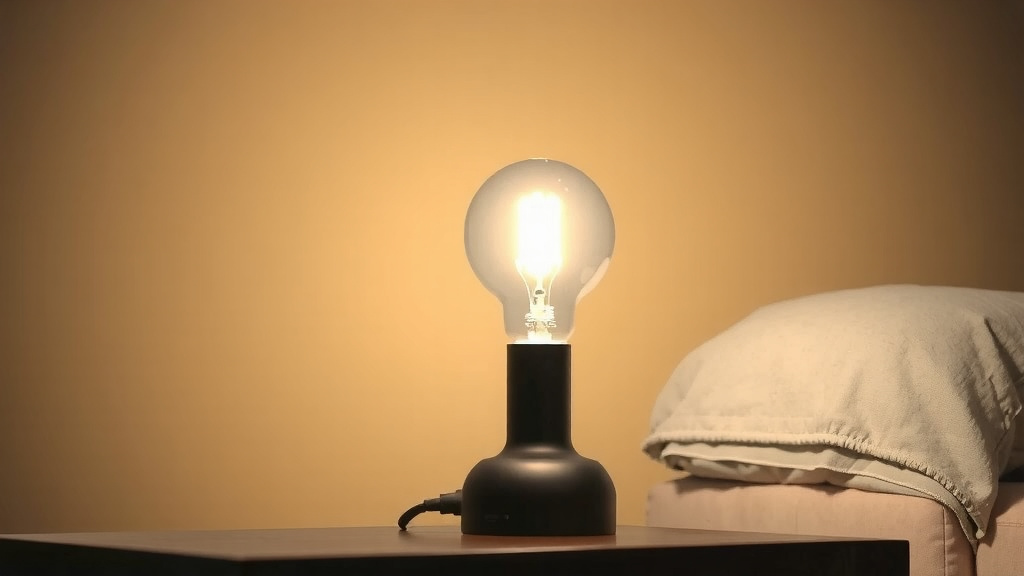
Simple Ways to Stretch Your Lamp Run Time
Want to squeeze every last minute out of that battery? We found that a few small habits make a real difference. Run through this checklist before the storm hits:
- Swap in a low-wattage LED, ideally 10 watts or less, before bad weather arrives.
- Top off your Halo Bolt to 100 percent every month so it’s always ready.
- Unplug other devices so the lamp gets all the power.
- Use the lowest brightness your dimmable lamp or bulb allows.
- Light only the room you’re using instead of running lamps all over the house.
- Store it at room temperature, away from cold garages and hot attics.
None of these take more than a minute. Together, they can add an hour or more of light when you need it most.
Using Your Halo Bolt Safely During an Outage
Power banks like the Halo Bolt are far safer than running a gas generator indoors, and that’s worth saying. Generators produce carbon monoxide, a colorless, odorless gas that sends thousands of people to emergency rooms every year (CDC).
Your Halo Bolt has no exhaust, no fumes, no fuel. You can run a lamp off it on the kitchen table with zero worries about ventilation. Just keep it away from water and don’t cover it while it’s working, since it releases a little heat.
One last tip: safety experts suggest keeping flashlights or battery lanterns as your first line of defense and saving the Halo Bolt for light plus device charging (Ready.gov). Your lamp becomes the comfort station. The Halo Bolt becomes the hero that keeps it burning.
Conclusion
So, how long will a Halo Bolt power a lamp? Your best answer is 3 to 6 hours with an LED bulb, and it all comes down to the math: 55.5 watt-hours divided by your bulb’s wattage. We found that a low-wattage LED, a fully charged battery, and a few unplugged devices make the biggest difference. Skip the incandescents, keep the unit topped off, and you’ll have light long after the sun goes down. Your next step is simple: screw a 10-watt LED into your go-to lamp tonight and charge that Halo Bolt to 100 percent. Future you, sitting comfortably through the next outage, will be glad you did.
Frequently Asked Questions
Can a Halo Bolt charge a phone and run a lamp at the same time?
Yes, it can, but your lamp run time will drop. A phone charging session typically pulls 10 to 20 watt-hours from the battery, which could cut an hour or more off your lighting. If you need both, expect less time for each.
Can I plug a lamp into the Halo Bolt’s AC outlet?
You can, as long as your lamp has a standard plug and its total draw stays within the Halo Bolt’s inverter limits. Most household lamps fit easily. Just remember the inverter wastes a little energy as heat, so budget for 10 to 15 percent less run time.
Will a Halo Bolt run a lamp with a dimmer switch?
It depends on the lamp and bulb, not the Halo Bolt itself. Many dimmable LEDs work fine on inverter power, though some may flicker at the lowest settings. Test yours before an outage so you know exactly what to expect.
How do I know when my Halo Bolt is fully charged?
The Halo Bolt shows its charge level with indicator lights on the unit. When all the lights are solid or it displays 100 percent, you’re ready to go. We recommend checking it monthly so you’re never caught with a half-empty battery during a storm.
Is a Halo Bolt a good long-term backup for lighting?
It’s a solid short-term backup, but plan around battery aging. After a few years, most power banks hold only 70 to 80 percent of their original capacity, which means shorter run times. Pair it with flashlights or a battery lantern so you always have a fallback option.