How Long Should a Turtle’s Heat Lamp Be On Each Day?
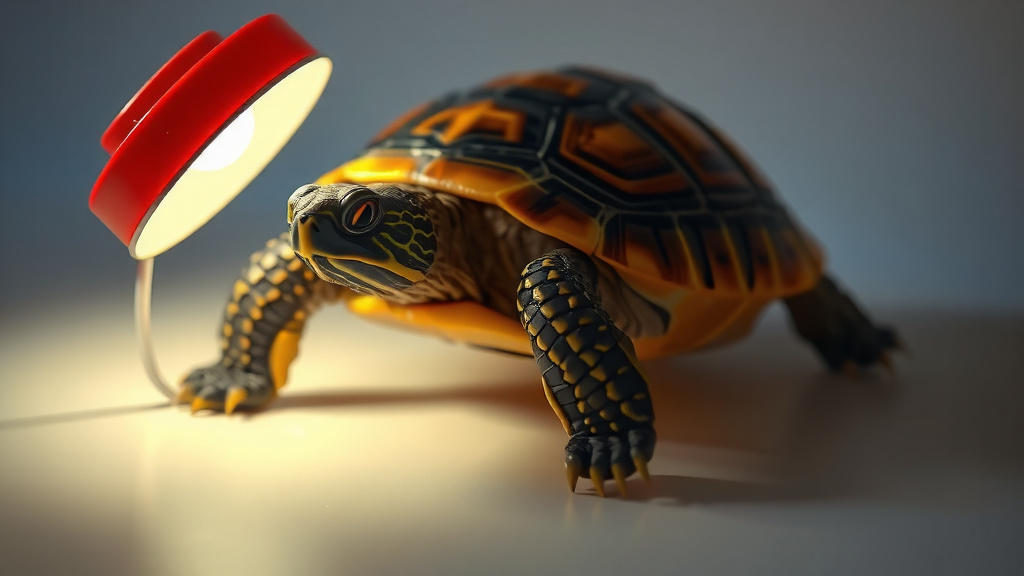
Your turtle’s heat lamp should be on for 10 to 12 hours every day. That mirrors the natural daylight cycle your turtle would get in the wild. So if you flip it on in the morning and off in the evening, you’re right on track.
Here’s the catch: your turtle’s heat lamp and UVB light serve different jobs, and both matter. The heat lamp keeps the basking area warm, while UVB lighting helps your turtle make vitamin D3 for a strong shell. Many experts say skimping on either one can lead to serious health problems down the road. And no, leaving it on 24/7 isn’t a shortcut — your turtle needs a proper day and night cycle too.
- Turtles need their heat lamp on 10 to 12 hours per day.
- Use a timer so the schedule stays consistent, even when you forget.
- Never leave the heat lamp on all night — turtles need darkness to rest.
- Adjust the hours slightly with the seasons if you want to mimic nature.
- Hatchlings and certain species may need a slightly different schedule.
Below, we break down everything you need to know — the exact hours, why the schedule matters, and a few easy tricks (like timers) to keep your shelled friend happy and healthy.
Daily Heat Lamp Hours for Your Turtle
Most turtles do best with 10 to 12 hours of heat and light each day. Think of it like a work shift: the lamp clocks in during the morning and clocks out at night. We found that this range matches the daylight hours turtles get in most parts of the United States, so it’s an easy baseline to follow.
If you want to get a bit more natural, you can shift things with the seasons. Slightly longer days in summer and shorter days in winter mimic what wild turtles live through. It’s not required, but some keepers swear their turtles seem more settled with a seasonal rhythm.
Why a Day and Night Cycle Matters
Here’s a question worth asking: would you want the lights blazing in your bedroom all night? Your turtle feels the same way. Turtles need darkness to rest, and constant light can stress them out and mess with their natural behavior. Not sure whether a red bulb counts as darkness? Our clear vs. red heat lamp comparison breaks down which is better for pets.
Research on reptile care consistently points to a proper photoperiod — that’s just a fancy word for the light-dark schedule — as a core part of good husbandry. Many experts say a turtle kept under 24-hour light may eat less, act sluggish, or pace the tank like it’s waiting for a bus that never comes.
What Happens If the Lamp Stays On Too Long
Too much light time can cause real problems. Your turtle may become stressed and restless, and the basking area can overheat. Overheating is the bigger danger here — a turtle that can’t escape the heat can suffer heat stress, which can turn dangerous fast.
There’s also your electric bill. Running a lamp around the clock does nothing good for your turtle and quietly drains your wallet. Win-win to turn it off, right?
What Happens If the Lamp Stays Off Too Long
Now flip it. Too few light hours means your turtle can’t warm up properly, and cold turtles have slow metabolisms. A chilly turtle often stops eating and digests food poorly.
The bigger risk is with UVB lighting. Without enough UVB exposure, turtles can’t make vitamin D3, and that opens the door to metabolic bone disease — a soft, painful shell condition. Veterinary sources, including reptile care guidance from university extension programs, warn that this condition is painful and often preventable with proper lighting.
Heat Lamp vs. UVB Light: Know the Difference
These two lights are not the same thing, even though they often sit side by side. The heat lamp provides warmth. The UVB bulb produces ultraviolet light that helps your turtle synthesize vitamin D3, which is needed to absorb calcium and build a strong shell.
Some bulbs do both jobs — they’re called mercury vapor bulbs — but most setups use separate lamps. Either way, both should follow the same 10-to-12-hour schedule. We found that keeping them on a shared timer is the simplest fix.
| Light Type | What It Does | Daily Duration |
|---|---|---|
| Heat lamp (basking light) | Warms the basking area for digestion and activity | 10 to 12 hours |
| UVB bulb | Helps your turtle make vitamin D3 for shell health | 10 to 12 hours |
| Ambient tank light | Lights the enclosure for viewing | 8 to 12 hours |
| Night light | Not needed — turtles rest in darkness | 0 hours |
Using a Timer to Stay Consistent
Let’s be honest: we all forget things. You meant to turn the lamp off at 8 p.m., and suddenly it’s 11 p.m. and you’re binge-watching a show. A $10 outlet timer solves this completely.
Plug the lamp into a simple mechanical or digital timer, set it for your chosen hours, and forget about it. Consistency matters more than perfection, and a timer delivers consistency every single day — even on vacations and busy workweeks.
Sample Schedule You Can Copy
Here’s an easy schedule that works for most keepers:
- 7:00 a.m. — Lights turn on with breakfast.
- 7:00 a.m. to 12:00 p.m. — Turtle basks and warms up.
- 12:00 p.m. to 6:00 p.m. — Swimming, eating, normal activity.
- 7:00 p.m. — Lights turn off; nighttime begins.
- Overnight — Full darkness and cooler temps for rest.
Adjusting for Species and Age
Not every turtle follows the same playbook. Aquatic species like red-eared sliders and painted turtles do well with the standard 10 to 12 hours. But some species have their own quirks worth knowing.
Hatchlings and Young Turtles
Baby turtles need steady warmth to grow, but their needs aren’t dramatically different from adults. Keep the same light schedule, but double-check that the basking temperature stays in the right range for your species. Many experts say hatchlings are more sensitive to temperature swings, so a reliable thermometer is a must.
Species With Special Schedules
Turtles from temperate climates may naturally slow down in winter — some keepers shorten the light cycle to 8 to 10 hours to reflect that. Desert species often thrive with longer, brighter days. Research the exact species you own; a quick check of care sheets from reputable herpetology societies can save you guesswork.

Seasonal Changes and Brumation
If your turtle slows way down in fall — eating less, sleeping more — it may be heading toward brumation, which is basically reptile hibernation. If you keep indoor temperatures stable and maintain normal lighting, most pet turtles skip brumation entirely, and that’s perfectly fine.
Planning to adjust the schedule seasonally? Do it gradually. Shift the timer by 15 to 30 minutes each week instead of changing everything overnight. Turtles appreciate routine more than surprises.
Signs Your Lighting Schedule Is Working
How do you know you’ve nailed it? Watch your turtle, not just the clock. Healthy lighting routines show up in behavior. Look for these good signs:
- Regular basking during the “daytime” hours.
- A strong appetite and consistent eating.
- Active swimming and exploring when lights are on.
- Settled, calm rest once lights go off.
- A firm, smooth shell with no soft spots.
- Clear eyes and steady energy day to day.
If you see the opposite — lethargy, refusal to bask, or a soft shell — revisit your light schedule and temperatures first, then check in with a reptile vet if things don’t improve.
Quick Lighting Setup Checklist
Before you call your setup done, run through this list:
- Set a timer for 10 to 12 hours daily.
- Check basking temps with a thermometer, not guesswork.
- Verify UVB bulb age — most need replacing every 6 to 12 months.
- Confirm full darkness at night with zero glow.
- Position lights safely so your turtle can’t touch hot bulbs.
- Log your schedule so the whole household stays consistent.
That last one sounds small, but we found it matters more than people think. If one family member turns the lights off early and another leaves them on late, your turtle’s routine turns into chaos. A shared schedule keeps everyone — shell and skin alike — on the same page.
Conclusion
Getting your turtle’s heat lamp schedule right comes down to one simple habit: 10 to 12 hours on, then full darkness. Pair that with a timer, keep your UVB bulb fresh, and watch your turtle’s behavior for confirmation. If it basks regularly, eats well, and rests calmly at night, you’re doing it right. We found that consistency beats perfection every time — your turtle cares more about routine than an exact minute count. So here’s your next step: grab a $10 outlet timer today, set it to your chosen hours, and let it handle the schedule from now on. Your turtle (and your electric bill) will thank you.
Frequently Asked Questions
Can I leave my turtle’s heat lamp on overnight if my house is cold?
It’s better to use a ceramic heat emitter instead, which provides warmth without light. Your turtle still needs darkness to rest properly. Check that overnight temperatures stay within your species’ recommended range.
Do turtles need a heat lamp every day, or can I skip weekends?
Your turtle needs its lamp every single day — no days off. Skipping days causes temperature swings that can affect digestion and appetite. A timer makes daily consistency effortless, even when life gets busy.
What time of day should I turn my turtle’s heat lamp on?
Morning works best, ideally around 7 to 8 a.m., so it matches natural daylight. The exact hour matters less than keeping the schedule the same every day. Pick a window that fits your household routine and stick with it.
How far should the heat lamp be from my turtle’s basking spot?
Most basking bulbs work well positioned 10 to 12 inches above the basking platform, but follow your bulb manufacturer’s guidelines. Always measure the basking surface temperature with a thermometer. If your turtle avoids the spot, the heat may be too intense.
Can I use a regular light bulb instead of a reptile heat lamp?
A standard incandescent bulb can provide heat, but it lacks the quality and safety features of reptile-specific bulbs. Reptile bulbs are built to handle fixture heat and provide the right light spectrum. We recommend sticking with bulbs designed for reptile habitats.