How Long Does a Tortoise Need a Heat Lamp? Daily Guide
Most tortoises need a heat lamp for 10 to 12 hours a day, basically mimicking natural daylight. You turn it on in the morning and switch it off at night so your tortoise gets a proper day and night cycle. That said, the exact answer to how long does a tortoise need a heat lamp depends on the season, the species, and the temperature in your home.
Here’s the thing: tortoises are cold-blooded, so they can’t make their own body heat. They rely on you to keep their enclosure warm enough for digestion, activity, and overall health. We found that many new owners worry about leaving the lamp on too long, but the bigger risk is actually letting the enclosure get too cold overnight.
So what should you really know? Here’s the short version:
- 10 to 12 hours daily is the standard for adult tortoises.
- Turn the heat lamp off at night unless your home drops below the safe overnight temperature.
- Baby tortoises and sick tortoises may need extra warmth and longer hours.
- A timer makes the whole routine painless and consistent.
- Ceramic heat emitters can provide nighttime heat without light if needed.
Below, we break down everything you need to know about heat lamp timing, temperatures, and the little details that keep your shelled friend happy and healthy.
Setting Up Your Tortoise’s Daily Heat Lamp Schedule
The easiest way to answer this question is to treat your heat lamp like the sun. It comes on in the morning, shines all day, and sets at night. For most species, that means 10 to 12 hours of heat and light each day, matched closely to the seasons outside.
We found that owners who keep a steady schedule see calmer, more active tortoises. Why? Because reptiles are creatures of rhythm. Their bodies expect warm days and cooler nights, just like they’d experience in the wild.
Why a Timer Is Your Best Friend
Here’s a little confession from the reptile-keeping community: everyone forgets to turn the lamp on or off sometimes. Life gets busy. That’s exactly why we recommend a cheap plug-in timer.
Set it once, and your tortoise gets the same reliable schedule every single day. Many experts say consistency matters more than perfection, and a timer delivers that without you lifting a finger.
Seasonal Adjustments That Make Sense
Tortoises don’t check calendars, but their bodies do notice the seasons. You can mimic that with small tweaks:
- Summer schedule: 12 to 14 hours of heat and light.
- Winter schedule: 8 to 10 hours, often with slightly lower daytime temps.
- Brumation periods: Some species and owners reduce heat dramatically under guidance from a reptile vet.
You don’t need to obsess over these numbers. A swing of an hour here or there won’t hurt anything. Think of it as tuning a guitar, not performing surgery.
What Happens If the Heat Lamp Stays On Too Long?
Honestly? Not much, as long as the temperature stays in the safe range. The lamp itself isn’t dangerous. The real issue is that constant light can disrupt your tortoise’s sleep cycle.
Imagine trying to sleep with the sun blazing in your face all night. That’s what a bright basking bulb does at 2 a.m. Research on reptile husbandry, including guidance summarized by veterinary schools, points to a proper photoperiod (day-night light cycle) as a core part of reptile health.
Signs Your Tortoise Is Getting Too Much Light
Watch for these signals:
- Hiding more than usual during the day.
- Restless pacing at night.
- Refusing food or eating less.
- Sitting pressed against the coolest hide all day.
Any of these alone might just be a moody tortoise. But if you see several together, check your lamp schedule first. It’s the easiest thing to fix.
Should You Turn the Heat Lamp Off at Night?
Most of the time, yes. Tortoises need a temperature drop at night to sleep well and metabolize properly. A dip into the 60s°F is fine for many common species like Russians and Hermann’s.
But there’s a limit. If your home gets chilly in winter, your tortoise can get dangerously cold. The Humane Society and reptile veterinarians generally agree that sustained temps below about 60°F overnight are risky for most species.
Using a Ceramic Heat Emitter for Nighttime Warmth
This is where a ceramic heat emitter saves the day. It produces heat with zero light, so your tortoise stays warm without feeling like it’s noon at midnight.
Screw one into a porcelain socket on a separate timer or thermostat, and set it to kick on if the enclosure drops below your target overnight temp. It’s a simple, affordable fix that many keepers swear by.
Nighttime Temperature Targets by Species
Not sure what “too cold” means for your shelled buddy? This quick table helps.
| Species | Daytime Basking | Safe Overnight Range |
|---|---|---|
| Russian Tortoise | 95–100°F | 65–70°F |
| Greek Tortoise | 95–100°F | 65–72°F |
| Sulcata (African Spurred) | 100–105°F | 70–75°F |
| Red-Footed Tortoise | 90–95°F | 70–78°F |
| Leopard Tortoise | 95–100°F | 70–75°F |
If your home dips below these overnight numbers, that’s your cue to add nighttime heat. A simple thermometer with a min/max memory function tells you exactly what’s happening when you’re asleep.
Do Baby and Sick Tortoises Need More Heat Hours?
Yes, and this is one area where a little extra care goes a long way. Hatchlings have tiny bodies that lose heat fast. Sick or recovering tortoises also need warmer, more stable temperatures to fight off illness and digest food.
Many reptile vets recommend keeping young or ailing tortoises at the warm end of their range around the clock, sometimes with a slightly longer daytime schedule. If your tortoise is under the weather, call a reptile-savvy veterinarian. They’ll give you exact targets for your species and situation.
Pairing Heat With UVB Lighting
Don’t forget: heat alone isn’t the whole story. Tortoises need UVB light to make vitamin D3 and process calcium. Without it, they can develop metabolic bone disease, a painful and preventable condition.
UVB bulbs follow the same 10 to 12 hour schedule as your heat lamp, so it’s easy to run them on the same timer. Just note that UVB bulbs lose strength over time, even if they still glow. Many experts say to replace them every 6 to 12 months depending on the brand.
Your Quick Heat Lamp Routine Checklist
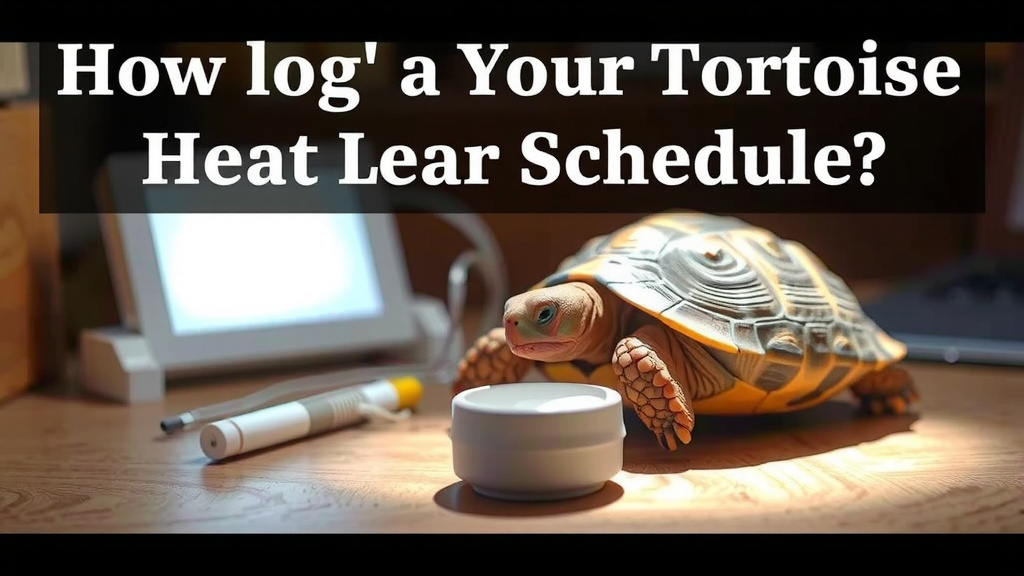
Want to keep this simple? Here’s your daily and weekly routine in one place:
- Plug lamps into a timer set for 10 to 12 hours daily.
- Check basking temps with a digital thermometer or temp gun.
- Log overnight lows once or twice a week.
- Swap in a ceramic emitter if nights drop too cold.
- Replace UVB bulbs every 6 to 12 months.
- Adjust hours slightly with the seasons.
Common Heat Lamp Mistakes to Avoid
Even experienced keepers slip up now and then. These are the mistakes we found most often in owner communities and vet guidance:
- Guessing temperatures instead of measuring them. Your hand is not a thermometer.
- Using an incandescent bulb at night, which floods the enclosure with light. Our comparison of clear vs red heat lamps explains which bulb colors are least disruptive at night.
- Placing the lamp where the tortoise can’t escape the heat. Every enclosure needs a cool zone.
- Skipping the thermostat on heat sources. A thermostat is cheap insurance.
One quick anecdote that circulates in tortoise groups: a keeper noticed their tortoise stopped eating, panicked about parasites, and spent hundreds at the vet. The actual culprit? A winter cold snap had dropped the room to 55°F overnight. One $20 heat emitter later, appetite returned. Sometimes the answer really is that simple.
Getting Your Timing Right Without Stress
At the end of the day, tortoise keeping rewards steady habits over complicated ones. A timer, a thermometer, and a quick glance at the weather forecast cover about 95% of what you need. Give your tortoise a warm day, a cool night, and a predictable rhythm, and you’ll have a happy shelled roommate for decades.
Conclusion
Getting your tortoise’s heat lamp schedule right really comes down to three things: 10 to 12 hours of daytime heat, a proper cool-down at night, and a timer to keep it all consistent. Add a ceramic heat emitter for chilly nights, and you’ve covered just about everything. We found that keepers who measure temperatures instead of guessing catch problems long before their tortoise shows symptoms. Your next step is simple: grab a plug-in timer and a digital thermometer this week, set your schedule, and log overnight lows for a few days. That small bit of setup buys you years of peace of mind.
Frequently Asked Questions
Can I leave my tortoise’s heat lamp on 24 hours a day?
You can if temperatures demand it, but most tortoises do better with a day and night cycle. Constant bright light can throw off their sleep and eating patterns. If your enclosure stays warm enough on its own at night, turn the lamp off and let your tortoise enjoy the dark.
Do tortoises need a heat lamp in the summer?
It depends on your home. If your house stays within your species’ daytime range naturally, you may only need the lamp for basking hours. In hot climates, some owners shorten lamp time in summer and lengthen it again in winter. A thermometer tells you what your tortoise actually needs.
How close should the heat lamp be to my tortoise’s basking spot?
Most basking bulbs work well 12 to 18 inches above the basking surface, but the exact distance varies by bulb wattage. The honest answer is to measure, not guess. Set it up, check the surface temperature with a temp gun, and adjust the height until you hit your species’ target.
What happens if the power goes out and the heat lamp turns off?
A few hours without heat won’t hurt a healthy adult tortoise, especially if your home isn’t freezing. For longer outages, wrap the enclosure partially with blankets to hold warmth, or move your tortoise to a warmer room. Hatchlings and sick tortoises are more sensitive, so prioritize them.
Can I use a regular household bulb as a heat lamp for my tortoise?
You can for heat, since an incandescent bulb produces warmth just like a reptile basking bulb. The catch is light color and durability. Reptile bulbs are built to handle a fixture’s heat cycles and often give off a more natural spectrum. Just make sure any bulb sits in a ceramic-rated socket.