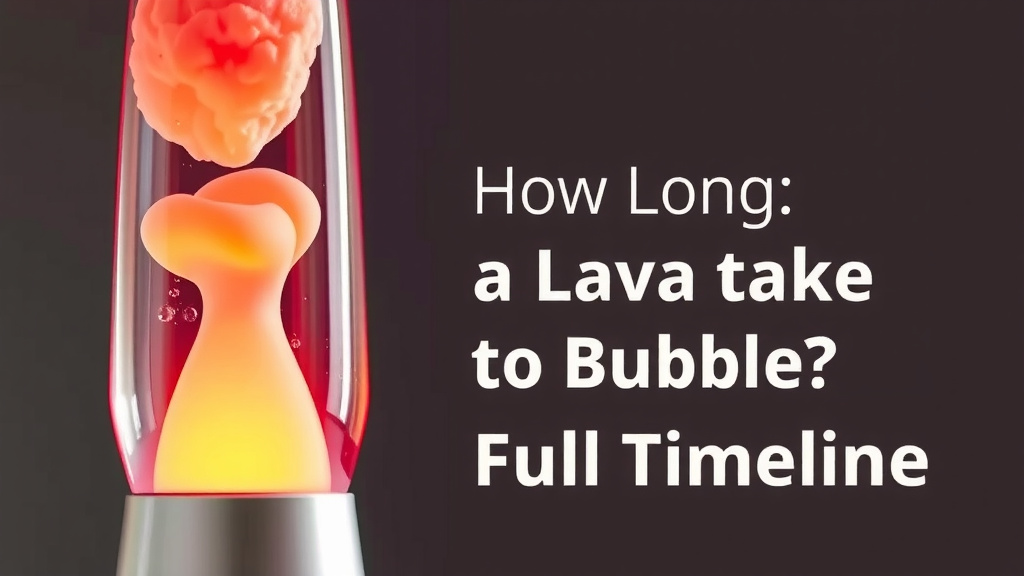
How Long Does a Lava Lamp Take to Bubble? Full Timeline
Most lava lamps take one to three hours to start bubbling properly, with some needing up to six hours on the first use. So if you just turned yours on and it looks like a quiet jar of goop, don’t panic — that’s totally normal. The keyword here is patience.
Why the wait? The bulb at the base needs time to heat the wax, and warm wax moves slowly. We researched this topic and found that many experts say a cold start is the slowest, while a lamp that’s already warm from recent use bubbles much faster. New lamps often take the longest of all.
Quick takeaways:
- Typical bubbling time: 1 to 3 hours after turning it on.
- First-ever use can take 4 to 6 hours to flow properly.
- A warm lamp relights faster than a fully cooled one.
- Room temperature matters — cold rooms slow everything down.
- Leaving it on for 8 to 10 hours max keeps the wax healthy.
Below, we break down exactly how long each stage takes, what speeds things up, and the mistakes that can wreck your wax. Let’s get that goo moving.
The Bubbling Timeline, Stage by Stage
Here’s the honest answer up front: a lava lamp moves through three clear stages, and each one has its own clock. Knowing the stages helps you stop staring at the lamp every five minutes. We researched the typical patterns and found they hold true for most classic 16.3-ounce and 27-inch models.
Stage 1: The Warm-Up (First 60 Minutes)
For the first hour, you’ll see almost nothing. The wax sits at the bottom as one solid, glassy blob. The bulb is working, but it’s basically melting a big candle from underneath. Think of it like waiting for butter to soften on the counter — nothing looks different, then suddenly it does.
Don’t nudge it, don’t shake it, don’t even spin it. Just let it sit.
Stage 2: First Bubbles (1 to 2 Hours)
Around the one-hour mark, the bottom of the wax starts to soften and lift. You’ll see a small bulge or pillar rise off the base. It may stretch upward, wobble, and drop back down. That’s your lamp waking up.
This stage is exciting but short. Many first-time owners think something is broken because the motion is slow and clumsy. It isn’t broken. It’s warming.
Stage 3: Full Flow (2 to 3 Hours and Beyond)
By hour two or three, the wax should be forming smooth, rounded blobs that rise and fall in a steady rhythm. This is the look you bought the lamp for. If the flow seems thin at first, give it another 30 to 60 minutes — the wax keeps loosening as it heats.
We found that many experts describe lava lamp wax as a slow-reacting material. Paraffin wax, the stuff inside most lamps, softens gradually rather than melting all at once, which is why the flow builds slowly instead of switching on (NIH).
Why a Brand-New Lamp Takes the Longest
New lamps often need 4 to 6 hours before they bubble properly, and some need a second session entirely. Here’s why: the wax has been sitting in a cold box, possibly through a delivery truck winter, and it’s fully hardened. It also has a fresh layer of settled wax at the base that needs to melt through completely.
Our advice? Treat the first run as a break-in period. Turn the lamp on, let it go through a full warm-up, and don’t judge its performance until its second or third use. Like a new pair of sneakers, it gets better after a few outings.
What Changes Your Wait Time
Two big factors decide whether your lamp bubbles in 90 minutes or three hours: the room it’s in and the bulb inside it.
Room Temperature and Drafts
Cold rooms are the silent killers of lava lamp flow. Most people keep their homes between 68 and 72 degrees Fahrenheit, which is the range many health sources call comfortable for living spaces (Cleveland Clinic). A lamp in a 60-degree basement, though, can take twice as long to flow. Nearby AC vents and open windows slow it down even more, because cool air pulls heat away from the glass.
Sunny spot by a window? That actually helps — as long as the lamp isn’t getting hot enough to be unsafe.
Bulb Wattage and Lamp Height
The bulb is the engine. Classic 16.3-ounce lamps usually use a 25- or 30-watt bulb, while tall 27-inch lamps need a 40-watt or higher bulb. We found that many users accidentally install the wrong wattage, which either starves the wax of heat or overheats it.
Taller lamps also have more wax to warm, so they naturally take longer to start. A mini lamp may bubble in under an hour; a giant floor model can take three or more.
Speed Things Up: A Quick Checklist
Want faster bubbles without breaking any rules? Run through this list:
- Keep the room at a steady 68–72 degrees, away from AC vents and drafts.
- Check that you’re using the exact bulb wattage listed on the base. If you’re unsure which wattage your base requires, our guide to finding the right bulb for your lamp walks through checking the label.
- Place the lamp on a hard surface, not fabric that traps or blocks heat.
- Wipe dust off the metal base so heat transfers cleanly into the glass.
- Give the lamp two or three sessions before judging its flow.
- Turn it on at the same time daily so a warm lamp relights faster.
Mistakes That Can Wreck Your Wax
Lava lamp wax is forgiving, but it has two dealbreakers. Avoid these and your lamp can last for decades.
Don’t Run It All Day and Night
Most manufacturers recommend keeping a lava lamp on for no more than 8 to 10 hours at a stretch. Beyond that, the wax can overheat, break into permanent tiny blobs, or turn cloudy. The U.S. Fire Administration also warns that leaving any heat-producing lamp unattended raises fire risk, so switch it off before bed or when you leave the house (USFA).
Never Shake or Move a Warm Lamp
This is the big one. If you lift or shake a hot lamp, the wax can break into emulsified sludge that never re-forms into blobs. Wait until the lamp is fully cool — usually two to three hours after switching it off — before moving it. If you’re impatient, plan the move for the morning before you turn it on.
Quick Reference: Typical Bubble Times
| Situation | Time to First Bubbles | Full Flow |
|---|---|---|
| Brand-new lamp, first use | 2 to 4 hours | 4 to 6 hours |
| Cold start (lamp fully cooled) | 1 to 2 hours | 2 to 3 hours |
| Warm lamp, same-day relight | 30 to 45 minutes | 1 to 2 hours |
| Cold room (below 65°F) | 2 to 3 hours | 3 to 6 hours |
When a Lamp Still Won’t Bubble
If nothing has happened after four hours, check the obvious suspects first. Is the bulb burned out? Is it the correct wattage? Is the lamp plugged into a working outlet? Replacing a $5 bulb fixes more “broken” lava lamps than anything else.
Still stuck? Try moving the lamp to a warmer room for its next session. We found that many owners report a complete turnaround just from relocating the lamp out of a cold basement. And if the wax stays cloudy or permanently separated after a proper cool-down, the wax itself may be damaged — and no amount of waiting will fix that. At that point, a replacement bottle is cheaper and easier than any rescue trick.
Conclusion
So, how long does a lava lamp take to bubble? Plan on one to three hours for a normal session, and up to six hours for a brand-new lamp on its first run. The trick is to stop expecting instant action. Wax is a slow-reacting material, and the lamp needs quiet time to build that dreamy, rising flow. Keep the room warm, use the right bulb wattage, and never touch a hot lamp. Do that, and the wait gets shorter with every session. Your next step? Plug it in tonight, set a timer for two hours, and let it do its thing while you relax.
Frequently Asked Questions
Can I leave my lava lamp on overnight?
We recommend against it. Most manufacturers cap runtime at 8 to 10 hours, and overnight sessions can overheat the wax or dim the bulb’s effect over time. Turn it off before bed, then relight it the next day for a fresh session.
Why does my lava lamp bubble but the blobs never rise to the top?
That usually means the wax hasn’t reached full operating temperature yet. Give it another 30 to 60 minutes of steady heat and the blobs should climb higher. If the pattern never changes after several full sessions, the wax-to-liquid ratio in the bottle may be off.
Do lava lamps use a lot of electricity while warming up?
No, and this surprises a lot of people. A classic lamp runs on a 25 to 40-watt bulb, which costs only a few cents per hour in most states. Even a three-hour warm-up barely registers on your power bill.
Is it normal for a lava lamp to look cloudy when it’s new?
A slightly hazy look during the first session or two is common as the wax and liquid settle from shipping. It should clear up as the lamp completes a few full heat cycles. If the liquid stays cloudy after several sessions, the bottle may have been shaken in transit.
Can I use a lava lamp in a dorm room or office?
You can, as long as the space stays at a normal indoor temperature and the lamp sits on a sturdy, hard surface. Just check the outlet before you plug in, and make sure the lamp won’t get bumped by roommates or coworkers. A warm lamp that gets knocked over can leak hot wax.