Choosing the Right Lamp Harp Size: A Simple Guide
Choosing the right size harp for your lamp is all about achieving a balanced look and ensuring proper light distribution. Generally, the harp’s height should be about 75% of the lamp base’s height, and the shade’s width should be roughly twice the base’s width. This creates a visually pleasing proportion and helps your lamp function at its best. Don’t worry, we’ll walk you through the simple math.
Getting the proportions right prevents your lamp from looking top-heavy or undersized. A harp that’s too short can make a shade look awkward. Too tall, and it might overwhelm the lamp base. Finding the perfect fit means your lamp will illuminate your space beautifully and add to your room’s decor. We’ve researched the common guidelines for you.
- Measure your lamp base from bottom to where the harp attaches.
- Consider the lamp shade’s width and depth.
- Harp height is typically 75% of the base height.
- Shade width is usually double the base width.
Let’s walk through exactly how to measure and select the perfect harp size for your lamp, ensuring it looks fantastic and lights up your room just right.
Finding the Perfect Harp Size for Your Lamp
So, you’ve got a beautiful lamp base and a shade you adore, but they just don’t seem to “fit” quite right. The culprit is often the lamp harp. This seemingly small piece is a major player in how your lamp looks and functions. Getting the harp size wrong can make your whole lamp feel off-balance.
Don’t stress, though! We’ve researched the best ways to figure out exactly what size harp your lamp needs. It’s mostly about simple measurements and understanding some basic proportions. You’ll have your lamp looking picture-perfect in no time.
Understanding the Harp’s Role in Lamp Aesthetics
Think of the harp as the lamp’s shoulder. It holds up the shade and sets the overall posture of your lamp. If the harp is too short, the shade might droop or look too big for the base. If it’s too tall, the lamp can seem top-heavy. We want a harmonious look between the base, harp, and shade.
Many sources suggest a general rule for visual balance. This rule helps ensure your lamp doesn’t distract from your room’s decor but rather enhances it. It’s about creating that perfect silhouette. It ensures your lamp tells a cohesive design story.
Key Measurements to Take for the Right Harp
To start, you’ll need a few key measurements. Grab a tape measure. You’ll be measuring your lamp base and your lampshade.
Measuring Your Lamp Base Height
First, measure the height of your lamp base. Start from the very bottom of the base and go straight up to the point where the harp attaches. This is usually a threaded nipple or a finial screw. This measurement is your primary reference point. It tells us how tall the “body” of your lamp is.
Be precise here! Every inch counts when you’re aiming for perfect proportions. Make sure your tape measure is straight and not bending around curves. You want the true vertical height. This measurement is vital for all subsequent calculations.
Measuring Your Lampshade Dimensions
Next, let’s look at your lampshade. You’ll need its width and depth. For most shades, the width is the measurement across the widest part of the shade. If it’s a drum shade, this will be the diameter. For a square shade, it’s the diagonal measurement.
The depth is how tall the shade itself is, from its top rim to its bottom rim. These measurements help determine if the shade will fit the harp’s support and look proportional to the base. A shade that’s too wide or too narrow can throw off the entire lamp’s balance.
The 75% Rule for Harp Height
Now for the magic number: the 75% rule. Many lighting experts recommend that the harp’s height should be approximately 75% of your lamp base’s height. So, if your lamp base measures 20 inches tall, you’re looking for a harp that’s about 15 inches tall (20 inches * 0.75 = 15 inches).
This rule is a fantastic starting point. It’s a guideline that consistently produces visually appealing results. It helps avoid that “top-heavy” or “under-dressed” look that can plague ill-fitting lamps. It’s a simple calculation that makes a big difference.
Calculating Your Ideal Harp Height
Let’s do a quick example. Suppose your lamp base measures 18 inches from bottom to the harp attachment point. To find your ideal harp height, you multiply 18 by 0.75. That gives you 13.5 inches. So, you’d look for a harp that is 13.5 inches long.
Harp lengths are usually standard sizes, like 7, 8, 10, 12, 14, or 16 inches. You’ll want to find the closest standard size to your calculated measurement. Slightly taller or shorter might be acceptable, depending on your preference and the specific lamp.
Ensuring Shade Width Proportion
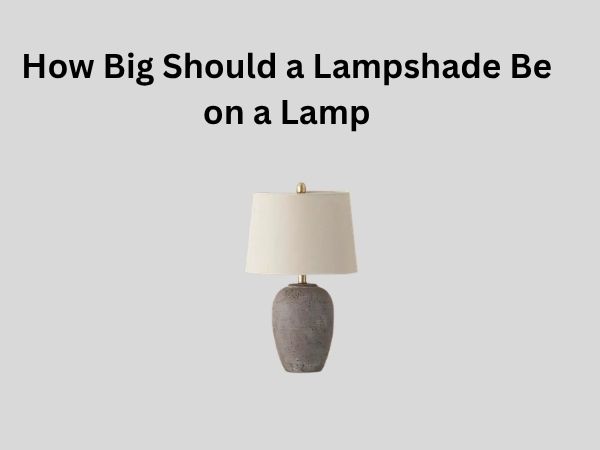
While the harp height is critical, the shade width also plays a significant role. A common guideline suggests that the width of your lampshade should be roughly twice the width of your lamp base. If your lamp base is 6 inches wide, you’d look for a shade that’s about 12 inches wide.
This proportion helps ensure the shade doesn’t overhang the base too much or look too small. It creates a pleasing visual connection between the base and the shade. This is another aesthetic rule that many designers follow.
Matching Shade Width to Harp Length
It’s not just about the shade’s width; it’s also about how it sits on the harp. Most standard harps have a “harp-to-shade” fitting. This fitting is usually a standard size, like a 9-inch fitter for many table lamps. This means the shade’s inner opening needs to match this fitting.
When you choose a shade, check its fitter size. It should correspond to the harp’s fitter size. This ensures the shade attaches securely and sits at the correct angle. This is where the shade and harp work together in perfect harmony. It prevents wobbling and ensures the light shines evenly.
Standard Harp Sizes and How They Fit
Harp sizes aren’t infinite. They come in standard lengths and top/bottom fitter sizes. Understanding these can simplify your shopping. Common harp lengths include 7, 8, 9, 10, 12, 14, and 16 inches. The top fitter size is often 1/4-inch IP (internal thread) for the finial, and the bottom fitter size is typically 7/16-inch for the shade.
You’ll also find different harp styles, like “uno” harps where the shade attaches directly to the harp without a fitter. Most common are the “bridge” or “candelabra” harps that use a finial to secure the shade and harp. Knowing these differences helps you select the correct type of harp.
| Harp Length (inches) | Typical Base Height Range (inches) | Typical Shade Width Range (inches) |
|---|---|---|
| 7 | Up to 9 | 10-12 |
| 8 | 9 – 10.5 | 12-14 |
| 10 | 10.5 – 13 | 14-16 |
| 12 | 13 – 15 | 16-18 |
| 14 | 15 – 18 | 18-20 |
| 16 | 18+ | 20+ |
This table offers a general guide. Your lamp might have unique proportions. Always prioritize your measurements. These are just starting points to help you visualize the relationships.
The Final Check: Visualizing the Fit
Once you have your measurements and an idea of the harp size, it’s helpful to visualize. Imagine the harp and shade on your base. Does it look balanced?
You can even simulate it. If you’re buying a new shade, bring your lamp base with you if possible. Or, measure your existing shade and base carefully. Hold up different sized harps if you can. The goal is a lamp that looks intentionally designed, not like an afterthought.
Troubleshooting Common Harp Sizing Issues
What if your lamp is unusually shaped? Or what if you have a very tall shade?
When to Deviate from the 75% Rule
Sometimes, the 75% rule needs a little adjustment. If your lamp base is very wide and short, a harp that is exactly 75% might look too short relative to the shade width. You might need a slightly taller harp to achieve visual balance.
Conversely, if your base is very tall and slender, a standard 75% rule might work well. It’s always about the overall visual impression. Don’t be afraid to slightly tweak the measurements if something feels off. Your eye is a good judge.
Specialty Lamps and Shades
Some lamps are designed with unique aesthetics. Think of art deco lamps with sculptural bases or modern lamps with minimalist forms. For these, the standard rules might not apply perfectly. You might need to prioritize the shade’s fit and how it complements the lamp’s artistic style.
For very large shades, you might need a more robust harp. Ensure the harp is sturdy enough to support the shade’s weight and size. Many manufacturers offer heavy-duty harps for this purpose. A properly supported shade is key to longevity.
Quick Checklist for Harp Sizing Success
Here’s a quick checklist to ensure you get the right harp size:
- Measure your lamp base height from bottom to harp attachment.
- Measure your shade’s width (widest point).
- Calculate 75% of your base height for a target harp length.
- Note your shade’s fitter size (e.g., 7/16-inch).
- Confirm the harp’s bottom fitter size matches your shade.
- Visually assess the proportions – does it look balanced?
Conclusion
You’ve now got a clear roadmap to selecting the perfect harp size for your lamp. Remember, it’s all about balance and proportion. By measuring your lamp base and shade, and applying the 75% rule for harp height, you’re well on your way to a lamp that looks beautifully cohesive. Don’t hesitate to trust your eye if a slight adjustment is needed for that ideal aesthetic. Your next step is to grab your tape measure and start applying these simple steps to your own lamps!
Frequently Asked Questions
What if my lamp base is very ornate or irregularly shaped?
For ornate bases, focus your measurement on the highest vertical point from the bottom of the base to where the harp attaches. Don’t measure around decorative elements. If the base has a unique shape, prioritize how the shade will visually connect to it.
How do I know what size fitter my shade has?
The fitter size is usually indicated on the shade itself, often on a tag near the top rim or on the internal frame. For most standard table lamps, you’ll see a 7/16-inch fitter size, which is what the harp’s bottom loop will connect to.
Can I use a harp that’s slightly longer or shorter than the 75% rule suggests?
Yes, you absolutely can! The 75% rule is a guideline, not a strict law. If the closest standard harp size is a little off, try it out. Often, a slightly taller or shorter harp can still look great depending on the specific lamp and shade design.
My lamp shade looks too big for the base, even with the right harp. What’s wrong?
This often means the shade width isn’t proportional to the base width, not just the harp height. Try a shade that is closer to twice the width of your lamp base. A wider shade can create better visual balance, even if the harp height is technically correct.
What are “uno” harps and when should I use them?
Uno harps have a built-in shade holder that attaches directly to the lamp socket, eliminating the need for a separate fitter. They’re common on certain styles of lamps, like vintage table lamps, and the shade screws directly onto the uno fitter. You’d use one if your lamp came with one or if you’re replacing a broken uno harp.