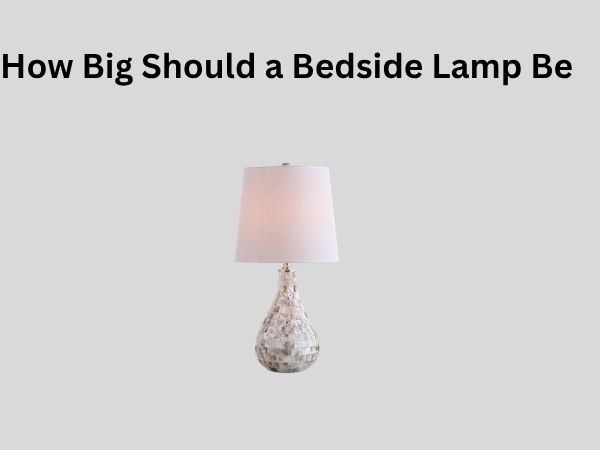
How Big Should a Lamp Be on a Nightstand: The Complete Guide to Finding Your Perfect Fit
When you’re setting up your bedroom, one of those decisions that seems simple on the surface but actually matters more than you’d think is choosing the right nightstand lamp. I mean, think about it—you’re going to interact with this lamp multiple times every single day. You’ll reach for it when you’re groggy in the morning, turn it on before bed, and maybe use it to read or check your phone at night. So shouldn’t it be just right?
The truth is, getting your nightstand lamp size just right isn’t rocket science, but it does require you to think about a few different factors. Let me walk you through everything you need to know.
Understanding Nightstand Lamp Proportions: Why Size Actually Matters
Here’s something I’ve learned from interior design principles: a lamp that’s too small on your nightstand looks lonely and underwhelming, like you forgot to decorate. On the flip side, a lamp that’s too large can dominate the entire table surface and make your bedroom feel cramped and cluttered. It’s all about finding that sweet spot—that Goldilocks zone where everything just feels right.
Think of your nightstand lamp as a visual anchor for your bedroom. It needs to be proportional to the space around it, or else it creates an imbalance that your eye will pick up on immediately, even if you can’t quite put your finger on why something feels off.
The Height Factor: Getting the Measurements Right
When we talk about lamp size for a nightstand, height is usually the first thing people consider. And for good reason—it’s one of the most visible aspects of the lamp. Most interior designers recommend that your nightstand lamp should be between 24 to 34 inches tall, measuring from the base to the top of the shade.
But here’s where it gets interesting. The ideal height for your specific setup depends heavily on your nightstand height and what you plan to use the lamp for. If you’re primarily using it for ambient lighting while you wind down, you might lean toward the shorter end of that range. If you want to read in bed, you’ll want something taller so the light can reach your book more effectively.
How Your Nightstand Height Influences Lamp Selection
Most standard nightstands are between 24 to 28 inches tall. Once you place a lamp on top, you want the bottom of the lampshade to be roughly at eye level when you’re sitting up in bed. This typically means your lamp should reach somewhere around 30 to 36 inches total height when sitting on your nightstand.
If your nightstand is on the taller side—say, 30 inches—you might opt for a slightly shorter lamp. Conversely, if you have a lower nightstand, a taller lamp will help compensate. It’s like balancing scales; you’re trying to achieve visual harmony.
Lamp Shade Dimensions: The Often-Overlooked Detail
Here’s something many people overlook when shopping for nightstand lamps: the lampshade dimensions matter just as much as the overall lamp height. The shade is what actually produces the light, and its size affects both the light distribution and the visual weight of your lamp.
A good rule of thumb is that your lampshade diameter should be about one-third the height of the lamp base. So if your lamp base is 15 inches tall, aim for a shade that’s roughly 5 inches in diameter. This creates visual balance and ensures the shade doesn’t look disproportionately large or small compared to the base.
Width Considerations for Your Nightstand Setup
Beyond height, you need to think about the lamp’s footprint—how much table space it actually takes up. Your nightstand probably isn’t huge, and you likely want room for other items like a phone, alarm clock, water glass, or a book. Most nightstands range from 16 to 24 inches wide.
I’d recommend choosing a lamp with a base diameter no larger than 6 inches. This leaves you plenty of room to actually use your nightstand without it feeling completely consumed by your lamp. If you go with a lamp that has a really wide base, you’re stealing valuable real estate from yourself.
The Visual Balance Equation: Making Everything Work Together
Visual balance in bedroom design isn’t just about individual pieces—it’s about how everything relates to each other. Your lamp needs to balance with your nightstand size, your bed dimensions, and even your bedroom’s overall square footage.
In a smaller bedroom, you’ll want a more compact lamp setup. A delicate, slender lamp with a modest shade will feel appropriate. In a larger master bedroom with a king-size bed and substantial nightstands, you can get away with a bolder, larger lamp that makes more of a statement.
Creating Proportional Harmony in Your Sleep Space
Think about your bedroom as a whole ecosystem. If you have a really chunky, oversized bed frame, a delicate little lamp might look out of place. But if you have a sleek, minimalist platform bed, that same lamp might be absolutely perfect.
The key is stepping back and looking at the complete picture. Does your lamp feel like it belongs in this space, or does it seem like it wandered in from someone else’s bedroom?
Functional Lighting: Does Your Lamp Need to Do More Than Look Good?
I can’t stress this enough: your nightstand lamp needs to actually work for your lifestyle. If you’re a bedtime reader, you need adequate light projection. If you mainly use it for ambient mood lighting, you might prioritize aesthetics slightly more.
The lamp’s function will actually influence the ideal size. Reading lamps tend to be slightly taller and have more angular shades to direct light downward onto your book. Ambient lamps can be a bit shorter and often have diffused shades that scatter light more evenly throughout the room.
Reading Lamps Versus Ambient Lighting Lamps
Are you the type who settles in with a novel every evening, or do you mainly use your lamp to set the mood? This question should heavily influence your lamp selection.
- Reading Lamps: These should be positioned to cast light directly onto your reading material without creating glare on the page. They’re often slightly taller and positioned toward the head of the bed.
- Ambient Lamps: These provide general lighting and set the atmosphere. They work best with softer, diffused shades that distribute light evenly throughout the room.
Style and Aesthetic: Making Your Lamp Match Your Bedroom Vibe
Here’s where personal preference really comes into play. You could have the perfectly sized lamp mathematically speaking, but if it doesn’t match your bedroom’s aesthetic, something will still feel off.
A minimalist bedroom might call for a sleek, modern lamp with clean lines and a narrow silhouette. A traditional bedroom might benefit from a lamp with a classic base and a pleated fabric shade. A bohemian space could incorporate a lamp with a unique base material like wood or ceramic.
Style Considerations That Impact Size Perception
Interestingly, the material and style of your lamp can actually make it appear larger or smaller than its actual dimensions. A lamp with a heavy, ornate base appears bulkier than a lamp of the same height with a slender, minimalist base. A lamp with a wide, puffy shade looks bigger than one with a narrow, cylindrical shade.
So when you’re shopping, don’t just measure—actually visualize how the lamp’s style will feel in your space. Sometimes a lamp that’s technically the right size doesn’t feel right because of its aesthetic qualities.
The Rule of Thirds: A Helpful Proportion Guide
Interior designers often use the rule of thirds for sizing decorative items, and nightstand lamps are no exception. Here’s how it works: imagine your nightstand as one-third of your bed’s width (roughly). Your lamp should be about one-third the height of your nightstand’s depth. This creates pleasing proportions that feel intuitive to the human eye.
It’s not a rigid rule—more like a helpful guideline when you’re feeling uncertain about sizing. If you follow this principle, your lamp will almost always look appropriately proportioned.
Practical Examples of Good Proportions
Let me give you some concrete examples. If you have a standard 24-inch nightstand with a 16-inch depth, your lamp height should be around 8 inches tall. Wait, that sounds short! But remember, you’re measuring just the base portion. Add a typical lampshade, and you’re now at 24-28 inches total—right in that sweet spot we discussed earlier.
Space Constraints: When Smaller Is Actually Better
Not all bedrooms have generous nightstand space. In apartments, small bedrooms, or homes with compact furniture, you might need to think smaller. There’s absolutely nothing wrong with a petite nightstand lamp if that’s what your space requires.
Smaller lamps (16-20 inches tall) can work beautifully when paired with proportionally smaller nightstands and bed frames. The key is maintaining that visual balance throughout your room. A small lamp looks intentional and cute; it only looks wrong when it’s sharing a nightstand with an oversized base or too much empty space around it.
Tips for Making Small Lamps Feel Adequate
If you’re working with limited space and need a smaller lamp, consider these strategies to ensure it still meets your functional and aesthetic needs:
- Choose a lamp with a higher wattage bulb to compensate for the smaller shade
- Opt for a shade material that diffuses light efficiently, like linen or silk
- Position the lamp toward the center of your nightstand to maximize its visual presence
- Choose a lamp with an interesting base or shade design so it commands attention despite its smaller size
Oversized Lamps: When Big Statements Make Sense
On the flip side, there are situations where a larger nightstand lamp actually works beautifully. In master bedrooms with generous proportions, king or California king beds, and spacious nightstands, a lamp in the 36-40 inch range can make a stunning design statement.
Oversized lamps work best when they’re paired with equally substantial furniture and when the rest of your bedroom design can support that bolder aesthetic. They’re particularly effective in transitional or contemporary bedroom designs where a sculptural lamp serves as a focal point.
Making Oversized Lamps Feel Right in Your Space
An oversized lamp isn’t inherently wrong—it just needs the right context. Think about it this way: the same lamp that would overwhelm a bedroom with twin beds would look perfectly proportioned in a room with a dramatic four-poster king bed and high ceilings.
Lamp Base Width: The Often-Forgotten Measurement
We’ve talked a lot about height, but let me circle back to base width because it’s genuinely important. The diameter of your lamp’s base directly impacts how much nightstand real estate it consumes and how stable the lamp feels.
For most nightstands, a lamp base with a 4-6 inch diameter works best. This provides stability (taller lamps need wider bases to avoid tipping) while still leaving room on your nightstand surface. If your nightstand is particularly narrow, you might need to go with a base on the smaller end of that range, even if it means the lamp feels slightly less substantial.
Material Considerations: How What Your Lamp Is Made Affects Perceived Size
Here’s something interesting: a ceramic lamp base feels heavier and more substantial than a metal base of the same size. A glass base feels lighter and more delicate. These material differences actually affect how “big” your lamp appears and feels in the space.
A metal lamp with a minimalist design can be taller but feel less imposing because of its slender silhouette and lighter visual weight. Conversely, a chunky ceramic base lamp of a smaller height can feel more dominant because of its mass and visual presence.
Choosing Materials That Complement Your Space
When you’re shopping for a lamp, consider what materials are already present in your bedroom. If you have a wood bed frame and wooden nightstands, a wooden lamp base creates continuity. If you have metal accents throughout your room, a brass or chrome base picks up those elements.
Shade Shape and Its Impact on Overall Proportions
The lampshade shape actually matters more than many people realize. A drum shade (cylindrical) has a different visual weight than an empire shade (wider at the bottom). A bell shade has more drama than a coolie shade. Each shape interacts with your lamp’s base differently and affects the overall proportion.
Generally, drum shades work well on most lamp bases and create balanced proportions. Empire shades add formality and work beautifully on traditional lamp bases. Tapered shades (wider at the top, narrower at the bottom) create a more modern, streamlined look.
Matching Shade Shape to Your Lamp Base
The relationship between your lamp base and shade should feel intentional. A curvy, ornate base pairs well with a structured shade rather than a slouchy, baggy shade. A slim, modern base looks better with a simple, geometric shade than with an elaborate, ruffled design.
Quick Sizing Checklist: Your Nightstand Lamp Size Guide
Let me pull all of this together into a practical checklist you can use when you’re actually shopping for a lamp:
- Measure your nightstand height (most are 24-28 inches)
- Determine total desired lamp height (base plus shade): 30-36 inches for most situations
- Check that lamp base diameter is 4-6 inches maximum
- Ensure lampshade width is proportional to the base (roughly one-third of lamp base height)
- Verify the lamp leaves at least 8-10 inches of clear nightstand space on either side
- Consider your primary use (reading versus ambient lighting)
- Confirm the style matches your bedroom aesthetic
- Test that the lamp doesn’t block your view of your alarm clock or other nightstand items
Conclusion
Choosing the right nightstand lamp size doesn’t have to be complicated. The most important principle is proportion—your lamp should be proportional to your nightstand size, your bed dimensions, and your overall bedroom space. Generally, aim for a lamp between 24-34 inches tall (measuring to the top of the shade), with a base diameter of 4-6 inches, positioned on a nightstand that’s typically 24-28 inches high.
But remember, these are guidelines, not absolutes. What matters most is that when you look at your bedroom, the lamp feels like it belongs there. It should be functional enough to meet your lighting needs—whether that’s reading or creating ambiance—and aesthetic enough that you actually enjoy looking at it. Take your time when choosing, consider your space carefully, and don’t be afraid to visualize how a lamp might look before you bring it home. With these principles in mind, you’ll find a lamp that’s just right for your nightstand.
Frequently Asked Questions
What’s the ideal lamp height for a standard nightstand?
For a standard 24-28 inch nightstand, your lamp should ideally measure 30-36 inches tall from base to top of shade. This ensures the bottom of the shade is approximately at eye level when you’re sitting in bed, providing comfortable lighting for reading or winding down without creating glare or shadows.
Can I use a very tall lamp on a small nightstand?
While technically possible, a

![10 Best Clip On Reading Lamp [2026]](https://bestdesklamp.com/wp-content/uploads/2026/08/10-best-clip-on-reading-lamp-2026-featured-768x432.jpg)