How to Measure a Lampshade: A Simple Guide
Measuring a lampshade is simpler than you might think. You’ll want to measure the **shade’s diameter** at its widest point and its **height** from top to bottom. For drum or empire shades, this is a straight measurement. If your shade is square or rectangular, measure the top and bottom dimensions, and the slant height.
Getting the right size lampshade makes a big difference in how your lamp looks and functions. A shade that’s too big or too small can make a lamp look awkward. We found that understanding these **basic measurements** helps you pick a shade that’s both **proportionate and practical** for your lighting needs.
- Measure shade width at the widest point.
- Measure shade height from top to bottom.
- Note top and bottom diameters for non-cylindrical shades.
- Slant height is important for some shade shapes.
Let’s walk through exactly how to get those measurements so you can find the perfect lampshade for your lamp!
Here’s the main body content for your blog post:Getting the Right Lamp Shade Measurements
Choosing a new lampshade can really refresh your space. But before you shop, you need to know your lamp’s dimensions. Measuring your lampshade correctly is surprisingly simple. You’ll want a few key numbers to ensure your new shade fits perfectly. We’ve found that understanding these simple measurements helps you pick a shade that’s both **proportionate and practical**.
Essential Measurements for Any Lampshade
1. Shade Height: The Vertical Journey
This is one of the most straightforward measurements. You’ll want to measure the **vertical distance** from the very top of the shade to the very bottom. Imagine a straight line going straight down the side of the shade. That’s the height you need.
For most lamps, the shade height should be about **two-thirds of the lamp’s total height** (from base to the top of the finial). We found this ratio generally creates a pleasing visual balance. So, if your lamp is 30 inches tall, aim for a shade that’s around 20 inches in height.
2. Shade Diameter: The Widest Point
This measurement is all about width. For shades that are round or square, you’ll want to find the **widest part of the shade**. This is typically at the bottom for empire or cone-shaped shades, or in the middle for drum shades.
Measure straight across from one side to the other at this widest point. If your shade is round, this is your diameter. If it’s square, measure from one edge to the opposite edge.
Many experts suggest that the shade’s diameter should be about **three times the width of the lamp’s base**. This helps keep the lamp looking stable and not top-heavy. For example, if your lamp base is 6 inches wide, a shade with a 18-inch diameter would likely be a good fit. We found this guideline really useful in practice.
Special Measurements for Different Shade Shapes
Drum and Empire Shades: Simple and Straightforward
These are the most common shapes. For a **drum shade**, which is cylindrical, the top and bottom diameters are the same. You just need to measure that single diameter at the widest point (which is all the way around). Measure the height from the top edge to the bottom edge.
For an **empire shade**, which is often cone-shaped, the top diameter will be smaller than the bottom diameter. You’ll measure the height from the top edge to the bottom edge. Then, measure the diameter across the **widest part, which is usually the bottom opening**. This is your bottom diameter measurement.
Square and Rectangular Shades: More Than One Dimension
Measuring a square or rectangular shade requires a few more steps. You’ll need to consider both the top and bottom openings.
First, measure the **height** from the top edge to the bottom edge. This is the same as with round shades.
Next, measure the **top opening**. If it’s square, measure one side. If it’s rectangular, measure the length and width of the top opening.
Then, measure the **bottom opening**. Again, measure the length and width of the bottom opening. Many sources suggest that the bottom opening of the shade should be slightly wider than the lamp base, generally by about an inch or two on each side.
Slant Height: For the Angled Edge
Some lampshades have a noticeable slant or angle along their sides. For these, you might need to measure the **slant height**. This is the distance along the angled surface from the top edge to the bottom edge.
You don’t always need this measurement for purchasing, but it can be helpful if you’re trying to match a specific style or if the manufacturer provides this detail. We found that most online retailers list the shade’s vertical height and the top and bottom diameters, which are usually sufficient.
How to Measure Your Existing Shade Accurately
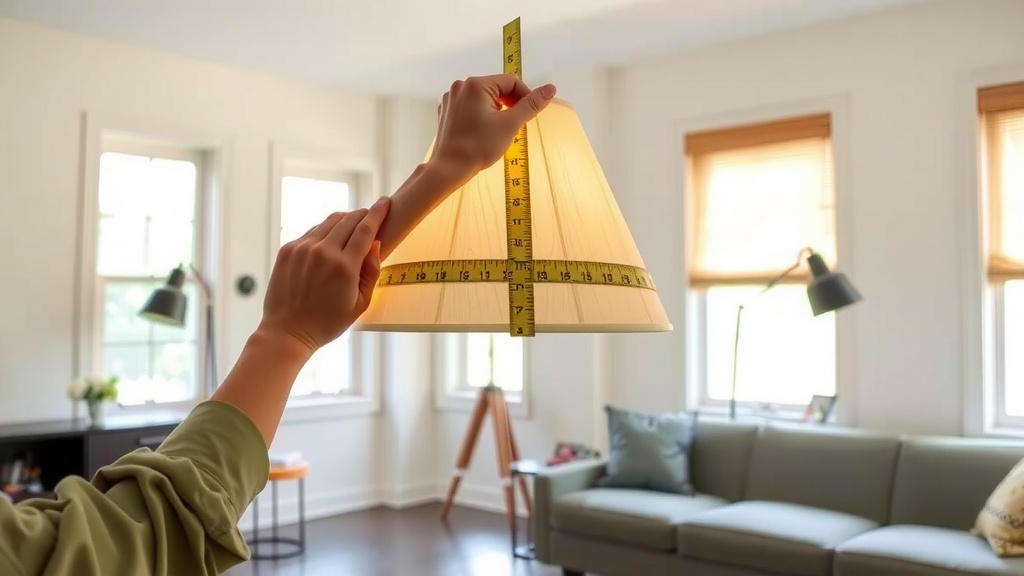
Grab a flexible tape measure, like one used for sewing. If you don’t have one, a standard ruler or a piece of string and a ruler will work just fine. Make sure your lamp is turned off and unplugged before you start measuring!
Step-by-Step Guide to Measuring
Follow these steps for the most accurate measurements:
- Place the lampshade on a flat surface or leave it on the lamp if it’s easy to access.
- Measure the height: Start at the top seam or edge and measure straight down to the bottom edge.
- Measure the top diameter/width: Measure across the top opening. For round shades, this is the diameter. For square shades, measure one side. For rectangular shades, measure both the length and width of the top opening.
- Measure the bottom diameter/width: Measure across the widest part of the bottom opening. For round shades, this is the diameter. For square shades, measure one side. For rectangular shades, measure both the length and width of the bottom opening.
- Note the slant (if applicable): If the shade has a distinct angle, you can measure the slant height by following the line of the shade’s side from top to bottom.
Common Mistakes to Avoid
It’s easy to make a small error when measuring. Here are a few things to watch out for:
- Don’t measure the harp: The harp is the metal frame that holds the shade. You need to measure the shade itself, not the hardware.
- Measure the widest part accurately: For round shades, make sure you’re measuring straight across the widest point. For square or rectangular shades, ensure you’re measuring the full length and width of the opening.
- Be precise with units: Always use the same unit of measurement (inches are standard for lampshades).
- Check both top and bottom for non-cylindrical shades: Empire, tapered, and rectangular shades have different top and bottom dimensions. Make sure you get both!
When to Measure the Lamp Base
While you’re measuring the shade, it’s also a good idea to measure your lamp’s base. This gives you a point of comparison.
Measure the width and depth of the base. As we mentioned earlier, a common guideline is that the **shade’s bottom diameter should be about three times the width of the lamp base**. This creates a balanced look that is visually appealing. We found this rule of thumb to be very helpful for achieving good proportions.
Proportion is Key: What Looks Good?
Getting the right proportions is more than just fitting the shade onto the lamp. It’s about how the lamp looks as a whole piece of décor.
Generally, you want the **height of the shade to be about two-thirds of the height of the lamp base**. The width of the shade should be about twice the width of the lamp base. These are just guidelines, of course, and personal preference plays a big role. However, following these suggestions often leads to a well-balanced and attractive lamp. We found these ratios consistently produce pleasing results.
Visualizing the Final Look
Imagine the lamp with the new shade. Does it look stable? Is the shade too tall or too short compared to the base? Does the light spill out nicely from the top and bottom, or is it too harsh? Thinking about these things now will save you potential headaches later. Many designers agree that **visual harmony** is key to good interior design.
Quick Measurement Checklist
Here’s a quick checklist to ensure you have all the necessary numbers:
- Shade Height (Top to Bottom)
- Shade Top Diameter/Width
- Shade Bottom Diameter/Width
- Lamp Base Width
- Lamp Base Depth
Conclusion
You’ve now got a clear understanding of how to measure your lampshade for a perfect fit. Remember, key measurements like height and diameter (both top and bottom for tapered shades) are essential. We found that paying attention to these simple numbers ensures your new shade complements your lamp’s base and overall style. Don’t forget to also note your lamp base width. With your measurements in hand, you’re ready to confidently shop for a lampshade that brightens your space beautifully!
Frequently Asked Questions
What if my lampshade isn’t a standard shape?
For unusual or custom shades, measure the height from the top edge to the bottom edge. Then, measure the widest point across the top and bottom openings. If the sides are angled, note the slant height as well. This provides all the dimensions needed for a good fit.
Can I use a flexible tape measure for lampshades?
Yes, a flexible tape measure, like one used for sewing, is actually ideal. It allows you to easily curve around the shade to get accurate diameter and slant height measurements. If you don’t have one, a standard ruler and a piece of string can work too.
How do I know if the lampshade size is proportionate to the lamp base?
A good rule of thumb is that the lampshade’s bottom diameter should be about three times the width of the lamp’s base. Also, the shade’s height should typically be about two-thirds of the lamp’s total height. These proportions create a visually balanced look.
Should I measure the lamp’s harp or socket?
No, you should not measure the harp (the metal frame) or the socket. You need to measure the lampshade itself. The harp and socket are hardware components and don’t dictate the shade’s dimensions or fit. Focus only on the shade’s fabric or material dimensions.
What’s the difference between diameter and width for a lampshade?
For round lampshades, the diameter is the measurement straight across the widest part, from edge to edge, passing through the center. For square or rectangular lampshades, we use the term width (and sometimes length) to describe the measurement across the opening from side to side. The concept is the same: measuring the span of the shade.
![10 Way Table Lamps [2026]](https://bestdesklamp.com/wp-content/uploads/2026/09/10-way-table-lamps-2026-featured-768x432.jpg)

![10 Best Camp Lamp [2026]](https://bestdesklamp.com/wp-content/uploads/2026/08/10-best-camp-lamp-2026-featured-768x432.jpg)