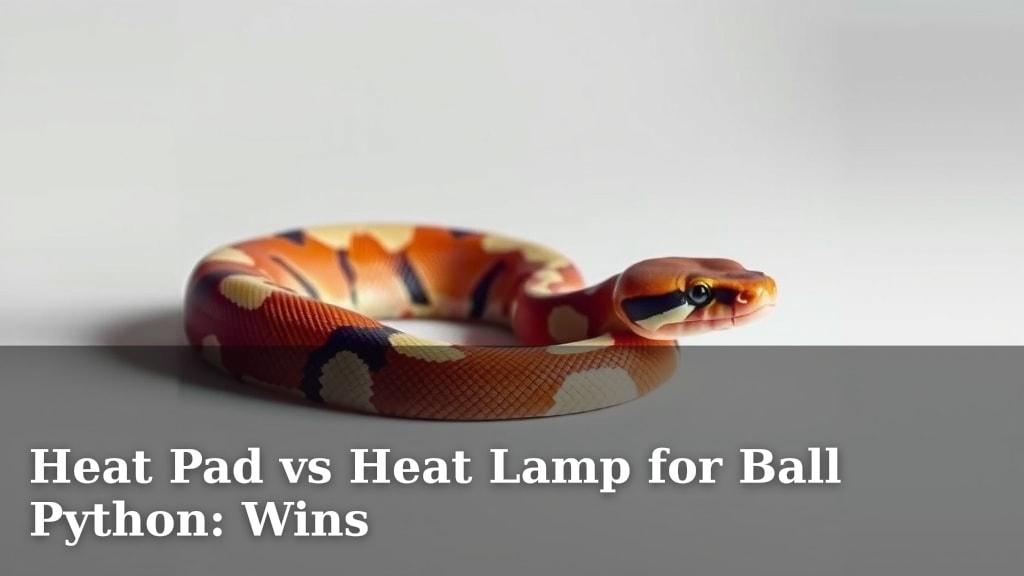
Heat Pad vs Heat Lamp for Ball Python: Wins
When choosing between a heat pad and a heat lamp for your ball python, the heat pad is generally the better choice for creating a stable, ambient temperature. While heat lamps provide intense, focused heat, they can dry out your snake’s enclosure too quickly and are harder to regulate for the consistent warmth ball pythons need. A well-regulated heat pad offers a more natural temperature gradient, crucial for your serpent’s health.
Understanding your ball python’s specific needs is key to providing the right environment. These snakes require a temperature gradient to thermoregulate, meaning they need a warm side and a cool side to move between. Both heat pads and lamps have pros and cons, but **proper temperature control** is non-negotiable for a healthy pet, and research shows heat pads excel at providing consistent warmth.
- Heat pads offer more consistent, ambient warmth.
- Heat lamps can create dry conditions and are harder to regulate.
- A temperature gradient is essential for your snake’s health.
- Proper temperature control prevents many common health issues.
Let’s dive into which heating method best suits your ball python’s terrarium and how to set it up for success.
“`htmlChoosing the Right Heat Source for Your Ball Python
Selecting the best heating method for your ball python is super important. You want to create a cozy environment for your scaly friend. Research shows that for ball pythons, a consistent, gentle warmth is key. This often makes heat pads a preferred choice. They help maintain that crucial temperature gradient without making the air too dry. Heat lamps can work, but they require careful setup. Let’s look at why one might be a better fit for your snake’s home.
Understanding Ball Python Heating Needs
The Importance of a Temperature Gradient
Ball pythons are ectothermic, meaning they rely on their surroundings to regulate their body temperature. They need a warm side and a cool side in their enclosure. This allows them to move between areas to find the perfect temperature. Think of it like you choosing between a sunny spot on the couch and a cool breeze by the window. This movement helps with digestion, immune function, and overall well-being (National Research Council).
Ideal Temperature Ranges
For a ball python, the warm side should hover around 88-92°F (31-33°C). The cool side can be a bit lower, around 75-80°F (24-27°C). Nighttime temperatures can drop slightly, but should ideally stay above 70°F (21°C). Maintaining these specific ranges is not just about comfort; it’s about health. An unstable temperature can lead to stress and illness.
Heat Pads: The Stable Choice
How Under Tank Heaters Work
An Under Tank Heater (UTH), or heat pad, is typically a flexible heating element that attaches to the outside of the enclosure’s bottom. It provides radiant heat upwards. This warms the substrate and the snake directly when it’s on the warm side. Many experts suggest these are excellent for creating a stable, consistent heat source. They don’t directly affect humidity levels like some other methods can.
Wins for Heat Pads
- Consistent Warmth: Heat pads provide a steady, reliable source of heat. This is vital for preventing temperature fluctuations.
- Humidity Friendly: They don’t dry out the enclosure as much as heat lamps. This is a big plus for ball pythons, which prefer moderate humidity.
- Subtle Heat: The heat is indirect and gentle. This mimics the natural way snakes absorb warmth from their environment.
- Low Profile: They are placed underneath, so they don’t take up valuable space inside the tank. This leaves more room for your snake to explore.
- Energy Efficiency: Many heat pads are quite energy efficient. They use less electricity to maintain stable temperatures.
Controlling Heat Pads Safely
It’s absolutely essential to use a thermostat with any heat pad. A thermostat prevents overheating. It monitors the temperature and cycles the heat on and off to maintain your set point. Without one, a heat pad can become dangerously hot. Research from reptile care guides consistently highlights the thermostat as a non-negotiable safety device.
| Feature | Heat Pad | Heat Lamp |
|---|---|---|
| Heat Type | Radiant (Bottom) | Basking (Top) |
| Humidity Impact | Low | Can be high (drying) |
| Regulation Needs | Thermostat (essential) | Thermostat & Dimmer/Timer |
| Primary Benefit | Stable ambient warmth | Basking spot creation |
| Best For | Overall enclosure temp | Supplemental basking spot |
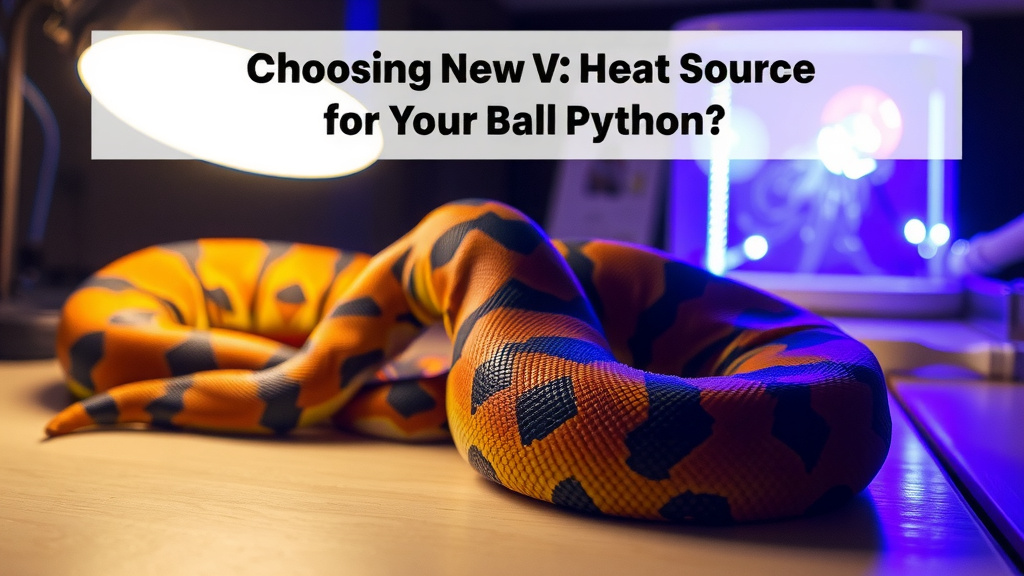
Heat Lamps: When They Might Be Used
How Heat Lamps Function
Heat lamps, often referred to as basking lamps, are typically ceramic or incandescent bulbs. They hang above or are mounted inside the enclosure. They produce intense, focused heat that simulates basking. This can be useful for creating a specific hot spot. However, many keepers find they can be tricky to manage for overall tank temperature.
Challenges with Heat Lamps
The main issue with heat lamps is their tendency to dry out the air. Ball pythons need a certain level of humidity to shed properly and avoid respiratory issues. High heat lamps can quickly lower humidity to unhealthy levels. They can also create very hot spots if not regulated properly. This poses a risk of burns to your snake.
Using Heat Lamps Wisely
If you choose to use a heat lamp, it’s best used as a supplemental heat source. It can help create that distinct basking spot on the warm side. But it shouldn’t be the sole source of heat. You’ll likely still need a heat pad to maintain the overall ambient temperature. A thermostat or dimmer is also critical to control the intensity. Many recommend using a lower wattage bulb designed for reptiles.
Setting Up Your Ball Python’s Heating System
Getting the heating right is about layers and control. You want to provide consistent, safe warmth. It’s not just about plugging something in; it’s about creating a naturalistic and safe habitat.
Your Ball Python Heating Checklist
- Install a thermostat with your heat source.
- Place a thermometer on the warm side and cool side.
- Use a hygrometer to monitor humidity.
- Check substrate temperature with an infrared thermometer.
- Ensure no wires or heating elements are accessible to your snake.
- Monitor temperatures daily for the first few weeks.
Conclusion
When setting up your ball python’s enclosure, providing the right heat source is a top priority. Research and reptile care guides consistently point towards heat pads as the superior choice for maintaining stable, ambient temperatures. They offer gentle, consistent warmth that respects your snake’s need for a temperature gradient without excessively drying out the environment. While heat lamps can play a role in creating a basking spot, they are best used as a supplement and require careful regulation to avoid harming your pet. Prioritize a thermostat with any heating element you use for safety and optimal conditions.
Your next step is to ensure you have a reliable thermostat connected to your chosen heat pad. Measure your enclosure’s temperatures on both the warm and cool sides with accurate thermometers daily to confirm your setup is working correctly.
Frequently Asked Questions
Can a heat lamp replace a heat pad for my ball python?
No, a heat lamp generally cannot fully replace a heat pad for your ball python. Heat lamps excel at creating a basking spot but tend to dry out the enclosure quickly. A heat pad provides more consistent ambient warmth, which is vital for your snake’s overall thermoregulation.
What is the biggest advantage of using a heat pad?
The biggest advantage of a heat pad is its ability to provide consistent, gentle, and ambient warmth throughout the enclosure. This type of heating helps maintain a stable temperature gradient without drastically impacting humidity levels, which is ideal for ball pythons.
How do I prevent a heat pad from getting too hot?
You absolutely must use a thermostat with any heat pad. The thermostat will monitor the temperature and automatically turn the heat pad on and off to maintain your desired temperature, preventing dangerous overheating.
Can heat lamps cause shedding problems for ball pythons?
Yes, heat lamps can contribute to shedding problems if they dry out the enclosure too much. Ball pythons need adequate humidity to shed their skin properly. Excessive dryness from a heat lamp can lead to retained shed, which can cause health issues.
Should I use both a heat pad and a heat lamp?
Many keepers find success using a heat pad as the primary heat source for overall ambient temperature, and a low-wattage heat lamp positioned over a specific spot to create a basking area on the warm side. This combination can provide a well-rounded temperature gradient.
![10 Best Affordable Lamps [2026]](https://bestdesklamp.com/wp-content/uploads/2026/09/10-best-affordable-lamps-2026-featured-768x432.jpg)


![10 Best Color Changing Floor Lamp [2026]](https://bestdesklamp.com/wp-content/uploads/2026/09/10-best-color-changing-floor-lamp-2026-featured-768x432.jpg)